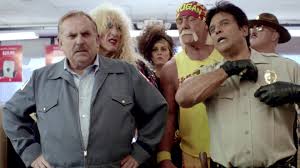
 Greetings, my fellow nerdy friends. I read with concern last week in the business press that you are closing as many as 1100 stores, following your well-received Super Bowl commercial earlier this year. You are not alone. Sears is closing stores. Staples is closing stores. Quiznos is closing stores. There seems to be plenty of commercial real estate coming on the market in all shapes and footprints. I wanted to write to you because I used to love the RadioShack brand, and I would hate to see it join the other tombstones in the Dead Brand Graveyard. You see, I was a bit of a geek as a kid, still sort of am, mowed a lot of lawns and bought my first CB Radio at RadioShack way back when, then used to love to hang out with the other geeks in the store.
So I wonder if the big-salary strategy teams sitting around the table in your headquarters this modern moment have asked themselves the following ten very personal questions:
1) When was the last time they shopped unprompted as a customer in a RadioShack?
2) What did they love about walking into the store?
3) What did they love about the shelf displays in the store?
4) What did they love about the merchandise on sale in the store?
5) What did they love about the staff in the store?
6) What was in the store that was unique, perfectly priced, or presented so well they couldn’t say no to it?
7) How much did they spend of their own money in the store?
8) Did they tell a friend about the experience and urge that friend to also visit the store?
9) When they got home, did they think, oh wow, I should have bought something else while I was there?
10) Are they actually excited about visiting that store again as soon as they can?
The reason I ask is, I never worked at a RadioShack, but I used to be able to answer every single one of these questions in the affirmative. I was a brand evangelist for RadioShack. I actually loved your brand.
At the moment I have no clue what it stands for, except every once in a while I need an obscure electronics plug or unusually shaped battery, and I drop by because you’re paying top dollar for a great location right between my bank and a sushi place I enjoy. If it pops in my head, sometimes I drop off a bucket of old batteries for you to recycle, and if you have the gizmo I need, I gladly fork over about $3 to $8. The guys at checkout always ask for my zip code for some reason, even though I know you know it, because you used to mail me a catalogue several times a year with cool stuff to come see and at least one great coupon offer, but no one there seems to know me after 40-plus years of stopping by. I’m glad you still have the little wired metal gizmos when I need them, and I wish I could spend more money while I was in the store, but there’s really nothing I need or can’t get online cheaper, and the guy behind the counter doesn’t seem to want to swap stories about weird-shaped neon mini bulbs anymore. I miss that guy, he was a geek like me.
You were once the Tandy Corporation, remember? You sold leather goods. Then you reinvented and became RadioShack, and we geeks thought it was a cool place to gather, kind of like Egghead, before they became rent-free NewEgg. You had the TRS-80 and knew how to load software on it! Are some of those geeks at your conference table? Do they love your brand the way we did–not like, but actually love? If they don’t, are they able to articulate what happened to the magic? Because if they can’t, and they don’t want to go to RadioShack like a real customer, then why should I? I mean, sure, anyone can hire an agency to do a killer commercial, and you can love a commercial, but that’s not the same as loving a brand. It’s also not the same as a reason to go into your store.
I do believe you have to eat your own dogfood if you want someone else to give it a taste. That’s just me. Call me a simpleton without an MBA, but when I love a brand, and I have reason to recommit my loyalty to that brand time and again, price is only one part of my decision funnel. I want a brand that comes with a promise. What’s yours?
I won’t be writing this letter to Sears or Staples or Quiznos, although I do occasionally frequent those stores, but I did want to share my thoughts with you, because there was a time not long ago when you meant something to me. Like Borders. Like Tower Records. Like Blockbuster. Those old friends are no longer to be found. I wonder if the people sitting around the table in their final year loved their brands as much as their customers once did, or if they just ran spreadsheets and focus tests.
There’s a lot going on in a store; it’s a great laboratory for learning. When there’s nothing going on there at all, you can learn even more.
It all begins with a promise.
Signing off now, that’s a big 10-4.



 CorporateIntel