Steve Martin in his heyday had a funny routine called Let’s Get Small. Today I am going to ask you to do the opposite. I am going to ask you not to be small.
A while back I wrote an article called the The $20 Brand Bond, noting how Amazon locked in my loyalty by facilitating a modest refund in record time without asking me a single question. Now I am going to tell you the story from the other end, how a local brick-and-mortar company lost me forever for half that much.
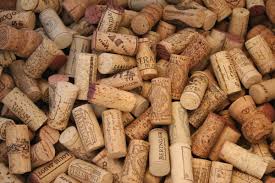 This was the very definition of a no-brainer. My wife and I recently went to dinner at a neighborhood restaurant, which since it opened offered a no-corkage policy if you bought a bottle of wine at a shop a few doors down. We had done this several times and enjoyed the restaurant as well as spent a little more on wine, since there was no mark-up after retail. All was well with the village—until we walked in one Friday with a store-bought bottle stickered with the retail shop’s brand, only to be told while the waiter was uncorking it that the no-corkage fee no longer applied weekends but was now good weeknights only. I asked why the fellow at the wine shop hadn’t told me that since we had just been there and mentioned we needed the sticker for the restaurant to waive the corkage. The waiter said he had no idea why, but it was “out of his authority” and he would send over the owner.
This restaurant is about 1500 square feet, maybe 20 tables. The owner arrived a half-hour later. I told him the situation bothered me, that we had followed the routine only to be told after our bottle was open that corkage would apply because it was Friday. He responded, “Well, they should have told you at the wine shop. I’ll have to follow up with the owner there. He should tell his people that we changed this policy. I have to charge you $10 tonight.”
“You’re the owner,” I said. “You have to charge me $10? You have no leeway to make this one-time exception since we didn’t know you changed the rules?”
“We changed the policy so I am going to charge you,” said the owner, and he walked away.
We will never go back to that restaurant. I have told this story to perhaps 50 people around town. I am not naming the restaurant here out of loyalty to our community to prevent harm to our local businesses. Yet here you observe the destruction brought on a business by making the single most important mistake a business can make: not loving customers.
What’s interesting about this particular scenario is that we almost always order extra food when we don’t pay the restaurant for a bottle of wine, and we take home increased leftovers. We also tend to tip heavily and supplement the night’s bill so the restaurant doesn’t get beat on its own promotion. We understand the cost of customer acquisition and operating in a competitive environment. We understand you can change your policies anytime you like and rules are rules, no doubt to be fair and ensure continuity in the enterprise. We also understand that we have choices, we like great value more than we like a reduced bill, and we like to be treated kindly when we are guests in your house. You don’t have to do any of those things. Feel free to advertise, run Groupons, buy ads on Google, whatever you think gets us in the door. What gets us in the door fastest is getting us back in the door after we just had a swell experience. It doesn’t get any cheaper or easier than that.
When it comes to your customers, never think small. Your customers are your lifeblood. Without them your business is nothing. It takes years to acquire a customer base, and marketing is often your biggest intangible risk investment in a new business. You can lose a customer in an instant, and the potential damage to your reputation is unquantifiable. Yelp and OpenTable are only the beginning of your problem when you do a customer wrong. While bad reviews there are almost impossible to shed, they pale in comparison to the power of WOM: Word of Mouth. Casual conversation now travels at internet speed. Word of mouth escalates and compounds exponentially, but we are more predisposed to hear the bad over the good. It might take a dozen people telling you a place is good to try it. It might take only one to get you to avoid it all costs.
Is this just about small local businesses? I think not. Listen to the people around you talk about their cable companies, their phone carriers, their insurance companies. What’s their #1 complaint? Well, cost of course, getting gouged for mediocre products. And then? Customer service. They can’t get anyone on the line to help them. When they do get someone on the line they have little discretion to help them. These customers are held in place by a lack of choice—a situation that won’t last forever. When these neglected customers do have a choice—and they will—they will be gone, gone, gone!
Last week I attended a talk called The Rise of the Chief Customer Officer. I agreed with everything the speaker had to say about making customer service strategic and giving the Chief Customer Officer a seat at the table, except for one thing: I don’t think a CEO or an owner can afford to delegate this title; I think the CEO or owner has to be the Chief Customer Officer. If you want to show your employees what matters to you most, lead by example. Customers matter most. They pay for you to have a business. Contrary to an old cliché, they aren’t always right, but they do always matter. If you don’t woo them at every turn, they will vote with their feet. Or their mouths. Or their smartphone.
Thinking big means thinking long term. You don’t want one-off transactions; they are much too expensive. You want ongoing relationships, where customers return to you because you treat them like gold. Invest in relationships and the transactions will follow. Leave a few bucks on the table today for lifetime value that is unlimited.
Our local restaurateur got his ten bucks for the bottle of wine per his policy. Good for him. The next ten times we don’t walk into his cafe at $100 per seating costs him gross sales of $1000. The ten people who don’t come in because of word of mouth cost another $1000. Multiply by ten years of lost loyalty, that’s $20,000 of topline vaporized. You won’t need an MBA to calculate the negative ROI on that cold hard ten-spot in his pocket.
Still want that extra margin on a bottle of wine on tonight’s tab?


 CorporateIntel