 We wake up to news that the prior night an innocent person was killed at point-blank range. We come back from lunch to news of a mass shooting in a public gathering place. We drive home from work but have to go around downtown because there’s a bomb scare. We sit down to dinner and try to dissect the political ramblings of where to plant the blame and why it’s someone else’s fault that nothing can be done about bloodshed. We go to bed trying to shut out the squabbling hysteria and another gunshot rings out. This time maybe it’s across the street.
Alton Sterling.
Philando Castile.
The slaughter of five police officers in Dallas.
That’s was in 72 hours, folks.
Last month we suffered Orlando. Last year it was San Bernardino. Two years ago it was Ferguson. Sandy Hook, Aurora, and Columbine might seem to some like ancient history. We can’t even keep an inventory or a timeline in our own minds —and that’s before we even toss in the endless acts of organized terrorism around the globe.
Some of the shooters are mentally ill, some are socially broken, sadly enough, some are cops. You try to tease them apart — it’s not the same thing when a psychopath fires into the crowd as it is when a jittery police officer kills a pleading African-American on the street — but under all of it you find the common theme: unrestrained hatred, reckless emotion taking power over determined action.
Violence, murder, death. Blame, finger-pointing, posturing. Every single day now. What vision of America is this? How did we get ourselves here? The victims fall pointlessly and then the rest of us argue to exhaustion. We have to be better than this. We just have to be better than this.
If the best minds speak out, will we hear them?
We are simultaneously irate and numb. How exactly can we be both of those at the same time?
Is it the 300 million cheap retail guns? The mass economic inequality? A sudden perceived freedom to express racist thoughts as “just saying candidly what’s on someone’s mind?” Too much pent-up anger in the institutions empowered to protect us from widespread chaos?
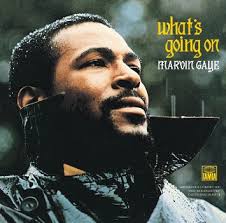
Marvin Gaye sang it the last time we rumbled nationally on the topic of civil rights. What’s Going On?
It’s more than we can see, hear, feel, or perceive. It’s not us and them. It’s not here and there. We are all in it all the time whether we want to be or not. Hello, Social Media, the untethered connectivity that weaves us together habitually and perpetually.
I am convinced the internet itself has to be at work here, although I see it as an equal plus and minus given the freedom it has already inspired in developing, previously autocratic countries. It’s not a coincidence that public violence and social media are exploding together.
Think about it. TV was the fuel of Vietnam protests and the Civil Rights Movement. We saw stuff everyday on analog television that we never saw before, and that made us mad, so we reacted. Now the internet lets us see and hear everything in realtime, it lasts a second in impact, and then a meme wipes that out with another. Nothing is edited, vicious words and horrific images fly around the globe at light speed. Regular folks like us gobble it up and talk about it like tallying statistics, while other “less regular” folks do who knows what because of it or maybe even try to make their own news for a few seconds.
Pretty soon we are on overload, frozen in inability to combat the madness.
Yes, the for-profit media is playing a role, but I don’t think it’s the big money professionals who are whipping up the frenzy as much as our addiction to social media. I don’t think any of us understands the impact the constant give-and-take-and-tackle-and-refute is having on us because we are devouring the scraps embedded in the platform simultaneously with its invention — without enough history, context, or perspective to make real sense of the role we are playing as nodes.
This is not a value judgment on our actions, mind you, it’s an observation. I am as guilty as anyone of living in the fray of exchange. I am more guilty because I am a writer and any good I try to do in getting you to think about this stuff can and will backfire and create more angst in its dismissal and rebuttal.
Sorry, I don’t have any brilliant answers. I’m a little frozen as well, a lot like you. I’m an observer and an interpreter, one voice trying to wrestle through the noise and rhetoric. I am convinced that it is not going to be a politician who leads us out of this muck. Martin Luther King wasn’t elected. He inspired his following. He paid the price, and he made a difference. We need that badly. I don’t have a clue what a Dr. King looks like in the 21st century or even if such a thing is possible anymore given our cynicism. I hope someone out there can figure out how to be one, the real deal.
Here’s one answer: Don’t let social media demoralize you. Don’t let the random ramblings of reactionary tirades spin you. Don’t be confused and don’t be manipulated by entrenched greed or opportunistic power grabs. Stay focused on ideas that resonate with your values, but listen thoughtfully when someone who looks or sounds different from you is making a compelling case for justice. Celebrate unsung heroes who are quietly making a difference. Catch someone in an act of compassion and sing their praises. The self-imposed noise around us can be divisive or unifying — it’s a rather important choice and always a choice.
Apathy and the status quo aren’t a solution. Terror can’t be a norm. We must find a way to unmake this mess. Don’t give up. Demand better. Demand sanity. Listen for the silenced voice in the room without an agenda. The better answers won’t be in obvious places. It is time to Think Different.
_____
This article originally appeared on The Good Men Project.


 CorporateIntel