Unfit: A Memo


TO: DJT, POTUS

FROM: Ken Goldstein, Author & Businessperson

RE: The Trump Legacy

SUMMARY ASSESSMENT:

You were unfit to hold the title of the executive office you won in election.

You were unfit to issue executive orders empty of study and laden with self-interest.

You were unfit to appoint cabinet officials whose job it is to challenge your opinions.

You were unfit to seek loyalty from the subordinates you bullied.

You were unfit to be seen as a role model by children in homes and classrooms.

You were unfit to talk of family values, ethical mandates, or moral imperatives.

You were unfit to order military action or report on its efficacy.

You were unfit to lay a wreath at Arlington.

You were unfit to represent our nation in state visits or international forums.

You were unfit to offer comment on science, health, or climate change.

You were unfit to speak of business norms or effective negotiation.

You were unfit to hold authority in the age of “Me Too” reform.

You were unfit to broadly attack our free press as perpetrators of fake news.

You were unfit to demand intellectual credibility when you lied consistently without regret.

You were unfit to be taken seriously as anything other than a threat to world stability and security.

You were unfit to embrace the gravitas of the immense power you commanded and the lack of humility you celebrated.

CORRECTIVE ACTION:

We will heal while you are mired for the rest of your years in shame.

We will recommit to values that embrace compassion and empathy.

We will again celebrate learning and understanding, particularly in matters of science and empirical knowledge.

We will rejoin the community of nations in saving our planet.

We will address income inequality.

We will recommit to healthcare justice.

We will acknowledge the safe haven of asylum and treat immigrants with dignity and kindness.

We will welcome the stranger.

We will not viciously insult distinguished participants in our democracy whose views reflect diversity of thought or background.

We will not embrace humiliation as a strategy to undermine those with whom we may disagree.

We will appreciate journalism and distinguish facts from dangerous manipulation.

We will reject the cynicism of pattern lying for convenience.

We will never forget the hardships we suffered under your fragile ego.

We will face the future with courage, hope, and love.

We will make our nation appropriately great again.

We will let time address your place in history.

_______________

Image: Pixabay

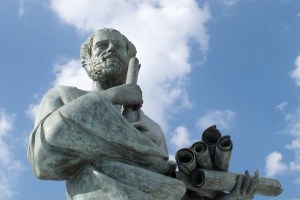
The Study of Philosophy

With all of the ways one could spend four years in college, why would anyone study philosophy?

It’s impractical.

It’s largely self-serving.

Given the vast syllabus of reading necessary to be even modestly well versed in both Eastern and Western thought, there is terribly little material one can cover in such a short amount of time.

It makes no sense to absorb oneself in such an esoteric endeavor with such thin coverage and so little quantifiable value.

It’s an expensive way to squander time, and even harder to explain to those helping pay for it.

Yet I did it, albeit about three and a half decades ago. Truth be told, I still spend unreasonable amounts of time delving into such curious texts as Kierkegaard’s Either/Or and Sartre’s Being and Nothingness.

Why?

Why Then and Why Now are two different things. Let me try to begin with a justification, and then tell you how it has helped me to be better in business, better in service, better in life.

Philosophy is mostly about reading literature, but not the fun stuff. It’s mostly non-fiction, and it’s mostly argued opinion, if not conjecture. There is some history and an occasional parable, but mostly it’s very dense expository in translation. Occasionally you get to drill into something quirky and theatrical like Beckett’s Waiting for Godot, but that’s a tangent, not core curriculum. I mostly focused on the Western canon, so that means works originally composed in Latin, Greek, German, French, and Russian. The translations are often as head-scratching as the source texts.

From the middle ages to the Renaissance in Western philosophy, there is little differentiation between theology and philosophy, so if you don’t want to read about God, this is probably not going to be your thing. You can reject faith later as is often the tradition in modern existentialism, but you have to read a lot about it to reject it comprehensively. Faith is a subject of mainstream devotion and much conflict in our culture. It’s worth learning about it, regardless of what you choose to believe.

The tension in philosophy between quantifying the physical world and attempting to explain metaphysics is persistent and unresolved. Logical argument as a discipline embraces mathematics until calculations outreach contemporary science, forcing abstraction onto problems that later generations will solve. Laws, ethics, psychological motivations, justification for conflict and its resolution, and even aesthetic judgment all prove evolutionary. What is certainty at one time is speculation in another.

Rejection, revision, and reform are the guiding constants of substantial ideas. It’s all quite messy, contradictory, and exhausting.

Philosophy for me as a young person became a passion of personal growth, self-realization, and academic inspiration. It was helpful to me that it was mostly non-emotional because I was also a student of the arts, which were emotional. I needed the balance. I needed the complementary discipline. I needed to be satisfied that hard questions were worth attempting to answer, even if those who answered them began by rejecting the last person who tried to reject them. Somehow that all seemed progressive and appealing to me.

I also managed to convince myself that the power of logic was broadly applicable in almost any field of inquiry. At the very least I would find the structure of articulating an idea useful in dramatic storytelling. While it might not have seemed obvious or even apparent to me how that could be put to use in purchasing food for consumption, I had faith I would figure it out at some point.

Ah, faith—it surfaces in the least likely of circumstances.

There was also this quintessential challenge from Socrates in Plato’s Apology:

“The unexamined life is not worth living.

Those words messed me up because I took them seriously. I even wrote and directed a short film in college specifically about the reincarnation of Socrates in modern times to make this point. It was called Apology. It was supposed to be funny. It wasn’t, but the dialogues of Plato became so ingrained in my consciousness that I had to give it a try.

Failure came early and often after that, but with much clearer reason.

That was Why Then. Let’s cut to Why Now. Yes, there actually is a timeliness to all this.

Our next presidential election is on the horizon. A lot of awful stuff has happened since our last presidential election. I’m upset. I’m more than upset. I’m baffled, befuddled, and out of sorts. Our nation may never heal. I doubt we will get over these scars in my lifetime.

Philosophy remains my comfort zone. It’s a place I go to make sense of things that do not, will not, and perhaps cannot make sense. I wrestle with this all the time. It does not immobilize me. I get things done. To my surprise, I have indeed learned how to apply logical argument to my work. I use it in storytelling and even find ways to wind ponderous floating into the plots of my novels. I also use logic to make arguments in business—in sales, in legal, in coaching. That’s become a byproduct of philosophical usefulness. The core practice is now about coming to terms with the absurd.

I’ve heard all the rhetoric about how our president got elected, about somehow appealing to a forgotten middle class. He has never acknowledged income inequality as one of the defining issues of our generation, never displayed any evidence of empathy or humility, yet he declared himself the champion of hard-working people authentically in need of a break. Those voters may have been duped, but he is an absurdity, as is their loyalty. Our embrace of ignorance and authoritarian mindlessness is absurdity. I use philosophy to live with the absurdity. As long as I am wrestling with difficult ideas, I am convinced the wrestling matters.

Where there are ideas, someday there will be solutions.

The unexamined life is not worth living.

Why are we here? Why is there consciousness?

To do this hard work.

To self-define in the name of combating the absurd.

To commit authentically to making that which is bad better.

Might there be such a thing as Applied Idealism? It’s a counterintuitive notion, difficult to contemplate certification, but spiritually tempting. Samantha Power grapples nobly with reaching for a more attainable abstract in her new book, The Education of an Idealist. It’s comforting to know we are not alone in our outlandish aspirations.

When I envision structures of evaluation, I often discover that the separation of thought and action is at best temporary, if not arbitrary. Logic does not exist outside a problem; it is embedded in the problem. Ethics aren’t distinct from rules and laws; they are expressed in the adoption of rules and laws. Pragmatism does not have to be isolated from hope. When I contemplate a model of assessment and apply it rigorously, I can be held in check by obstruction, but I can’t long be fooled.

As long as I can study, I can stay a fighter. As long as I can delve into the abstract, I will always have more stories to share with you. Once in a while I may even get you to chuckle. That’s when I know your mind is opening and perhaps ready to absorb something new.

In the end, is the study of philosophy a tragic waste of time? I guess for many that might be a fair conclusion. I’ll never see it that way. I see it as vital. I see it as necessary.

Stay tuned to this channel. There’s a lot more philosophy ahead. Considered yourself warned. Or alerted. Or ignited. Ideas are always free. What we do with them is seldom without cost.

_______________

Image: Pixabay

From Nothing: Reflections from the Road

One of the rare joys of being a writer is getting to talk about your work. One of the even rarer joys is getting to talk about the same work more than once because it is being published in a new format.

From Nothing, my third novel published by The Story Plant, allows me that joy with the paperback release on October 7, 2019.

It’s two generous bites of the apple, separated by over a year of contemplation, during which I got to hear from readers on how this story impacted their lives.

It’s a privilege to reflect on how I intended the troubled journey of Victor Selo to stir emotion, and how that was played back to me by my cherished readers. Perhaps an appropriate context for this is leaning on some of the lyrics I borrowed for inspiration and attempting to tie them back to many of the comments shared with me at readings, in reviews, and in letters sent my way.

Turn off your mind, relax, and float downstream …

That’s The Beatles, and they are everywhere in this tale. Probably the first thing people discover about Victor is that he is anything but relaxed. Life events don’t afford him that luxury. Yet readers clearly made the connection between the invisible forks in the road chosen by Victor and the intense downstream consequences or results of their own unpredictable resolutions to unseeable moments of fate.

I found that I am not alone in boiling down my life to five or six key choices that I wasn’t necessarily aware were determinations of my ultimate twists and turns until decades after those quiet tests were unmasked. I have found great moments of connection in hearing readers see the fickle outcomes of their paths in the eyes of a character who is a stranger to their circumstances while a mirror for the task of connecting their own dots.

We are stardust, we are golden …

That’s Joni Mitchell, celebrated forever by Crosby, Stills, Nash & Young. It has been hard to escape this refrain with all the milestone anniversary hoopla around Woodstock, but readers seemed to understand that nostalgia wasn’t a theme I wanted to explore. My devotion is to the miraculous artistry of the songs that stay with us, the melodies and harmonies that become attached to the events we navigate and reconstitute themselves during the many decades we interpret their significance.

Readers have joyfully acknowledged that context and relevance become inescapable in the songs that become their favorites. Think about your favorite song the first time you heard it and what was happening in your life then. Now think about the same song a decade later, and a decade after that. The song hasn’t changed, but you have. If it remains a favorite, there is a reason. Our favorite songs blossom as our lives expand. We may even have to abandon a song for a while when our history associates it with pain. Yet we can always return to a song, and it can return to us. That is the majesty of composition and the alchemy of our interactions with vibrant creative matter.

Guess it’s better to say goodbye to you …

That’s Scandal, one of the less famous bands covered in the Vegas clubs where Victor crawls his way back to self-confidence. Early in my thinking about the arc of this tour, I knew I wanted to include references to the biggest acts of our time alongside some of the voices that had equal impact on me even with fewer hits. I’ve enjoyed the engagement from readers asking me why I excerpted one song and not another, and whether I planned a sequel to fill out the playlist. I don’ think a sequel is possible, and the chorus sung here by Patty Smyth is a good reason why.

It is humbling to know that readers turned these pages to find out what Victor might learn from the corporate monsters pounding on him, and from the many misfortunes he believed he had overcome but never actually escaped. When I listen to people tell me about the past events that are holding them in place, I wonder if part of the glue that holds us together is the evasive hope that we can let go, that we can move on, that we can start again. Whether it’s business, invention, or love, the past is an obstacle we all understand. It is all too easy to suggest to another that letting go and moving on is usually our best bet, but how often do we courageously take our own advice?

If you haven’t yet had a chance to read From Nothing, I hope some of these thoughts may inspire you. If you do have occasion to pick it up in any of its releases and have your own interpretations to share, I would enjoy learning from you.

This is the soundtrack of our lives.

Opinions That Matter

Be cautious with the advice you seek. Be more cautious with the advice you offer.

I enjoy and appreciate seeking business input from all kinds of people on all kinds of topics, but lately, I’m noticing that much of what people offer is too off the cuff. I usually know a problematic opinion is coming my way when I spend several minutes framing the complexity of a souring issue, and the assessment I receive is preceded by this phrase:

“Why don’t you just…”

That warning prelude is often followed by a very simple response in a sentence or fragment encompassing very few words. Some examples of confounding suggestions:

“Why don’t you just reduce your overhead?”

“Why don’t you just hire someone else?”

“Why don’t you just find a new supplier?”

“Why don’t you just change the value proposition to your customer?”

“Why don’t you just worry less about your brand?”

All of these phrases were spoken in earnest, in a neutral tone without any particular agenda or adversarial intention. I said my thing and they said theirs.

There’s another warning sign that preceded these suggestions—the words were delivered quite quickly, the “Why” being initiated almost instantly on the period ending my lead-in sentence.

There is a word to describe this kind of give and take. It would best be described as “conversation.”

It could also be described as “bar talk.”

There’s nothing wrong with conversation or bar talk, as long as we realize that’s what it is. Banter is entertainment, not problem-solving. Words that pass the time are not thoughtful solutions. In matters of consequence, I find chit-chat troubling traveling in both directions.

The easiest response to a “Why don’t you just…” suggestion is probably the obvious: “Uh, yeah, we thought about that and ruled it out… months ago.”

A less polite response might be: “Buddy, can you take this discussion a bit more seriously?” If you are in a bar in the midst of bar talk with someone who has been drinking a few hours, be careful in selecting that response, or at least judicious in the tone you use to convey it.

The lack of thoughtfulness in idea-sharing may come down to a matter of confidence and overconfidence. I applaud you for having a quick response to my nagging torment. It is possible I missed the obvious in the fog, but when I hear my problems so easily solved, what I really hear is someone who might not have failed enough. We all fail and to some extent learn from failure, but where is the empathy in our counsel when it comes to someone else’s dilemma, where we are less likely to lose anything if we are wrong?

Some call that having skin in the game. There is nothing that will slow down your response rate quicker than putting your own money or success at risk. You may be confident in making an investment, but when it starts to flounder, overconfidence should have already left the building.

Opinions can be interesting, but when they fail to embrace consequences, they can undermine trust in relationships.

When I am sharing a problem with you, I am not simply venting. I am seeking an improved outcome. If you want to help me, try getting me to rethink the problem in areas I might be stuck. Try some of these approaches on me and you’re likely to catch me listening more intently:

“What is the data telling you about changes in circumstance?”

“When you made that choice, what were the key factors that led to your initial decision?”

“Are your competitors in the same boat, or is this unique to your company?”

“Is the situation temporary and likely to reverse with more usual market conditions, or have the market conditions fundamentally changed?”

“What other advice have you received on the topic, and how was it helpful or damaging?”

If I share a problem with you, I don’t expect you to have the solution. Unless I have gotten ridiculously lucky, you probably can’t solve my problem. Yet if we work through a set of abstracts together, it is possible you might cause me to look at the problem differently and start me on the path to identifying a new solution. Dialogue like that in times of trouble has infinitely more value than a spitball suggestion.

Ego gets in our way when we think the winning outcome of a discussion is to have the right answer. That kind of overconfidence is unrealistic at best and reckless at worst.

Our roles in listening to each other are about being helpful, about unlocking hidden secrets in our judgment and navigating safely around treacherous obstacles. Slam dunks may win bragging rights, but in my many decades on the job, I’ve never heard one that changed the landscape in real-time.

Our words have consequences. Noble advice requires discipline and credibility. If what you prefer is bar talk, let me know and I’ll tell you why I think the Dodgers lost the last two World Series. I can’t imagine anyone in Dodgers management asking my opinion on that. Why would they seek an opinion that didn’t matter?

_______________

Image: Pixabay