Your War to End

Dear Teenage America:

Your outrage is well founded. All your lives you’ve known gun violence as a norm. It was not a norm when we were in school. It should not be a norm.

This is your Vietnam. It is a corrupt war hijacked for purposefully obscured reasons. It is your war to end.

Vietnam was a war abroad challenged at home. This war is solely on our land. The names of schools suffering premeditated surprise attacks of destruction ring out like the battles of any prior global conflict:

Columbine (1999).

Virginia Tech (2007).

Sandy Hook (2012).

Parkland (2018).

Add to these battle monikers the neighborhood mass shootings near your campuses:

Aurora (2012).

San Bernardino (2015).

Orlando (2016).

Las Vegas (2017).

These don’t even include the lessor acts of weekly gun violence that no longer seem to warrant national news coverage. The assaults are frequent and terrorizing, yet somehow they have become numbing. With these numbers and the vast unpredictability of some 300 million guns in American civilian hands, no public space can be declared protected, fortified, or safe. Not schools. Not churches. Not theaters or clubs. Not government office buildings.

How is this not a war?

We hear your cry. Enough already. Make it end here. Make it end now.

Eliminate assault weapons from the American civilian landscape and you will have changed our nation for the generations to come.

You have risen with spontaneity, passion, and authenticity to oppose injustice. You can no longer tolerate the breach of trust perpetuated on the places you come in order to learn, share, trade ideas, grow, and ready yourselves for the future.

Your immediate impact and opportunity have not gone unnoticed. Here is what one writer, Emily Witt, wrote about you in The New Yorker:

By Sunday, only four days after the school shooting at Marjory Stoneman Douglas High School, in Parkland, Florida, the activist movement that emerged in its aftermath had a name (Never Again), a policy goal (stricter background checks for gun buyers), and a plan for a nationwide protest (a March for Our Lives, scheduled for March 24th). It also had a panel of luminary teens who were reminding America that the shooting was not a freak accident or a natural disaster but the result of actual human decisions.

You are moving quickly. You can’t stop. We are counting on you to create outcomes the adults of this nation have been unable to create. You are not conflicted. Your agenda is pure. Stay focused on demanding the safety and security of outcomes that make sense, and you can make this happen. You are our best hope.

We didn’t have social media in our youth. You have mastered it and know how to use it to bring change. Even in our most agitated state, we largely maintained a sense of awe and respect around Congress and the Presidency. Your trust in them has been so violated that you are not bound by the conventions of artificial deference. We may have opened the doors to opposing the restraints of conformity, but you can walk through them. Your fear of violating your own beliefs is greater than your fear of retribution from those in power who need to fall.

Do it peacefully but relentlessly. Fight with words and ideas, rallies and activism. Stand your ground in civil disobedience until there is no fight left.

We failed. You should not.

Do what no one has been able to do for a generation:  Defeat the NRA.

Knock Wayne LaPierre off his arrogant perch and discredit him as the gun lobby huckster he chose to become, not an American patriot fighting for constitutional rights.

You know this is about money, about preserving the profit in selling weapons that no other modern nation exploits. You see the reality. Expose the falsehoods.

You are right to call out the hollow shell of condolences spouted by the talking heads in empty sound bites. You are wise to know the head fake of leadership paralysis, the helplessness of those elected through bad money who are beholden not to their duty to protect our friends and families but to the special interests who rent their authority.

Thoughts and prayers in absence of action aren’t even background noise.

In a few years you will have the vote. You will no longer be teenagers and will have the same voting rights as every adult in America. You can use those votes in blocks to eliminate every cynical politician who has sold us out. Between now and then, it’s all about exposing them and pressuring them to do what is right or step down.

Organize, gather, and demand what is right, once and for all. Yes, it will take decades to clear the land of guns in the hands of people who shouldn’t have them. The sooner we begin, the fewer the decades.

You are on the side of moral right.

Assault weapons have got to go.

Background checks must be mandated.

Mental health requires more than lip service.

You can make this pointless bloodshed end.

We are counting on you.


Humbly in your debt,

The grown-ups who so terribly let you down


_______________

This article originally appeared on The Good Men Project.

Photo: Rhona Wise / AFP / Getty

The Emergent Miracle of 50

Were popular songs from 1918 played widely in 1968?

How about songs from 1928 in 1978?

Or songs from 1938 in 1988?

So how come songs from 1968 are still widely played in 2018?

Want to know why? Here are ten songs from the top of the charts in 1968, from the Billboard Hot 100 of that year:

“Hey Jude” by The Beatles (#1).

“Sunshine of Your Love” by Cream (#6).

“Mrs. Robinson” by Simon and Garfunkel (#9).

“Mony Mony” by Tommy James and the Shondells (#13).

“Dance to the Music” by Sly and the Family Stone (#20).

“Born to Be Wild” by Steppenwolf (#31).

“Jumpin’ Jack Flash” by The Rolling Stones (#50).

“Light My Fire” by Jose Feliciano (#52).

“Ain’t Nothing Like the Real Thing” by Marvin Gaye and Tammi Terrell (#57).

“I Say a Little Prayer for You” by Aretha Franklin (#93).

I don’t think I need to write any more words today. The point proves itself. We don’t need to know why. The songs speak for themselves. They sing for themselves. Our attachment is primal, mystical, enduring.

Given the fifty years between the 1960s and the 2010s, not a day goes by that we don’t celebrate the 50th anniversary of something, for many of us our own time on the earth.

Last year we celebrated the 50th anniversary of Sgt. Pepper’s Lonely Hearts Club Band. This year it’s The White Album.

The Rolling Stones already have a 50 and Counting tour on their resume. Last year Fleetwood Mac hit 50 and headlined The Classic West and East stadium tours alongside iconic peers the Eagles, Doobie Brothers, Steely Dan, Journey, and Earth, Wind, & Fire.

Paul McCartney will likely tour until he can no longer stand on the stage. Ringo is still regularly on the road with his All-Starr Band.  You’ll remember that The Beatles led The British Invasion shortly after the Kennedy assassination. Yes, “all those years ago!”

So what is the endurance factor of what we now call classic rock? Is it simply that the baby boomers who shepherded these bands in youthful acts of defiance are living a lot longer? There might be something to that, but it doesn’t explain why so many millennials are subscribing to the same Spotify channels as their parents.

Certainly improvements in studio and consumer technology have made it easier to preserve and share high-quality recordings of later eras, but the conduit of access is a mechanical bridge, not an emotional path to replay. Variety shows on television in the 1960s and 1970s harkened back to songs of prior times, but not with the same urgency, devotion, or pervasiveness. The sheer volume of fifty-year-old songs populating playlists across age groups today tells us that “something’s happening here.”

Walk into a downtown bar or hotel lounge and you might be as likely to hear a cover band playing “Suzie Q” (Creedence Clearwater Revival, #97 in 1968) as you are anything from Bruno Mars or Beyoncé. I’m not suggesting every roadhouse on the highway basks in nostalgia, but when you walk into a live club and hear “Hello, I Love You” (The Doors, #14 in 1968) little about it seems dated or out of place. Of course there is an entire segment of the population who couldn’t care less about fifty-year-old relics, but the fans who forever revel in these not-so-ancient hits will stay up all night on the dance floor as long as the song list rolls.

It’s the music. It was good fifty years ago and it’s good today. For many who loved the music when it first hit the airways, this is the soundtrack of our lives. We love it, we love the memories that come with it, we love the way it makes us feel. We are silly enough to believe it keeps us young, and we want to share the beat with anyone who can’t sit still once the guitar licks begin pouring from the stage.

It doesn’t matter if that stage is a tiny corner platform in a pizza joint or a grand proscenium dragged into Dodger Stadium. We love the famous original acts when they are on the road, but we also love the young house bands who take the time to learn to play the hits well and then sneak in an original song of their own.

We love the occasional current star who braves an interpretation of a long-ago track (Dylan’s “All Along the Watchtower” covered by Devlin with Ed Sheeran is mighty powerful material). We love the new beside the old. We feel those classic rock tunes as part of our being, whether live, broadcast, streamed, satellite transmitted, or silently resonant in our minds.

Surely there is context to consider in a half-century of resilience, the voices of youth and diversity fighting for equal footing with established authority in the latter half of the twentieth century. Yet context doesn’t make a pop song last. Composition does. Performance does. Texture does. Maybe artists under contract just got better at the whole Tin Pan Alley game. Maybe they started to care as much about their legacy as their commercial acumen. Maybe connecting the generations came to mean more to them than the hunger for flowing cash. Well, maybe.

I’ve been thinking and writing about these songs most of my life, linking them to stories and plays, stitching their lyrics into the fabric of modern and historical philosophy. I’m never quite satisfied with the words I choose to explain why this music matters to me as much as it does. I suppose the songs are an organic whole without explanation. As so many of the young artists declared of their work when it was created, it was never meant to be analyzed. The songs were meant to be felt.

That doesn’t adequately address why this half-century is different, and why people like me believe so many of these songs are not likely to evaporate from the earth when we are no longer here to listen to them. The magic has emerged without anyone showing how the trick is done. That’s probably because the magicians don’t know how they did the trick.

It’s probably better that way. It keeps things authentic.

Keep listening. Keep embracing the beat. Feel young and stay young. You know I will—with any luck for another fifty years.


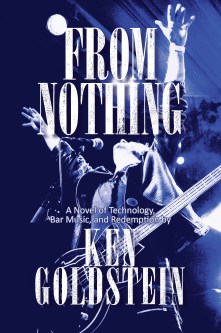
My Third Book: From Nothing

Writers by affliction are an idiosyncratic lot. Other than a willingness to spend an enormous amount of time alone and a preternatural love of language construction, we don’t have all that much in common. We write about different things, from the historic lives of dead people to the ponderous calculations of romance that could never live up to its description. Some of us have enviable discipline in reserving hours for our craft day in and day out. Others are beasts of procrastination who binge occasionally in overnight typing sessions while devoting daylight hours to cleaning out pencil-stuffed drawers and ceiling fan lint. An author on tour may enjoy speaking publicly, while another cowers at facing readership in the form of human flesh.

We may share a passion for literary achievement, but we are in few ways the same. One bit of sameness has occurred to me exactly three times, each when I’ve finished one of my novels. When the final copy-edit has put the book to bed and readied it for your consumption, I’ve invariably asked myself the same simple question:

“Why did I do that?”

The existential query is unavoidable. Why does a writer remain dedicated to the challenge of completing a book? I am guessing I am not alone in that meditation. It is impossible to think that most of my colleagues and the legions of our predecessors have not asked themselves the same thing. It’s a heck of an endeavor, for most not particularly lucrative. It disarms the writer to a battalion of transparent critics, and the incomplete satisfaction is resolved only in the reborn commitment to attempt it yet again.

So I ask you, as you are likely to ask me: Why bother?

To say that we are without choice in the matter may sound glib, but I am afraid that is the only reasonable answer I can muster. We do it because we can’t not do it. We do it because there is something inside of us that needs to ferment and emerge, to escape the confines of a sole mind and become part of a shared consciousness. If we could avoid or redirect this need many of us would, but we cannot, and so we sit, ruminate, draft, and revise. Somehow the new book becomes complete and we are ready to share it, with the best of intentions. For me, happily that time is now, and I hope the new work resonates with some of you the way its voice called out to me.

I am glad it is done. I am honored to share it with you.

It has been a fragile three years in the making. It was delayed partly by life’s interruptions and partly by my need to pick each word at least a dozen times. I may not have the discipline to write in predetermined sections of each day, but I do have the discipline to embrace each of my sentences before I toss them to you. It’s nerve-wracking. It’s time-consuming. It’s exhausting. I know of no other way to do it with pride.

From Nothing. That’s the title, and sort of where it came from — out of nowhere, yet grounded in a collection of moments I have known or expanded in scope. Should you choose to read it, you’ll discover in more detail why I called it that.

It’s the story of why a life becomes a story, how that story is guided concretely and through alchemy, and why some stories are better than others, even if they didn’t set out to be something more than assembled emotions wrapped around an evocative philosophy.

Weird stuff, huh? The problem remains that it’s difficult for an originator to talk about the plot and characters in a book without giving away any spoilers or making light of one’s own intentions. Allow me instead to dance around a few of the book’s themes.

Technology: Yes, it’s me again, come to take you inside the empirical land where I earn most of my living. This is the universe of creative destruction, where bad things have to happen to otherwise good people for progress to have its way with all of us. At the same time, bad people have a way of making these spoils the treasury of their own private club, and the best most of us can hope to do is stay out of the way of the greedy stampede when it targets our cubicle. Change comes with ugly intervention and nasty byproducts. We then quickly abandon the carnage, cash in whatever chips are left on the table, and reinvent ourselves in our evolving world.

Bar Music: I hope you like piercing lyrics and backbeat as much as I do. Sound is at the heart of this novel. We’re still digesting the baby boom, the soundtrack of our lives, the guitar-hero worship that came and went as fast as any other craze but lingers in the possibility of ephemeral ambition. I spend a lot of time thinking about music, and in this tale I devote a lot of pages to unwrapping composition. The songs connect the dots, even when the dots don’t want to be connected and would rather fade into the Milky Way. I have my favorites and they may not be yours, but our immersion in star-quality memories holds us together. That makes for songs that matter.

Redemption: This book has been a strangely spiritual journey for me, more unmasking than I have attempted previously and certainly more uncomfortable than I intended. The protagonist, Victor Selo, has a troubled life that he finds ways to overcome on the surface, yet he can neither come to terms with success nor adequately interpret loss. He makes a lot of mistakes, stumbles through a litany of lifetime accidents, and where he learns from some misdoings, the ultimate assessment of moral right and material wrong forever confounds and eludes him. Theology and philosophy are a tight couplet in our curious canon. I know I have done no better a job of answering the unanswerable than any before me, but perhaps I can open a different door for you to the unquenchable struggle.

So there you have it, a new book is born and with my deepest hope on its way to your hearts. Reserve a copy, read it when time allows, and let me know where we are and aren’t on the same page. With any luck I’ll be back again in a few years with another adventurous yarn, asking myself why I once again committed to the improbable. Much of that will always be up to you, more than you will likely ever know.

>> <<

Publication date is June 12, 2018. If you would like to review an advance reading copy please contact my publisher, The Story Plant, or via email: thestoryplant@thestoryplant.com.

>> <<

A Brief Excerpt from Track 2

When Victor awoke it was dark. He looked around and the parking lot was filled. He recognized a third of the cars from the office parking lot. Full Stack Max’s mustard yellow minivan, dents on three sides. Code Machine Clarence’s jacked up Escalade with the shotgun bucket seat usually toting that new kid, QA Juan. Admin Darcy’s prized lime green Prius gleaming under security lights as if she had driven through the car wash on the way there. The familiarity was comforting. At least some of them had come. He was head to toe in perspiration but relieved in the dashboard’s digital transmission that it was after 7:30. People inside would be singing. There would be friendly faces. Inside Providence it would be safe.

Victor had slept in the car almost six hours. That was odd. He really was drained, more than he had thought. As he mustered the courage to open the car door, a tap came on the half-open window. The face beyond the glass was unfamiliar to him.

“You okay?” It was the voice of a man perhaps a decade older than him. Victor looked at the stranger, his plain grey T-shirt, blue-black lumberjack flannel overshirt, vintage khakis, stubble beard, untrimmed mustache and mutton chops. It was a programmer look, but Victor knew all the programmers at Global Harmonics and they were the only programmers who came to Providence. Who was this guy?

“I’m fine,” replied Victor, not yet finding the energy to move.

“Come on inside, you look like you could use a drink,” said Mean Master Muttonchops.

“Yeah, I’m coming. Do I know you?”

“You don’t. My name is Thomas Katem. I’m an investment banker.” He handed Victor his business card through the open window slot. “You’re Victor Selo, right?”

Victor eyed the card for familiarity and put it in his damp chest pocket. “Have we met before?”

“It’s possible, the circles we travel overlap. Unfortunately your meeting at Global Harmonics was over before I got there. Late to the slaughter, the way I heard it.”

“Your loss, we put on a good show. You don’t dress like an investment banker.”

“It’s afterhours. I carry a change in the car. Doesn’t everyone around here?”

“You think I need to clean up before we go in?”

“Nah, come on, I’ll buy you a drink. I’ll bet you have friends inside.”

“We’ll find out.” Victor opened the door and got out of the car. Strangely, the asphalt felt comforting under his feet.

As Victor walked through the doors beside Katem, Providence was in full swing. In all the day’s drama, he had forgotten this was Friday, Live Band Karaoke Night. A warm fall weekend was getting under way. Tonight people wouldn’t sing with a machine, they would front a cover band. It was what made Fridays special, particularly for anyone who had abandoned a long-ago dream.

At the mic was possibly the worst Elvis impersonator of all time, a grey ponytailer doing his best to belt out “Viva Las Vegas” with more stage drama than musicality. He wasn’t an awful singer, he could work his way through a tune with credible intonation. He just didn’t sound anything like the King. He didn’t look like him either, beyond the tattered white sequined jumpsuit. Elvis recognized Victor from across the room and raised the mic stand to him as he entered. Victor waved briefly, then crossed toward the bar with Katem a half step behind. Elvis found the segue to a low pitch baritone interpretation of “Love Me Tender.”

“You know Elvis?” asked Katem.

“His name is Johnny Olano. He lives for this. Friday is his day. Three Elvis tunes, five shots of tequila, and he never goes home alone.”

“He must be seventy, maybe seventy-five,” observed Katem. “How does he pull off that trick?”

“Welcome to Providence.” Victor motioned the bartender with two fingers and was handed a pair of Coronas. Few of his colleagues in the bar were making eye contact with him. A few nodded slightly his way, but his usual warm embrace wasn’t to be found.

>> <<

Proactive Means Now

For many of us the new year begins with the best of intentions. It’s not so much that we delude ourselves in committing to resolutions we will never pursue as it is the open calendar before us filled with possibility and promise. What can we do with all of those days between now and the end of the year? The choices are as endless as the opportunities.

Almost immediately we start falling behind in our daily tasks. Days into the new year we are already playing catch up. Why can’t we get ahead of our task lists and beat the daily grind into submission? Why can’t we focus on projects and prospects that matter? Why do we spend endless hours on stuff but still waste so much time?

Maybe it’s just too easy to kick the can.

Difficult challenges don’t sort out themselves. They have to be wrangled and wrestled. That’s the kind of intellectual and emotional commitment that takes the force of will to muster. If you want to achieve meaningful progress, you have to get ahead of your calendar, not let it consume you.

Want that glorious promotion at work? It’s not going to find you.

Want to make a significant dent in your competition? They aren’t going on vacation to give you breathing room to pounce.

Want to learn a new skill, a new language, accelerate your ability in an artistic discipline, or finally figure out why your department is going sideways instead of upward? Those are all really difficult things to do that won’t take place between Facebook posts or tweets.

If you want to stop drowning in your dizziness, learn to think proactively. Set your sights on a potential outcome and work your way back to the present. Envision a roadmap and establish a set of checkpoints that will lead you to a better outcome. Own the outcome by owning the process.

Most important, you need to do it now. Not in a month. Not in a week. Not tomorrow. Not in an hour. Now means now.

Procrastination will cost you your dreams. If you have dreams, you need to act on them. Even if you don’t have dreams, and you should, if you have stuff to do that will make you more successful and personally fulfilled, you need to do it immediately.

Not after breakfast. Not after lunch. Not at the day’s end when you are exhausted, pissed off, and want to climb under a blanket. Do it now.

I don’t care if you’re busy. We’re all busy. If you are putting off the stuff that matters for busywork, knock it off. Do the hard stuff first. Busywork is a punt. People do busywork to look busy, often at the expense of making a difference.

What does it mean to be proactive? It means not waiting to be reactive.

Reactive is a deflating death march of punch lists.

Proactive is an uplifting rallying cry of planning.

Reactive is missing a sales forecast and formulating a remedy to catch up on lost business.

Proactive is outpacing a sales forecast by building customer loyalty through surprising and delighting.

Reactive is compiling a list of customer complaints bludgeoning customer service.

Proactive is regular ride-along listening sessions in customer service to turn suggestions and trends into repeatable wins.

Reactive is lowering prices to steal market share with thin margin transactions from customers who will easily abandon you to save pennies.

Proactive is designing a brand that is equal parts price, service, and quality so that small fluctuations in price become ignorable noise to your best customers.

How do you stop being helplessly reactive? You have to commit to the habits of being a self-starter. You’ll know you’re a self-starter when your boss asks a question in a meeting and everyone looks at you to serve up a suggestion fearlessly.

Ready to be a self-starter?

You need to move faster. If you thought something was going to take a week, do it in a day. Force yourself to accelerate.

You need to act with higher quality. If you thought good enough was going to please a customer, you’re wrong. Exceed their expectations.

You need to utilize fewer resources, not more. Use every tool that is available to you and don’t worry about what you don’t have.

The formula for reinvention is better, faster, cheaper. Not one, not two, not two and a half, all three.

What does being proactive mean?

Proactive means to take on a task before someone asks you to do it. It means to finish the task with excellence before someone even knows you started it.

Proactive means knocking the stuff off your to-do list that will have an impact, not the maintenance stuff that no one will notice.

Proactive means knowing that email is a tool, not a task. Unless you work in customer service, no senior executive is going to promote you because you answered all your email.

Proactive means plan for a crisis by avoiding it. If you’re dealing with a surprise crisis, you’re already reactive. Anticipate the crisis. Write down your response to the crisis before it happens. Scenario plan. Have notebooks filled with scenario plans.

Proactive means investing in quality assurance testing at five cents on the dollar instead of a product recall at 200 cents on the dollar.

There aren’t that many commonalities in the success stories you may admire, but one that holds true is urgency. Setting priorities, making time for abstract planning before reporting memos consume you, carving out blocks of time to schedule the milestones of your challenge — that’s how big things in your life will happen.

No outsider will hold you to the promises you make to yourself. You have to decide you want to be proactive. Then you have to remain consistently proactive.

Someone has to make change happen. Why not you? Your future outcome is at this moment in the making. Think about how you could be feeling this time next year if only you can get ahead of your day.

Being proactive is more than a choice. Being proactive is finding the freedom to make this year a year like no other.

____________

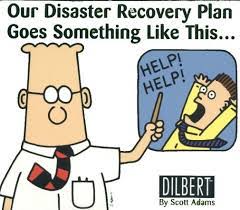
Image: Dilbert.com ©Scott Adams