The Quality Chronicles

BugThe recent “failed IPO” of BATS has to be a cautionary tale. This wasn’t just a deal that didn’t price or trade according to plan. A software bug caused it to be withdrawn. You don’t hear that one too often.

A bug killed an IPO?

There is no argument that we live in a world of staggering speed, where competitors race to meet customer needs and time to market matters. Innovation is always factored by the ticking click, who gets the jump and the competitive advantage, when a cost center becomes a profit center. Information compounds on our desktops, the team with analysis paralysis most often loses to the nimble risk takers—but all this means is that in product development, the role of Quality Assurance (QA) has never been more critical.

I have often heard the mantra from development teams: “Better, Faster, Cheaper—we can give you any two and a half.” Believe me, I understand trade-offs. All product development is tempered by tough decisions that incorporate a series of smart and well-balanced quid pro quos. You want to cut the budget, give us more time or expect fewer features. You want to tighten the schedule, give us more capital or reduce the scope of benefits. You want an industry defining product, show us the money or don’t ask for a date.

Surely these threads have become clichés, and as such, they are not without some underlying truth. There are even schools of thought that proclaim speed over accuracy is the game-winning formula, entire companies built on this premise, hugely successful in their own right. Yet when the Decision Maker, whoever that is, makes the call to greenlight a software or product release, another question comes to mind: Is the call transparent or opaque? Said another way, are the risks inherent in the release from staging to live known to the Decision Maker, or is that person flying blind?

If the release is going live with known issues, that becomes a business decision with acknowledged acceptable risk. If a showstopper issue exists but is unknown to anyone, well, I don’t think I have ever seen that case in a going concern. If the release is going live with issues known to others but not the Decision Maker, that is a dysfunctional process, possibly the beginning of the end.

Here is the way I like to think about quality in product development: Quality Assurance is a Process, not a Department.

Like so many of the great lessons I have co-opted in this blog, this first became clear to me in hard-won experience with the magnificent QA Directors with whom I have worked over the years (several of whom reviewed this post in draft prior to publication), and second in Jim McCarthy’s brilliant book Dynamics of Software Development first published in 1995 and still a must read for any of my teams—non-tech even more than tech staff. The most critical constant of which I am aware in delivering great products to market consistently is for Quality to be owned by everyone involved in innovation—from designers to developers to marketers to feedback from end-users.

Of course every great development company will have a final step in the process called Quality Control or Quality Assurance, but it is my sense that the QA formal group is there to be the standard-bearer for Quality and rally the company around it, putting a final go or no-go procedure in place before the world gets its hands on a product, but not accepting proxy status for an otherwise poor process. A QA department is not a dumping ground, not a remote server where code is parked as a step function or convenient checkpoint in a perfunctory release approval, not a cynical target of blame. QA is the proxy for the customer, not management, and as such must have a voice that is shared throughout a company. If a Decision Maker chooses not to listen to either the process or a warning from fully objective and independent QA stewards, you get what you get.

I have always been enamored with QA teams, for their passion, for what they teach me, for how much they care about excellence. When QA is wound into the culture of a company, it is often because of the mutual and shared respect an organization has for the value of Quality as an intrinsic good that will most likely yield extrinsic rewards, but carries reward for itself in the form of realized creativity and pride. It is very hard to fake a love of Quality, and this applies to much more than software. Quality is a path to premium brands cautionary tale and premium prices in a landscape where speed and disseminated knowledge can commoditize just about anything if you let it. Quality is won when it is broadly embraced as a shared value, and then championed by a high energy team that inspires its adoption at the highest levels of management and all through the ranks. If top management does not buy this, Quality is doomed.

If top management at BATS did not know about the bug in their system—a software platform for trading equities like their own on IPO day and beyond —they did not do the hard work that is expected of them and now accept the business consequences. The downside illustrated in this real world example of an incomplete process is about as clear as it can be. To ignore or be ignorant of a showstopper in one’s own product is a reflection of a process that needs to be re-engineered. When you’re working with world-class engineers, it is much easier and far more fruitful to make sure the process is engineered correctly before the products go through it. The material cost of discovering a bug early in development is a tiny fraction of what it can cost you in the hands of the public. Give your engineers a voice and they will save you every time.

Listen to your QA stewards. If you built the right team, they are your first line of offense and your last line of defense. They know of what you speak.

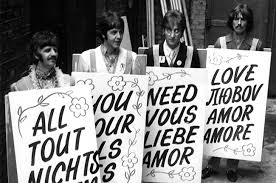
Like Is Not Enough

AllYouNeedAll You Need Is Love” — Lennon/McCartney, The Beatles

Facebook over the past several years has done the unexpected in creating exponentially vast usage of the noun/verb Like. This has been fun for those of us who indulge in broadly stamping our personal approvals on anything from a friend’s single syllable utterance to the launch of a new wave of flavored taco shells. Some argue the Like button has diluted the very significance it is meant to convey by spawning misguided promotions to increase click tallies, while others maintain it is the metaphysical fuel that rocketed Facebook into the stratosphere as the place advertisers have to be to mine explicit commendations. Regardless of the ultimate conviction it conveys, Like is an ultra easy way to express a soft high-five in public without any substantive commitment, and if you change your mind, you can Unlike something just as quickly.

While the full measure in a Like action remains on the light side of hand-waving, for marketers it can nonetheless provide an easy litmus test to note directionally if their intended messages are registering at all. Registering is not necessarily resonating, but it is a decent stride across the starting line. Getting someone to Like your brand for the long haul—on Facebook or along the purchase funnel—will never be a small task, but my sense is there is one constant in consistent success: For star marketers to get a Like, they must first Love.

I wrote about a similar topic not long ago in a post about eating your own dog food, where I suggested if you don’t use your own products, how could you expect anyone else to pay you for the privilege. This is a tangent to that thread, where of late I have observed entire marketing teams dogged by cynicism. They are charged with brand evangelism, but in their own minds, they are either not engaged in the true value proposition of their products and services or they have given up on their own futures, proclaiming themselves victims of an ice age they believe is imminent and unavoidable. I believe we often refer to this malady as the self-fulfilling prophecy.

Recently in a meeting with a team of executives who had invited me to help them with some seismic strategic planning issues, I noticed a through line where all of the many accomplished marketing executives in the room found a way to get on each other’s bandwagon, lamenting that their company’s future was not bright. I thought this was simply a down cycle in the conversation which is normal in brainstorming, but the negative energy was a contagion. Here we were, charged with helping reinvent the company, a blue sky path to infusing new levels of Like into brands that were already broadly embraced, but no consensus was emerging on how past Like could become new Like, or dare I say it, Love. As an outsider, I saw that their brands were certainly challenged in the market place, they had seen some decline, but they had in no way collapsed. Yet here the brand stewards being paid quite well for their presumed passion had convinced themselves their brands were dying—a sickness that was terminal and could not be reversed. Where I really got myself in trouble was asking the team how many of them still loved these brands. The rest of the assignment was awfully quiet.

If a brand steward does not start the day in Love with a brand, by the time that apathy translates and diffuses itself into a campaign of communication tactics, Like is not going to be there with the public. Better the executives hand in the baton and give the assignment to someone else who might find a way to convince themselves there is light ahead, yet throwing yourself on the sword for lack of conviction is not a road well-traveled in business. Instead it is likely that these brands will die, even though they could fight on, because no one behind them has the Love to fight. I wonder if the CEOs at the top of these companies know their chief lieutenants have already surrendered to creative destruction rather than rallied to next generation rebirth. Even if the beaten executives are right and the brand is destined to die, shouldn’t someone else who doesn’t believe that be given the chance to prove otherwise—to try with honest enthusiasm to wrestle imagination and go a different route that might just work despite the naysayers? Perhaps some of the CEOs are biding time as well, but my sense is most of those wouldn’t last too long in a board meeting. Love has to be real, and it has to start at the top.

Can someone in a marketing job walk away nobly from a lack of Love? Sometimes I think it is necessary and essential. A very successful friend recalled for me recently how early in her career she was working for a multi-national corporation on a vastly successful billion dollar brand that had of late stalled in its growth, years after it had gone wild and saturated market share. The team brainstormed and came to the conclusion that to reignite growth, marketing programs would have to implicitly suggest that the brand being marketed met the needs of a more healthful alternative already for sale, and that by shifting use from the believed healthful product to the growing brand, nothing would be lost and everything would be gained. Mind you, nothing illegal was being plotted and the campaign would by default have to meet truth in advertising laws, but the very idea that the only way to grow the brand was to pull attention from a more healthy alternative did not sit well with my friend. She understood the strategy, but she fell out of Love, and even out of Like. She did the right thing and left the company. Today she runs her own company and I can tell you this—she Loves her brand.

Remember this: a brand is not a logo or a trademark or a pithy name—a brand is a promise. You can stop loving a product line because it needs to change, indeed loving a product line too much can be a trap, but products are directed to evolve because loving the brand is a driving force. A brand is a set of choices that begins and ends with meeting customer needs. The branding process begins with ideation, continues through product development, then translates into communication (these days bidirectional feedback loops, like we see in social media, more than soap box broadcasting) and ultimately does or doesn’t result in customer loyalty. When you make a promise to your customers, you are obliged to make good on that promise. My sense is for that to happen repeatedly and predictably, if you are part of the creative cycle, you must Love, Love, Love your brands. If you don’t, no one else will.

If for some chronic reason you’re convinced a brand truly is at end of life, the right thing to do is protect working capital and advocate to take it out of commission mercifully. It is wrong to shovel high-priced coal into an engine you believe will no longer run because you’re pretending to believe a directive handed down that you knowingly disavow. Don’t try to fake it! If you don’t Love your brand, go find another that you can Love. If you are biding your time waiting to be found out, don’t worry, you will be found out. Your customers will do that for you. You need their Like. They deserve your Love.

Love, Love, Love.

Beware the Idle Question

In his absurdist play Rosencrantz and Guildenstern are Dead, playwright Tom Stoppard invents any number of ways for the courtiers to pass the time while Hamlet comes and goes:

Rosencrantz: Do you want to play questions?
Guildenstern: How do you play that?
Rosencrantz: You have to ask a question.
Guildenstern: Statement. One – Love.
Rosencrantz: Cheating.
Guildenstern: How?
Rosencrantz: I haven’t started yet.
Guildenstern: Statement. Two – Love.
Rosencrantz: Are you counting that?
Guildenstern: What?
Rosencrantz: Are you counting that?
Guildenstern: Foul. No repetition. Three – Love and game.
Rosencrantz: I’m not going to play if you’re going to be like that.

Our modest heroes Rosencrantz and Guildenstern are not involved in serious inquiry.  They are burning minutes off the clock.  Their fate has already been cast, and although they don’t know that, they are reasonably certain there is not much else they can contribute because they are but secondary players in Hamlet’s drama, even in a new play named after them.  Good questions, bad questions, neither really matter, and statements result in a lost point.

Is there a business corollary here?  I think so.

When anyone is asked what appears to be a Big Question, it is often a good idea to decipher if the question is real, or if the person asking it is just passing time.  When top management in a company asks for “real change,” is the voice authentic, or simply read from a prepared script for the sake of appearances?  It is never easy to tell, tone only gets you so far.  Knowing the difference may determine whether your full commitment is warranted and can actually make a difference when applied.

Questioning the status quo is the stuff of innovation, the catalyst to progress.  A good question can be provocative, inspirational, challenging, a thought starter — but for a question to have the potential to cause impact, it has to be sincere, honest, clearly well-intentioned.  Not enough questions are like that.  Many only serve to feign engagement.  You’ve been in that meeting, right?  Me, too.

Some questions become legend.  A colleague of mine who worked for a Fortune 100 corporation recalled how shortly after the first dot bomb bubble the CEO turned to him in a strategic planning meeting and said: “eBay, why didn’t you think of that?”  He wasn’t sure if it was a joke.   It wasn’t.  A few months later he was gone.  It was his fault the company had missed the shift to digital.  It had to be someone’s fault, right?

I still gasp when I think about that.

If the top people in your company are asking how they can have all the benefits of the New World without upsetting too much structured order from the Old World, start provisioning the bomb shelters.  If your company is asking what are its core values and how its value propositions can become relevant to new generations of customers, transformation has begun.

Recently in response to my post Creativity and Courage, a friend called me to brainstorm how to more aggressively nudge his company into the 21st Century.  He had been hired by that company’s CEO as a change agent, with plenty of vim and vigor to come in and make change happen.  He had been asked the multi-billion dollar question: What do we have to do right now to reinvent our business before we are toast?

It had been almost a year since that curious question was posed.  Lots of ideas had been floated.  Many follow-up questions had been asked, most of them repeatedly.  To date, no substantive change had occurred.  Blame was starting to appear on the whiteboard where new ideas had been wiped clean to keep the peace — potentially good but uncomfortable answers to the hardest questions were emerging, yet the status quo had largely triumphed without consensus to advance.  It was an anxious peace, which led my friend to believe the question he had been asked was more a checklist item than a true strategic mandate.  Indeed, a perfunctory question is unlikely to elicit an eye-opening answer.  Those charged with asking questions usually get what they want, one way or another.

The second example of questioning is the opposite of the eBay punchline.  The first CEO was angry that no change had happened and needed someone to skewer.  The second CEO said he wanted change, but not too much, there was no reason to upset people unnecessarily and disrupt workflow with festering speculation.  Rumor mills can be ghastly impediments to productivity, particularly when they transmit substance.

Because questions are constructed of words, they can only get us so far.  Your real gauge has to be the reaction to your proposed answers, actions of consequence and commitment of resources.   If a request to bring change is heartfelt, a door has opened and you have the incredible opportunity to close it behind you.  On the other side of that door is risk, and you have no choice but to take it.  You can win or lose the whole ballpark, but at least you are in the game.  If the request to bring change is just passing time, you really don’t need to answer it, better to avoid it entirely to buy yourself as much time as you can — Powerpoint can be helpful to tread water while your wheels spin.  What you really need to do is find someone who asks more honest questions.

Playing at questions can be a pastime or serious business.  When asking, do your best to understand the difference.  When asked, be ready to know the difference.

Shall we play?

Do I Have To Eat It?

A recent opinion piece in the Wall Street Journal by Jesse Kornbluth, a onetime devoted and inspired employee of America Online, pondered the question of “How AOL—aka Facebook 1.0—Blew Its Lead.” Kornbluth does a good job acknowledging the irony of overlap between the fallen angel and the rising star—the staggering power of community, the seduction of the walled garden, the financial reward of vast momentum—but more importantly, he gets his head around what he believes to be the downward turning point for his former employer. It was not so much the bursting of the bubble, nor even the distractions of failed promise in the historic merger with Time Warner. As a product person, Kornbluth saw the blood start to flow when those who loved product began to be overruled by those who lived by argument. Those arguments were not the healthy tension of developers debating the relative merits of features and benefits. The conflict shifted to initiatives in product strategy that were driven by individuals who had assured themselves their creative ideas would lead to success, even though they did not much have time to embrace and use AOL they way its creators had previously.

When the consultants arrived, strategy was not driven by those who embraced the product and its audience; strategy became a set of theoretical suppositions evidenced by the competitive landscape. There were only two problems: 1) the consultants were no more obsessively using competitive products than those of AOL; and 2) the competitive landscape was crumbling because it was just as inorganic in construct, itself no more than the conclusions of observation. Using a product is not trying it once, it is using it every day and using competitive products to fully internalize how bad becomes good and good becomes great. Data, analysis, reconnaissance, and interpretation are all essential in responding to hyper growth, but if you aren’t eating your own dog food, all bets are off.

Yes, you must Eat Your Own Dog Food.

Alpo Lorne GreeneSome people trace this edict to the television commercials for Alpo in the 1970s and 1980s where Lorne Greene made a point of showing us that he fed the very product he endorsed to his own dogs. No, he didn’t actually eat it himself, but the way he looked at it, you could tell he might be considering it. His dogs were an extension of himself. That love made it clear he would only feed them a product he trusted, and he would only endorse it publicly because he trusted it. I am not saying he was right. I am just noting than his conviction was visceral.

In the software spectrum, the phrase “Eating Our Own Dog Food” is more commonly traced to a 1988 memo from then Microsoft Manager Paul Maritz, encouraging his team to obsess over use of Microsoft’s products. His basic tenet was that to win a category and perfect your work, you had to be the consumer. The memo spread widely throughout Microsoft, over the gate and through the industry. It resonated with many of us, and began being accompanied by such observations as, “If you won’t use the software when it’s free, why should anyone pay you for it?”

Soon after came the dawn of the Dot-com age in the mid 1990s, quickly followed by the implosion of Web 1.0 known as the Dot-bomb era circa 2000. Interesting to note, a few of the companies that survived the turmoil and went onto become the great first generation brands of the Internet like Amazon and eBay made it a point to eat their own dogfood. While third-party consultants poured into corporations to sort out their tanking business models and rationalize their value propositions, far too many of those consultants were busy writing decks and compiling spread sheets. When you asked them what online products and services they loved, they often couldn’t respond, because they were too overwhelmed by time commitments to use the products they would evaluate, let alone love them. For those who had already been through a product development cycle or two, the writing was on the whiteboard.

The absolute necessity of eating your own dog food is anything but limited to software. If you design cars for a living and are not planning to drive your own creation when it comes off the line, how can you attend to every nuance and detail that sets apart your vehicle from the vast number of choices already available for sale? If your team designs a new line of workplace apparel intended to be marketed as more comfortable, durable, and stylish than everything else already hanging on the rack, will you not be planning to wear what you have produced proudly at least a few days each week out of pure joy? When you have the privilege to be creative and innovative in your occupation, you are quickly humbled by the fact that an idea for a new product or service however inspired and brilliant is in fact almost worthless. Customers seldom buy or become loyal to the ideas you pitch. Until a concept is executed expertly and embraced by those who will champion it, it really is just a first draft—perhaps filled with promise, but nonetheless in need of refinement, iteration, and polish. There is a long and winding road from pitch to product, and all along the way details have to be vetted first by those who most love the work, the creators.

Apple long ago coined this notion as Evangelism, and no Apple Evangelist in his or her right mind would try to get you excited about a product they weren’t already using themselves. To be fair, Evangelism is a beginning, not an end, after which customer feedback must become part of the process, but if our goal in social marketing is to engage our community in a supportive and seamless dialogue, then we owe it to them to initiate the dialogue with honesty, commitment, and passion. There will always be pain to share in early releases, but the more defects we extract ahead of release because we already know they are there, the more our customers can trust us to take them seriously in allowing our own needs to be met before we presume to address theirs.

Design is not cynical; its true elegance is purely self-reflective because form and function are easily evaluated in day-to-day use. If something is good enough for your dog, it might be good enough for someone else’s dog. Now imagine if you ensured it was good enough for you before you topped off the can. That would be some seriously tasty dog food. Go on, take a byte.