Rage On

It’s a strange way to end a strange year.

About a decade ago I wrote a book about an internet uprising in support of a pair of unlikely criminals who kidnapped a pair of executives after accidentally killing a businessperson during the abduction. In hindsight, it’s a bit eerie given current events.

The book is called This Is Rage. It’s a novel of outlandish observations and counterintuitive character behavior I assembled from a career in technology and media. Much of the underlying ethos had been eating at me in repeated cycles. My goal was to paint in the extreme, to bridge the dying days of old world communication with the uncharted future of a world without filters. It was meant to be outrageous, plausible only at the fringes, a look into events that possibly could happen, but held resonance more as a cautionary tale than a slice of life.

I knew the premise was plausible because I’ve been a student of the commercial internet since it entered our lives. I watched it bring out the worst in people, particularly behind anonymity, but also the ways uncontainable sentiment could be exploited by businesses, politicians, and other special interests. I knew the events could spin out beyond the control of those seeding them, while a clever few would convince themselves they could harness the battered convictions of those who felt forgotten.

I meant it as satire in the spirit of Tom Wolfe. In the years that followed, the line between satire and reality began to blur. Then one day, it seemed to me the line was gone.

Skits on Saturday Night Live and news headlines often became indistinguishable. Something called fake news became identified as unreliable information emerging from unconfirmed sources that took on snowball effects with implied credibility. Just as we got our heads around the notion of fake news, it became an easy label for anything someone didn’t want to believe. Deepfakes, videos that appeared to be evidence of real activity, were revealed to be manipulated images edited for effect without regard for truth. The act of lying was sometimes referred to as alternative facts.

Imagine that, alternative facts as a reality we should consider.

This confluence of powerful, widely distributed technology and internet anarchy has exceeded most of what I imagined, yet the one storyline I hoped was long into the future no longer is. While I anticipated the fiery populism most often expressed with unchecked anonymity, I held the belief that human character would nonetheless gravitate toward a sense of justice. The stretch in my satire was that in fully unrestrained expression, a villain could in the public eye become a hero. This to me was a bridge too far, and that if a movement began to form in that direction, the goodness in us would win out. The failings in our logic would become uncomfortably apparent.

I was wrong. Today the headlines tell us popular sympathy can align behind a villain if the circumstances motivating a crime are deemed by spiraling opinion somehow more pernicious than the crime itself. It was impossible then and it is impossible now for me to believe a vote of internet emotion can take the side of the criminal who murders an insurance executive because he finds the victim’s business unethical. I say it is impossible to believe, and yet it is reality.

How did we get here? As I have written so many times before, the implications of the technology weaving through our lives takes its toll whether we understand it or not. Our ability to digest the psychological impact of technology can’t keep pace with the deployment of its power. We use the internet freely, we express ourselves in whatever form of truth we believe is appropriate, but the ability to decipher how our behavior is being altered eludes us as individuals and in the collective.

There are no alternative facts unless we allow them. Fake news is not a convenience unless we allow it be. Villains are not heroes unless we allow them to be.

There will be more rage, I am assured of that. People are angry, confused, and sadly turned against each other for the gains of those who fuel the rage. While we are free to express ourselves without restraint in anonymity, it’s hard for me to think of that as freedom when we could be empowering each other with shared values and vetted knowledge.

We don’t need to hide behind falsehoods. If we are made to feel afraid for saying the emperor has no clothes, we need to rediscover the courage to stand ahead of the herd. Transparency may prove increasingly challenging in a world gone mad, but actual facts are available if we commit to the work of identifying them. Argue with data and a passion for clarity over impulse.

It is a privilege to write for you, and I believe I have one at least one more book in me. Before I get to that, I am going to have to come to terms with what is meant by satire, and whether being predictive has any value at all. Irony is only a teacher if the comparisons we attempt are rooted in decency that is broadly recognized.

As we begin a new year, remember that there are facts worth unearthing, unsung heroes all around us worth celebrating, and plenty of villains playing out schemes to convince us they are worthy of trust. I’ll finish the year on a thread of optimism and say that together we can separate a worthy example from a fabricated manipulation. The choice to offer applause only when it has been earned remains at our discretion.

_______________

Image: Pixabay

Weak Thinking

I’ve been a student of philosophy for most of my adult life. It’s a passion, it’s an indulgence, at times it’s an obsession, and it’s a driving force in many of my most consequential actions. Digging through the canon of thousands of years of argument — hundreds of thousands of pages of dense text — can be vastly unsatisfying. It’s not for everyone. It becomes obvious there are far more questions than answers, and the answers that emerge do so largely to be impeached and reconsidered.

One of my key takeaways from this often senseless pursuit of the abstract is that the difference between reasonable inquiry and fabricated drivel is discipline. A noble premise or argument usually embraces long periods of study, focused meditation, and incorporated strings of historical context. Saying stuff because it happens to occur to you is not the same as constructing a point of view built on the readings of diverse schools of thought.

Weak thinking seems to be thriving these days in our universities. While I am fully in the camp of maintaining free speech on college campuses, praising the right of individuals to speak their minds is not the same as celebrating poorly articulated points of view. I also think some of these students better learn to get a thick skin and learn to hear words that are objectionable without expecting institutional protection. If students think they are graduating into a world where their feelings are going to matter to their adversaries, they better understand that there are few anointed referees handing out self-esteem shields.

So let’s assume we all have a right to weak thinking, we all will be exposed to it, and almost no one is going to protect us from it. Does that leave us in a world where all opinions are valid and to be polite we should smile and nod when we hear garbage thought? We should not. When we fail to incorporate proper intellectual discipline into our viewpoints, we should be knocked back to sensibility.

When Sam Bankman-Fried said he would willingly flip a coin if he knew that heads would make the world twice as good and tails would enact its destruction, he wasn’t expressing a valid philosophy. He was expressing the kind of stupidity that results in dangerous consequences, even beyond the absurdity of the abstraction. Imagine if he had retained wealth and power with this worldview. He would have made even more bad decisions that affect too many of us. The world should be spared this dose of weak thinking while he contemplates his theories in prison.

When viewers on TikTok recently discovered the manifesto of Osama Bin Laden expressing his fanatical Letter to America, some decided that this was a hidden revelation that pointed to an alternative point of view on terrorism. Are there two sides to the tragedy of 9-11? Does the weak thinking of a handful of younger citizens not yet born when terrorists took the lives of thousands in the attack on the World Trade Center warrant further discussion? No, this is not serious inquiry, not a valid call for plurality of opinion, it is rubbish. It is appalling and they should be told as much.

When a prominent business leader like Elon Musk decides to publicly acknowledge that an antisemitic rave is the “absolute truth,” is this just another opinion from a high-profile individual who has deeply considered the implications of his political expression? No, it’s lazy, spur-of-the-moment madness from someone who has convinced himself that success in some aspects of his career translates into broad intellectual authority. It is essential that we separate Musk’s technological accomplishments from his broader persona. He is a philosophical lightweight with an attention span disorder and grotesquely poor manners. His weak thinking is glaring, tone-deaf, and hateful.

These are but a few examples of the power of weak thinking to undermine civilized discourse and lead masses astray. Too many people still gravitate toward iconic figures to do the hard thinking for them. They also choose to invest unlimited time in scraping the surface of summarized ideas rather than focus on the detailed construct that might or might not support the idea. Said another way, if you want to buy into an idea, you can’t read enough about where it came from, how it’s been argued, and what it might really mean.

You might be left wondering who I think gets to be the arbitrator of weak thinking. Each of us has this specific right as well as the power to exercise it as it applies to our own opinions. The amount of energy we invest in considered thought is a choice. In my current observations, weak thinking is becoming endemic and putting our shared interests at risk. If you agree, read more, listen more, and at the risk of producing more unnecessary conflict, apply the discipline necessary to separate debatable philosophy from buckets of bull.

_______________

Photo: Pixabay

David Milch Pens a Curtain Call

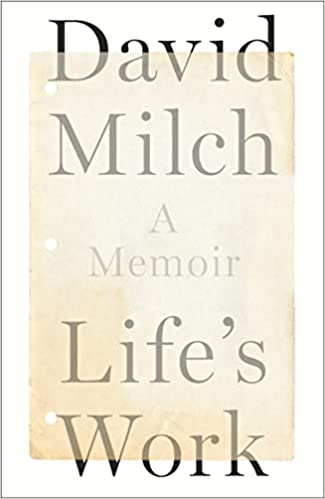
It’s called Life’s Work. It’s anything but a simple title, as only to be expected from its incomparable author, David Milch. It’s not so much a play on words as it is an enunciation of intent, a spiritual aspiration. Yeah, let’s start there and see where it takes us. The rabbi is in.

There is a profound sadness that winds its way through these pages. Alzheimer’s is laying claim to David’s current challenge, and it permeates his thought process in this troubling memoir. He is assisted in committing the recallable memories to paper by his family, and even where confusion follows his path like a sine curve, it’s not just Alzheimer’s that elicits sorrow. It’s the entire path of intermittent regrets. If words are to make us feel, his words again succeed.

I hadn’t seen David in a very long time when I attended his book launch. I asked him if he remembered me. “Of course,” he said, “do either of us owe the other money?” I was 99% sure it was a joke, but just in case I assured him we did not.

In the broadest sense of its definition, rabbi means teacher. In the workplace, it means more than that. If you get one, your life is going to change. You might just be finding a path to Life’s Work.

When you’re a young writer, if you’re smart you seek teachers. They don’t teach you how to write. They teach you how difficult it is to write. They instill in you taste, fortitude, inhuman patience, proper doubt, and resilience.

The feedback is anything but pleasant. It’s not for the faint of heart. You learn that bad first drafts are a fact of process. They are necessary, but largely need to be deleted.

David Milch taught me these things, mostly by demonstrating them, but sometimes from the breakfast lectern. He taught me that subjecting others to unpolished work was amateur, lazy, and unfair. If you choose to tell stories, you must learn to craft them in ways that don’t waste an audience’s time or take advantage of their goodwill.

You learn discipline, like an athlete. You do it every day, again and again. The rabbi keeps you honest. Character comes first, then reveals plot, but plot is only a device to enhance the arc of character development. We think we love story, but what we really love are characters.

David taught me those characters are guests in people’s homes. Audiences will let them in on expectation, but will only keep them there if they grow. When a show dies, it’s not because you have run out of story; it’s because the characters have no more headroom to interpret and flourish.

Feedback becomes lifeblood. Then one day you’re on your own. When the teacher is no more, your filter is established to shield you from embarrassment. The work must pass your own sniff test as it would be blessed from further refinement by the teacher.

In this memoir, David writes of the mind’s decay. He didn’t ask for this denouement, but his choices are few. He accepts the path as inescapable. He turns to notions of faith that evaded him in his younger years, when his temperament was not tamable. I remember that David. That was the rabbi who first said to me: “If you want to make God laugh, tell him your plans.”

He wrote unforgettable, award-winning episodes of Hill Street Blues. He created the groundbreaking television series NYPD Blue and Deadwood. He left the craft of episodic television writing better than he found it. That is an understatement.

He battled substance abuse and gambling addiction, both almost crushing his existence. He raised a caring family and found his way back to their love. Surviving his demons to nurture love was a monumental achievement.

I came to David because my viewing experience of Hill Street Blues was TV that tore at the soul. I didn’t know that was possible, particularly because it broke for commercial every 12 minutes or so. David came to think of it as bourgeois. That’s a word you don’t often hear outside of college.

He wanted to go deeper, extract honesty from language despite the limitations imposed by presumed broadcast standards. Rules for David were goalposts that needed to be moved with concerted wit whenever a network executive forgot to interfere. All forms of writing are bound by some form of convention, but he wanted those boundaries to be in service to creativity, not obstacles to authentic expression.

He never stopped being a teacher. He saw the gift in his mentor, Robert Penn Warren, and paid it forward. He helped the careers of endless writers who learned from his example the poetic revelations in pure, gritty, messy, conflicted reality.

For many years I never believed I would achieve David’s standard. My aesthetic was too unformed, too quick to quip, too impatient to let a character breathe if it killed a laugh or shocking turn. I became despondent with my own attempts at composition. I worried words would fail me when I needed them most.

Yet I never gave up. The rabbi made that an untenable notion. Work was essential. Rewriting was essential. Craft was essential. I was on my own as David was. Every writer is alone. It takes a lifetime to learn that. The rabbi if abrupt saves you half your life denying this truth and readying you for being alone, determined, indefatigable.

A mentor is a subject matter master. A mentor is not meant to be kind in the present, only in the long arc of life. We learn this too late. The critique of the master is only meant to become self-critique in perpetuity. Like I said, apprenticeship is not for the faint of heart.

There is gravitas in the audacity of writing, absurdity in committing to an endeavor that consistently leaves you empty and unnaturally separates writer from the written. David understands that in a rabbinical sense. His ability to articulate the nature of output is simultaneously divine and existential. A brief, revealing excerpt early in the memoir captures the essence of that reduction:

There’s something about literature—poetry and prose, but particularly poetry—which disinfects the efforts of being. The effort itself is cleansing. It neutralizes what’s profane about the process, and just leaves the result.

If writing becomes your essence, the idea of not writing is about the same as the idea of not breathing. Neither is feasible. Both are equally necessary.

At the end of the reading, supplemented by famous friends sharing passages for reasons of pragmatism, David took the microphone. “Thank you so much for being here. I love you all. God bless you.”

I had never heard him say words like that. His arc had come with an unpredictable resolution. Story and character were again united in natural resonance.

The rabbi placed a small ribbon between chapters and closed the book. His eyes were clear and telling. Here ends the lesson.

_______________

Photo: The Author at Diesel Bookstore

From Nothing: Reflections from the Road

One of the rare joys of being a writer is getting to talk about your work. One of the even rarer joys is getting to talk about the same work more than once because it is being published in a new format.

From Nothing, my third novel published by The Story Plant, allows me that joy with the paperback release on October 7, 2019.

It’s two generous bites of the apple, separated by over a year of contemplation, during which I got to hear from readers on how this story impacted their lives.

It’s a privilege to reflect on how I intended the troubled journey of Victor Selo to stir emotion, and how that was played back to me by my cherished readers. Perhaps an appropriate context for this is leaning on some of the lyrics I borrowed for inspiration and attempting to tie them back to many of the comments shared with me at readings, in reviews, and in letters sent my way.

Turn off your mind, relax, and float downstream …

That’s The Beatles, and they are everywhere in this tale. Probably the first thing people discover about Victor is that he is anything but relaxed. Life events don’t afford him that luxury. Yet readers clearly made the connection between the invisible forks in the road chosen by Victor and the intense downstream consequences or results of their own unpredictable resolutions to unseeable moments of fate.

I found that I am not alone in boiling down my life to five or six key choices that I wasn’t necessarily aware were determinations of my ultimate twists and turns until decades after those quiet tests were unmasked. I have found great moments of connection in hearing readers see the fickle outcomes of their paths in the eyes of a character who is a stranger to their circumstances while a mirror for the task of connecting their own dots.

We are stardust, we are golden …

That’s Joni Mitchell, celebrated forever by Crosby, Stills, Nash & Young. It has been hard to escape this refrain with all the milestone anniversary hoopla around Woodstock, but readers seemed to understand that nostalgia wasn’t a theme I wanted to explore. My devotion is to the miraculous artistry of the songs that stay with us, the melodies and harmonies that become attached to the events we navigate and reconstitute themselves during the many decades we interpret their significance.

Readers have joyfully acknowledged that context and relevance become inescapable in the songs that become their favorites. Think about your favorite song the first time you heard it and what was happening in your life then. Now think about the same song a decade later, and a decade after that. The song hasn’t changed, but you have. If it remains a favorite, there is a reason. Our favorite songs blossom as our lives expand. We may even have to abandon a song for a while when our history associates it with pain. Yet we can always return to a song, and it can return to us. That is the majesty of composition and the alchemy of our interactions with vibrant creative matter.

Guess it’s better to say goodbye to you …

That’s Scandal, one of the less famous bands covered in the Vegas clubs where Victor crawls his way back to self-confidence. Early in my thinking about the arc of this tour, I knew I wanted to include references to the biggest acts of our time alongside some of the voices that had equal impact on me even with fewer hits. I’ve enjoyed the engagement from readers asking me why I excerpted one song and not another, and whether I planned a sequel to fill out the playlist. I don’ think a sequel is possible, and the chorus sung here by Patty Smyth is a good reason why.

It is humbling to know that readers turned these pages to find out what Victor might learn from the corporate monsters pounding on him, and from the many misfortunes he believed he had overcome but never actually escaped. When I listen to people tell me about the past events that are holding them in place, I wonder if part of the glue that holds us together is the evasive hope that we can let go, that we can move on, that we can start again. Whether it’s business, invention, or love, the past is an obstacle we all understand. It is all too easy to suggest to another that letting go and moving on is usually our best bet, but how often do we courageously take our own advice?

If you haven’t yet had a chance to read From Nothing, I hope some of these thoughts may inspire you. If you do have occasion to pick it up in any of its releases and have your own interpretations to share, I would enjoy learning from you.

This is the soundtrack of our lives.