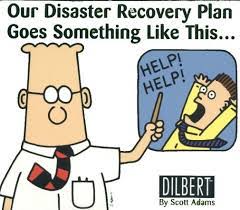
Proactive Means Now

For many of us the new year begins with the best of intentions. It’s not so much that we delude ourselves in committing to resolutions we will never pursue as it is the open calendar before us filled with possibility and promise. What can we do with all of those days between now and the end of the year? The choices are as endless as the opportunities.

Almost immediately we start falling behind in our daily tasks. Days into the new year we are already playing catch up. Why can’t we get ahead of our task lists and beat the daily grind into submission? Why can’t we focus on projects and prospects that matter? Why do we spend endless hours on stuff but still waste so much time?

Maybe it’s just too easy to kick the can.

Difficult challenges don’t sort out themselves. They have to be wrangled and wrestled. That’s the kind of intellectual and emotional commitment that takes the force of will to muster. If you want to achieve meaningful progress, you have to get ahead of your calendar, not let it consume you.

Want that glorious promotion at work? It’s not going to find you.

Want to make a significant dent in your competition? They aren’t going on vacation to give you breathing room to pounce.

Want to learn a new skill, a new language, accelerate your ability in an artistic discipline, or finally figure out why your department is going sideways instead of upward? Those are all really difficult things to do that won’t take place between Facebook posts or tweets.

If you want to stop drowning in your dizziness, learn to think proactively. Set your sights on a potential outcome and work your way back to the present. Envision a roadmap and establish a set of checkpoints that will lead you to a better outcome. Own the outcome by owning the process.

Most important, you need to do it now. Not in a month. Not in a week. Not tomorrow. Not in an hour. Now means now.

Procrastination will cost you your dreams. If you have dreams, you need to act on them. Even if you don’t have dreams, and you should, if you have stuff to do that will make you more successful and personally fulfilled, you need to do it immediately.

Not after breakfast. Not after lunch. Not at the day’s end when you are exhausted, pissed off, and want to climb under a blanket. Do it now.

I don’t care if you’re busy. We’re all busy. If you are putting off the stuff that matters for busywork, knock it off. Do the hard stuff first. Busywork is a punt. People do busywork to look busy, often at the expense of making a difference.

What does it mean to be proactive? It means not waiting to be reactive.

Reactive is a deflating death march of punch lists.

Proactive is an uplifting rallying cry of planning.

Reactive is missing a sales forecast and formulating a remedy to catch up on lost business.

Proactive is outpacing a sales forecast by building customer loyalty through surprising and delighting.

Reactive is compiling a list of customer complaints bludgeoning customer service.

Proactive is regular ride-along listening sessions in customer service to turn suggestions and trends into repeatable wins.

Reactive is lowering prices to steal market share with thin margin transactions from customers who will easily abandon you to save pennies.

Proactive is designing a brand that is equal parts price, service, and quality so that small fluctuations in price become ignorable noise to your best customers.

How do you stop being helplessly reactive? You have to commit to the habits of being a self-starter. You’ll know you’re a self-starter when your boss asks a question in a meeting and everyone looks at you to serve up a suggestion fearlessly.

Ready to be a self-starter?

You need to move faster. If you thought something was going to take a week, do it in a day. Force yourself to accelerate.

You need to act with higher quality. If you thought good enough was going to please a customer, you’re wrong. Exceed their expectations.

You need to utilize fewer resources, not more. Use every tool that is available to you and don’t worry about what you don’t have.

The formula for reinvention is better, faster, cheaper. Not one, not two, not two and a half, all three.

What does being proactive mean?

Proactive means to take on a task before someone asks you to do it. It means to finish the task with excellence before someone even knows you started it.

Proactive means knocking the stuff off your to-do list that will have an impact, not the maintenance stuff that no one will notice.

Proactive means knowing that email is a tool, not a task. Unless you work in customer service, no senior executive is going to promote you because you answered all your email.

Proactive means plan for a crisis by avoiding it. If you’re dealing with a surprise crisis, you’re already reactive. Anticipate the crisis. Write down your response to the crisis before it happens. Scenario plan. Have notebooks filled with scenario plans.

Proactive means investing in quality assurance testing at five cents on the dollar instead of a product recall at 200 cents on the dollar.

There aren’t that many commonalities in the success stories you may admire, but one that holds true is urgency. Setting priorities, making time for abstract planning before reporting memos consume you, carving out blocks of time to schedule the milestones of your challenge — that’s how big things in your life will happen.

No outsider will hold you to the promises you make to yourself. You have to decide you want to be proactive. Then you have to remain consistently proactive.

Someone has to make change happen. Why not you? Your future outcome is at this moment in the making. Think about how you could be feeling this time next year if only you can get ahead of your day.

Being proactive is more than a choice. Being proactive is finding the freedom to make this year a year like no other.

____________

Image: Dilbert.com ©Scott Adams

When Your Team Loses

The Houston Astros won the 2017 World Series last week. The Los Angeles Dodgers lost. It was an epic contest. Many have observed it was one of the greatest World Series match-ups in the history of Major League Baseball. It lasted into the mythic and deciding Game 7, crossing tentatively into the month of November, creating the first-ever Game 7 at Dodger Stadium and the first-ever MLB game played in November at Dodger Stadium.

This year’s fall classic delivered all of the drama any fan could want from a World Series. There were come-from-behind victories one after another, larger-than-life villains and heroes caught in an explosive discussion of racism, more lazy walks and majestic home runs than most of us could imagine, and two world-class managers locked in a battle of wits. It was an endurance contest. It began in Game 1 at 103 degrees on the sweltering Chavez Ravine field and ended there eight days later some forty degrees cooler. It brought many viewers back to the game who had abandoned baseball for its slow pace in our ever-hectic world. It was the perfect collision of talent and human will emerging from an always imperfect playing season.

Then it was over.

Only one team could take home the Commissioner’s Trophy. One team did, in a stadium not their own but on a makeshift stage they made their own. The local contenders, who could win only three of seven games, looked on from the home team dugout and watched the award ceremony broadcast to the globe. Behind the blue-flagged dugout sat their fans, also staring vacantly beyond the bright television camera lights with sadness and acceptance. I was among those fans. I slumped in my hardwood seat and watched the grand on-field celebration to my right and the silence of humility to my left.

Bart Giamatti, former MLB Commissioner and President of Yale University, probably said it best in his acclaimed essay The Green Fields of the Mind:

It breaks your heart. It is designed to break your heart.

That is the game, where each preliminary round of the postseason always ends in an event called an elimination game, and then the World Series itself winds down to the final elimination game. When your team is eliminated from competition, your season is over. There are no appeals. At the final elimination game, one team is victorious. The other team retains the consolation prize of league champion, but it is increasingly less of a bragging right than it was in professional baseball’s beginnings over a century ago.

The eliminated team leaves the field with a broken heart shared with its fans. That is the design. It needs no improvement. A loss is as perfect in its ability to stir emotion as a win means to those who share a parade in the glorious days following the final pitch.

So why does any of this matter? Baseball is a business, a big-money enterprise where fans shell out enormous sums of money for ballpark visits, television and internet subscriptions, staggeringly high-margin junk food, proud but ridiculously overpriced authentic field wear, signed souvenirs, trading cards, collectors’ memorabilia, and tiny parking spots where door dings are as much a part of the game as the ceremonial first pitch. Players are traded back and forth late in the season as insurance for a playoff spot, and just because you call it your home team doesn’t mean many of the players on the payroll call it home.

Why does it matter? If you are a fan, you have to answer it in your own way. Let me try to answer it in mine.

Never mind that the Los Angeles Dodgers, a controversial transplant from Brooklyn today playing in the second-largest media market in the nation, haven’t even appeared in a World Series since 1988, the year ace Clayton Kershaw was born. Never mind that the Dodgers are the team of historic #42 Jackie Robinson, whose jersey number is the only one retired across both the National and American leagues. Never mind that Dodger Stadium, the model for modern stadiums when it opened in 1962, the year I was born, is now the third-oldest stadium among the 30 in MLB. All of that is nice context, but it doesn’t reasonably define why I would feel sorrowful over a loss in Game 7.

In fact, in a world plagued by continuing terrorism, nonstop acts of violence, social vitriol, political lunacy, global instability, and wildly unjust economic inequality, why do seven months of three-hour-plus games played day and night on well-manicured fields by young millionaire athletes directed by billionaire ownership groups matter at all? It shouldn’t, right? We’re adults, aren’t we? We’ve got important stuff to worry about, not the velocity of a breaking ball walloped by a carved piece of wood and sailing 400 feet into the bleachers of a 50,000-seat arena.

Well, let’s try it another way and go back to Bart Giamatti, a Renaissance scholar and baseball fanatic who left us much too early but was gracious enough to capture some meaning in all of it in his own temporal longing:

There are the truly tough among us, the ones who can live without illusion, or without even the hope of illusion. I am not that grown-up or up-to-date. I am a simpler creature, tied to more primitive patterns and cycles. I need to think something lasts forever, and it might as well be that state of being that is a game; it might as well be that, in a green field, in the sun.

That is why it matters to me. It matters because it lasts all our lives. It dies with the coming of winter and is reborn in the spring. I love the game because my father loved the game. It is essentially the same game, forget the bells and whistles and data analytics and all that newfangled scoreboard jazz. The game no matter what is fully unpredictable to the final out, the alchemy of athleticism, calculating strategy, and too often chance. It is consistent in its ritual routines, relentless in its aggregate simplicity, intoxicating in its repetitiveness. Forever it has broken hearts. We share that from generation to generation, from season to season. It is absolute in its constancy, absolute in its recurring challenge, absolute in its finality — until it comes again.

It always comes again. It has to come again. It is designed to break your heart.

When your team loses, you internalize the emotion, politely congratulate the winning opponent, and make no excuse for the silliness of the sadness in your obsession with constancy. We all like to win. We all want to win. We all want to be part of winning. Yet more than that, we all want to be part of something that matters because it holds us together with permanence solely because its vitality is assured in its unfailing renewal.

The Brooklyn Dodgers, who didn’t win a World Series until 1955, owned the nickname Dem Bums. Each year they lost, Dem Bums and the fans who followed them would finish the season with the same words: “Wait ’til next year.” Dem Bums knew the answer to what you do when your team loses.

I’ll see you at the green field next April. Opening Day is traditionally played in the early afternoon. With a little luck the sun will be shining on all of us.

______________________

Photo: By the author, Ken Goldstein (11/1/17)

Standing Your Ground

How do you know when it’s time to stand firm on a point and when it’s time to cave in and go with the flow?

The answer is obvious: You never know, not for sure.

The hardest calls are the ones you make alone. You listen intently, gather data, think about the situation, seek counsel from close advisors, but in the end if you decide to take a stand, consider yourself alone.

Values, ethics, morals — all of them seem clear on paper when you are reading about someone else’s lapse. That’s called history. You read it in hindsight with reflection. You wonder in amazement at how something so rotten could have been advanced.

Looking forward is another problem entirely.

If you think making a decision on principle is easy, you probably haven’t yet made a hard one. If you have put yourself on the line for a heartfelt conviction, you know that courage is not something usually acknowledged in the present tense. It is awarded upon completion of a task, win or lose, based on context.

In the present you might be called something else entirely: difficult.

Difficult people tend to get a bad rap, and being difficult just to be difficult is not likely to lead you to the corner office. Some of the questions we face in staring down adversity include:

  • Whether we have thoroughly thought through an objection to the more genially accepted plan we oppose.
  • Whether dissension without triumph creates any intrinsic value of its own.
  • Whether the cost of standing in isolation is worth it.

Let’s think about those three filters as we ponder a few hypothetical but easily applicable real-world examples of standing your ground in the corporate world.

Someone Getting Fired Unjustly. Suppose a colleague of yours, Charlie, has somehow become the fall guy for a project that has spiraled wildly off schedule and budget. The project team has found an easy out because your department VP is already known to dislike Charlie, so all the group has to do is subtly throw Charlie under the bus and the clock resets to zero. You don’t particularly like Charlie, but you know he is no more innocent or guilty than anyone else on the wayward team. When you suggest a defense of Charlie to the group, it becomes clear that if you go to bat for the loser, you will be ostracized, And hey, everyone knows the VP has been looking for a way to get rid of Charlie for years, so how are you going to talk her out of it?

Bonus Calculations Are Manipulated. You work under a sales leader who is a notorious sandbagger (someone who asserts a goal is a Hail Mary when it’s an underhand toss), but smooth talker that he is, his forecasts go through every year and your team receives handsome bonuses. This year he sets a revenue goal that your team has already achieved with existing repeat business. His plan is approved. This year’s goal is in the bag before the starting gun is even fired, so bonuses will be flowing like water. Then you attend a company meeting and hear the CEO say in earnest that the company is having some critical financial issues this year and will probably lose money unless everyone digs deep for a better outcome. You approach your sales leader and suggest he increases the sales goal so bonuses aren’t paid out of losses. He tells you that you don’t understand the CEO’s game, and if you so much as mention taking up the goal again, you will certainly need to find another sales team, and possibly a new employer.

Confidential Information Is Compromised. After months of going in circles and failing to make progress on a design problem, the senior engineer on your team circulates a breakthrough project plan. Your company has been losing market share to a competitor for the last year on inferior feature design at high cost, but at last that is behind you. Late one night when you are building out your portion of the specification, you overhear a conversation where the senior engineer jokes that it only cost him a few thousand dollars cash to hack the competitor’s database and extract the secret sauce that has been causing your company to lose. You approach the senior engineer and tell him you are uncomfortable with what you overheard. He tells you he was just bragging, it was open-source code he found and modified, and he would appreciate it if you didn’t broadcast that because open-source solutions are frowned upon in the company. Is he lying about open-source vs. hacking? Either way, if you speak up you’re going to be responsible for stalling the turnaround.

On first blush I’m sure most people considering these scenarios think they would do the right thing, because we all like to believe when faced with a crisis of values, ethical people will choose to act with ethical intent. Now ask yourself this: Do you know someone working beside you who has faced a similar situation and not acted in the appropriate ethical manner? If you do, why haven’t you confronted them? If you have confronted them and they have brushed you off, how far were you willing to pursue the compromise in judgment? Why are you willing to work in an environment where a person like that can get away with something so wrong?

Courage is a word that is tossed about without nearly enough care, but understand that in your time on the job you will have multiple opportunities to act courageously or not. Are you ready to put yourself to the test? Are you willing to stand your ground and take what comes with that decision when the consequences may not be reversible? If you want courage to be a descriptor of what your life is about, you’ll need to embrace the notion that poetic justice is much more present in literary fiction than it is in real life. Situational ethics may be a useful convenience, but they aren’t likely to do much for your self-esteem. You only win by doing what is right if your definition of winning is more about who you are than the outcomes you direct.

Courage is at the heart of a true leader. It can be costly in the short term, but it will always reflect your character. Standing your ground is not a question of options; it is the challenge of identity.


The Little We See

I discovered the NBC television series This Is Us in summer reruns this year and I have become obsessed with it. If you enjoyed shows like Thirtysomething and My So-Called Life, you’ll not only recognize the tone and structure in This Is Us, you’ll see familiar names pop up in the directing credits. It probably won’t surprise you that what has most attracted me to this show is the writing, both the quality of dialogue within episodes and the structural connections between episodes. Series creator Dan Fogelman has framed a milestone achievement in word-to-screen translation.

If you are a student of fiction you know that narrative has the highest emotional impact when story and character are revealed on equal footing, one reinforcing the other. Whether you attempt the craft professionally or as an avocation, you know how immensely difficult this is to do, particularly consistently. Characters matter more when the story advances as a result of their arcs. The depth of characters is more fully rendered when plot points drive their change. It’s enormously challenging. Try it sometime. Or you can just watch This Is Us.

I certainly don’t want to give away any spoilers surrounding this show in case you decide to binge on it after reading this post. At its core it is the story of three people born on the same day circa 1980 (the year I graduated from high school, go figure). The storyline follows them from infancy to adulthood with all of the many tangents in their lives around family, friends, loved ones lost and found, career highs and lows, and personal discoveries. The emotional complexity of the characters is what makes it powerful, yet surprise twists in their interwoven journeys jump out all the time, making it the kind of serial that leaves you both satisfied and wanting more.

What consistently blows my mind in this show is how character development is revealed in snippets that link forward and back in time, particularly replaying events with increased detail layered into the unveiling of previously hidden moments. It is these hidden moments that led me to write about the show. What continually strikes me as gripping drama is how little we know about any one character or event at any moment in time, and how adding onto the storyline sheds light on the “why” of every moment. I think about this in life every day as I encounter people, not so much in what I do see but in the stark reality of how little I see.

“The little we see” is the mystery of real-life human drama. Someone could be standing next to you in line at Starbucks with a thin smile, but she may have just come from the hospital visiting someone in critical condition. Someone could run into you on the freeway wildly distracted, when an hour ago he was turned down in his marriage proposal. The person next to you in a bar watching a baseball game might be ordering the beer that sends him tumbling off the wagon. We barely know what we see. We usually have little idea why it is happening, what meaning or consequence it may have, or what life fork in the road it may represent. Good storytelling fills in the blanks. Compounding life events don’t snap together as Lego blocks nearly that solidly.

Returning to my obsessions, in my early writing career when I was learning the craft and reading much more than I was writing, I found myself consumed with the question of what happens to characters when we don’t see them. I spent a lot of time immersed in stage-play texts and repeatedly asked myself purposefully unanswerable questions. What are these characters thinking and doing when they are offstage? What were they doing before the play began? What will they be doing after the final curtain? Certainly writers have to think about these things, but the time-limiting constraint that they never can fill in all the blanks is what can elevate a story from entertainment to a more lasting form of art. The elements of a character’s life that are left open-ended are the entry point where the reader’s imagination can come alive. It is in that synthesis that a work becomes both personalized and shared.

Why might this matter to you even if you aren’t particularly enamored with fiction? Perhaps you are like me and find yourself wondering throughout the day about the backstories and masked details in the lives of the people who walk into and out of your contact each day. When you are in a meeting and the presenter is struggling, what was he doing an hour ago, a day ago, a week ago, a year ago? When you hear a co-worker arguing on the phone in the hallway about something that sounds personal and know that you are about to review a business plan together, will that person be paying enough attention to make good decisions and what will happen to resolve the argument by the time you meet again tomorrow? When a co-worker’s child visits your office, what does she see and how will it possibly affect her future decisions about her career?

All of this fascinates me both as a writer and a businessperson, because the long and winding roads of our lives are filled with invisible forks where we choose a path and don’t necessarily know at the time that the decision was of immense consequence. I will be writing more about these invisible forks soon because I think the resonance of our decision-making becomes more consequential when we pay attention to the impact it has on those around us. We can never chart our own fate entirely, but we can think now and again about what might be going on offstage as well as onstage before we act.

One of the best pieces of advice my dad gave me in business was that unless you are in the room where a decision is made, you will never know why that decision was made. My trepidation has gone further, because too often I have been in that room and I still don’t know why many decisions are made. To me that signals what happened in the other room where I wasn’t present and didn’t even know there was a meeting, or what happened in someone’s living room that morning, or what might be happening in some hotel conference room that night. We see what we see and it’s never enough. We see too little, yet we still have to make decisions.

The little we see is a subset of any story. Think about it that way and you might make different choices when you are in the scene. Onstage or off, the story is part public, part private, part secret, part personal, and always conflicted. That is what makes a great television series like This Is Us. What it says about our lives and our business dealings is something else entirely.

____________

Photo: This Is Us Gallery, NBC.com