Toons, Love, and Letting Go

Earlier this month the curtain finally fell on Toontown Online.  I am guessing that 90% of the people who read this post will have no idea what that is, was, or means.  I won’t spend a lot of time telling you what it is or was, but I do want to share a few words about what it means.

TTO End of the WorldToontown was a massively multiplayer online role-playing game, an MMORPG, if you can believe such an acronym exists.  It is more commonly referred to as an online world, or a virtual playground, where participants create a character, or avatar, that represents them among tens of thousands of others at any given time, in what is affectionately known as cyberspace, the intersection of computer networks, or the Cloud.  The most famous and successful MMORPG of all time is undoubtedly World of Warcraft, which was created ages ago by Blizzard Entertainment and has produced immense wealth for those behind it.  Toontown is kind of like the quirky second cousin of World of Warcraft, created by huge fans of WOW initially at Disney Imagineering R&D, seeking a key point of differentiation — Toontown was the first MMORPG for kids and families.  Yes, that’s right, kids and families.  It came from Disney, after all, where family entertainment is the brand promise.

Aside from appealing to a different demographic audience, Toontown accomplished a few other significant milestones.  For one, it lasted commercially over a decade, if not putting it in the wealth stamping mode of World of Warcraft, certainly getting it into the rare window of time warp triumph that few digital games enjoy.  It was certainly the longest living bit of software that I ever helped see the light of day, by an order of magnitude.  We started working on it in 1999, launched the free public beta at Disney Online in the Fall of 2002, and went live in full subscription model in mid-2003.  Earlier this year, Toontown Online celebrated a milestone of ten years active that very few libraries of compiled code ever have the occasion to note.

If you have never played an MMORPG or have no idea what the gameplay in Toontown Online encompassed, you can easily learn that by doing a few web searches or scanning the Toontown entry in Wikipedia.  Now that Toontown Online is over, I want to talk less about its being, and more about its resonance.  It was a turning point for those who worked on it in several capacities — proof that the Disney brand and Walt’s vision could be migrated to a new platform of which Walt never dreamed.  It galvanized a team to emerge from the DotBomb bubble years through a process of creative destruction and reinvention.  It bonded its developers to its customers in a true paradigm shift that redefined for all involved the notion of “community.”  I remember approving a job requisition for a position called “Community Manager,” and I swear I stared at the page for an hour wondering what that meant, whether we really needed one, and whether any person was superhuman enough to tackle such a role.  The truth was, we were all Community Managers, and residents, and participants, and young at heart immersives who knew something had changed.  We bonded with our customers, and we bonded with each other, and that bond proved to be something that will last in perpetuity.

World class work is contagious.  High performance teams willingly tackle shared dreams.  Achieving the improbable is a permanent bonding agent.  Copy and paste that in your signature file.

The bond of being part of doing something that hasn’t been done before with a team of impossibly talented individuals with whom you are unlikely to ever work again is both powerful and intangible.  The odds against Toontown lasting a year let alone a decade were incalculable.  It was so hard to describe the concept to people both inside and outside the company that building a consensus and maintaining funding was entirely improbable.  Yet because history told us Walt had faced the same struggle and challenge opening a branded family theme park — Walt’s Folly, as it was known — we just stuck to it and got it done.  We knew if we could get people to sample it — try it, touch it, be in it, share it — it would slowly catch on.  It did, like the Little Engine that Could, and those silly little Toon characters got stuck in our minds and our hearts.  We played in that world with each other, kids and adults, employees and customers, everyone an equal, everyone just looking for gags and Cogs to take down.

Years into it, Thomas Friedman wrote a critically important book called The World is Flat, but those of us making and playing Toontown already knew that.  The hierarchy had inverted, unrestricted except by carefully constructed parental controls, global in reach and appeal.  The Toons were in charge of this world, not us.  Our job was to be good stewards of the world, not run it, only to tend the expansive lands.  Yep, it was an online theme park that belonged to everyone there.  It was a community, a true virtual community, almost perfectly safe because the community kept it that way, alive and vital 24x7x365.  We discovered it then, and we feel it now.  The game might be gone, but our sense of belonging, no chance that can be dipped in solvents.  Belonging is eternal.

Therein lies the truest lesson of Toontown for me, a lesson I learned my very first years in the software business, years in which I rode the unruly swings of success and failure all at once.  Astonishingly few projects in media succeed commercially or critically, and even fewer achieve both, but the ones that do make up for all the ones that don’t, both financially and in life satisfaction.  An extraordinarily wise mentor taught me at the outset of my journey this simple but enduring lesson, that if I stayed in this racket and wanted a career instead of a job, I needed to learn and embrace the mantra that projects come and go, but it is the people with whom you work  you will remember way more than the projects.  He explained that anyone looking back on a creative career when it comes to an end — and they all do at some point because we are humans, not T0ons — is that a truly successful career will be built on the back of about a half-dozen successes you could never predict, mixed in with a landfill of failures.

The takeaway was that it would always be easy to forget projects magnificent and awful, but the people with whom you shared those projects could rise to the level of unforgettable if you made that a focus.  If process was as important as outcome — more important than outcome because it is the only path to sustainable outcome — then you might forget the rotten days, the missed milestones, the modules that wouldn’t compile, the costly customer service calls, all that junk — but the joyous memories of the people would stay with you.  The people were the gift then, and they would remain so forever.

The incomparably talented people who built and nurtured Toontown were many of the same people with whom I shared any number of initiatives that didn’t go right.  It would be impossible to acknowledge and commend all of them here, and to pick just a few would inevitably be read wrong by the many.  The ten-year run of Toontown didn’t make them good, they were good already and they are good still.  All of us shared this tiny bit of magic, and now like most forms of media it joins the destiny of the ephemeral.  Our bond with each other is unbreakable , and our bond with that community is impenetrable.  The memories of the cast endure, the value of the bond beyond price, the stories of each other ours forever.  We are a little geeky, a little playful, a little different, and a little older.  We are forever Toons.

Toons of the World Unite.

On a Mission or Just Staying Awake

One of the themes I explore in my forthcoming debut novel, This is Rage, is the notion of motivation.  This is a subject I hold dear, and one I focus on a great deal in the executive coaching workshop I co-lead with John Vercelli.

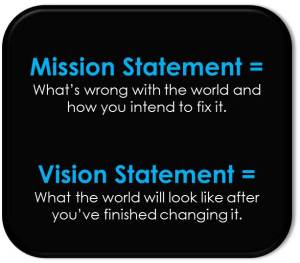
mission-statement-vs-vision-statementIf all a mission statement is meant to do is fill a half page in your human resources handbook, it is probably not worth the time to write it down.  One of my former teachers and board members used to say he had a vision of all the great mission statements in the world collected in a single volume, and there could be no possible better bedtime sleeping remedy than trying to force oneself through those pages with one’s eyelids open.  Again I agree, if a mission is just a string of words — Buzzword Bingo without a juicy prize — it will not motivate, but let’s consider a few potential examples of applying a personal leadership mission in attempting to inspire a team.

Here are three choices I offer participants in the workshop, all of which we’ve heard in some variation, from the absurdly failing to the boldly aspirational:

Choice 1:

To make this department much more efficient and profitable!

Choice 2:

To overcome market forces and prevail over our competition!

Choice 3:

To provide my team with the support and resources they need, to the very best of my ability, to collaborate and do the very best work of their careers.

My response to Choice 1:

Not gonna inspire, management by fear is so not cool.

My response to Choice 2:

You’re starting to get my attention, through an occasional yawn.

My response to Choice 3:

I’d build you a log cabin in the arctic if you asked me.

Call me an optimist; people like to be inspired.  It’s not a sleight of hand.  Real leadership means rallying people around a cause, to subordinate their own personal quirks to the shared agenda adopted.  The leader’s job is to create the environment for sharing.

Is it the business leader’s job to make her or his department more efficient and profitable?  Do we really need to ask?  It goes without saying, so don’t seek glory in the obvious.  Is it the business leader’s job to respond to market forces and win market share from the competition?  Once more I ask, where’s the question?  Any answer to this presupposes a complete lack of faith in the common sense of why we are employed by our company and not another.  Is it the business leader’s job to rally, help, support, test, and muster the collective wisdom of those assembled to form a team and work together?  That should be just as obvious, but try saying it aloud and look at the surprised gazing around you.  That’s what people want to hear.  Uttering the manifesto is the first step toward building trust and accomplishing the impossible.  True, it’s just the first step, and trust is easily shattered when actions upend words.  Yet it’s an important step, and it does fire up hearts and minds much in advance of a spreadsheet.

It also connotes vulnerability — to the very best of my ability — which again is all in fact you can ever do.  Not proclaiming more makes you human, perhaps a form of life other people are more willing to follow.  Be honest, not only about what you can do, but in admitting that you are not de facto possessive of superpowers.  Try it out, it just might give you superpowers.

In my novel, a few clever and powerful people are trying to make a whole lot of money.  That is not a bad thing, until they forget that how you make the money is the difference between taking along a deserving set of others and leaving almost all of them behind.  Most of the people in the story just want to do their jobs, to find a way to love their jobs, to shake off the demoralization that has come from the illogical separation between task and income.  When a job is a paycheck, you don’t need a mission statement or real leadership, you just keep your head low and get through the day.  When a job is about something more, it’s still a paycheck — we all need a paycheck — but the purpose of the work is a much more substantial driver, creating better outcomes and better paydays.  Improved business comes from more engaged employees, and getting those employees engaged is a soft skill that in the hands of a master can conquer most obstacles.  That’s when work is fun, when we believe in something, when we believe in the leaders and their values and their rallying cries and we choose to be a part of innovation’s path.

The promise of the start-up is to build something new with heartfelt values at its core, and in closely held companies at modest scale it is much easier for founders to maintain the kind of personal mission and creative culture that reflects this entrepreneurial DNA.  When an exceptional start-up enters a period of hyper growth, hands on sustenance of idealized culture becomes considerably more difficult.  Should the start-up go public, it too easily can take on the shape and form of the goliaths it sought not to be, and then the challenge of maintaining a mission grounded in shared values is often put on trial.  The disconnect between what was innocently envisioned and what inertia morphs can be terribly upsetting to the grasping loyals, who hold their idealism in longing, hoping at length for the pledge to retake honest meaning.

Still it is important to remember than the personal leadership mission can endure.  Indeed it might be less than a grand corporate mission statement, but I believe conviction is almost always within a business leader’s reach at all levels of an organization.  Committing to a personal leadership mission is a choice — a brave choice with its own risk — and while rare, a good one in the spirit of Choice 3 has a decent shot at creating significantly more employee engagement and long-term value than the other two slug lines.  It’s all a matter of executive style, setting a tone for the broadest possible positive, tangible outcomes.

It is too easy to check out, and once people check out, try getting them to check back in.  As my story compounds, an awful lot of people check out — because they don’t feel valued, because they don’t feel inspired, because they see what they do each day as separate and divorced from the actual process that creates income for the business and value for the shareholders.  Tie those pieces back together and real innovation comes a good deal more naturally.

Leadership is not so much a word as a behavior, a walking example of what it means to be intertwined with the enterprise.  It does begin with words, words that are grounded, words that do something.  Choose those words carefully, lead by example, motivate by inclusion, dole out support without reservation.

You want to keep things humming, make it a little less comfortable and a little more complicated — for yourself, not those you guide.  In the book, I take you to the extremes of this world view, heroic and cowardly and all that binds the spectrum.  The words did not come easily to me, but I committed myself to resilience and found them over time.  You can, too.

Whose Ad Is It Anyway?

Investors and company executives are cheering of late for the resurgence of Facebook above its IPO price from about a year ago.  Mobile growth is the story at Facebook, and many are pleased with the associated revenue progress.  I wish everyone well tallying their riches.  I am still not sure how much significant value is being created, particularly as it applies to the company’s core advertising business.  And hey, I was a very early believer in this business model and all the promise it held as the definitive interactive media platform of a generation — kind of like the first time as I kid when I saw a movie on HBO, a complete movie on television with no commercials, I just  knew something good had happened and someone was going to get rich as a result.  Uh, that was for taking the ads away.

If you are active on Facebook, particularly mobile, you probably weren’t surprised by the earnings improvement.  You’ve seen the ads — oh, have you seen the ads — you can’t miss them, right there in your news feed, as intrusive as the interface mandates.  Recently an ad for a salacious French maid’s costume was offered to me with the following copy — pretty much full screen — and I was kindly given the opportunity to Like the page:

“This five-piece At Your Service set from Dreamgirl comes with a sexy babydoll with apron, maid’s hat, ruffle back thong, and feather duster.”

Curiously this clever bit of sponsored media appeared above a friend’s timely post on racism and below a post from a financial journal I follow on how to avoid manipulated options.  I suppose under certain circumstances this might be considered targeting, but I can honestly assert I was not in the market for such an outfit, either for myself or as a gift, nor had any click stream I created left a trail for the behavioral targeters.  Perhaps they could have offered me a nice bottle of Bordeaux, which would have made sense since I am a wine enthusiast and often post articles about my favorite varietals on Facebook, and I’m guessing their database knows I have a Pinterest board on the subject of value excellence (“Good Wine, Good Price“), but no such luck.  I am a middle-aged male, heterosexual, and married, so maybe that’s the profile they sold to the advertiser.  I would guess that the CPM (in ad-speak, that’s “cost per thousand” impressions, where the M is the Latin numeral) was very, very low, offset by volume that was very, very high.  Again in ad-speak, we sometimes call that “dollar-a-holler.”  In these cases, maybe a nickel.

Just so it’s clear that I am not picking on Facebook, my friends at AOL Mail where I have maintained the same email account for about a quarter century, now offer a curious feature: After I send an email, the confirmation screen is filled with singles looking for a date.  It’s nice to see that the advertiser is not presumptuous; sometimes they offer me women and sometimes men.  The fact that the advertising delivery system is ambivalent toward my preference is unusually progressive.  It also is quite genially unconcerned that my wife continues to see my email send pages resolve to these artifacts on our shared monitor.

Note to New Media Companies, with love, from Old Media Companies: Some things have not changed, including that there are still four key constituents in the advertising equation:

1) The manufacturer or seller of products and services.

2) The ad network or agency.

3) The media delivery vehicle or platform.

4) The viewer of the ad.

For full value to be created, all four have to be satisfied by the results of the supply chain.  For real ongoing business, it is most essential that #1 and #4 are happy, so that #2 and #3 can speak to a job well done.

Let’s look at all four in the French maid and available-singles ad examples and see who is happy working backward:

4) Me: Not happy, except that it gave me an idea for this story.

3) Facebook and AOL; Happy (except if they read this post); they got paid by #1.

2) Agency or network: Happy; they found plentiful inventory in the form of my news feed and mail page, and they also got paid by #1.

1) Advertisers: Should not be too happy; they paid the bill, and I am making fun of them for it.

So the owner of the bill and the receiver of the message are not happy (#1 and #4), but the middle-folks are just fine with it (#2 and #3).  Oh, they’ll tell you they are working on it, improving their targeting technology and all that, but they aren’t losing sleep, because they got paid.  They should be losing sleep, lots of it.

There is also an implicit fifth constituent, the expanded community surrounding the nucleus of the supply chain, particularly of significance in our interconnected world of social media.  When an offer is useful and enticing, like many of the tested e-coupons on RetailMeNot, pleased customers will gleefully pass them along.  That’s free evangelism from existing fans to unlimited prospects, making ad dollars work even harder through leverage.  When ads are garbage, they are terminal, mercifully so.  In fact, bad-vertising can hurt a brand through negative association — poor word of mouth is difficult if not impossible to combat.  Wonder if your would-be customers are laughing at you?  You may not know until the community turns on you, then it’s costly to recover, or perhaps too late.

When advertising works — the right, relevant message in front of the right, engaged human being — it can be an excellent experience.  Absent concerns about privacy, you might embrace the very respect involved in not having to see ads you don’t care about.  But all this posturing about collecting intelligence on customers to deliver better leads — how come I’m still getting ads for reverse mortgages on My Yahoo homepage, which has every financial feed coming through loud and clear to tell them I’m a reasonably well heeled owner?  That page is still sold as remnant inventory (in ad-speak, leftovers) at bargain-basement prices, maybe less than the French maid costume or the singles ads.  Some money being left on the table there?  They’ll probably tell you no.  They would be wrong.

As the national dialogue on privacy invasion is reaching fever pitch, even POTUS has been dragged into the ruckus with a defensive “Don’t worry, we respect you while we protect you” mantra.  That dialogue is likely to resolve itself in the dialectic, because it is a civil rights discussion grounded in our cherished democracy.  I actually think that problem is going to get solved before the ad targeting starts to get it right, because there is too much money at stake for annoying and disrupting us that no one really wants to give back.  Like the story goes, always follow the money — the real today-money, not the theoretical long-term-value, someday-we’ll-get-this-right money.  Why would you want to do that?

Maybe I’ll just watch HBO.  The price has skyrocketed, but the shows are pretty good, and it is still ad free.  I am always willing to pay for that.

HBO Image