Making Sense of the Senseless

It’s a strange time, stranger than any I can remember in the second half of my life.

If you try to summarize the number of global issues our nation faces, it begins to feel unprecedented. There is violence on three fronts in Israel arising from the horrific terrorist attacks of Hamas. There is the question of how Iran and Hezbollah will accelerate that conflict. Putin is still waging a brutal war on Ukraine. No one is quite sure what Xi will do in Taiwan. Kim Jong Un remains a force of chaos in North Korea. That’s a lot of global conflict without much epicenter.

Then there is the building lack of faith in our government. The divisiveness between and within the parties is all but unbridgeable. Maybe we’ll fund the government, maybe we won’t. What happens if we have to make a really big decision, like going to war as a nation? Do we have the wherewithal to come together on anything that is consequential?

Inflation drags on family budgets. Healthcare costs continue to soar, while faith in modern medicine is frayed. Gun violence takes lives every day. The education gap widens and so does income inequality.

When we aren’t angry or fighting with each other with uncontained words, we often take on a cold silence of passive aggression, too exhausted to argue, knowing we can’t change each other’s minds. The internet should have been a gift of doors opening to each other, but we know it is anything but that.

In the midst of all that, we go to work. We try to focus on our goals. We try to do right by our customers, partners, and employees. We look for a path to salvation in our tangible achievements, but those are increasingly less tangible.

Two to three times each day people come into my office “just to talk” or call me on the phone with a long pause often preceding the inevitable opening remarks, “Hey, Ken, how are you doing with all this?”

I guess the flattering part is people think I might have something worthwhile to say. It feels like the days after 9-11. I had little worthwhile to say then. I have less now. It is impossible to make sense of the senseless.

I’m a trailing-edge baby boomer born many years after the last world war, but I wonder if this is how it might have felt then, when parts of Europe were being overrun and Asia was in equal turmoil. The US waited for its leadership to guide us toward the good. Then we were attacked, which made the response largely unanimous. Can we respond to anything unanimously today? Is there an FDR we have yet to meet waiting to show us what leadership means?

Back to the idea of trying to work steadily through all this. I often suggest to people that compartmentalizing can be an effective strategy for getting things done in a day despite the overwhelming distractions. I’m doing it increasingly, but I am finding it more challenging. Remember, we are making sense of the senseless. That’s hard to do and tackle your monthly sales quota without fail.

Few of us have the option of letting world events be an excuse for missing business goals. We all have inescapable responsibilities. We have to do what we have to do.

First of all, we have to be human. I am hopeful we can also be humane.

I write this as I am wrapping up project reviews for the past year, building a budget and a work plan for the new year with our team, and trying to listen closely to the smartest people around me offer wisdom on how to navigate the shaky ground we share. I read the Wall Street Journal for clues on where the economy is headed, but it is like a giant treasure hunt where no one knows if the treasure has actually been hidden let alone where. How do you find firm ground when the elephants won’t stop jumping on it, not even to take a breath?

Here’s what I know: Wherever we are, whatever we are doing, we don’t have to be in this alone. If you think it’s hard to make sense of the senseless, you might have retained enough of your good senses to share that concern with another caring soul who can help you by listening. Yes, you are still sane if you think we are dancing aimlessly in a circle of senselessness, but there is strength in numbers and even greater strength in diversity.

When people come to me and open their hearts with questions I am always listening. Sometimes they share perspectives I never expected. Sometimes they find a way to make me chuckle. I find that keeping some semblance of humor is a gut check on reason. The bonds between us that let us continue to be successful no matter the noise around us can only be severed if we let them.

I have no good answers. Senseless means senseless. Let today be a day of strength, tomorrow be a day of hope, and the next be one of empathy. We advance in infinitely small increments, sometimes so tiny they seem invisible. Yet the bonds between us were formed in better times, and the goals we share give us an abstract common purpose that brings with it the dawn of a future we can never fully imagine.

Bend toward justice. Don’t let the bad guys win. Don’t give up. It’s called a dream for a reason. Dreams of peace and healing are not senseless.

_______________

Photo: Pixabay

The Throes of Attention

Some people suck all the air out of the room. You know the kind.

Some people try to suck all the air out of the internet. You also know the kind.

What do we miss when the signal-to-noise ratio is self-cancelling? How much valuable information might we be missing when a small cast of characters forever desperate for attention floods the airwaves with endless “look at me” pageantry?

I don’t need to hear anymore for a long time about Elon Musk. I don’t care about his transformation of Twitter into X and whether advertisers will embrace it. X is not a town square I frequent. It’s CB radio. Who listens to ads on CB radio? Let’s call the Isaacson biography definitive and put this subject matter on the shelf for a decade to see if it improves with age.

Hunter Biden has humiliated himself, his father, and the nation. He doesn’t have the good sense to retreat, apologize for abusing privilege, and start the long road toward repentance. Instead, we get to hear that he has done nothing wrong and will fight back with every resource someone else is willing to fund on his behalf.

The only thing I want to hear about Sam Bankman-Fried is when he’s going to be convicted of felony fraud. The human interest story around the benevolent “why” of his deception crimes is manufactured and disingenuous. A con man of this magnitude is unworthy of sympathy.

Lauren Boebert doesn’t know how to behave like an adult at a musical on tour. End of salacious story. I don’t care if she claims the reason she is disgracing herself is because of the lingering effects of her divorce. If you have no manners, don’t go to the theater, stay home. Oh wait, she has a seat in Congress.

Senator Bob Menendez gets caught with a room full of gold bricks and suit pockets stuffed with cash but doesn’t have the good sense to resign. Now we have to listen to why he is being victimized and will fight to retain his office no matter what. This is not a noble fight. He ought to slip away quietly while he can.

George Santos won’t go away. He can’t stop lying. There is not a token of substance in any proclamation he utters. Turn off every microphone in his reach forever.

Does it occur to any of these people or the media covering them that they are unworthy of this much attention? Has the notion of humility and decorum so left the public stage that none of these people can muster the good sense to be quiet? Is the media so equally desperate to remain relevant that it has found symbiotic bonding with a nucleus of spotlight seekers who revel in the throes of attention?

I won’t even embark on our upcoming election. Consequential? Yes, beyond belief. Filled with vital news or endless, self-aggrandizing, lowbrow drama. Yours to channel choose.

I have written before about noise and how necessary it is that we navigate it to sane retreat. The cacophony of attention-seekers can make us numb to more inspiring stories of triumph and self-sacrifice. Gossip may grab headlines, but it teaches us little. There are always voices fighting to break through the rancor and tell us things we need to hear.

Voloydymr Zelensky wants us to know what is really happening in Ukraine, why his people are giving their lives, and the threat Putin poses to the world order. Do we have time left to listen?

Children of 9/11 fallen firefighters are stepping into the shoes of their parents and joining FDNY to continue a legacy of public service. Their parents were brave and made the ultimate sacrifice to save the lives of others on that unforgettable day. Do we know who they are or how their lives unfolded?

In each of the ceaseless weather disasters we’ve heard about — wildfires, hurricanes, tornados, you name the storm — there are heroes who have selflessly saved lives, risked their own, rebuilt communities, and never given up caring for those in need. How many of their names do we know? Can we follow their living examples if we never learn what they discovered?

There was a time not long ago when getting attention was something people earned for doing good, not asking to be celebrated, and then quietly ceding the platform to someone else worthy of a big moment. I remember it well. I think maybe it was right before the advent of social media.

We live in a world of TikTok attention spans where every mobile phone is a video window to the world, but can we tell the difference between useful information and filled space? There will always be those with an insatiable appetite for celebration whether they’ve earned it or not, but changing the channel is always our choice.

Don’t be misled and don’t waste your time. There is usually a better story to hear. It just might take a little extra tuning to tune in something worthy of your attention.

_______________

Photo: Pexels

A Letter Regarding Financial Faith

Dear Financial Community:

The failure of Silicon Valley Bank is enormously troubling. Call it an isolated circumstance all you want, but it has further stressed our nation’s dialogue. An echo of other bank failures has followed SVB down the drain. Long lines of anxious customers waiting outside banks are never something we want to see. This was unnecessary. This was bad form.

As dependability in our institutions continues to fray, I worry increasingly about where we’re headed. As divided as we are in this nation, can we withstand a true crisis of faith in our banking system? What understandable assurances are in evidence that wider contagion is not possible, that limits can be maintained on the ramifications of remarkably poor judgment?

Where does resilience meet its match and cause us to lose faith in the basics of our grand experiment in economic expansion?

Our economy works on a number of elusive factors in concert with tangible reporting. One of those is faith. If we lose faith in our banking system, the notion of ongoing growth and innovation at scale seems to go out the window. The economic miracle we have created together freezes solid and then melts into the ordinary.

Ample credit fuels dreams. Intelligently borrowed capital brings to market hopeful new companies and bolsters the expansion of existing businesses. Financial institutions, mostly banks, have to lend money for ideas to become enterprises.

Lending money as its own business only works if there is leverage in lending. We understand the rules of engagement: a bank keeps some cash on reserve and lends more than it has at any given time. This works fine as long as there are no unaddressable runs on banks.

Should redemptions exceed liquidity, banks are forced to liquidate assets at any price to return cash to depositors. Trust in the banking system and the FDIC is required of depositors to prevent runs from melting down banks. Trust is a reflection of faith. Lose all faith, lose all trust, we all lose.

Here’s ground zero: If we lose faith that banks can get our money for us whenever we ask for it, deposits cease. If there are no deposits, there can be no lending. That’s the endgame you are teasing when you fail to do your job and cautiously manage risk. Kill deposits, kill lending — that’s a death spiral in the making.

Faith is increasingly becoming a conflicted proposition. Reckless financial engineers test us every decade. The savings and loan crisis. Long-Term Capital Management. Sub-prime mortgages. Washington Mutual. Collateralized debt obligations. Lehman Brothers. One day the combined impact of these attacks on faith may succeed in fully undermining the little faith we have left.

Then the thinning ice cracks for good.

Don’t tell me this time it’s about rising interest rates that weakened your balance sheet. You’re smarter than that. You know history. You knew interest rates had to rise. Nearly free money is never forever. You’ve been making loans as long as you’ve existed. You understand liquidity. You understand it so well that you spend millions lobbying against the very regulations you need to stay in business.

There are no excuses. You take bonuses for being clever. When you’re too clever, the damage has the potential to become systemic. When faith in the system evaporates, apologies are meaningless.

A brand is a promise. When a bank’s brand fails that promise, the entire concept of for-profit banking is soiled. We are only human. Serial violations of trust reveal fragile faults in what we’re repeatedly told is a robust system. We can only experience so many failures before trust is gone.

If we come to believe that U.S. Treasuries are the only safe place to park our money, what happens to commercial lending? If commercial lending retreats, how do the entrepreneurial efforts of the next hundred years replicate the last hundred years?

Do we really want to depend on government to keep righting the wrongs of irresponsible, conniving executives? Government’s role is to referee where self-regulation has proven farcical. Regulate, yes. Adjudicate, yes. Underwrite exponential losses, unsustainable.

If government must guarantee every deposit regardless of the amount in order to maintain faith in those deposits, how can bank executives ever be trusted to take risk seriously?

There’s a lot at stake, more than many of us may yet realize. We’re shell-shocked, but we’re supposed to maintain faith. Each day it’s harder. Each day we put our own historical investment paradigm at risk.

In simplest terms: Please stop putting our nation’s future at risk and punting your unnecessary failures to manufacture compensation you haven’t earned and don’t deserve.

Seek to restore our faith. You need deposits. We need loans. Keep our money safe to put it to work properly. We’ll pay our installments. That’s the contract. It’s a virtuous circle. We all have to abide by the rules, not wait to get caught if enough oversight is available.

Please make the rules work to all our advantage and believe in something more than your own benefit. Prosperity hangs in the balance. You’re toying with breaking everything. Let’s look to another hundred years of wise lending and liquidity to continue investing in positive outcomes we can’t even yet imagine.

Yours in faith,

A dissatisfied lifelong banking customer

_______________

Photo: Pixabay

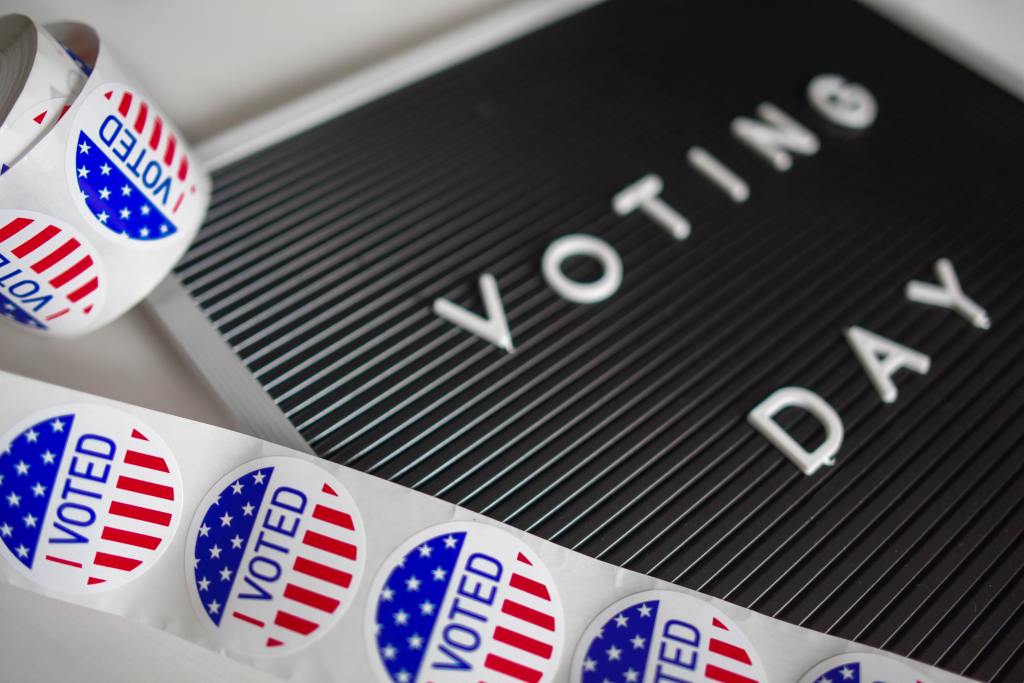
Ten Bad Reasons Not to Vote

It’s easy to convince yourself not to vote. While the 2020 presidential election had a record high turnout for the 21st century, that still represented just 66.8% of citizens 18 years and older who participated. Midterm elections tend to yield significantly fewer voters. In many other nations around the globe, people still die for the right to play a role in free and fair elections. If you’ve managed to convince yourself that you needn’t exercise your right to vote, here is a laundry list of bad excuses that might talk you off the bench.

1) My single vote is just that; it hardly matters in a nation of millions.

Well, maybe, but what if the millions feel the same as you? There go the millions. Have a look at how close some of the vote counts have been in a number of highly contested races and you are likely to change your mind. Your vote matters.

2) I’m really busy and I don’t have the time to vote.

Well, maybe, but think about something you could trade for the time that you won’t miss, perhaps an hour of social media scrolling, television reality shows, or arguing with others about their poor election choices.

3) Voting is so inconvenient.

Well, maybe, but if going to a physical voting booth is not your thing, in almost every state there is some form of a mail-in ballot you can fill out anywhere and drop in a mailbox. If you need assistance getting to the polls, there are free or reduced-cost transportation resources available in many municipalities.

4) Most of the candidates fall into two parties and I don’t like either of them.

Well, maybe, but no rule says you have to vote strictly along party lines. Vote for the individual who best aligns with your needs, choices, and values.

5) Those ballot initiatives are too complicated and are meant to trick people.

Well, maybe, but there are plain language summaries of every initiative published online, in local newspapers, and in widely distributed brochures that can help you cut through the foggy language.

6) I don’t trust the election establishment and think fraud is deeply embedded in the system.

Well, maybe, but if you study the research, there is scant evidence of widespread election fraud, and the best way to overcome the possibility of fraud is for elections to be won decisively with huge turnouts.

7) I like identifying as being outside the system and not part of corruption.

Well, maybe, but if you live in the same nation as those who vote and you choose not to vote, the same laws apply to you. Your outsider status doesn’t exclude you from compliance with the laws others make. Letting those who vote elect officials to make laws for those who don’t vote seems like an awful concession. Where voter intimidation is in play, standing up for your right to vote seems more consequential than ever.

8) The candidates are idiots and I don’t want to endorse idiots.

Well, maybe, but even if the candidates aren’t up to your standards, you still might want to offer a stack ranking. Your opinion of relative competence can only be included in outcomes if you submit a ballot.

9) Campaign commercials, lawn signs, and debates are just icky, meaningless rhetoric.

Well, maybe, but choosing not to vote when you’re offended doesn’t give voice to your offense, it just rewards those behind the ickiness by silencing your repulsion.

10) I just don’t feel valued as a voter and don’t think elections matter to my everyday life.

Well, maybe, but if that kind of apathy becomes widespread, it becomes much easier for autocrats to seize control and take away the choices you may someday regret losing.

The right to vote should never be taken for granted. Wars have been fought and lives sacrificed to protect this sacred right. You will be compelled to pay taxes, but you won’t be compelled to vote. They sort of go together, so don’t give up your right willingly. Those who allocate your financial resources will still send you a tax bill whether or not you like how they spend your money.

Voting may seem bothersome, abstract, or elusive in representing your point of view, but it always matters and can never be surrendered. Rational and heartfelt thinking are the main hopes we have for transforming bad behavior into good behavior. Listening and learning are all part of the process of bringing positive change. Sitting on the sidelines doesn’t make a statement, it avoids one. If it doesn’t go your way this time around, there’s always next time, and the time after that, and the time after that.

Never give up hope. Protect your right by exercising it every time you can. Please, get out the vote.

_______________

Photo: Pexels