Now Wrestling with Normalcy

peacePeople I know on the right tell me the way I continue to feel  unbalanced, lacking foundational equilibrium, wondering what shared values remain among our vast nation that’s how they felt when Barack Obama was elected and now we get to experience the same emotion. I want to have empathy that acknowledges their reflection, but it’s hard for me to grasp the counterpoint.

When Obama was elected we had started an unjust war, crashed the real estate market on unregulated bank speculation, crashed the stock market causing desperate people to liquidate retirement holdings at half their value, and unemployment was spiraling. The night of his election supporters across the nation spontaneously danced in the streets. When Donald Trump was elected, many of the same people who danced for Obama marched in protest against Trump, but I saw no one dancing for Trump. Is repealing the burdens of the Obama administration a cause equally worth celebrating?

I’m not mourning politics. I’m trying to come to terms with shared values, norms of civility, and making sense of my entire education  classroom instruction, professional experience, and community engagement. We can’t all be right about the Trump agenda and approach. If I’m not in the majority, I’m misaligned with about half the people in the places I travel. This is about spiritual identity and wondering what it means to be American.

This is not sour grapes because my team lost and someone else’s won. I didn’t suffer isolation and questioning of self when the Dodgers lost the NLCS and by the way, the victorious Cubs fans visiting Chavez Ravine were pretty cool. This is way beyond a team losing. It’s about losing the team I thought my great grandparents came here to join.

The strange part is, I am personally likely to benefit from Trump’s financial policies, as long as none of his fringe followers assault me for my heritage. I believe the people hungry this Thanksgiving who bought his story will still be hungry the next four Thanksgivings. They will discover they were conned and I will still have empathy for them and be fighting for their human and civil rights.

Yet if you tell me the way I feel on this Thanksgiving spiritually empty   is how you felt when Obama won, I actually feel bad for you. This is a feeling no one should have, that maybe we don’t have enough in common to share the holiday Abraham Lincoln envisioned when he created it during the Civil War. I can’t get over what happened, what our nation just did and what we might do next. I wonder if Obama’s equally offended opponents will get past what they believe was the moral wrong in his election.

3 Paths to Adulthood

Transitional Independent Living Program

I’d like you to think for a moment about the last homeless person you happened to encounter. Ask yourself: What was his or her story? Do you know?

Now I’d like you to think about the last 18 to 21 year-old you met in any walk of life — from a middle class or wealthy family, any high school grad will do. Ask yourself: Was this young adult ready to go out into the world completely on his or her own? Do you know?

Now consider that every year our foster care system emancipates thousands of 18 year-olds, presenting them with the rights and responsibilities of full independent adulthood. They are on their own to go to college, get a job, find an apartment, obtain credit, feed themselves, clothe themselves, seek medical care and insurance, all of the things that you and I learned to do over a period of time that likely transcended our 18th birthdays.

What do you think the chances are that a young adult released from the foster care system can sign a lease without credit, get a job without references, obtain medical insurance without an address, or attend college without a bank account? If you answered “not very good,” you’re starting to get the picture.

What happens if that 18 to 21 year-old goes out into the world without any support system of any kind? Imagine the worst because that’s what happens. Nowhere to live, no legal income, no reason to worry about the future because all that matters is surviving the present — will hungry, cold, isolated people do desperate and horrible things if the only thing that matters is surviving the present and no one cares if they make it through the day? You bet they will. You and I would, too.

Now I would like you to look at the faces in the picture at the top of this page. These are some of the participants and staff in the current cohort of the Transitional Independent Living Program (TILP) at Hathaway-Sycamores Child and Family Services. Yeah, that sometime city slicker in the cowboy hat on the right is yours truly hosting the 8th Annual Celebrating Children Gala we recently held at the Autry Museum of the American West. We raised about $200,000 to support this program. The rest of the smiling faces are young adults who will not be homeless and the staff who guide them to independence. With our love and assistance, these wonderful people will further their education, get their first apartment, find employment, and build a foundation that will keep them independent for a lifetime.

Need some further convincing? Watch the video below. You will see specifically how “3 Paths to Adulthood” helped three exemplary individuals navigate from negativity to optimism. Their stories are the narratives of three strong people who didn’t become homeless and never will. Their stories are unfolding like yours and mine. They are making their way through life on their own. They have dreams, they have families, and they have hope. They stand on their feet with pride and humility. They shake your hand and look you in the eye as a peer. One just bought a home!

They make me smile and they make me cry. If only we could help more people like them, we wouldn’t see nearly as many homeless people on the street. We could play a role in their lives and alter each story for the better. Their stories will always be their own, but we would be a small part of them and they would never forget us. We would never forget them.

We have a choice: Help bridge the gap between age 18 and 21 where government assistance is not available, or let these young adults tackle the immense difficulties of our world on their own and fail as any of us would. It’s not hard to understand why our TILP is vital and in the community’s interest. It makes economic sense. It makes human sense. It takes a story with an otherwise cruel outcome and turns it into a happy ending for everyone involved.

It doesn’t happen without a lot of hard work and commitment, but it happens. That’s why we held this year’s Celebrating Children to bolster this mission and attack homelessness through proactive guidance and direction. It’s much less expensive than getting someone off the street, and much more sustainable for an entire lifetime. It works. Watch the video! I promise you it works.

If you’d like to join in supporting our work please visit Hathaway-Sycamores.org.

And the next time you see a homeless person, take a moment and ask for his or her story. You might be surprised to learn they didn’t have to be on the street. Most of the time, they simply couldn’t find another path. We’ll help them as well, but let’s start by keeping them off the street. We know how to do that. Really, we do.

_____

This article originally appeared on The Good Men Project.

What’s Going On?

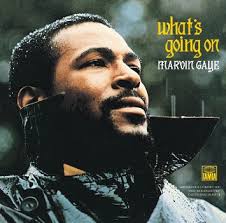
Marvin Gaye: What's Going On?We wake up to news that the prior night an innocent person was killed at point-blank range. We come back from lunch to news of a mass shooting in a public gathering place. We drive home from work but have to go around downtown because there’s a bomb scare. We sit down to dinner and try to dissect the political ramblings of where to plant the blame and why it’s someone else’s fault that nothing can be done about bloodshed. We go to bed trying to shut out the squabbling hysteria and another gunshot rings out. This time maybe it’s across the street.

Alton Sterling.

Philando Castile.

The slaughter of five police officers in Dallas.

That’s was in 72 hours, folks.

Last month we suffered Orlando. Last year it was San Bernardino. Two years ago it was Ferguson. Sandy Hook, Aurora, and Columbine might seem to some like ancient history. We can’t even keep an inventory or a timeline in our own minds —and that’s before we even toss in the endless acts of organized terrorism around the globe.

Some of the shooters are mentally ill, some are socially broken, sadly enough, some are cops. You try to tease them apart — it’s not the same thing when a psychopath fires into the crowd as it is when a jittery police officer kills a pleading African-American on the street — but under all of it you find the common theme: unrestrained hatred, reckless emotion taking power over determined action.

Violence, murder, death. Blame, finger-pointing, posturing. Every single day now. What vision of America is this? How did we get ourselves here? The victims fall pointlessly and then the rest of us argue to exhaustion. We have to be better than this. We just have to be better than this.

If the best minds speak out, will we hear them?

We are simultaneously irate and numb. How exactly can we be both of those at the same time?

Is it the 300 million cheap retail guns? The mass economic inequality? A sudden perceived freedom to express racist thoughts as “just saying candidly what’s on someone’s mind?” Too much pent-up anger in the institutions empowered to protect us from widespread chaos?

Marvin Gaye sang it the last time we rumbled nationally on the topic of civil rights. What’s Going On?

It’s more than we can see, hear, feel, or perceive. It’s not us and them. It’s not here and there. We are all in it all the time whether we want to be or not. Hello, Social Media, the untethered connectivity that weaves us together habitually and perpetually.

I am convinced the internet itself has to be at work here, although I see it as an equal plus and minus given the freedom it has already inspired in developing, previously autocratic countries. It’s not a coincidence that public violence and social media are exploding together.

Think about it. TV was the fuel of Vietnam protests and the Civil Rights Movement. We saw stuff everyday on analog television that we never saw before, and that made us mad, so we reacted. Now the internet lets us see and hear everything in realtime, it lasts a second in impact, and then a meme wipes that out with another. Nothing is edited, vicious words and horrific images fly around the globe at light speed. Regular folks like us gobble it up and talk about it like tallying statistics, while other “less regular” folks do who knows what because of it or maybe even try to make their own news for a few seconds.

Pretty soon we are on overload, frozen in inability to combat the madness.

Yes, the for-profit media is playing a role, but I don’t think it’s the big money professionals who are whipping up the frenzy as much as our addiction to social media. I don’t think any of us understands the impact the constant give-and-take-and-tackle-and-refute is having on us because we are devouring the scraps embedded in the platform simultaneously with its invention — without enough history, context, or perspective to make real sense of the role we are playing as nodes.

This is not a value judgment on our actions, mind you, it’s an observation. I am as guilty as anyone of living in the fray of exchange. I am more guilty because I am a writer and any good I try to do in getting you to think about this stuff can and will backfire and create more angst in its dismissal and rebuttal.

Sorry, I don’t have any brilliant answers. I’m a little frozen as well, a lot like you. I’m an observer and an interpreter, one voice trying to wrestle through the noise and rhetoric. I am convinced that it is not going to be a politician who leads us out of this muck. Martin Luther King wasn’t elected. He inspired his following. He paid the price, and he made a difference. We need that badly. I don’t have a clue what a Dr. King looks like in the 21st century or even if such a thing is possible anymore given our cynicism. I hope someone out there can figure out how to be one, the real deal.

Here’s one answer: Don’t let social media demoralize you. Don’t let the random ramblings of reactionary tirades spin you. Don’t be confused and don’t be manipulated by entrenched greed or opportunistic power grabs. Stay focused on ideas that resonate with your values, but listen thoughtfully when someone who looks or sounds different from you is making a compelling case for justice. Celebrate unsung heroes who are quietly making a difference. Catch someone in an act of compassion and sing their praises. The self-imposed noise around us can be divisive or unifying — it’s a rather important choice and always a choice.

Apathy and the status quo aren’t a solution. Terror can’t be a norm. We must find a way to unmake this mess. Don’t give up. Demand better. Demand sanity. Listen for the silenced voice in the room without an agenda. The better answers won’t be in obvious places. It is time to Think Different.

_____

This article originally appeared on The Good Men Project.

Let’s Ask Dad

GMP DadsThis year at The Good Men Project, we have committed to a number of strategic initiatives developed to better engage our community. Original video programming where our distinct voice can be well-expressed continues to be a key focus for our creative team.

Our latest shoot which I helped produce got me thinking there’s a reason some things change while others stay the same. Our increased use of video may be new, but at its heart, it’s just another tool for telling the stories we so love to share. Many of those stories this month are about dads, not surprisingly with Father’s Day on the horizon.

We interviewed seven dads across a spectrum of different backgrounds. They were different ages, their children were different ages, some had one child, some had several. They came from different backgrounds, different income levels, different commitments to faith, and different hopes for the future. What they had in common was profound love for their children, deep reflection on the impact of their own fathers on their lives, humble concern about wanting to make consistently good choices for their children, and hope that their children would grow up resilient and caring in a world with unnerving obstacles at every stage of life.

As I sat in the studio and got to know each of these fine men through their detailed answers to our deceptively simple questions, I was struck by the commonality in their integrity, candor, introspection, and keen insights into the forever moments of parenting. Any single moment of a child’s development might or might not become a memory, but the memories each of these individuals recalled with resonance were as different as they were as human beings.

One father struggled to explain where a very young child’s grandparents “went” when their lives had come to an end. Another father lamented how the sad sarcasm his child learned to express was a direct result of the same sarcasm he wished he never expressed to that child in moments of exhaustion. Yet another wished that he could provide more material comforts to his children, yet hoped his child understood how hard he worked for what they did have.

There were so many emotions expressed in such a short time during the course of our interviews, I wondered how the clichés of men retreating to the silence of their insecurities ever became so widespread. The dads we met wanted to talk, wanted to share, wanted to explore, and most of all wanted to be the best dads they could ever be. They wanted to exchange ideas, hear what each other had to say, learn from each other, and find community in the complexity of fatherhood where definitive textbooks don’t exist and the future impact of their choices is as abstract as the roadmap that brought them to the present.

When you get a dose of honesty that concentrated and expressed with unlimited pathos, the mirror of your own life reflects vividly and without filter. We see ourselves in each other’s eyes, and we learn many of our lessons in seeing our own successes and setbacks in the similar acts of our peers.

It is very much our mission at The Good Men Project to further the conversation no one else is having, and while video in this form might be historical artifact, when placed in a give-and-take context it very much can inspire dialogue. That’s what we set out to do with this bit of storytelling, not just record the stories of those talking, but lay the groundwork for others to react to these truthful moments as starting points in diving into their own personal histories.

Dad relationships are complex, we all know that. One way to start making sense of the father-child bond is to listen carefully to expressions we might not otherwise hear, think about our own answers and actions, and then see where the conversation takes us. Empathy can be a strong force in course correction. Celebration can be an even stronger force in replacing strident self-critique with simple moments of approval and acknowledgment.

Fathers are not simple entities, there is no reason to pretend they are. We all may not have one active in our lives, but if we do, there’s no time like the present to celebrate the dialogue we can still enjoy. If that is not an option, then listening and sharing with others might be another path to awareness and bonding. Mistakes are plentiful, but forever moments matter more.

Enjoy the videos. Enjoy the conversation. It only works if this is a starting point, not an archive. Let us hear from you. Let your children hear from you. Listen to their prying questions and find their hearts in your heartfelt answers.

We’ll be adding more video to this page and our YouTube channel on an ongoing basis, so check back frequently as the story unfolds. The more we add, the better the conversation — but only if you become a part of it.

And hey, an extraordinarily Happy Father’s Day to our entire community from everyone at The Good Men Project!

_____

Here are the questions we asked in the interviews. Just click on the questions to launch the video answers.

How has the word “love” changed now that you are a dad?

Are your children more like you or more like their mom?

What’s the best advice your father ever gave you?

How would you describe your dad in a sentence or two?

What advice would you give to new dads?

In your family what are dad tasks and what are mom tasks?

What was expected and unexpected about fatherhood?

This article originally appeared on The Good Men Project.