Brands In Memoriam 2012

Frequent readers of this blog know that I am obsessed with the concept of creative destruction, the intangible but daunting market force where an invention that is vital takes out that which has become defunct, and the nascent replaces the established. For those of you just stopping by, you will find any number of mentions of creative destruction as you page through my posts on innovation—it represents for me all that is true and real in deploying creativity to survive in business, perhaps best captured in the title of Andy Grove’s definitive book, “Only The Paranoid Survive.”

As a result of creative destruction, every year we add more once significant names to the Dead Brand Graveyard. Recent memory had us bid adieu to such iconic enterprises as Palm, Saab, Lehman Brothers, Zenith, Compaq, Borders, Circuit City, Ritz Camera, CompUSA, Mervyn’s, Friendster, Tower Records, Polaroid, and Kodak. I polled my network on Facebook for suggestions to include this year and got way more than I could include in a single blog post, many of which could be argued are still on the bubble; some have already quietly jumped the shark, others are still operating as near zombie brands, not yet coming to terms with their imminent vaporization. I invite those dear friends who offered their suggestions to include them in the comments below—as well as anyone else who can see what is certain to end badly—as internal politics and stagnating ideas cause those who should know better to obscure the mandate of leadership.

Here then are my top label farewells for the current calendar year:

Continental Airlines Logo Circa 1940sContinental Airlines: As a result of the merger between United and Continental, the marketing folks did the right thing and picked one brand to make it easier to find your tail logo on the runway. Was anything really lost if this was just a merger? Ask the people (like me) still stuck flying United—yeah, the customer experience did the impossible and took another plunge. If you aren’t 1K at this point in your frequent flyer status, melt down your Premier Card, there are so many top dogs in the system the rest of us matter not, kiss upgrades goodbye. Choice on routes? Funny how the routes and times keep getting de-duped. It’s ironic that an industry that flies you around in the sky at 500 mph and largely invented the modern loyalty program today can’t come up with more clever ways to achieve growth than eliminating its own competition—plus five extra inches of leg room, baggage checks, and those yummy inflight box lunches are now upsells. The parade of eliminated airline brands welcomes another, while customers fume with rising prices and deteriorating service. Hard to believe this is a path to long-term health and improved profits in a backbone industry our economy needs to thrive.

Fresh & Easy: This expansion into the USA didn’t go so well for UK grocery titan Tesco. Any ideas why? Been in one? Okay, that’s a good start. Here’s another—where was the segmentation analysis? Same prices and quality as the giant American supermarkets like Safeway, but a smaller footprint and thus fewer shelf offerings. Same footprint and attempted laid back environment as Whole Foods or Trader Joe’s, but no real upscale inventory warranting premium prices or nice people to kibitz with you at checkout. No meaningful differentiation to be found, and small parking lots, too. Ready made portions for young working professionals weren’t a home run in a market with as much choice and variety as ours. Head on competition with Wal-Mart—which can operate at scale near 3% net income while it’s strategically expanding in the grocery category—was a capital-intensive bet inclusive of acquiring real estate and building new stores, a tough play requiring far-ranging commitment and vision to warrant the pain. Without either, Tesco cut its losses and retreated.

Newsweek: This one is spiritually sad for us old school hard news and analysis junkies, except that I cannot remember when I last touched a copy of this magazine, even in a dentist’s office. Bought in 2010 from The Washington Post by audio magnate Sid Harman for $1 and assumption of the losses, ostensibly for sentimental reasons, it was then merged via IAC with The Daily Beast and put under the direction of star editor Tina Brown (there’s a cost saving measure, huh?). Circulation and ad rates for the print version of Newsweek never regained momentum sufficient to cover costs, so this year we heard announcement that the print edition is ceasing. Can Newsweek digital-only survive as a differentiated masthead next to The Daily Beast? Can you imagine a good reason to continue two separate editorial teams? Can you imagine the same editorial team producing two presumably different publications? Have you tried to sell display advertising lately for vertical online editorial products? And just what is a News-Weekly in the age of internet microsecond breaking info copy? At 79 years on the newsstands and in mailboxes, Newsweek had a good run, it just stopped evolving.

Hostess: It seems obvious to many that the sub-brands of 85-year-old Hostess will live on post the uber bankruptcy, and there will be some snack distributor out there continuing to put Twinkies, Ho-Hos, and Ding-Dongs on grocery store shelves everywhere (other than Fresh & Easy, see above). The master brand is likely to die with the corporate entity, as executive management was unable to make a deal with the labor union representing the workers who made the Twinkies, Ho-Hos, and Ding-Dongs. So 18,000 people lost their jobs because no deal could be reached between managers and workers? I don’t think that’s the whole story. Try a balance sheet too weak to support internal investment after emerging from a prior bankruptcy with private equity imposed debt and mounting unfunded pension obligations. The real culprit in my mind—you got it, thinner margins and declining market share due to lack of innovation. Hostess management—now asking for bonuses in liquidation—failed to bring relevant new products to market in a climate where obesity and diabetes became part of the vernacular. Wonder Bread may have been the greatest thing since… whatever came before it, but not in a world of seven grain all natural high fiber baked fresh daily, sliced thick and thin or not at all, your choice.

Blackberry: I am going out on a limb here, calling the magnificent former high-flier from Research in Motion dead even though launch of a new platform has been loaded into the cannons for ignition. Why do I say it’s gone with two new Blackberry’s rolling out as soon as next month? As noted in the Wall Street Journal last week, “Consulting firm IDC recently estimated that RIM’s share of the global smartphone market stands at 4.7%, down from 9.5% at this time last year and from more than 50% in 2009.” Sorry, but when a company has less than 10% of the market share it had three years ago, I am not sure how you could classify a recovery as anything more than a dangling lifeline. What went wrong? Ever try to use the Blackberry browser? There is no word in our language of which I am aware to adequately modify the word slow. With an extremely late to market touchscreen interface, where was the incentive for app developers to develop apps? Those of you who know me know my devotion to the thumb driven analog keyboard, but when I tossed it in for an iPhone 5, I knew the rest of the thumbers were coming too.

There were a number of brands suggested by my colleagues as sighted on death watch, but I’ll let those opinion makers chime in themselves and go out on their own limbs as I did with Blackberry. I have my suspicions about who might be on deck for next year’s list, but I will keep those sealed for now in a paper envelope so as not to publicly curse them or too soon embarrass myself for being wrong. Some in the soon to be gone circle I still like and am hoping for a comeback, though not many.

I think I may make this an annual feature. History would suggest I won’t have much trouble coming up with a list each year. Why chronicle the abdicated? Creative destruction is permanently embedded in our business culture, and even the greatest company can be gone in a single product cycle if customers aren’t understood to be our ultimate boss. With constraints on distribution forever less a moat and abundant technology a ceaseless path to increased consumer choice, business leadership requires nimble execution, unending responsiveness, and gracious humility to constantly win anew customer loyalty. It’s a lesson we all need front and center to do our jobs honestly and well: Innovate quickly or die.

Don’t Fear the Fad

As an investor, can you ever know for certain if that newfangled gizmo come to market is the real deal or a fad?

Let’s try it a different way—perhaps everything is a fad, until it’s proven otherwise.

Bread, most likely not a fad. But organic fair-market nine-grain soft crust, probably a fad.

Cars, probably not a fad. But eight-cylinder 130 mph muscle mobiles with no back seats could be a fad.

AM radio, possibly a fad, but one that has enjoyed a long shelf life—and now with news and sports retransmitted over the internet to mobile devices, probably a decent bit of runway left in the broadcast machine.

Farmville, Mafia Wars, and their brethren? You tell me.

Our attention spans are surely fickle, but just because something is a fad does not necessarily make it a bad investment. I am not certain internet keyword search will last forever, but the last decade and a half have proven pretty rewarding, at least for one company that currently commands better than 70% market share. Games? That’s where they come and go in a coughing breath—if you are going to bet at that crap table, come with a lot of chips and a jug of Pepto-Bismol.

The question of whether it makes sense to bet on a fad in a commercial, accelerated, low-loyalty, short-attention-span, vastly diverse, market-driven global economy seems moot. People have bet against railroads, phones, airlines, television, personal computers, and even guitar bands as fads—and that was before they had customers! Even after these “fads” had momentum, there were endless naysayers who said they were on their way out as fast as they’d found their way in. With that kind of outlook, eventually you have to be right, but you may be staring up at daisy roots when you finally win your bet.

There is tremendous Monday morning quarterbacking now about the dive in Web 2.0 companies, from Facebook to Zynga to Groupon to Pandora. Maybe they are all fads, but let’s separate the fad of stock market performance from the fad of consumer adoption as two separate issues. The shine may be off the stock, or the shine may be off the company’s products, but those are very different things. High-growth speculative stocks like these are most often valued on future earnings potential, not current performance, so if the stock is out of favor, that does not de facto mean the product or service has gone out of favor. Plenty of people are enjoying these consumables at the moment, though it is safe to say that they won’t all be in vogue for eternity. Styles change, tastes change, brand loyalties change. We know that to be Creative Destruction, an ever-present cycle, so when we criticize either an equity or a product as being a fad, let’s be careful to make the distinction, and even more careful not to level broad sweeping judgment that could lead to missed opportunity.

Can a company make money riding the wave of a fad? Seems to me that is more norm than anomaly. Can an investor make money owning the stock of a company that rides the wave of a fad without volatile exposure to market timing? Again this seems perfectly reasonable, depending on the window. Think Intel with micro-processing chips during the PC revolution, Electronic Arts with the rise of sports-based video games led by Madden NFL, and today’s True King of All Media, Apple. Equity markets in the long run reward smart risk and punish reckless risk, just as commercial markets reward desirable consumer offerings and reject cynical ones. There has to be risk for there to be reward or no one would invest, so the question is not whether something is a fad, but whether that fad represents some potential form of continuity recognized by visionary management as one in a string of ventures that together comprise opportunity.

Intel’s legendary former CEO Andy Grove clearly taught us, “Only the Paranoid Survive.” He knew at any strategic inflection point the difference between a fad and a trend was largely the expanse of the product life cycle. More importantly, he worried about management culture as the path to product culture, where innovation means never-ending creativity, not tossing the dice and getting lucky on a good roll. I don’t worry whether a company is profiting from a fad, I expect companies to be opportunistic. I worry whether the company is a one-trick pony, whether it has created a learning culture where success and failure are both studied. A company that has learned to learn, that can read data and understand how fads are perpetuated as trends that constitute periodically sustained disruptions—that is a company that can extract true shareholder value from a fad, foremost by surprising and delighting customers repeatedly with that which they never expected was possible.

I have a lot of criticism about this year’s poor performing new entries in the NASDAQ, but that criticism has nothing to do with whether those companies were beneficiaries of identified fads now assessed by pundits to be in decline. My own career has been the beneficiary of any number of fads that came and went—computer games that sold millions and now barely qualify as second round questions on Jeopardy, once immensely cool websites that scored millions of visits that no longer can be found, virtual communities that ranked with the best in loyalty and now would be lucky to make the card draw on Trivial Pursuit. Does that mean they weren’t good businesses that added significant value to their owners? To the contrary, in their useful lives they added exceptional shareholder value in earnings and lifetime contribution. We worked the brand promises as long as we could, but when their time was done, we moved on.

That’s why a sweeping statement like “don’t invest in fads” makes little sense, because if virtually everything is a fad with varying sustainability, there is no choice but to invest in fads. What I worry about is management vision, how the brand stewards of a company are migrating from one fad to the next, how maneuvering through Creative Destruction is an art and science unto itself. Edison did it over a very long period of time. So did Steve Jobs. The folks who run television networks have to do it, because no show lasts forever and formats are cyclical; yesterday’s Variety Shows are today’s Reality Shows, half-hour comedy goes in and out of style, so does one-hour drama. Walt Disney famously bet the ranch on 2D feature animation, clearly a fad, although one he created and that lasted more than 50 years—but that wasn’t the only trick he had in the magic shop, not even close. To invest wisely in the likelihood that originators can capitalize on a string of fads through creativity and experimentation is very different from investing in one hot rocket that goes straight up with full knowledge that gravity will send it back down with equal and opposite thrust.

As the contemplative George Harrison reminds us, All Things Must Pass. That doesn’t mean windows of opportunity aren’t always in abundance. Watch the fad-makers, not the fads themselves, and the game changes significantly. While even the best fad-makers can’t call winners forever, those longer windows leave plenty of room for upside, especially when you bet the full spectrum of an index rather than trying to call the hits in isolation. If you bet on a one-trick pony and lose your bait, that was most likely your mistake, not that you bet on a fad.

Learning from Mars

If you went to elementary school circa the 1960s, you remember that one of the few times TV was brought into the classroom—likely a dusty, early model, enormous 21-inch Zenith B&W CRT with bent rabbit ears, strapped to a prison issue, grey steel rolling wheel cart—was for the Apollo lift offs, splash downs, and moon walks. During those turbulent years of hard-won civil rights and compounding economic expansion, you might have dreamed about growing up to be the next Mick Jagger, but it is equally possible you aspired to have The Right Stuff and be the next Neil Armstrong.

The Space Race captured our imaginations. We watched in awe as the first boot imprint and an American flag were planted in the Sea of Tranquility. We lost sleep with the good people at Houston who had “a problem” bringing home Apollo 13. It was all so captivating, the science in our textbooks was made real, technology was cool, and the Warp Factors of Star Trek seemed someday plausible. I’m glad I got to experience that as a child—it made childhood more childlike and less childish. The Little Prince would have been proud.

Much has been written about the fall off in public enthusiasm for the space program after the tapering Apollo missions and the less grandiose but still near miraculous Space Shuttle missions. As we left The Cold War behind with the collapse of the Soviet Union, we came to worry less about controlling our Solar System. Satellites became our path to better television and radio entertainment, not so much a magic portal to the future as a manufactured bridge to enhanced convenience. It all became ordinary, and then expensive, a difficult pair to keep at the high-end of federal funding without public enthusiasm. We moved on, to the information age, to the PC revolution, to the wildly lucrative internet. NASA was scaled back year after year, and although we knew that wasn’t optimal, we were largely okay with it.

Too often we forget all the ancillary learning that occurred as part of space exploration—not just the nifty consumer products like cordless power tools and vastly improved athletic shoes, but the processes of working together in high function teams. Getting tonnage into and out of space safely has never been a job for individual heroes as much as it sets the tone for working together in groups, combining scientific work methods that emphasize cooperation, breaking down gigantic projects into manageable tasks. Engineering is a profession of shared ideas, where the accuracy of each single contribution matters immensely, but the compiled knowledge of all participants matters even more. We take so much of that kind of process for granted now when we bite off big chunks. I wonder if we take appropriate time to digest just what the process of doing the incredible really means.

As we took a brief intermission from the Games of the 30th Olympiad these past few weeks to observe the otherworldly, never before tried jet-softened hard landing on Mars, I was left pondering if perhaps we were being a bit too casual about the successful parachuting of the Curiosity Rover. No, there were no astronauts on board, and yes, we had landed on Mars before—but not this way, and not with a nuclear powered craft of such immense size and scale. I think everything that involves operating with precision at distances of this magnitude is astonishing, and no matter how clear the physics, we should celebrate with the geniuses at JPL and NASA anytime they pull off the near impossible. Getting to Mars and sending back data to Earth is not a little thing no matter how many times we do it.

This one left me thinking even further. In the midst of a floundering economy and awful recession, precisely the opposite of the Apollo climate, our national tech teams did more with less and made us proud. What were the business lessons, I wondered—more ancillary byproducts of this adventure in science—from which we can additionally benefit in learning by example? I am sure there are many, but three leap out for me:

  1. Difficult is Good.  Paraphrasing President Kennedy’s challenge to set an arbitrary deadline without a known roadmap, the Curiosity team chose their path not because it was easy, but because it was hard. This was wide-eyed enthusiasm for a mission about something other than personal gain. Want people to rally around a task? Give them something where they need each other, where failure is acceptable in concept, but not in approach. Big problems are always worth solving.
  2. Resilience is Rebound.  Here was a team that had just put the Shuttle in mothballs, experienced colossal layoffs, and had no choice but to accept for the immediate future that our astronauts would have to hitchhike across the galaxy in the form of renting seats from former competitors. They put this behind them by committing to the project at hand.
  3. Sharing Triumph is Personal.  How do you get a team fired up and motivated? Bypassing cynicism is a decent route. This mission was about proving what was possible, about intrinsic meaning as much as the survival of equipment. The Curiosity team built pride because they did something together they will forever share, advancing progress, continuing exploration. Often you forget the details of a project, but you don’t forget people who matter. This is where emotion has a clear role in that which is otherwise objective.

I hope enough people at home were paying attention, partly because the landing was worthy of our attention, but more because when you think about it in the abstract, there is more application than meets the eye. Getting out of this recession is no small task, and it won’t be our government who gets the job done. It will be teamwork, commitment, creativity, motivation, and entrepreneurial spirit. Our move forward will be economic, but satisfaction has come from more than that. It will be of the human spirit, with celebration in the process of innovation as well as getting some problems solved.

I like that they named the rover Curiosity. It’s a good, real world metaphor. It sings aspiration. It’s worthy of our attention, a form of pedagogy that really does come from another planet.

The Ultimate Broker

“Uncovering hidden supply to meet pent-up demand is the magic behind some of today’s most exciting start-ups.”

I read that opening phrase in a Heard on the Street WSJ Article by Rolfe Winkler last week and it stuck with me. It’s not a particularly new idea, but it is elegant, simply stated, and true.

At its core, the internet in many ways is a giant marketplace—a shared global space for socializing, exchanging ideas, buying and selling goods and services, hanging out, observing human behavior—occasionally offering spectacle, always stimulating interactive exchange.

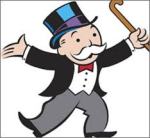
Uncle PennybagsIn the simplest terms, a broker brings together buyers and sellers. A broker can be a person or it can be a facility. It is a go-between function for give and take—introductions, descriptive information, negotiation, resolution. The act of brokering can be formal and compensated with paid commissions or informal and somewhat ephemeral.

It was anything but coincidental that discount stock brokerages like Charles Schwab and TD Ameritrade made a beeline to the commercial web in its earliest days, circa the mid 1990s. Some observers eventually came to blame much of the dot-com bubble on too easy access to day-trading by non-professionals. A good many individuals who prior to loading their first browser never met a stock broker found themselves easily comfortable with entering their own trades at hugely reduced transaction fees where professional labor costs were eliminated. We all know that didn’t turn out well for a lot of folks and the overall economy, but the point remains that the excitement of the internet’s adoption was fueled by people using the internet to buy and sell a whole line-up of newly created internet stocks. Marshall McLuhan deja vu, eh? Not sure we will see a self-referential kaboom quite like that again in our lifetime, though the public’s hunger for IPOs built on entirely new business paradigms (proven or not) still seems rather insatiable.

One of the things the internet does well is bring efficiency to the brokering process. Success stories are a virtual Who’s Who of celebrated internet brands—eBay, Priceline, Expedia, Travelocity, Craig’s List, Etsy, Airbnb—any number of much embraced marketplaces where the site of exchange never takes possession of physical inventory on its balance sheet, but instead acts as an agent to connect what is for sale with both new and loyal customers. A myriad of innovative payment models has been developed to compensate these broker-marketplaces for the service they provide, but in almost all instances they have lowered transaction costs, passed those savings along to customers, and increased total sales volume in the categories tackled. This mostly customer-friendly way of doing business is now every bit as normal for us as sitting on the back side of a travel agent’s CRT monitor waiting for him to input an airline seat query into Sabre not even a full generation ago (like, when I was in college). What others used to do for us we now do for ourselves, happily in most cases, and because of the savings and easy access, we do it a lot more frequently.

I have been spending a reasonable amount of time of late helping a number of start-ups get off the ground—formally and informally, no shameless plugs today, but I do mention them often in my tweets—and one of the constants in determining my excitement level is how thoroughly an emerging visionary has thought through a problem of reinvention. If we take it on faith that basic human needs and behaviors don’t change that much—we sleep, we eat, we learn, we love, we move, we fight, we heal, we protect, we shop—then the march of progress marked by improvements in technology finds reward when disruptors help us do those things better.

Returning to the quote that kicked off this post, when an entrepreneur is able to identify an abundance of largely unknown supply and connect it with a steady stream of curiously hidden demand, new business can boom. In the realm of the marketplace, anytime a business can innovate around streamlining the availability and visibility of products and services in need of buyers—and buyers motivated to use these new tools are driven to discover otherwise opaque inventories—a new brokerage is born. This can bring to bear a cruel process of creative destruction on entrenched competitors without the willingness or vision to change, but in our current economic landscape, it can offer a steady flow of more efficient business endeavors that inspire imagination and eliminate unnecessarily inflated costs. Pooled information, often in the form of personal opinions and reviews, is a freely traded currency, a form of entertainment in itself. Add social sharing playfulness along with clever experiments in curation and the fun really begins.

The innovation I am seeing both as an insider and an outsider suggests we are nowhere near maturity in reinventing how sellers find buyers and vice-versa—through digital channels and whatever awaits us beyond mobile, social, and local electronic communities. That should be good news as the availability of previously gated inventory finds its way into the supply chain and into the hands of delighted customers. Each new successful brokering start-up comes with its own spin. Some are truly wacky, some are obvious in hindsight, some too quickly migrate from wacky to obvious. I have little fear that all the people functions of brokering will be replaced—there will always be demand for great customer service and high touch assistance that adds value—but I do know that increasingly over time we will stop paying high fees for anything that doesn’t add much value. That’s the way of efficiency, and a great use of connective technology, where I’m pretty sure we ain’t see nothing yet.