Generative AI refers to the technology that can generate new content such as text, images, music, or videos. Like any technology, it has its advantages and disadvantages. Here are some of the pros and cons of generative AI:
Pros:
Creativity: Generative AI can generate new and creative content that can be used in various fields, including music, art, and advertising. It can come up with novel ideas that humans might not have thought of.
Efficiency: Generative AI can create content much faster than humans can. For example, it can generate thousands of images or pieces of text in just a few minutes.
Personalization: Generative AI can create content that is personalized to the user’s preferences. For example, it can generate music or art that is tailored to the user’s tastes.
Automation: Generative AI can automate repetitive tasks that would otherwise require human intervention. This can save time and resources, especially in industries such as marketing or content creation.
Cons:
Quality: The quality of content generated by generative AI can vary widely, depending on the quality of the data used to train the model. The content may be low-quality or even nonsensical.
Bias: Generative AI can perpetuate biases that exist in the data used to train it. For example, a generative AI trained on a biased dataset may generate content that is discriminatory or offensive.
Ethical concerns: Generative AI can be used to create deepfake videos or other content that can be used to spread misinformation or deceive people.
Intellectual property: Generative AI can create content that may infringe on intellectual property rights, such as copyright or trademark.
Lack of human touch: While generative AI can create content quickly and efficiently, it lacks the human touch that makes content truly unique and memorable.
In summary, generative AI has many potential benefits, but it also comes with significant risks and challenges. As with any technology, it is important to weigh the pros and cons carefully and use it responsibly.
Note: This special guest post was created in its entirety other than the title by ChatGPT.
Over the past weeks, several major companies have announced various return-to-office policies. That means a requirement to be in an office some number of days each week. Thus far I have resisted sending a similar memo because I think for the most part this is best left to the judgment of department leaders who understand their goals, More than that, I am counting on the good judgment of individuals to make sense of advancing their career horizons.
Let me offer this one bit of advice: If you have the opportunity to be in the room and are not taking it, you might be doing yourself an enormous disservice. The time you spend at home may make your current life easier. I have significant doubt it will make your future more successful.
In my experience, there is no substitute for being in the room. It is where true bonds are created. It is where you can see in person how difficult challenges are met. It is where your gifts can be shared and recognized not just by your peers and boss, but by your boss’s boss, and anyone up the chain who might poke in their head and see you in action.
That’s not office politics. That’s reality.
Willingly giving up a chance to be in the room is a choice you make at your own risk, to the extent you have the choice. If you still have that choice, consider what you might be giving up in exchange for those nasty commute hours and a refrigerator full of your own preferred food.
Several decades ago, I was a recent college graduate desperate for an opportunity. I offer the word desperate quite deliberately. Despite a bachelor’s degree in the humanities from a known college, a string of paid jobs and internships, and a resume filled with extracurricular projects, I was just another unknown job applicant in a huge pool of recent college grads. The economy was in rough shape. It seemed no one who mattered even wanted to talk with me, let alone hire me.
All I wanted was to be in the room.
Like so many others, I ceaselessly kept at it and eventually got interviews. After many of those I got hired into a lousy job, then another lousy job, then several other lousy jobs, then finally a good job that I believe started my real career. At no time during that arc or any subsequent arc did the notion of willingly working remotely ever cross my mind, although one of those jobs happened to be such four out of five days each week because they had no desk for me. Any time I was able to be at work I considered it a catapulting privilege to be among accomplished, ambitious colleagues.
I never forgot what it was like being in a small apartment waiting for the phone to ring for an invitation to be in the room. I also can’t imagine doing what I do today without those many decades of watching other people perform their jobs across the spectrum from expertly to incompetently.
Every chance to be in the room for me has been a chance to learn. At the same time, it has been a chance to collaborate, creatively engage, and be a part of innovation.
Have I taken solo work home to review evenings and over the weekend regularly? You bet.
Do I believe there are times when telecommuting makes sense? Absolutely.
Do I see the internet as an unrivaled tool to share ideas globally among people who might never have the chance to gather under the same roof? Without question.
Would any of it convince me that forgoing an opportunity to be in the room for comfort, convenience, or an alleged increase in productivity was a reasonable trade? Not on your life.
Working alone may increase efficiency. I don’t see it increasing creativity.
Covid-19 response was an anomaly. Did it teach many of us a new set of behaviors, that we could accomplish things remotely if it was a necessity? It certainly did. Is the continuing right to work remotely an entitlement that is the result of that learning? Well, not exactly.
I suppose in an employment market where talent has unlimited options, the benefit of working remotely might be a trading card that management can offer to attract team members. Yet if management is only offering this benefit because it has no choice if positions are to be filled, how positive do you think management feels about that? Hiring managers want choices just like you want choices. When anything becomes a mandate, it often does so with a nagging amount of reservation.
One of the things I noticed when Covid first grounded us was how quickly and well our leadership team adapted to remote meetings. In many respects, I think it is the reason our company succeeded and curiously accelerated during Covid. Many colleagues at other companies weren’t as lucky. Some tragically saw their companies in demise, not only as a result of unprecedented business conditions but of the challenges in responding to those conditions with untested practices.
The more I thought about this, the more I was convinced that we succeeded because of the years we previously spent together in the room. Those many years of collaboration established a solid foundation for crisis management we could apply remotely. We were able to talk in shorthand because we had established that shorthand. We were able to use humor because we knew each other’s sensibilities and sensitivities. I couldn’t even imagine the idea of trying to onboard a VP into a remote setting, where I knew others were trying and failing at this.
Our team knew this management paradigm was intended to be temporary and that we would be back in person as soon as practicable. Personally, I couldn’t wait and was back in the office as soon as I could. We also didn’t overreact. We knew that five days a week in person for everyone no longer made sense because it had never made sense. It was obvious that forty or so required office hours was too broad a brush. We knew workplace equilibrium would work itself out, while we counted on individuals to make sense of their careers in tandem with company needs.
Moderation always seems like a better approach to consensus than absolutes. Individual decisions always seem preferable to sweeping mandates when inspiring people’s best work.
I had a sense that every individual would come to understand the value of being in the room. To be in the room is to absorb the skills you will call upon to address the next set of challenges you will face. To be in the room is a gift, perhaps not every day, but on the days that matter and will stay with you for a lifetime.
You may be arguing with me in your head. You may be telling yourself this is a new day, a different generation, a wiser and more inspired collective that embraces work-life balance and knows to mistrust corporations that don’t have their best interests at heart. You might be convinced that because technology advances have made remote work viable, we’d be silly not to ride the horse in the direction it seems to be going. You might be right, but I am always reminded of those very dangerous words that creep up every time I think they are going away forever: “This time is different.”
I have written before about leverage in getting your way. It can be an effective tactic as a matter of last resort, but it is seldom a path to trust, long-term relationships, and compounding progress. If the only reason you are allowed to work remotely is that you think your employer has no other choices, I wonder whether you really want to work for that company. If there is a mutual understanding about workplace arrangements that benefits you and your employer in agreeing to a schedule that helps you with childcare, quiet time to think on your own, and still leaves room for in-person collaboration, that’s one thing. If either side is making a demand of the other, that seems like a shaky platform to advance together.
Some types of professions like software engineering seem particularly well suited to remote working as has been evinced by decades of sharing libraries and contributing to enterprise projects, where most of the engineer’s time is spent on individually created program code that is later assembled with other modules. Even then, when I see software engineers in a room with marketing and finance professionals, I often see exponential progress in shorter windows of time.
Don’t undervalue intangibles. Learning to read a room can help you secure unexpected allies to support a controversial strategy. The most unassuming bits of advice acquired from unfamiliar colleagues in the breakroom can be life-changing. Lifelong friendships emerge and develop from unplanned acts of empathy and compassion. You can say all of that plus mentorship and coaching are available electronically and you’ll be right. The in-person impacts you might be underestimating are tone, degree, and happenstance.
When we are together, we learn from each other. We have peripheral vision that lets us see not just what Zoom or Teams puts on the video screen, but what catches our attention in the corner of our eye. We take in winning and losing arguments and approaches. We have the unique opportunity to establish and build company culture.
My advice: Don’t wait for the company directive, don’t even wait to be asked politely. If you have the opportunity, be in the room.
“Someone has to tell me why we keep allowing social media and our very lives as social creatures to be dictated by the most socially awkward person in history.” — Bill Maher
I have the same nagging question. The self-celebrating visionary Mark Zuckerberg continues to express that he knows something about building human ties that the rest of us can learn from his business mission. I see scant evidence that Zuck can guide us anywhere better than where we are at the moment or have been. There is near zero chance that he is going to stop talking because his determined point of view is driven by a conflicted agenda where he benefits most. I am done listening.
I recently learned a new acronym: IRL. You’re probably ahead of me, but it means In Real Life. That would be the opposite of what we bucket today under the category of virtual. Virtual would be something other than sharing the same physical space. Zoom is virtual. Social media is virtual. Running around in a 3D online game space is virtual. Meta is virtual.
If you already know this, forgive me for catching up late. Here’s something that might irritate you even more: I don’t like Meta. Agreed, I don’t like the company now known as Meta, but I really don’t like the idea of meta.
Said better, if I have a choice to interact with you in person—In Real Life—unless we’ve already established an unrepairable dislike for each other, I would prefer to interact with you in shared physical space over shared electronic space. I believe we get more done in person more quickly. I believe there are fewer errors in interpretation when we are together in person. I believe our relationship has a better chance to improve in person. I believe our manners are better in person.
That doesn’t mean I don’t see a role for virtual, I just prefer IRL. Virtual has proven more accessible, often more practical, certainly more economic. The compromise is that virtual leans toward purely transactional exchange, algorithmic efficiency often at the expense of building emotional intelligence. There’s the rub—a lot can get lost when we eliminate nuance from contact.
Zuck probably doesn’t agree. I don’t think the renaming of Facebook to Meta is simply a PR stunt to get us to see past the failings of the platform called Facebook. I think he saw the early experiment called Second Life as an end, not a means. He lives better in the virtual. He belongs in the virtual. He wants us to join him in the virtual. He can be King of All Data in the virtual.
Count me out.
My sense is much of the unbearable divisiveness we are experiencing results from too many of us coming to the conclusion that virtual, or meta, is a substitute for IRL. I’ll accept virtual as an adjunct to IRL—an extension, enhancement, or convenience to supplement IRL. I also think we need to relearn IRL, and quickly, because human contact is a big part of what makes us human. Creating a machine interface between us does not always extract our best selves.
Regretfully, I am a hypocrite on this. I worked with an innovative team at Disney over a decade ago that created ToonTown Online, the first massively multiplayer universe for kids and families, complete with third-party vetted built-in safety. We never intended this virtual playground to be a substitute for recess or a replacement for after-school outdoor activity. It was meant as an alternative for when that playground wasn’t available, particularly for children dependent on parents for logistics.
I don’t think alternative or supplement is what Zuck has in mind. I think primary platform is what he has in mind, as addictive as Facebook, but even more isolating. We will have less agency in Meta. We will have less freedom. We will behave less well.
Zuck will have more authority. Zuck will have more control over directing our actions. Zuck will revel in even less oversight. Zuck will make more money.
Dystopian fiction usually takes us on a gradual journey into descent. In well-told stories, it doesn’t happen in an instant. We are drawn in slowly. Then we realize we have been had and are trapped. Kind of like Facebook.
I see a revolt on the horizon. It won’t look like January 6. It will be the alternative to getting “Zucked” in. Slowly we will grow tired of Facebook. Meta will fail, because IRL is better.
Several years ago during another public flare-up, I posed this question: Is Facebook the Next AOL? Then as now, I wondered if the voracious beast would devolve into oblivion. Why does that destiny today seem even more possible? Because Meta is fundamentally flawed. It advances a business agenda over a human objective. It presumes addiction is a higher-order force than graciously serving customer needs.
Zuck early on said the purpose of Facebook was to make the world more open and connected. He lied. How do I know that? Because he walked away from that proclamation the same way that Google walked away from don’t be evil. It was too hard to be consistent and authentic. Eliminating the binding pretension made it way easier to generate exponentially more cash.
The purpose of Facebook is to collect vast amounts of personal data and leverage it for advertising value. I’m actually okay with that. It’s a true and understandable business objective. We can resist it. We will resist it.
The purpose of Meta is to head-fake us from the world we need to improve to an alternate reality we can never make better than the one we can experience IRL. Even John Carmack, the technical genius behind Oculus, knows the vast details behind building a metaverse are well beyond the hype of advocating for its imminent commercial deployment.
Here’s a thought, Mr. Meta: Fix some of the nasty problems you’ve already created moving fast and breaking things before you dump another pile of poorly considered conflict on us.
Lest you be readying to drop the Luddite card on me, please know that I remain wildly optimistic about the application of virtual reality and augmented reality to medical and other scientific research. I also bear no grudge toward the gaming community, which gave birth to my career, as long as it approaches immersive gaming in a healthy balance with healthy living.
My gripe is with Zuck and anyone else advocating isolating technologies. Escape is not a viable substitute for learning to develop coping mechanisms that lead to mastery of the highly demanding but uniquely rewarding anything-but-meta real world.
Let’s hear a cheer for evolving our delicate mastery of IRL.
Avoidance of human beings in person is not a strategy for learning how to navigate the human landscape, which is created in a natural state to be physical first, virtual as an adjunct and counterpoint. A little social media now and again probably won’t ruin our lives, everything in moderation. Digital sharing can have its place when it defies obsession. I suggested a better rebranding of Facebook might have been Happy Birthday Central. That would celebrate its finest function.
Focus on the basics as we revisit each other IRL: being polite, making eye contact, actually laughing when something is funny rather than typing LOL. Go outside for walks, and when it’s safe to be maskless, smile at passersby. Feel the sun and the rain on your biological skin and be thankful for the gift of our senses.
We truly are a unique blend of the physical, psychological, and dare I say, spiritual. Productive communities are established in tangible places before they become replicated models. There remains evidence to suggest we can be better together than separate. It takes work to keep producing this evidence, but my experience is that removing an LED screen between us offers a dimension of clarity that is otherwise less satisfying and cannot be replicated.
When we let Zuck know we are out on Meta and all-in on true human connections, the real agenda of living with advanced technology can continue. As I have written so many times, technology is advancing much more quickly than our ability to make sense of it. This is not a secret. It’s why we feel anxiety. It’s why we don’t like Mark Zuckerberg when his answers to the hardest questions are unsatisfactory. His vision will not be our vision.
Bill Maher summarized his point of view in his recent ‘New Rules’ segment on Real Time succinctly: “The more time you spend in the virtual world, the more you suck at engaging in the real world.”
Given too many of my own interactions in the pandemic recovering world, I find that awfully and unfortunately compelling.
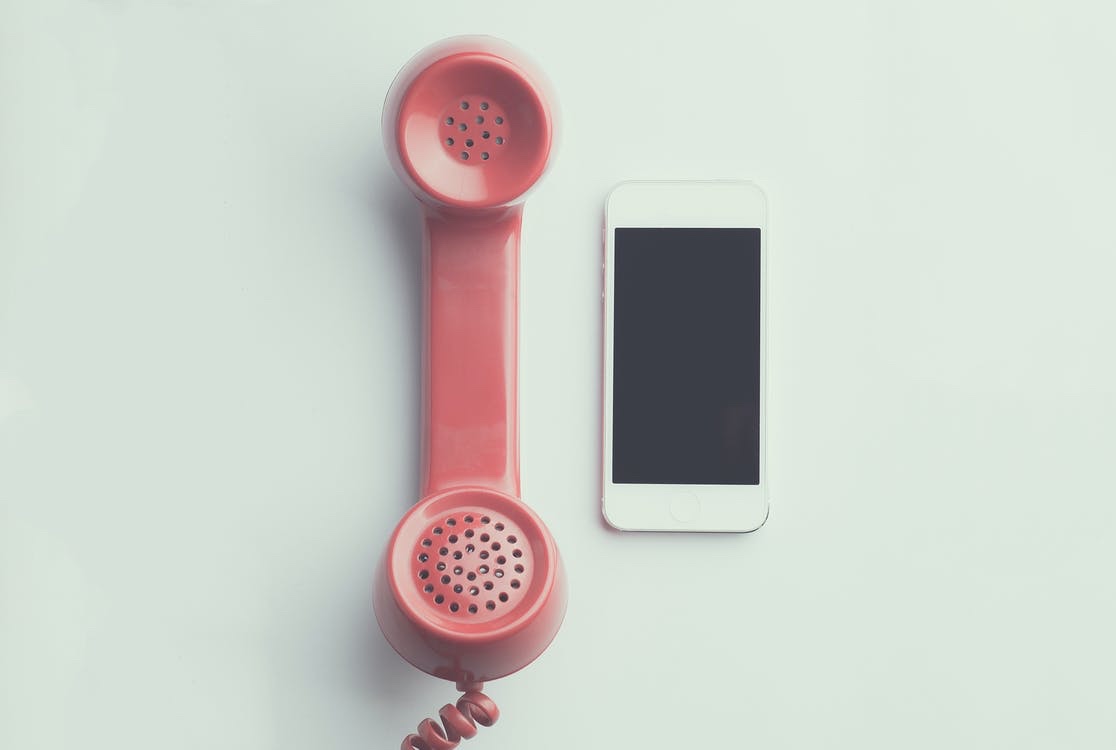
As we return to work and the workplace in the new order of normalcy, I am reminded of the many bad habits we may have acquired in the discomfort of isolation. Foremost among these vices is the spreading disease of poor telephone conduct.
A phone is hardly a phone anymore. It’s an email device, a web browser, a camera, a texting platform, and an app launcher. Yet its initial (if not primary) function we still call a telephone. Perhaps it is time we relearn how to use it in that regard.
Call me ancient, but let me suggest that manners still matter in human contact on both ends of the line.
Unless we recognize the contact name or Caller ID on the screen, few of us will answer a phone anymore. No matter what number you file at the DoNotCall.gov registry, your phone rings continuously with garbage sales calls and bot inquiries. I think that is where bad manners begin, with poor intention.
I once had a boss who never answered the phone, and this was in the days before cell phones. He used to say, “If it’s good news, they’ll call back. If it’s bad news, I don’t want to hear it.” I think that’s another form of bad manners. I also don’t think it’s true. Sometimes good news gets reallocated. Bad news swept under the rug can swiftly convert a minor misunderstanding into a corporate crisis.
Sometimes we need to answer the phone whether we like it or not.
Mobility doesn’t give any of us license to rotten phone behavior. I have written before about returning calls, but now I am getting into the basics. If you didn’t grow up with a landline or have forgotten the etiquette associated with polite calling, here is a laundry list of reminders you may want to paste on the back of your mobile case.
Do not leave your voice mailbox full. You may be getting a call with a job offer. I may not call back.
Record a greeting on your voicemail, however short, and your name. How else do I know I called the right number, particularly if you told it to me wrong.
Speak clearly into the mouthpiece. Don’t rely on the Bluetooth microphone. Articulate your verbal expressions with deliberate care and emphasis. Pretend the other person is really interested in what you are saying. Say it that way and I might be.
Speak even more clearly when you leave a message on my voice mail, particularly the number I should call back if it’s not the one you called from. If I don’t know you and your name is more than one syllable, be precise or spell it.
Should I take the time to leave you a voice message, please extend the courtesy of listening to it before returning my call. You don’t need to begin our conversation with, “What’s up?” I’ve already told you. You’d know that if you simply hit the playback button.
When you answer, speak. Say, “Hello, this is Joan.” If your name isn’t Joan, you can substitute the correct version. Don’t leave an awkward pause and wait for me. I called you and I want to hear your voice. That is reassurance we are getting off to a good start. Your silence tells me you are not interested in the activity at hand and you may never discover why I called if I don’t continue. There go the Dodger tickets I was calling to offer you.
If you’re sitting in the seat behind me on a plane being boarded, don’t speak at full volume. Same recommendation in the airport when we are in line for coffee. I don’t care if you have an earpiece. You may find this ironic, but I really think your business is best kept to you. If you are fighting with your spouse, do you think the fight will end better if she thinks you are sharing the disagreement with the company of strangers? Speak softly or step away where you are alone to lose your argument with dignity.
If I don’t know you, begin the call with your name. Then tell me why you are calling. You called me, remember? I need to know why, not guess at it.
If I call you to introduce myself, don’t know you, and it goes to voicemail, do not text me back. We don’t know each other yet. I’m not ready to text you in shorthand until we have established a relationship. Dial me back. If I waste your time, you needn’t ever text me at all.
Please, thank you, and goodbye are all foundational words that are exceptionally useful in building a platform for communication. Grunts and guttural utterances have their place, but you’ll be surprised how much easier sentences flow with old-fashioned politeness.
There are time zones. They are easy to understand and largely consistent. If you’re looking at the Atlantic Ocean and I live near the Pacific Ocean, your brilliant idea at an early breakfast is not quite as interesting to me in my final few hours of pre-dawn rapid eye movement. Likewise, when I get an idea at midnight, I promise not to bother you with it for at least six hours when we are both again awake.
The phone part of your mobile phone—don’t hesitate to occasionally use it when conversation is sufficient for the topic. Videoconferencing has its place, but we don’t always need to see each other just because the invitation link is a click away. Sometimes we can just talk. Really, we can.
I am sure you have some recommendations of your own. Feel free to share them in the comments here.
Here’s one more tip: Email is not the best way to handle everything. Around the time of re>re>re the essence of an email is largely lost. If you are seeking to be understood or understand (humbly invoking the inspiration of St. Francis), talking is a wonderful alternative to a long list of email comments no one can follow. Email certainly gives you a paper trail and artifact, but it doesn’t necessarily solve your problem.
Some people subscribe to the notion of returning all your calls every day. Try this. I’ll bet your life gets better.
When your phone rings, don’t assume that someone is in an accident or has died. I know that’s becoming an urban legend. Your heart rate deserves better.
Oh, and if I call you, it’s likely for a reason. Please give me the respect of a call back.






 CorporateIntel