World Series Reflections: 2025 Edition

You might have noticed I’ve published fewer blog posts this year. The political climate has made it hard to write about things that seem trivial in comparison. I’ve found it difficult to comment on news of the day without adding divisiveness to the national dialogue, yet unsettling to try to ignore it with distanced topics. I suspect I’ll resume my regular cadence at some point. I’m not sure when, but I will remain at the keyboard infrequently as my DNA requires.

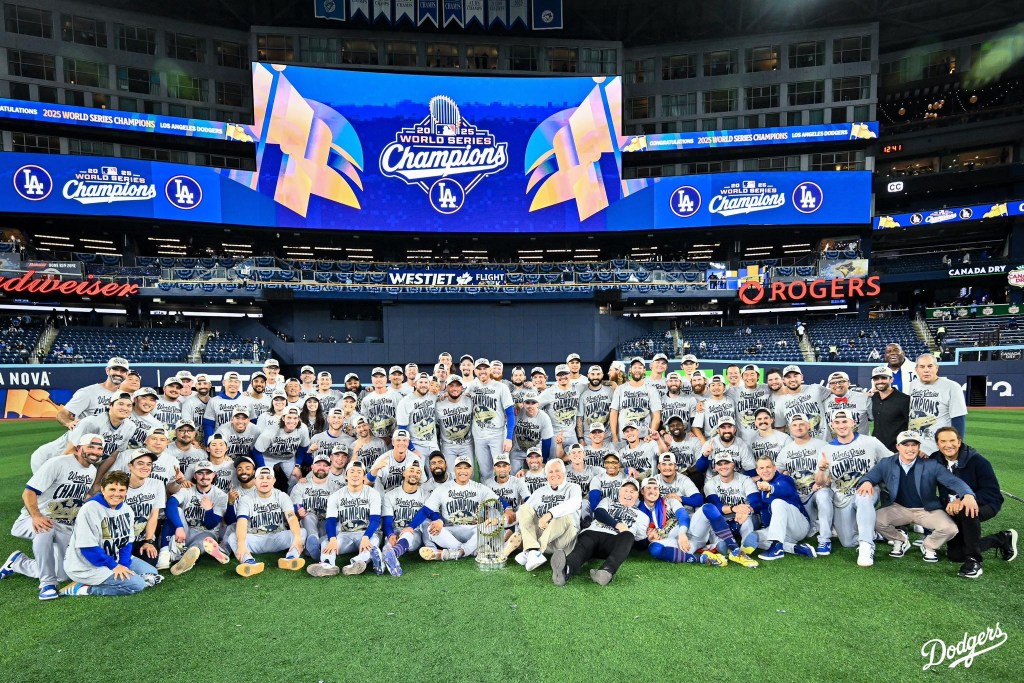
You might also have noticed that the Los Angeles Dodgers just won the World Series for the second year in a row. That is another infrequent happening, and while perhaps not life-changing, joyously worth a few comments from a devoted fan.

The entire MLB postseason this year was filled with unpredictability. The World Series was a fitting final act to that rollercoaster, with an 18-inning marathon Game 3 and a fought-to-the-finish Game 7 that went down to the last swing of the bat. I won’t recap the play-by-play, others have done that with endless detail, but I will say it was a game that turned on both the performances of superstars and journeymen.

That’s one of the things we love about baseball. Any team can beat any other team on any given day, no matter how good or bad. Chance is always at play. A ball can literally get stuck in a wall crevice and change the outcome of a game (it happened in Game 6). A series MVP like pitcher Yoshinobu Yamamoto can demonstrate consistent excellence on the mound in the clear sight of Sandy Koufax, or a little-known infielder with heart like Miguel Rojas can come off the bench and tie a game that seems all but lost.

Impact can happen at any moment from any player. The game can seldom be predicted.

What does this innocent children’s game played by highly trained adults teach us? We learn from the applied metaphor of baseball that you always play hard to the end. Resilience is your heartbeat. It pays to be indefatigable. You never give up. Never.

Baseball is so many things in the mirror of life. It is the ultimate combination of athleticism and strategy, training and statistics, physical readiness and endless number crunching. It is a game of mistakes — the only sport that counts them on the scoreboard. It is a game of overcoming failure, where a player who gets a hit 2 out of 10 times at bat usually gets dumped, and a player who hits 3 out of 10 often will be paid millions of dollars — crazy many millions of dollars. Unless you are a pro, you’ll never see a 100 mph fastball whip by inches from your body. In fact, the pros can’t see it either, but sometimes they time their swing right, make contact, and put it in the outfield stands.

I had hoped to see the Dodgers win the World Series at home for the first time since 1963. Not only didn’t that happen, but we lost both games I attended with my brother, who was quite the ballplayer in high school and college. So was my dad, who couldn’t attend this year, but texted me at every key moment with his coaching suggestions. I never had the talent, but curiously, I was pretty good with the numbers.

When we lost both those games, I thought of a marketing idea for the front office: how about they give us a 5% rebate for every run we lose by? So if we lose 6 to 1, we get 25% of our ticket price refunded. This would just be for the wildly overpriced World Series tickets. I’ll be sharing that concept free of charge on my annual season ticket feedback form. I don’t expect a response.

The two games we lost at home were more than offset by the final two games we won on the road. The drama of those two games would make for an Academy Award winning movie no matter who won. Note to Kevin Costner, Redford is unavailable — do you have one more baseball epic in you? And who would you like to play?

Hats off to the Toronto Blue Jays, who have waited since 1993 to get back to this big stage. Their ball club oozes talent, from the future Hall of Famer Vladimir Guerrero Jr to the wild ascent of pitcher Trey Yesavage from Single A minor league ball to triumph in the World Series seven months later.

The Dodgers magical starting lineup — Ohtani, Betts, Freeman, Smith, Muncy, Edman, Teoscar Hernandez, Kike Hernandez, Pages — will live in our imagination with most returning for another season. We also witnessed the impossible elegance of an unknown reliever in Game 3 named Will Klein, and in that same game the single inning bridge of the departing great Clayton Kershaw. Manager Dave Roberts made a number of gutsy, counterintuitive moves throughout the series that could have gone either way, but at last the risks played in his favor.

Maybe it will be enough for Costner to make a cameo, a lot of good picks there. AI can help with the aging thing.

It’s all one for the storybooks, but I’ll close with a quiet moment that summed it up for me. When I arrived at the entrance gate for Game 5, I said to the friendly parking attendant I see all the time, ”I’ll bet you’re sad it’s the last day of the season here at Dodger Stadium.”

”What do you mean it’s the last day?” he replied. “We have a parade next week. We’ll all be here for that.”

We had lost the game the night before and the series was tied at 2-2. There was no question in his mind there was going to be a parade. No question whatsoever.

Resilience to the end. Hope in the face of adversity. Optimism facing inescapable, ceaseless competitive resistance.

As Bart Giamatti wrote so eloquently about the game long ago, “It is designed to break your heart.”

Not this time.

Win or lose, this is the game we love.

________________________________________

Photo: TORONTO, ONTARIO – NOVEMBER 2: World Series Game 7 between the Los Angeles Dodgers and Toronto Blue Jays at Rogers Centre on Sunday, November 2, 2025 in Toronto, Ontario. (Jon SooHoo/Los Angeles Dodgers)

Don’t Yell at the Pilot

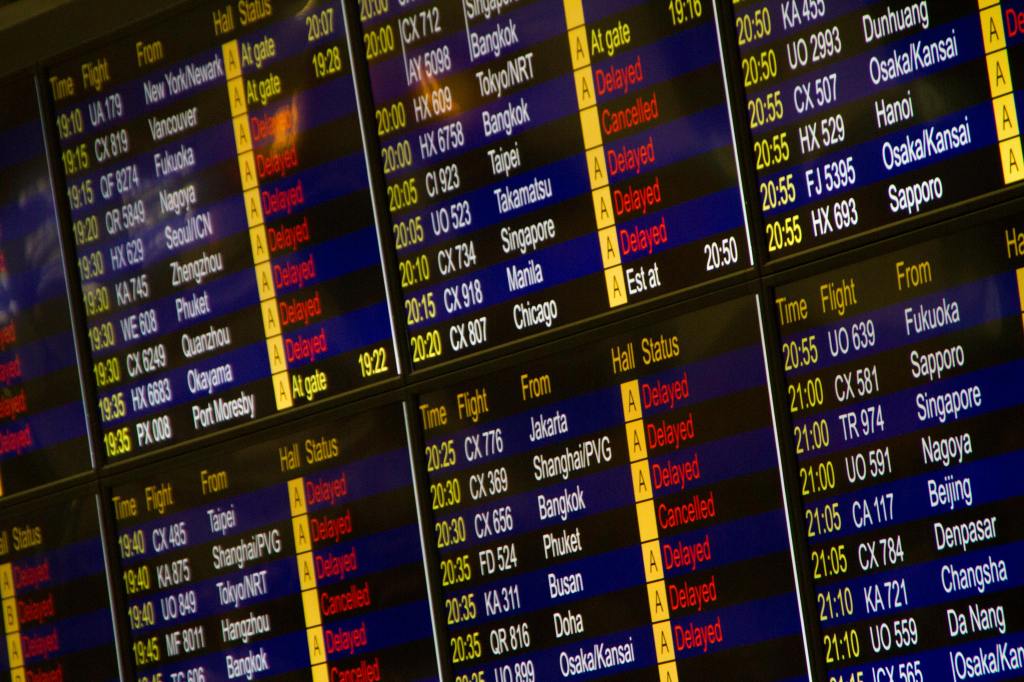
If you are a regular reader of this blog, you know I spend a lot of time on planes. When you fly a lot or spend a hunk of time at airports, you observe human behavior in many of its less magnificent expressions. There’s no way around it — the more you fly, the more likely things are to go wrong. It’s a numbers game. Take 100 flights, and if just 5% of them don’t go as planned, that’s five bad days of travel interrupted. That 5% is optimistic.

Frequent travelers know that getting angry at the people trying to help you with a canceled or rerouted flight is not likely to get you what you want. You may think yelling at the person on the other side of the computer will get their attention. What you don’t know is what they are typing, or would have typed if you had been a little kinder.

Last week I had one of those bad business travel days. Shortly after takeoff, we were notified by the captain that there was an unexpected rumbling we all heard in the retraction of the landing gear. Although he assured us we were safe, to be even safer he was going to make an unscheduled landing at the next major airport we were approaching.

You can imagine the groans from the cabin passengers. “There goes the day.” “So much for our plans.” Yep. That’s what happens. The captain makes the call and the plane goes where the captain says it goes. Twenty minutes later we were on a runway and at a gate two hours short of our destination.

Indeed there was confusion when we landed. We were asked to disembark and wait at the gate. Job 1 of course was to inspect the plane and see if it could be airborne again. If you have ever experienced this scenario, you know the chances were maybe 10% that plane was going back in the sky the same day, but you do what the crew advises and take it a step at a time.

Because we were an unexpected landing the gate was understaffed. While they tried to get the connecting passengers rerouted, they asked the single destination passengers to wait for a call on whether the plane was safe to fly again or we would need to be rebooked. Frequent travelers know not to wait — you get on the phone or internet, rebook while seats are available on other flights, and take whatever seat you can get to keep moving. Of course not everyone can be helped immediately with long lines and on-hold wait times, so there was reasonable angst in the gate area.

Reasonable, that is, until the captain came off the plane and visited with us while we waited. That’s when people became unreasonable. He told us the likelihood of that plane taking off again the same day was extremely low, and we should all be making other plans. He was honest and straightforward. He didn’t have to do that. He didn’t even have to talk to us. In exchange for his candor, a number of passengers started yelling at him. “This is unacceptable!” “Do you know how to run an airline or not?” “What compensation do we get for this inconvenience?”

There are a few cardinal rules frequent travelers embrace. Don’t make jokes when passing through security. Don’t step in front of small children or anyone in a wheelchair when boarding or deplaning. And don’t yell at anyone in uniform. Ever. Do not yell at a flight attendant. Absolutely never yell at a pilot.

For all these angry passengers knew, this pilot might have just saved their lives. Sure he said there was no danger in the air, but you don’t know if that’s really true. A captain would never create a panic in the cabin. This captain made a call and set the plane down. Now we’re calling family to tell them we’re going to be late and worrying about retrieving our luggage. Could it be worse? At 37,000 feet above the Earth?

I remember during Covid when passengers were complaining to flight attendants about wearing masks. Sometimes that exploded into yelling. I thought to myself, what makes people think that flight attendants have any discretion over enforcing federal policy? What can passengers possibly hope to accomplish by yelling at those making it possible to fly during the pandemic?

Airline inflight personnel are heroes who look after our safety first and foremost. They don’t run the airline. They aren’t in management or marketing. They are not jet manufacturers or maintenance crews. Their job is to get us where we are going safely. They do that with 99.99% accuracy, maybe more 9s. To yell at a pilot for the inconvenience someone might be suffering is beyond ignorant, beyond disrespectful, beyond lunatic. The pilot did his job. Applaud him, thank him, write a letter of commendation on his behalf.

Don’t yell at the pilot. Never. You’ll get where you’re going because a highly trained and experienced professional kept that option open for you. Their thousands of hours in the cockpit prepared them to make split-second decisions, perhaps a few consequential times in their careers, that allowed you to read these words. I’m in awe of their talent, commitment, dedication, and perfectionism. Yell at them and you’re going to get a different kind of feedback from passengers like me, their most devoted fans.

_______________

Photo: Pexels

Bringing Out The Best In Us

As we struggle through a difficult time of turmoil and division, I’m reminded that one of the least tangible yet most important responsibilities of leaders is to bring out the best in others. When we think about business leadership, we often think about strategy, alignment of goals, proper resource allocation, facilitating healthy debate around key issues, and maintaining team focus on high-impact initiatives that matter despite the noise.

Sometimes we lose sight of a more important task: inspiring others to reach the full potential of their talent. While the verb “inspire” is about as amorphous as it gets, another version of it might be coaching, or encouraging, or shaping, or mentoring. These days as a boss, I think more than half the battle is keeping people cooperative and positive, guiding them to circumvent negativity and work together even where differences in viewpoint creep into conversation.

Going deeper, I think about the best bosses I’ve worked under, and how their very different styles brought out the best in me.

While the input and output of these great bosses were different, their intentions were the same. Their goal was to get me to achieve things I wouldn’t have achieved without their direction. They wanted me to do the best work of my career with their guidance. They never took credit for my work, they got it as a macro by default. Like a baseball coach, each saw talent on the playing field and wanted to see more wins than losses.

Consider a tale of two bosses.

One was relentless in expecting the most of me. He was extremely competitive and wanted me to be more competitive. He was highly creative and wanted me to be more creative. He was troubled by mediocrity and wanted me to refuse it at every turn. He was perpetually prepared for a crisis and wanted me to embrace the mandate of rising above obstacles without excuse. He wanted me to expect more of myself. The notion of being indefatigable comes to mind.

The other was a master of collaboration and consensus. He wanted constructive dialogue and insisted I encourage it. He believed teams were stronger than individuals and wanted me to suppress all the egos in a room. He believed in building the best products in the world, but reminded me no end that if a product burned out a team, losing the team wasn’t worth it. He wanted me to be open to unusual or counterintuitive ideas. The notion of being empathetic comes to mind.

These two role models held commonalities, particularly of character. Neither of them ever lied to me. Both of them were ceaselessly demanding of my results, never satisfied, yet they never berated me even with the toughest feedback they offered. Both were tolerant of honest mistakes and noble failures, yet I knew that well wasn’t bottomless. They were happy to be proven wrong with data and facts (well, maybe not happy, but they welcomed it as important learning). They each displayed a unique sense of humor, entirely different in tone, but pointedly more pronounced in darker moments that required lightening.

Both of these bosses applied correct approaches in my mind, and while if ever put together they would have ardently disagreed on style, their synthesis lives in me. I believe they saw bits of themselves in me, chances to fix wrongs in their own failings. They knew I could do better, be better, and they took personal reward in seeing my potential realized.

I believe all of us are complex combinations of the conflicting inputs we receive over time, positive and negative. In that evolution, we come to form our own unique style of leadership. The key point here is to remember what we are trying to do is help others realize their own significance in the brief time we share with them.

To bring out the best in others may be the hardest thing we do. Like all difficult things, when we see the result we know it was worth it. We also learn repeatedly that style is content, how we lead in troubled times is as or more important than our intentions. Integrity is as contagious as its opposite. When we aspire to a higher purpose, we can lift each other to an otherwise unimaginable shared vision.

_______________

Photo: Pixabay

Knowing You Are There

It has been a harrowing start to 2025.

The change in Presidential administrations has further divided the nation. My own sense of the shared values that I presumed were unquestionable leaves me confused. I can’t make sense of the logic patterns laying the foundation for our future. The disorientation of those with opposing views seems to be intentional, and sadly, effective.

Closer to home, the wildfires in Southern California came about as close to our home as one could imagine. My wife and I are safe and without major damage to our home after a period of evacuation. We are among the lucky ones.

Everyone we know in the Los Angeles County area knows several people who have lost their homes. The damage we’ve observed can’t be described adequately in words. Whenever a natural disaster occurs, we see people on television attempting to find words to describe it. There’s a reason they mostly just cry. Experiencing the loss is not something words are meant to convey. Words fail us for a reason. Words are inadequate to express the true pain of total loss.

My point in writing here is different. It is meant as an expression of gratitude to all of you who contacted us during the fires. There were calls, texts, emails, social media posts — the kindness was endless. To say I was surprised at the expanse of outreach from around the globe would be another failure of words. Your concern wasn’t just heartening. It was rejuvenating. It was uplifting. It was empowering. It was an inspiration.

The words each of you shared meant the world to us, but more than that, the collective of those words enriched our lives with a sense of hope too easily lost in a time of crisis. We knew we had friends and people who cared about us. We had no idea how many of you there were.

Knowing you are there has proven a more powerful force than you can imagine. I tell you this because as the lucky ones, we are driven to pay it forward. One way to do that is to thank you for your graciousness of spirit. Another is to let you know your words matter more to all the people you offer them than you might think. Of course, actions of support matter in concert with words, but the words you choose to share hold a power all their own. When people know you are there, it gives them the strength to rise up.

Alone very little is possible. Together resilience is possible.

In this time of recovery, please know you are part of the solution when you choose to express kindness. It’s more than words. It’s the fuel of reenergizing those who need a boost. Where there is support, we can rekindle our dreams and muster the strength to find a direction forward. You make this possible in the very evidence of expressing care. Our humanity cannot be taken from us if we maintain the good sense to express it lavishly and without expectation.

Caring and the willingness to express it isn’t just how we get through the wildfires. It’s how we remain on course in our humanity no matter the obstacles thrown at us. Obstacles however great can be overcome when authentic charity overpowers the spoils of dislocation. This I believe is what is meant by community.

Knowing you are there has been a revelation that perhaps should have been more obvious. We can’t thank you enough, and we can only hope you continue that kindness to those who need it much more than we do.

Community is amazing. You are amazing. Together we rise.

_______________

Image: Los Angeles County Recovers