Rage On

It’s a strange way to end a strange year.

About a decade ago I wrote a book about an internet uprising in support of a pair of unlikely criminals who kidnapped a pair of executives after accidentally killing a businessperson during the abduction. In hindsight, it’s a bit eerie given current events.

The book is called This Is Rage. It’s a novel of outlandish observations and counterintuitive character behavior I assembled from a career in technology and media. Much of the underlying ethos had been eating at me in repeated cycles. My goal was to paint in the extreme, to bridge the dying days of old world communication with the uncharted future of a world without filters. It was meant to be outrageous, plausible only at the fringes, a look into events that possibly could happen, but held resonance more as a cautionary tale than a slice of life.

I knew the premise was plausible because I’ve been a student of the commercial internet since it entered our lives. I watched it bring out the worst in people, particularly behind anonymity, but also the ways uncontainable sentiment could be exploited by businesses, politicians, and other special interests. I knew the events could spin out beyond the control of those seeding them, while a clever few would convince themselves they could harness the battered convictions of those who felt forgotten.

I meant it as satire in the spirit of Tom Wolfe. In the years that followed, the line between satire and reality began to blur. Then one day, it seemed to me the line was gone.

Skits on Saturday Night Live and news headlines often became indistinguishable. Something called fake news became identified as unreliable information emerging from unconfirmed sources that took on snowball effects with implied credibility. Just as we got our heads around the notion of fake news, it became an easy label for anything someone didn’t want to believe. Deepfakes, videos that appeared to be evidence of real activity, were revealed to be manipulated images edited for effect without regard for truth. The act of lying was sometimes referred to as alternative facts.

Imagine that, alternative facts as a reality we should consider.

This confluence of powerful, widely distributed technology and internet anarchy has exceeded most of what I imagined, yet the one storyline I hoped was long into the future no longer is. While I anticipated the fiery populism most often expressed with unchecked anonymity, I held the belief that human character would nonetheless gravitate toward a sense of justice. The stretch in my satire was that in fully unrestrained expression, a villain could in the public eye become a hero. This to me was a bridge too far, and that if a movement began to form in that direction, the goodness in us would win out. The failings in our logic would become uncomfortably apparent.

I was wrong. Today the headlines tell us popular sympathy can align behind a villain if the circumstances motivating a crime are deemed by spiraling opinion somehow more pernicious than the crime itself. It was impossible then and it is impossible now for me to believe a vote of internet emotion can take the side of the criminal who murders an insurance executive because he finds the victim’s business unethical. I say it is impossible to believe, and yet it is reality.

How did we get here? As I have written so many times before, the implications of the technology weaving through our lives takes its toll whether we understand it or not. Our ability to digest the psychological impact of technology can’t keep pace with the deployment of its power. We use the internet freely, we express ourselves in whatever form of truth we believe is appropriate, but the ability to decipher how our behavior is being altered eludes us as individuals and in the collective.

There are no alternative facts unless we allow them. Fake news is not a convenience unless we allow it be. Villains are not heroes unless we allow them to be.

There will be more rage, I am assured of that. People are angry, confused, and sadly turned against each other for the gains of those who fuel the rage. While we are free to express ourselves without restraint in anonymity, it’s hard for me to think of that as freedom when we could be empowering each other with shared values and vetted knowledge.

We don’t need to hide behind falsehoods. If we are made to feel afraid for saying the emperor has no clothes, we need to rediscover the courage to stand ahead of the herd. Transparency may prove increasingly challenging in a world gone mad, but actual facts are available if we commit to the work of identifying them. Argue with data and a passion for clarity over impulse.

It is a privilege to write for you, and I believe I have one at least one more book in me. Before I get to that, I am going to have to come to terms with what is meant by satire, and whether being predictive has any value at all. Irony is only a teacher if the comparisons we attempt are rooted in decency that is broadly recognized.

As we begin a new year, remember that there are facts worth unearthing, unsung heroes all around us worth celebrating, and plenty of villains playing out schemes to convince us they are worthy of trust. I’ll finish the year on a thread of optimism and say that together we can separate a worthy example from a fabricated manipulation. The choice to offer applause only when it has been earned remains at our discretion.

_______________

Image: Pixabay

A Brief Reflection on Hope

One of the most rewarding moments of my life came when my wife started teaching one of my books in her college classroom. It wasn’t something I asked her to do or ever expected. She decided on her own that my short business parable, Endless Encores, was a good fit for her English language learners to be exposed to my particular take on management practices.

I can’t well enough convey the joy I experienced visiting her class on occasion as the guest author, usually surprising her students. If you ever want a jolt of self-confidence, listen to a group of others talk favorably about something you’ve written and what it means to them. There then came a point in the discussion where my wife quoted one line which she said was her favorite in the book:

”Hope is the strength that keeps us going.”

I never thought of it as particularly profound or even important. In the context it appears, it’s a bit of a throwaway phrase to transition to the next set of reflections. That’s the thing about writing, once you put the words in front of others they aren’t yours anymore. They belong to others and whatever resonance they may carry is beyond your control. We’ve all experienced that in song lyrics, poetry, and similar expressions. What we read and hear is often more significant than what the writer might have intended.

Hope is as good a proxy for interpretation as any abstract idea. Hope is enlightening, uplifting, motivating, and rejuvenating.

When I think about hope, I think about optimism. I think about all the daunting challenges we face in the world and why we don’t throw in the towel and admit defeat. I think about the more specific problems that land on my desk and whether it’s sensible to think about effectively meeting the needs of all of them.

Hope is a universal theme with centuries of literature beckoning its light. Hope can be melodramatic and miscast as a broad archetype, but it is seldom invoked without some kind of passionate foundation. Hope is resilience, not bluster. Unless misappropriated, it is not silly or trivial. Hope is meant to be heartfelt, which gives it credibility and sometimes surreal power.

We call upon hope when we are down, when we are exhausted, when answers are not apparent. We often look to hope when we are lost or wandering. We can come to hope as a first or last resort when more logical or empirical paths elude us.

For me, hope is not cynical. It’s not sardonic. It’s less an argument and more a rallying cry. It can bring us together because it is understandable and limitless. The emotion is complex, but the unifying impact is tangible.

While hope is too often in short supply, in dire times it is difficult to dismiss in significance. As I think about so many of the impossible conflicts surrounding us, I return to hope for its healing power. Hope is important, sometimes essential, regularly underrated in consequence. If your work involves motivating others, hope is always in your toolbox. I am not embarrassed to say it is high on my radar as a unifying force when the opportunity is relevant.

Maybe that’s why I wrote that simple line so many years ago and why my wife chose to share it every semester with her students. The lack of intention on my part is perhaps central to its celebration.

Hope is the strength that keeps us going. If I could say it better today I would.

_______________

Image: Pixabay

David Milch Pens a Curtain Call

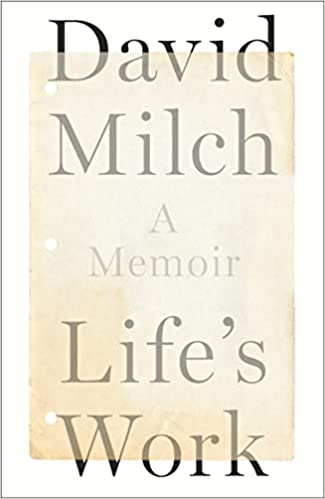
It’s called Life’s Work. It’s anything but a simple title, as only to be expected from its incomparable author, David Milch. It’s not so much a play on words as it is an enunciation of intent, a spiritual aspiration. Yeah, let’s start there and see where it takes us. The rabbi is in.

There is a profound sadness that winds its way through these pages. Alzheimer’s is laying claim to David’s current challenge, and it permeates his thought process in this troubling memoir. He is assisted in committing the recallable memories to paper by his family, and even where confusion follows his path like a sine curve, it’s not just Alzheimer’s that elicits sorrow. It’s the entire path of intermittent regrets. If words are to make us feel, his words again succeed.

I hadn’t seen David in a very long time when I attended his book launch. I asked him if he remembered me. “Of course,” he said, “do either of us owe the other money?” I was 99% sure it was a joke, but just in case I assured him we did not.

In the broadest sense of its definition, rabbi means teacher. In the workplace, it means more than that. If you get one, your life is going to change. You might just be finding a path to Life’s Work.

When you’re a young writer, if you’re smart you seek teachers. They don’t teach you how to write. They teach you how difficult it is to write. They instill in you taste, fortitude, inhuman patience, proper doubt, and resilience.

The feedback is anything but pleasant. It’s not for the faint of heart. You learn that bad first drafts are a fact of process. They are necessary, but largely need to be deleted.

David Milch taught me these things, mostly by demonstrating them, but sometimes from the breakfast lectern. He taught me that subjecting others to unpolished work was amateur, lazy, and unfair. If you choose to tell stories, you must learn to craft them in ways that don’t waste an audience’s time or take advantage of their goodwill.

You learn discipline, like an athlete. You do it every day, again and again. The rabbi keeps you honest. Character comes first, then reveals plot, but plot is only a device to enhance the arc of character development. We think we love story, but what we really love are characters.

David taught me those characters are guests in people’s homes. Audiences will let them in on expectation, but will only keep them there if they grow. When a show dies, it’s not because you have run out of story; it’s because the characters have no more headroom to interpret and flourish.

Feedback becomes lifeblood. Then one day you’re on your own. When the teacher is no more, your filter is established to shield you from embarrassment. The work must pass your own sniff test as it would be blessed from further refinement by the teacher.

In this memoir, David writes of the mind’s decay. He didn’t ask for this denouement, but his choices are few. He accepts the path as inescapable. He turns to notions of faith that evaded him in his younger years, when his temperament was not tamable. I remember that David. That was the rabbi who first said to me: “If you want to make God laugh, tell him your plans.”

He wrote unforgettable, award-winning episodes of Hill Street Blues. He created the groundbreaking television series NYPD Blue and Deadwood. He left the craft of episodic television writing better than he found it. That is an understatement.

He battled substance abuse and gambling addiction, both almost crushing his existence. He raised a caring family and found his way back to their love. Surviving his demons to nurture love was a monumental achievement.

I came to David because my viewing experience of Hill Street Blues was TV that tore at the soul. I didn’t know that was possible, particularly because it broke for commercial every 12 minutes or so. David came to think of it as bourgeois. That’s a word you don’t often hear outside of college.

He wanted to go deeper, extract honesty from language despite the limitations imposed by presumed broadcast standards. Rules for David were goalposts that needed to be moved with concerted wit whenever a network executive forgot to interfere. All forms of writing are bound by some form of convention, but he wanted those boundaries to be in service to creativity, not obstacles to authentic expression.

He never stopped being a teacher. He saw the gift in his mentor, Robert Penn Warren, and paid it forward. He helped the careers of endless writers who learned from his example the poetic revelations in pure, gritty, messy, conflicted reality.

For many years I never believed I would achieve David’s standard. My aesthetic was too unformed, too quick to quip, too impatient to let a character breathe if it killed a laugh or shocking turn. I became despondent with my own attempts at composition. I worried words would fail me when I needed them most.

Yet I never gave up. The rabbi made that an untenable notion. Work was essential. Rewriting was essential. Craft was essential. I was on my own as David was. Every writer is alone. It takes a lifetime to learn that. The rabbi if abrupt saves you half your life denying this truth and readying you for being alone, determined, indefatigable.

A mentor is a subject matter master. A mentor is not meant to be kind in the present, only in the long arc of life. We learn this too late. The critique of the master is only meant to become self-critique in perpetuity. Like I said, apprenticeship is not for the faint of heart.

There is gravitas in the audacity of writing, absurdity in committing to an endeavor that consistently leaves you empty and unnaturally separates writer from the written. David understands that in a rabbinical sense. His ability to articulate the nature of output is simultaneously divine and existential. A brief, revealing excerpt early in the memoir captures the essence of that reduction:

There’s something about literature—poetry and prose, but particularly poetry—which disinfects the efforts of being. The effort itself is cleansing. It neutralizes what’s profane about the process, and just leaves the result.

If writing becomes your essence, the idea of not writing is about the same as the idea of not breathing. Neither is feasible. Both are equally necessary.

At the end of the reading, supplemented by famous friends sharing passages for reasons of pragmatism, David took the microphone. “Thank you so much for being here. I love you all. God bless you.”

I had never heard him say words like that. His arc had come with an unpredictable resolution. Story and character were again united in natural resonance.

The rabbi placed a small ribbon between chapters and closed the book. His eyes were clear and telling. Here ends the lesson.

_______________

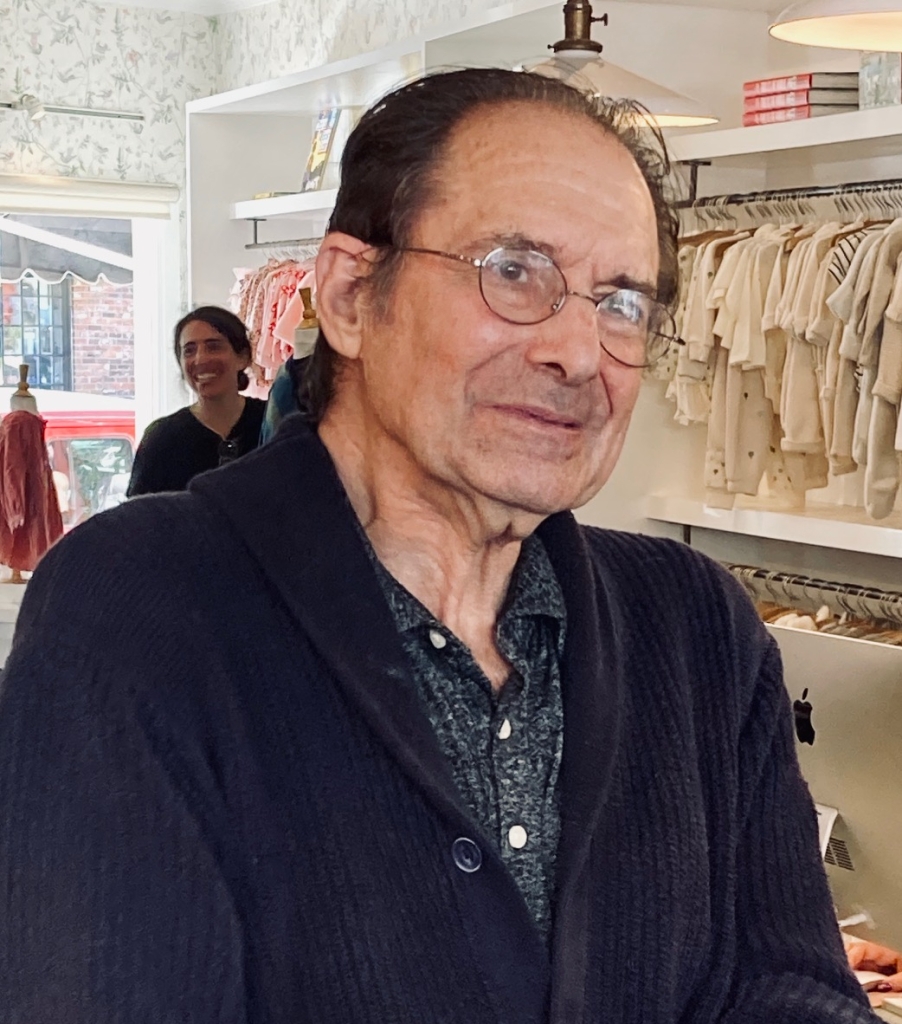
Photo: The Author at Diesel Bookstore

5 Brief Quotes That Keep Me Thinking

Are we turning the corner on a new day of reinvention and reinvigoration, or are we swapping one set of enormously complicated challenges for another?

I’ve been thinking about that a lot as Covid-19 vaccinations are welcomed by increasingly more people and the doors to a rejuvenated nation continue to open at an encouraging pace. Still, it’s hard to ignore that much of the conflict that existed in the pre-Covid world remains in the post-Covid world.

The economy is rebounding with optimism in investment, yet income inequality is as deeply embedded in our interactions as it has ever been. High profile convictions for the abuse of power have been handed down, yet racial injustice remains in the daily headlines. International travel is resuming, yet lives are being lost in battles across and within borders.

We remain too often divided and find little in the way of broad consensus that will adequately address sustainable remedies. Has the world learned anything from Covid-19, or are we picking up where we left off?

On days that are difficult to explain, I find myself looking to tiny bits of wisdom that keep me inspired and focused in good times, bad times, and when I can’t tell the difference. Here are five fragments I keep top of mind that I hope you will find perennial and inexhaustible.

“A life is not important except in the impact it has on other lives.” — Jackie Robinson

Jackie Robinson broke the color barrier in Major League Baseball. He had every reason to be a pessimist given the treatment he endured, yet he was a fighter of the most noble order and seems to me a true optimist. He had a gift that he transformed into a cause. He led by example. He teaches me there is no other way to lead than by example.

“It’s kind of fun to do the impossible.” — Walt Disney

Walt Disney was another optimist, but in a different way. He focused on pushing the imagination to unimaginable bounds. He knew beyond all financial gain that our aspirations live in our dreams, and that our stories are mirrors of our souls. He teaches me there is creativity in all of us, and nurturing that expression is essential to our fulfillment.

“All we are saying is give peace a chance.” — John Lennon

John Lennon expressed this in lyrics, so when I hear it, it is more music than words. Is it pointlessly naïve to think after centuries of combat, conquering, and attack we can make the active choice to seek peace as he suggests? To think less seems to me impossibly cynical. He teaches me that hope is at the root of getting past the seduction of old ways, and those old ways find a terrible way of repeatedly deceiving us.

“How wonderful it is that nobody need wait a single moment before starting to improve the world.” — Anne Frank

Anne Frank left the world much too soon and in the unfairest of ways, yet it is the majesty of her child’s voice that reminds us initiative to improve is always within our grasp. Her courage holds the uplifting power to bypass the contaminants of cruelty in favor of a bias toward action. She teaches me that no matter the debilitating obstacles confronting our values, we must remain true to a commitment to heal the world.

“One voice can change a room.” — Barack Obama

Barack Obama is the one person quoted here who is still alive, tirelessly active in his advocacy for our shared wellness. He remains a controversial figure and his impact on our world will be debated long after his poetic voice passes into history. He often cites another of my favorite quotes around the arc of the moral universe. He teaches me there is intrinsic reward in tackling audacious goals, and that where progress may appear thin, there is ever more necessity in maintaining navigation toward a North Star.

That’s a lot to invoke in relatively few words. I have another batch of these I may share at a later date, and of course I would love to hear the words that inspire you in these ambivalent times. The concise wisdom of others is often enough to help us make a better decision, sculpt a bad choice into an improved choice, or just fire up our engines when fuel is hidden from our view. As I get older, I seldom see the obvious clarity I once anticipated would always reveal itself.

Sometimes you have to Think Different. Sometimes you have to think harder. Sometimes a little listening helps us discover the path beyond the noise.

_______________

Photo: Pixabay