
Records So Good We Bought Them Again (and Again)

Fleetwood Mac - RumoursI guess for me this is turning into The Year of The List! Earlier this year, inspired by a Writers Guild initiative, I catalogued a suggested collection of the Funniest Screenplays of All Time. Right around that time, inspired by the Fleetwood Mac reunion tour, I found myself thinking about musical recordings so beloved I had purchased them multiple times on replacement platforms. While the records stayed largely the same (yes, I will keep calling them records as long as I am listening to them), a series of innovations in consumer technology offered us relatively inexpensive access to personal libraries of vinyl, 8-track tape, cassette, reel-to-reel, DAT, CD, DVD, and MP3-like digital hard drive storage along the lines of iTunes. Here I am considering what I would call three-buy and above purchases for personal use, which of course live alongside AM & FM radio broadcast, satellite play, streaming services like Pandora and Spotify, and any number of less legitimate ways to file-share.

While I was pondering all thatand readying myself to attend Fleetwood Mac’s current reunion tour at the recently refurbished concert-only Fabulous Forum in Los Angeles (remembering I had attended in 1990 what I believed was the final performance of the farewell Fleetwood Mac Word Tour)what should be playing in our living room but Rumours. Yep, at home in 5.1 Dolby Surround played an album so impossibly fantastic I had bought it at least five times with each subsequent technological improvement, including the remastered scratch tracks on the latest Expanded Edition, which chronicled the development of each song. I sat there listening again to this marvel, no regrets of any kind for the many dollars spent. I have extracted so much entertainment value from this record I would gladly purchase it again. And again.

Thus it occurred to me that Rumours was not alone, and that I was not alone in the three-buy, four-buy, and even five-buy serial record purchases. Rather than pencil out my own list, I went to my social network and asked friends where they had repeatedly dumped their dough buying the same thing over and over. Below you will see an unedited list of those records, some of which I also bought a bunch of times, others of which I have never heard but may sample now. Rather than allow this list to expire in the ephemeral Facebook news feed, I decided to recreate and share it here. I think it’s a cool list, one you should feel free to expand upon in broadening our spirit of sharing.

There is definitely a late Baby-Boomer Bias to these confessions of multiple repurchase, represented no doubt by my circle of social media friends, along with our age and taste. I think you will find the publishing dates stamped for the most part between the mid 1960s and the early 1980s, when the formative years of my contemporaries had disproportionate influence on our modest discretionary spending. Not surprisingly, in the “nifty fifty” albums reported here entirely unscientifically and in no particular order, multiple appearances are logged by the Beatles, Pink Floyd, the Rolling Stones, and Elton John.

If you’re looking for any connective tissue in all these, I think you’ll need more than the music to draw a speculative conclusion. Here is my one linking observation to the extent that I recognize most of the titles: they are in one way or another albums, curated collections or song cycles of various sorts that weave into and around themselves. Much has been written about the demise of the album in this day of pop streaming shuffles. For a while when we were younger, there was a wild notion that a record album could be something of its own as a form of, dare I say it, art.

I’m not sure I have the intellectual fortitude to plow through the art manifesto, but let me just say that when I play Abbey Road I don’t skip tracks, I play it through beginning to end. Okay, on The White Album I do skip “Revolution 9” most of the time, you got me there. But Dark Side is beginning to end, Hotel California is beginning to end, and Rumours is beginning to end. Remember, when these were vinyl, that meant getting up and switching to the flip side—yes, getting up physically to hear the rest!

There is a “something of substance” in these picks that a lot of us find missing in contemporary LP equivalents that don’t even try to compose, let alone somehow unite, a dozen or more flowing songs. I think that’s why a lot of us miss the days of AOR—album oriented rock—and why we’re willing to spend anew when landmark records with recurring motifs and thematic resonance repeatedly make their way back to the virtual shelves. These albums age well, a bit like fine wine, and seldom seem dated. Absent historical and social context, most of these carefully crafted works could just as well have been recorded today and simultaneously sound modern and classic. They were expertly written, performed, and engineered with creative courage that resulted in textured, lasting impact. Good is good, great is great, and unforgettable is, well, just what the word says.

So here is a compilation of fifty records my friends found so remarkable they bought them on three, four, or even more platforms (not to mention extended or remastered versions), and will probably continue to play until their last days on the planet in whatever form they may become available:

1) Abbey Road by The Beatles

2) Sergeant Pepper’s Lonely Hearts Club Band by The Beatles

3) The Beatles (The White Album) by The Beatles

4) McCartney by Paul McCartney

5) Band on the Run by Paul McCartney & Wings

6) All Things Must Pass by George Harrison

7) Imagine by John Lennon

8) Dark Side of the Moon by Pink Floyd

9) The Wall by Pink Floyd

10) Exile on Main Street by The Rolling Stones

11) Let It Bleed by The Rolling Stones

12) Madman Across the Water by Elton John

13) Goodbye Yellow Brick Road by Elton John

14) Hotel California by Eagles

15) Quadrophenia by The Who

16) Songs in the Key of Life by Stevie Wonder

17) Blonde on Blonde by Bob Dylan

18) Born to Run by Bruce Springsteen

19) What’s Going On by Marvin Gaye

20) London Calling by The Clash

21) The Rise and Fall of Ziggy Stardust and the Spiders from Mars by David Bowie

22) The Joshua Tree by U2

23) Led Zeppelin II by Led Zeppelin

24) Lady Soul by Aretha Franklin

25) Songs of Love and Hate by Leonard Cohen

26) Silk Degrees by Boz Scaggs

27) The Point by Harry Nilsson

28) After the Gold Rush by Neil Young

29) John Barleycorn Must Die by Traffic

30) Dr. Hook and the Medicine Show by Dr. Hook

31) Running on Empty by Jackson Browne

32) Cheap Trick at Budokan by Cheap Trick

33) Black Sabbath by Black Sabbath

34) Candide by Leonard Bernstein

35) The Lady and the Unicorn by John Renbourn

36) Nights in the Gardens of Spain by Manuel de Falla

37) The Remains of Tom Lehrer by Tom Lehrer

38) The Doors by The Doors

39) Tapestry by Carole King

40) Tom Petty and the Heartbreakers by Tom Petty and the Heartbreakers

41) Berlin by Lou Reed

42) Wheels of Fire by Cream

43) 21 by Adele

44) Crime of the Century by Supertramp

45) Bridge Over Troubled Water by Simon & Garfunkel

46) Graceland by Paul Simon

47) Dreamboat Annie by Heart

48) Pet Sounds by The Beach Boys

49) Something/Anything? by Todd Rundgren

50) Rumours by Fleetwood Mac

Which “greatest albums of all time” did we miss? Probably a lot. Add your favorites in the comments below and if there is anything you discover new in the suggestions provided, let us know what it sounds like no matter the player you choose as a conduit.

Park the Snark

We talk a good game about bullying. Then the claws come out.

Maybe we can’t help ourselves.

Maybe we should try harder.

Last weekend a good portion of the globe enjoyed the annual late winter Sunday evening television marathon known as the Academy Awards. The Oscars and the Super Bowl are two of the remaining real-time TV tent poles broadcast from the U.S. to the rest of the world still commanding appointment viewing of some of the largest assembled audiences joined collectively. Whether they are culturally worthy of that significance is beyond the scope of this blogger, but they are what they are: massive, temporally significant, and dare I say, glamorous.

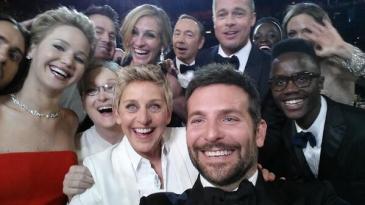
EllenOscarTweetThis year’s Academy Awards offered what many have called the best line-up of nominated commercial films in years. Among the strong critically acclaimed competition, an important film won Best Picture. We saw unusually significant advances in motion picture technology win accolades. An excellent line-up of creative contributors offered heartfelt belief in their projects. We also enjoyed a quite clever world record tweet stunt (“the retweet blasted round the world”) emerge from a reasonably relaxed show format that seemed to try hard not to focus on itself too seriously, but to put that focus on the work being honored.

I don’t know if it was one of the best Oscar shows ever, but it seemed to me a credible, enjoyable celebration of creativity, all the more poignant given the immense geopolitical events mounting on the world stage as it played. It was a good night for Pharell Williams to sing “Happy.” A lot of us felt that way.

Then came Monday morning. Or if you really wanted to get in on it, later Sunday night.

What was the most insulting joke told by the host?

Who had the bad taste to show up with the worst vanity surgery?

How awful was that mispronunciation of someone’s name?

Can you believe that awful gown? She has to be the worst dressed, no contest.

What kind of self-aggrandizing acceptance speech was that?

Did you see how drunk he was at the party?

What kind of backstage snub comment was that?

Did you see the look on his face when he lost?

Did you really think she deserved to win?

It’s astonishing. We can’t even have one night to send up fireworks and smile in the glow without the snark. Maybe it’s because I live in Los Angeles and dissing in social circles is as common as saying, “Let’s have lunch,” but it seemed for every word of praise I heard for a winner, I heard three times that many diatribes flicked at presumed losers. Were I able to isolate it to the Hollywood elite, I might feel better encasing it in a cone of irrelevant silence, but I saw and heard it everywhere–online, in the mainstream media, on the phone, wherever news travels.

Folks, this isn’t news. It’s babble. It’s unimportant. It’s not particularly clever. And it’s mean. Really, really mean.

Sure we are a society of tabloid media. Websites and TV shows and grocery checkout racks thrive on insults, humiliation, and Schadenfreude. Most of this is not satire, not irony, not well-crafted humor. It’s just junk. Bloated, bombastic garbage. And we absorb it until we become it, and then we spew it right back, as if somehow that makes us part of some intelligentsia, some wise-cracking inner circle that can distinguish meaningful critique from wasted breath. When we join in the rant, we are kidding ourselves. We become part of the problem.

And here’s the problem: the kids around us are listening. They hear every word we say, every word the media relays, every nasty remark that deflects from the celebration that should be going on of wonderful, creative work that helps define our shared culture, commercial or otherwise. Then they go to school and the clear message is that bullying is verboten–completely off-limits, not allowed, punishable by extreme… what? Any chance there is a slight conflict going on when what they hear in their heads are our voices institutionalizing the public act of professional cruelty? We wonder why bullying is everywhere, but we don’t hear it in our own everyday dialogue.

What the heck is wrong with us? Really, we can do better. All we need to do is talk more about stuff that matters, less about stuff that doesn’t, offer praise with enthusiasm where it’s earned, and try to be a tiny bit more polite when someone happens to make a boo-boo, or we perceive them as making a boo-boo.

Because you know what? We all make boo-boos. And I have yet to meet anyone who enjoys ridicule, especially when they just did something out of the ordinary, whether the words travel behind their back or in their face.

It hurts. So let’s stop.

A Very Good Year for Good Men

GMPI started writing for The Good Men Project in its second year of life, offering to share some of my thoughts on business, creative leadership, and management also published on my own blog. In its third year I joined the board of directors and became a strategic advisor to the CEO. As we embark now on its fourth year, I continue onward, helping to accelerate our growth, invigorated by what our CEO and team have accomplished in driving, “The Conversation No One Else is Having.”

What is this Good Man Project? It’s an editorial content destination you’ll find on the web and through mobile, riding the wave of digital publishing through curated editorial viewpoints on topics ranging from love and parenting to ethics and sports. Founded by entrepreneur Tom Matlack, our vision is never to tell anyone what we think a good man might be, but to share the considered points of view of thousands of vetted contributors on the uneasy questions surrounding the issues of being a man in the 21st century. Why Good Man and not Good Person? We observe that there are any number of sites dealing with the broader issues faced by both genders, but almost none taking a serious approach to some of the deeper issues faced by men. Curiously, we have found our audience to be half men and half women, with our contributors mirroring that dichotomy. Perhaps more interestingly, we find no bias as to whether a topic is covered by a man or a woman, and in the often hundreds of comments that follow our stories, we observe men and women talking with each other about subjects you seldom observe strangers discussing and debating without invective or attack. It’s a wild line we walk, and we love it.

How are we doing after three years on the playing field? Here are a few metrics that make us especially proud:

  • We have surpassed 150 million cumulative page views.
  • We have published over 22,000 articles.
  • We have ranked as high as #243 in Quantcast.
  • We average about 3 million page views per week, with more than half our stories getting over 5000 views and our best stories over 100,000 views. And of course we occasionally have runaway hits that are off the charts.
  • We have over 60,000 Facebook fans and over 100,000 Twitter followers.
  • Our work is overseen by more than 30 editors from the U.S., Canada, Costa Rica, Malaysia, Spain, and the U.K.

What do we think about this? We call it a decent start. If you had asked anyone at the launch of The Good Men Project how far into the future 100 million page views would be, I promise you no one would have said 3 years–not a chance! So when we think about what our business might look like a year from today, it is impossible for us to predict much of anything other than to say we aspire to do better.

When asked to what do I attribute our joyous success to date, that’s easy: People, Products, Profits, in that order. Yes, that happens to be my life mantra for innovation and the theme of my blog, but like I say, for me, these aren’t words, it’s a mandate. Recently I was reviewing a draft of our annual report with our CEO–more about her in a moment–and as we edited our slides, I got fixated on a virtual org chart that we didn’t have a year ago. It was a matrix of our editors and the categories they cover every week. In looking at that chart and how it tied back to our exponentially increased workflow, it was once again obvious to me that none of this would be possible without the immense talent in our community; these are the People who create our Product. That Product, our collection of stories and voices to which we add new material almost every waking hour of the day, is what our customers experience. The excellence of that Product is our lifeblood, and our unending commitment to improve it is what has graciously allowed us to create an embraced customer experience. Customers mean the world to us, their experience is what matters most, but it is our team that creates that experience, and that is where we focus our energy. And I’ll let you in on a little secret, having focused on People and Products, we are already modestly profitable, albeit at a very early scale, enough to let us recommit to our core values.

None of this would be possible without the ceaseless commitment of our CEO, Lisa Hickey. Lisa’s passion for this subject is exemplary, and her evangelism for our brand and our community is a source of pride for everyone involved with this mission. I honestly don’t think she sleeps. She is at the helm of every aspect of The Good Men Project from uptime to story selection to ad sales to social media integration. And yes, Lisa is a woman guiding The Good Man Project, and that is a big part of what makes us unique. She is welcoming, encouraging, open-minded, and forward-thinking. Most of all, she is a great partner, and I will have to twist her virtual arm to leave this paragraph in the post.

We thank everyone involved–our readers, our commentors, our writers, our editors, our sponsors, and our suppliers–for being part of this launch. We hope if you are a regular, you will sign up for our free email list (we publish a fantastic daily digest) or consider becoming a premium member for a small fee that includes a welcome gift. If you haven’t visited The Good Men Project in a while, come see how we have shaped and molded and evolved our site over the first three years, then join our community and help us take it together into the future. Like I said, we’re just getting started. We have a tremendous amount of work to do, and we can’t do it without you!

Whose Ad Is It Anyway?

Investors and company executives are cheering of late for the resurgence of Facebook above its IPO price from about a year ago.  Mobile growth is the story at Facebook, and many are pleased with the associated revenue progress.  I wish everyone well tallying their riches.  I am still not sure how much significant value is being created, particularly as it applies to the company’s core advertising business.  And hey, I was a very early believer in this business model and all the promise it held as the definitive interactive media platform of a generation — kind of like the first time as I kid when I saw a movie on HBO, a complete movie on television with no commercials, I just  knew something good had happened and someone was going to get rich as a result.  Uh, that was for taking the ads away.

If you are active on Facebook, particularly mobile, you probably weren’t surprised by the earnings improvement.  You’ve seen the ads — oh, have you seen the ads — you can’t miss them, right there in your news feed, as intrusive as the interface mandates.  Recently an ad for a salacious French maid’s costume was offered to me with the following copy — pretty much full screen — and I was kindly given the opportunity to Like the page:

“This five-piece At Your Service set from Dreamgirl comes with a sexy babydoll with apron, maid’s hat, ruffle back thong, and feather duster.”

Curiously this clever bit of sponsored media appeared above a friend’s timely post on racism and below a post from a financial journal I follow on how to avoid manipulated options.  I suppose under certain circumstances this might be considered targeting, but I can honestly assert I was not in the market for such an outfit, either for myself or as a gift, nor had any click stream I created left a trail for the behavioral targeters.  Perhaps they could have offered me a nice bottle of Bordeaux, which would have made sense since I am a wine enthusiast and often post articles about my favorite varietals on Facebook, and I’m guessing their database knows I have a Pinterest board on the subject of value excellence (“Good Wine, Good Price“), but no such luck.  I am a middle-aged male, heterosexual, and married, so maybe that’s the profile they sold to the advertiser.  I would guess that the CPM (in ad-speak, that’s “cost per thousand” impressions, where the M is the Latin numeral) was very, very low, offset by volume that was very, very high.  Again in ad-speak, we sometimes call that “dollar-a-holler.”  In these cases, maybe a nickel.

Just so it’s clear that I am not picking on Facebook, my friends at AOL Mail where I have maintained the same email account for about a quarter century, now offer a curious feature: After I send an email, the confirmation screen is filled with singles looking for a date.  It’s nice to see that the advertiser is not presumptuous; sometimes they offer me women and sometimes men.  The fact that the advertising delivery system is ambivalent toward my preference is unusually progressive.  It also is quite genially unconcerned that my wife continues to see my email send pages resolve to these artifacts on our shared monitor.

Note to New Media Companies, with love, from Old Media Companies: Some things have not changed, including that there are still four key constituents in the advertising equation:

1) The manufacturer or seller of products and services.

2) The ad network or agency.

3) The media delivery vehicle or platform.

4) The viewer of the ad.

For full value to be created, all four have to be satisfied by the results of the supply chain.  For real ongoing business, it is most essential that #1 and #4 are happy, so that #2 and #3 can speak to a job well done.

Let’s look at all four in the French maid and available-singles ad examples and see who is happy working backward:

4) Me: Not happy, except that it gave me an idea for this story.

3) Facebook and AOL; Happy (except if they read this post); they got paid by #1.

2) Agency or network: Happy; they found plentiful inventory in the form of my news feed and mail page, and they also got paid by #1.

1) Advertisers: Should not be too happy; they paid the bill, and I am making fun of them for it.

So the owner of the bill and the receiver of the message are not happy (#1 and #4), but the middle-folks are just fine with it (#2 and #3).  Oh, they’ll tell you they are working on it, improving their targeting technology and all that, but they aren’t losing sleep, because they got paid.  They should be losing sleep, lots of it.

There is also an implicit fifth constituent, the expanded community surrounding the nucleus of the supply chain, particularly of significance in our interconnected world of social media.  When an offer is useful and enticing, like many of the tested e-coupons on RetailMeNot, pleased customers will gleefully pass them along.  That’s free evangelism from existing fans to unlimited prospects, making ad dollars work even harder through leverage.  When ads are garbage, they are terminal, mercifully so.  In fact, bad-vertising can hurt a brand through negative association — poor word of mouth is difficult if not impossible to combat.  Wonder if your would-be customers are laughing at you?  You may not know until the community turns on you, then it’s costly to recover, or perhaps too late.

When advertising works — the right, relevant message in front of the right, engaged human being — it can be an excellent experience.  Absent concerns about privacy, you might embrace the very respect involved in not having to see ads you don’t care about.  But all this posturing about collecting intelligence on customers to deliver better leads — how come I’m still getting ads for reverse mortgages on My Yahoo homepage, which has every financial feed coming through loud and clear to tell them I’m a reasonably well heeled owner?  That page is still sold as remnant inventory (in ad-speak, leftovers) at bargain-basement prices, maybe less than the French maid costume or the singles ads.  Some money being left on the table there?  They’ll probably tell you no.  They would be wrong.

As the national dialogue on privacy invasion is reaching fever pitch, even POTUS has been dragged into the ruckus with a defensive “Don’t worry, we respect you while we protect you” mantra.  That dialogue is likely to resolve itself in the dialectic, because it is a civil rights discussion grounded in our cherished democracy.  I actually think that problem is going to get solved before the ad targeting starts to get it right, because there is too much money at stake for annoying and disrupting us that no one really wants to give back.  Like the story goes, always follow the money — the real today-money, not the theoretical long-term-value, someday-we’ll-get-this-right money.  Why would you want to do that?

Maybe I’ll just watch HBO.  The price has skyrocketed, but the shows are pretty good, and it is still ad free.  I am always willing to pay for that.

HBO Image