A Brief Reflection on Hope

One of the most rewarding moments of my life came when my wife started teaching one of my books in her college classroom. It wasn’t something I asked her to do or ever expected. She decided on her own that my short business parable, Endless Encores, was a good fit for her English language learners to be exposed to my particular take on management practices.

I can’t well enough convey the joy I experienced visiting her class on occasion as the guest author, usually surprising her students. If you ever want a jolt of self-confidence, listen to a group of others talk favorably about something you’ve written and what it means to them. There then came a point in the discussion where my wife quoted one line which she said was her favorite in the book:

”Hope is the strength that keeps us going.”

I never thought of it as particularly profound or even important. In the context it appears, it’s a bit of a throwaway phrase to transition to the next set of reflections. That’s the thing about writing, once you put the words in front of others they aren’t yours anymore. They belong to others and whatever resonance they may carry is beyond your control. We’ve all experienced that in song lyrics, poetry, and similar expressions. What we read and hear is often more significant than what the writer might have intended.

Hope is as good a proxy for interpretation as any abstract idea. Hope is enlightening, uplifting, motivating, and rejuvenating.

When I think about hope, I think about optimism. I think about all the daunting challenges we face in the world and why we don’t throw in the towel and admit defeat. I think about the more specific problems that land on my desk and whether it’s sensible to think about effectively meeting the needs of all of them.

Hope is a universal theme with centuries of literature beckoning its light. Hope can be melodramatic and miscast as a broad archetype, but it is seldom invoked without some kind of passionate foundation. Hope is resilience, not bluster. Unless misappropriated, it is not silly or trivial. Hope is meant to be heartfelt, which gives it credibility and sometimes surreal power.

We call upon hope when we are down, when we are exhausted, when answers are not apparent. We often look to hope when we are lost or wandering. We can come to hope as a first or last resort when more logical or empirical paths elude us.

For me, hope is not cynical. It’s not sardonic. It’s less an argument and more a rallying cry. It can bring us together because it is understandable and limitless. The emotion is complex, but the unifying impact is tangible.

While hope is too often in short supply, in dire times it is difficult to dismiss in significance. As I think about so many of the impossible conflicts surrounding us, I return to hope for its healing power. Hope is important, sometimes essential, regularly underrated in consequence. If your work involves motivating others, hope is always in your toolbox. I am not embarrassed to say it is high on my radar as a unifying force when the opportunity is relevant.

Maybe that’s why I wrote that simple line so many years ago and why my wife chose to share it every semester with her students. The lack of intention on my part is perhaps central to its celebration.

Hope is the strength that keeps us going. If I could say it better today I would.

_______________

Image: Pixabay

Getting Your Shot

This month Kamala Harris got a step closer to one of the most coveted jobs in the world. It was anything but a predictable path. The preceding weeks were filled with anxiety and uncertainty. Through it all she remained fiercely loyal to her boss and the inside circle that provided her with the opportunity to someday be considered for the gig in the spotlight. Without much trumpeting, the door then opened and she proudly walked through it. She was ready.

That is not to jump the gun and offer any conclusions about whether she will be president. This isn’t even meant to be a piece about Kamala Harris. It’s about readiness. It’s about preparation. It’s about truly knowing what you want and putting yourself in a position where you might get there.

That kind of readiness is harder than most people think. Way harder. Exponentially harder.

If you’ve ever been in second position in any leadership capacity, you understand the difference between advising the person making a call and making the call yourself. They are both tough jobs requiring objectivity, empathy, careful analysis, diligent consideration, and consensus building. A bench coach in Major League Baseball is a vital and respected member of the coaching staff, but he’s not the team manager who will take the fall for a failed season. The provost of a university has a vast impact on the institution’s administrative and financial condition, but if the university fails to meet the goals of the governing board, it’s the president most likely to be under fire.

Often these second-in-commands long to succeed their bosses, and often they do. When the time comes, the key questions those in a selection capacity will ask encompass whether the candidate understands the gravitas that shifts in this role change, and whether that candidate is fully prepared for the unknown roadmap in their future.

I have written often that mentoring might be the best part of being a leader, but also one of the most difficult. We do our best to share perspectives, but each of us has a unique approach to things that may or may not be useful to someone else. Of all the gratification I have enjoyed in my career, none has been greater than watching younger careers flourish. Sometimes I have been able to offer guidance to a rising star looking to shore up his or her toolbox. Sometimes I have been able to explain the nuances of navigating a particularly counterintuitive negotiation.

I have seen ambition tempered by learning, and ambition undermined by hubris. I have listened to people lobby for a big promotion, asked them to consider fully if they understand the change in expectations once they get it, and watched the results go both ways. We do our best as leaders to ready the next generation for the ladder ahead, but ultimately that readiness is in their own hands.

Opportunity knocks when it wants, not necessarily when someone wants it. That can come in the form of a crisis, an unexpected competitive swing in the market, a change in surrounding personnel, an expansion effort willing to take a chance on new talent and untested ideas — all kinds of events and circumstances can unlock a mythical gate. Sometimes patience is on your side. Sometimes impatience serves you just as well. The question you must have already asked yourself is not whether you want what you think you want, but whether you are ready to tackle the unknown that you accept when you are asked.

In a memorable moment in the musical Hamilton, the young Alexander Hamilton sings the powerful refrain, “I am not throwing away my shot.” It’s a dramatic proclamation of self and an emotional manifesto easily relatable to a mirrored audience. “I’m a diamond in the rough, a shiny piece of coal,” he continues. He knows the coming revolution will call upon the best of all those who choose the life risk of demanding national independence. It is that combination of desire, conviction, and opportunity that puts him on the path to becoming a historical figure.

Does nineteen-year-old Hamilton really know what is ahead of him, the sacrifices he will make, or the ultimate result of his ambition? How could he? What he knows is what matters: he believes he is ready. He commits. That puts him on a remarkable path with personal evolution and history. His choices are intentional. The opaque path ahead is purely beyond his control, and still, he makes his mark.

Alexander Hamilton didn’t throw away his shot.

Kamala Harris isn’t throwing away her shot.

There were no shortcuts for either of them. No guarantees. No promises. No sour grapes.

If you think you know what you want, recommit to readiness. Hone your skills. If you have a mentor, don’t squander the opportunity to be in the room anytime you can. You’ll see good decisions and bad decisions in real-time. You learn from both.

Test yourself repeatedly. Question your preparation even more often. Learn not just how important it is to be right under pressure, but how to improve your odds of being right by building trust with those around you to vet a broad spectrum of possibilities. Learn the balance of risk-taking, the integrity of owning failure, and the cycle of learning that comes from measured mistakes.

Embrace clear and frequent communication even when you want to be alone. Build a substantial contact list and advice circle that is diverse, renowned, honest, accessible, and global. Network ceaselessly for what you can do for others with such modest expectations of reciprocity that help is always abundant long before you ask for it.

Know that the next step is not a cosmetic change in title with better perks. If you want the gig, find the regimen to train for it. Don’t be timid, but don’t catapult yourself into contention before you’re convinced you can launch.

Don’t throw away your shot.

_______________

Image: BroadwayMerchandiseShop.com

Weak Thinking

I’ve been a student of philosophy for most of my adult life. It’s a passion, it’s an indulgence, at times it’s an obsession, and it’s a driving force in many of my most consequential actions. Digging through the canon of thousands of years of argument — hundreds of thousands of pages of dense text — can be vastly unsatisfying. It’s not for everyone. It becomes obvious there are far more questions than answers, and the answers that emerge do so largely to be impeached and reconsidered.

One of my key takeaways from this often senseless pursuit of the abstract is that the difference between reasonable inquiry and fabricated drivel is discipline. A noble premise or argument usually embraces long periods of study, focused meditation, and incorporated strings of historical context. Saying stuff because it happens to occur to you is not the same as constructing a point of view built on the readings of diverse schools of thought.

Weak thinking seems to be thriving these days in our universities. While I am fully in the camp of maintaining free speech on college campuses, praising the right of individuals to speak their minds is not the same as celebrating poorly articulated points of view. I also think some of these students better learn to get a thick skin and learn to hear words that are objectionable without expecting institutional protection. If students think they are graduating into a world where their feelings are going to matter to their adversaries, they better understand that there are few anointed referees handing out self-esteem shields.

So let’s assume we all have a right to weak thinking, we all will be exposed to it, and almost no one is going to protect us from it. Does that leave us in a world where all opinions are valid and to be polite we should smile and nod when we hear garbage thought? We should not. When we fail to incorporate proper intellectual discipline into our viewpoints, we should be knocked back to sensibility.

When Sam Bankman-Fried said he would willingly flip a coin if he knew that heads would make the world twice as good and tails would enact its destruction, he wasn’t expressing a valid philosophy. He was expressing the kind of stupidity that results in dangerous consequences, even beyond the absurdity of the abstraction. Imagine if he had retained wealth and power with this worldview. He would have made even more bad decisions that affect too many of us. The world should be spared this dose of weak thinking while he contemplates his theories in prison.

When viewers on TikTok recently discovered the manifesto of Osama Bin Laden expressing his fanatical Letter to America, some decided that this was a hidden revelation that pointed to an alternative point of view on terrorism. Are there two sides to the tragedy of 9-11? Does the weak thinking of a handful of younger citizens not yet born when terrorists took the lives of thousands in the attack on the World Trade Center warrant further discussion? No, this is not serious inquiry, not a valid call for plurality of opinion, it is rubbish. It is appalling and they should be told as much.

When a prominent business leader like Elon Musk decides to publicly acknowledge that an antisemitic rave is the “absolute truth,” is this just another opinion from a high-profile individual who has deeply considered the implications of his political expression? No, it’s lazy, spur-of-the-moment madness from someone who has convinced himself that success in some aspects of his career translates into broad intellectual authority. It is essential that we separate Musk’s technological accomplishments from his broader persona. He is a philosophical lightweight with an attention span disorder and grotesquely poor manners. His weak thinking is glaring, tone-deaf, and hateful.

These are but a few examples of the power of weak thinking to undermine civilized discourse and lead masses astray. Too many people still gravitate toward iconic figures to do the hard thinking for them. They also choose to invest unlimited time in scraping the surface of summarized ideas rather than focus on the detailed construct that might or might not support the idea. Said another way, if you want to buy into an idea, you can’t read enough about where it came from, how it’s been argued, and what it might really mean.

You might be left wondering who I think gets to be the arbitrator of weak thinking. Each of us has this specific right as well as the power to exercise it as it applies to our own opinions. The amount of energy we invest in considered thought is a choice. In my current observations, weak thinking is becoming endemic and putting our shared interests at risk. If you agree, read more, listen more, and at the risk of producing more unnecessary conflict, apply the discipline necessary to separate debatable philosophy from buckets of bull.

_______________

Photo: Pixabay

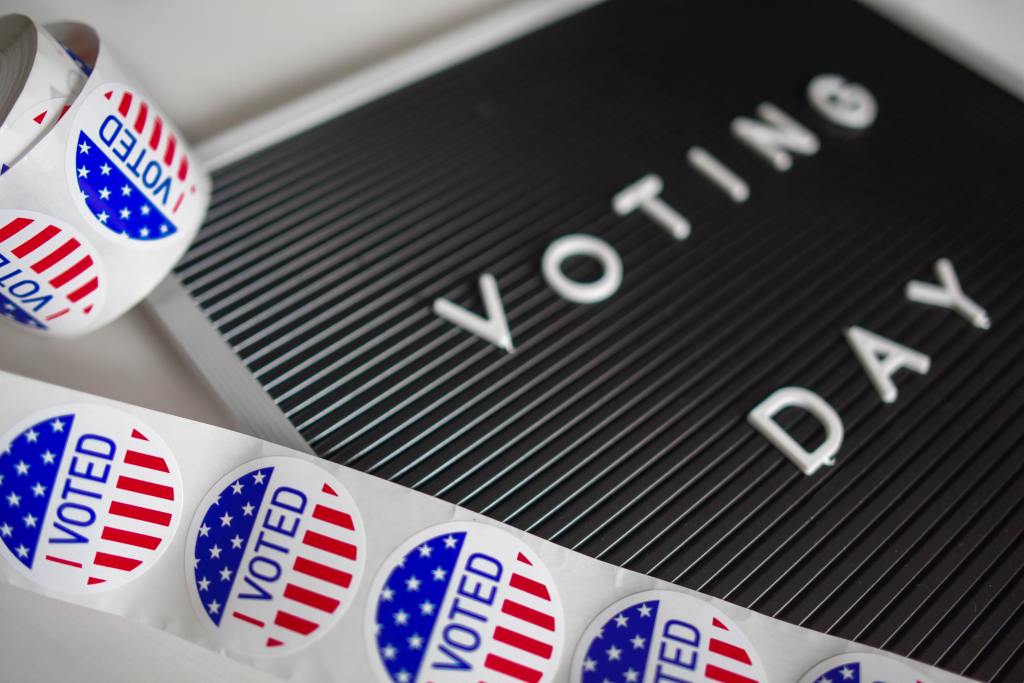
Ten Bad Reasons Not to Vote

It’s easy to convince yourself not to vote. While the 2020 presidential election had a record high turnout for the 21st century, that still represented just 66.8% of citizens 18 years and older who participated. Midterm elections tend to yield significantly fewer voters. In many other nations around the globe, people still die for the right to play a role in free and fair elections. If you’ve managed to convince yourself that you needn’t exercise your right to vote, here is a laundry list of bad excuses that might talk you off the bench.

1) My single vote is just that; it hardly matters in a nation of millions.

Well, maybe, but what if the millions feel the same as you? There go the millions. Have a look at how close some of the vote counts have been in a number of highly contested races and you are likely to change your mind. Your vote matters.

2) I’m really busy and I don’t have the time to vote.

Well, maybe, but think about something you could trade for the time that you won’t miss, perhaps an hour of social media scrolling, television reality shows, or arguing with others about their poor election choices.

3) Voting is so inconvenient.

Well, maybe, but if going to a physical voting booth is not your thing, in almost every state there is some form of a mail-in ballot you can fill out anywhere and drop in a mailbox. If you need assistance getting to the polls, there are free or reduced-cost transportation resources available in many municipalities.

4) Most of the candidates fall into two parties and I don’t like either of them.

Well, maybe, but no rule says you have to vote strictly along party lines. Vote for the individual who best aligns with your needs, choices, and values.

5) Those ballot initiatives are too complicated and are meant to trick people.

Well, maybe, but there are plain language summaries of every initiative published online, in local newspapers, and in widely distributed brochures that can help you cut through the foggy language.

6) I don’t trust the election establishment and think fraud is deeply embedded in the system.

Well, maybe, but if you study the research, there is scant evidence of widespread election fraud, and the best way to overcome the possibility of fraud is for elections to be won decisively with huge turnouts.

7) I like identifying as being outside the system and not part of corruption.

Well, maybe, but if you live in the same nation as those who vote and you choose not to vote, the same laws apply to you. Your outsider status doesn’t exclude you from compliance with the laws others make. Letting those who vote elect officials to make laws for those who don’t vote seems like an awful concession. Where voter intimidation is in play, standing up for your right to vote seems more consequential than ever.

8) The candidates are idiots and I don’t want to endorse idiots.

Well, maybe, but even if the candidates aren’t up to your standards, you still might want to offer a stack ranking. Your opinion of relative competence can only be included in outcomes if you submit a ballot.

9) Campaign commercials, lawn signs, and debates are just icky, meaningless rhetoric.

Well, maybe, but choosing not to vote when you’re offended doesn’t give voice to your offense, it just rewards those behind the ickiness by silencing your repulsion.

10) I just don’t feel valued as a voter and don’t think elections matter to my everyday life.

Well, maybe, but if that kind of apathy becomes widespread, it becomes much easier for autocrats to seize control and take away the choices you may someday regret losing.

The right to vote should never be taken for granted. Wars have been fought and lives sacrificed to protect this sacred right. You will be compelled to pay taxes, but you won’t be compelled to vote. They sort of go together, so don’t give up your right willingly. Those who allocate your financial resources will still send you a tax bill whether or not you like how they spend your money.

Voting may seem bothersome, abstract, or elusive in representing your point of view, but it always matters and can never be surrendered. Rational and heartfelt thinking are the main hopes we have for transforming bad behavior into good behavior. Listening and learning are all part of the process of bringing positive change. Sitting on the sidelines doesn’t make a statement, it avoids one. If it doesn’t go your way this time around, there’s always next time, and the time after that, and the time after that.

Never give up hope. Protect your right by exercising it every time you can. Please, get out the vote.

_______________

Photo: Pexels