Rage On

It’s a strange way to end a strange year.

About a decade ago I wrote a book about an internet uprising in support of a pair of unlikely criminals who kidnapped a pair of executives after accidentally killing a businessperson during the abduction. In hindsight, it’s a bit eerie given current events.

The book is called This Is Rage. It’s a novel of outlandish observations and counterintuitive character behavior I assembled from a career in technology and media. Much of the underlying ethos had been eating at me in repeated cycles. My goal was to paint in the extreme, to bridge the dying days of old world communication with the uncharted future of a world without filters. It was meant to be outrageous, plausible only at the fringes, a look into events that possibly could happen, but held resonance more as a cautionary tale than a slice of life.

I knew the premise was plausible because I’ve been a student of the commercial internet since it entered our lives. I watched it bring out the worst in people, particularly behind anonymity, but also the ways uncontainable sentiment could be exploited by businesses, politicians, and other special interests. I knew the events could spin out beyond the control of those seeding them, while a clever few would convince themselves they could harness the battered convictions of those who felt forgotten.

I meant it as satire in the spirit of Tom Wolfe. In the years that followed, the line between satire and reality began to blur. Then one day, it seemed to me the line was gone.

Skits on Saturday Night Live and news headlines often became indistinguishable. Something called fake news became identified as unreliable information emerging from unconfirmed sources that took on snowball effects with implied credibility. Just as we got our heads around the notion of fake news, it became an easy label for anything someone didn’t want to believe. Deepfakes, videos that appeared to be evidence of real activity, were revealed to be manipulated images edited for effect without regard for truth. The act of lying was sometimes referred to as alternative facts.

Imagine that, alternative facts as a reality we should consider.

This confluence of powerful, widely distributed technology and internet anarchy has exceeded most of what I imagined, yet the one storyline I hoped was long into the future no longer is. While I anticipated the fiery populism most often expressed with unchecked anonymity, I held the belief that human character would nonetheless gravitate toward a sense of justice. The stretch in my satire was that in fully unrestrained expression, a villain could in the public eye become a hero. This to me was a bridge too far, and that if a movement began to form in that direction, the goodness in us would win out. The failings in our logic would become uncomfortably apparent.

I was wrong. Today the headlines tell us popular sympathy can align behind a villain if the circumstances motivating a crime are deemed by spiraling opinion somehow more pernicious than the crime itself. It was impossible then and it is impossible now for me to believe a vote of internet emotion can take the side of the criminal who murders an insurance executive because he finds the victim’s business unethical. I say it is impossible to believe, and yet it is reality.

How did we get here? As I have written so many times before, the implications of the technology weaving through our lives takes its toll whether we understand it or not. Our ability to digest the psychological impact of technology can’t keep pace with the deployment of its power. We use the internet freely, we express ourselves in whatever form of truth we believe is appropriate, but the ability to decipher how our behavior is being altered eludes us as individuals and in the collective.

There are no alternative facts unless we allow them. Fake news is not a convenience unless we allow it be. Villains are not heroes unless we allow them to be.

There will be more rage, I am assured of that. People are angry, confused, and sadly turned against each other for the gains of those who fuel the rage. While we are free to express ourselves without restraint in anonymity, it’s hard for me to think of that as freedom when we could be empowering each other with shared values and vetted knowledge.

We don’t need to hide behind falsehoods. If we are made to feel afraid for saying the emperor has no clothes, we need to rediscover the courage to stand ahead of the herd. Transparency may prove increasingly challenging in a world gone mad, but actual facts are available if we commit to the work of identifying them. Argue with data and a passion for clarity over impulse.

It is a privilege to write for you, and I believe I have one at least one more book in me. Before I get to that, I am going to have to come to terms with what is meant by satire, and whether being predictive has any value at all. Irony is only a teacher if the comparisons we attempt are rooted in decency that is broadly recognized.

As we begin a new year, remember that there are facts worth unearthing, unsung heroes all around us worth celebrating, and plenty of villains playing out schemes to convince us they are worthy of trust. I’ll finish the year on a thread of optimism and say that together we can separate a worthy example from a fabricated manipulation. The choice to offer applause only when it has been earned remains at our discretion.

_______________

Image: Pixabay

The Throes of Attention

Some people suck all the air out of the room. You know the kind.

Some people try to suck all the air out of the internet. You also know the kind.

What do we miss when the signal-to-noise ratio is self-cancelling? How much valuable information might we be missing when a small cast of characters forever desperate for attention floods the airwaves with endless “look at me” pageantry?

I don’t need to hear anymore for a long time about Elon Musk. I don’t care about his transformation of Twitter into X and whether advertisers will embrace it. X is not a town square I frequent. It’s CB radio. Who listens to ads on CB radio? Let’s call the Isaacson biography definitive and put this subject matter on the shelf for a decade to see if it improves with age.

Hunter Biden has humiliated himself, his father, and the nation. He doesn’t have the good sense to retreat, apologize for abusing privilege, and start the long road toward repentance. Instead, we get to hear that he has done nothing wrong and will fight back with every resource someone else is willing to fund on his behalf.

The only thing I want to hear about Sam Bankman-Fried is when he’s going to be convicted of felony fraud. The human interest story around the benevolent “why” of his deception crimes is manufactured and disingenuous. A con man of this magnitude is unworthy of sympathy.

Lauren Boebert doesn’t know how to behave like an adult at a musical on tour. End of salacious story. I don’t care if she claims the reason she is disgracing herself is because of the lingering effects of her divorce. If you have no manners, don’t go to the theater, stay home. Oh wait, she has a seat in Congress.

Senator Bob Menendez gets caught with a room full of gold bricks and suit pockets stuffed with cash but doesn’t have the good sense to resign. Now we have to listen to why he is being victimized and will fight to retain his office no matter what. This is not a noble fight. He ought to slip away quietly while he can.

George Santos won’t go away. He can’t stop lying. There is not a token of substance in any proclamation he utters. Turn off every microphone in his reach forever.

Does it occur to any of these people or the media covering them that they are unworthy of this much attention? Has the notion of humility and decorum so left the public stage that none of these people can muster the good sense to be quiet? Is the media so equally desperate to remain relevant that it has found symbiotic bonding with a nucleus of spotlight seekers who revel in the throes of attention?

I won’t even embark on our upcoming election. Consequential? Yes, beyond belief. Filled with vital news or endless, self-aggrandizing, lowbrow drama. Yours to channel choose.

I have written before about noise and how necessary it is that we navigate it to sane retreat. The cacophony of attention-seekers can make us numb to more inspiring stories of triumph and self-sacrifice. Gossip may grab headlines, but it teaches us little. There are always voices fighting to break through the rancor and tell us things we need to hear.

Voloydymr Zelensky wants us to know what is really happening in Ukraine, why his people are giving their lives, and the threat Putin poses to the world order. Do we have time left to listen?

Children of 9/11 fallen firefighters are stepping into the shoes of their parents and joining FDNY to continue a legacy of public service. Their parents were brave and made the ultimate sacrifice to save the lives of others on that unforgettable day. Do we know who they are or how their lives unfolded?

In each of the ceaseless weather disasters we’ve heard about — wildfires, hurricanes, tornados, you name the storm — there are heroes who have selflessly saved lives, risked their own, rebuilt communities, and never given up caring for those in need. How many of their names do we know? Can we follow their living examples if we never learn what they discovered?

There was a time not long ago when getting attention was something people earned for doing good, not asking to be celebrated, and then quietly ceding the platform to someone else worthy of a big moment. I remember it well. I think maybe it was right before the advent of social media.

We live in a world of TikTok attention spans where every mobile phone is a video window to the world, but can we tell the difference between useful information and filled space? There will always be those with an insatiable appetite for celebration whether they’ve earned it or not, but changing the channel is always our choice.

Don’t be misled and don’t waste your time. There is usually a better story to hear. It just might take a little extra tuning to tune in something worthy of your attention.

_______________

Photo: Pexels

David Milch Pens a Curtain Call

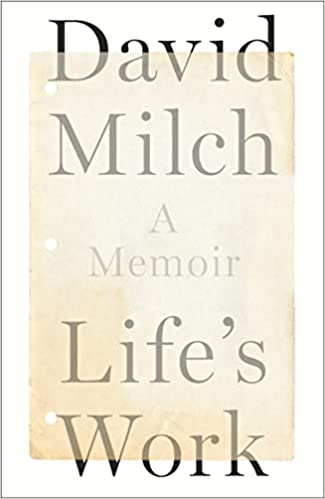
It’s called Life’s Work. It’s anything but a simple title, as only to be expected from its incomparable author, David Milch. It’s not so much a play on words as it is an enunciation of intent, a spiritual aspiration. Yeah, let’s start there and see where it takes us. The rabbi is in.

There is a profound sadness that winds its way through these pages. Alzheimer’s is laying claim to David’s current challenge, and it permeates his thought process in this troubling memoir. He is assisted in committing the recallable memories to paper by his family, and even where confusion follows his path like a sine curve, it’s not just Alzheimer’s that elicits sorrow. It’s the entire path of intermittent regrets. If words are to make us feel, his words again succeed.

I hadn’t seen David in a very long time when I attended his book launch. I asked him if he remembered me. “Of course,” he said, “do either of us owe the other money?” I was 99% sure it was a joke, but just in case I assured him we did not.

In the broadest sense of its definition, rabbi means teacher. In the workplace, it means more than that. If you get one, your life is going to change. You might just be finding a path to Life’s Work.

When you’re a young writer, if you’re smart you seek teachers. They don’t teach you how to write. They teach you how difficult it is to write. They instill in you taste, fortitude, inhuman patience, proper doubt, and resilience.

The feedback is anything but pleasant. It’s not for the faint of heart. You learn that bad first drafts are a fact of process. They are necessary, but largely need to be deleted.

David Milch taught me these things, mostly by demonstrating them, but sometimes from the breakfast lectern. He taught me that subjecting others to unpolished work was amateur, lazy, and unfair. If you choose to tell stories, you must learn to craft them in ways that don’t waste an audience’s time or take advantage of their goodwill.

You learn discipline, like an athlete. You do it every day, again and again. The rabbi keeps you honest. Character comes first, then reveals plot, but plot is only a device to enhance the arc of character development. We think we love story, but what we really love are characters.

David taught me those characters are guests in people’s homes. Audiences will let them in on expectation, but will only keep them there if they grow. When a show dies, it’s not because you have run out of story; it’s because the characters have no more headroom to interpret and flourish.

Feedback becomes lifeblood. Then one day you’re on your own. When the teacher is no more, your filter is established to shield you from embarrassment. The work must pass your own sniff test as it would be blessed from further refinement by the teacher.

In this memoir, David writes of the mind’s decay. He didn’t ask for this denouement, but his choices are few. He accepts the path as inescapable. He turns to notions of faith that evaded him in his younger years, when his temperament was not tamable. I remember that David. That was the rabbi who first said to me: “If you want to make God laugh, tell him your plans.”

He wrote unforgettable, award-winning episodes of Hill Street Blues. He created the groundbreaking television series NYPD Blue and Deadwood. He left the craft of episodic television writing better than he found it. That is an understatement.

He battled substance abuse and gambling addiction, both almost crushing his existence. He raised a caring family and found his way back to their love. Surviving his demons to nurture love was a monumental achievement.

I came to David because my viewing experience of Hill Street Blues was TV that tore at the soul. I didn’t know that was possible, particularly because it broke for commercial every 12 minutes or so. David came to think of it as bourgeois. That’s a word you don’t often hear outside of college.

He wanted to go deeper, extract honesty from language despite the limitations imposed by presumed broadcast standards. Rules for David were goalposts that needed to be moved with concerted wit whenever a network executive forgot to interfere. All forms of writing are bound by some form of convention, but he wanted those boundaries to be in service to creativity, not obstacles to authentic expression.

He never stopped being a teacher. He saw the gift in his mentor, Robert Penn Warren, and paid it forward. He helped the careers of endless writers who learned from his example the poetic revelations in pure, gritty, messy, conflicted reality.

For many years I never believed I would achieve David’s standard. My aesthetic was too unformed, too quick to quip, too impatient to let a character breathe if it killed a laugh or shocking turn. I became despondent with my own attempts at composition. I worried words would fail me when I needed them most.

Yet I never gave up. The rabbi made that an untenable notion. Work was essential. Rewriting was essential. Craft was essential. I was on my own as David was. Every writer is alone. It takes a lifetime to learn that. The rabbi if abrupt saves you half your life denying this truth and readying you for being alone, determined, indefatigable.

A mentor is a subject matter master. A mentor is not meant to be kind in the present, only in the long arc of life. We learn this too late. The critique of the master is only meant to become self-critique in perpetuity. Like I said, apprenticeship is not for the faint of heart.

There is gravitas in the audacity of writing, absurdity in committing to an endeavor that consistently leaves you empty and unnaturally separates writer from the written. David understands that in a rabbinical sense. His ability to articulate the nature of output is simultaneously divine and existential. A brief, revealing excerpt early in the memoir captures the essence of that reduction:

There’s something about literature—poetry and prose, but particularly poetry—which disinfects the efforts of being. The effort itself is cleansing. It neutralizes what’s profane about the process, and just leaves the result.

If writing becomes your essence, the idea of not writing is about the same as the idea of not breathing. Neither is feasible. Both are equally necessary.

At the end of the reading, supplemented by famous friends sharing passages for reasons of pragmatism, David took the microphone. “Thank you so much for being here. I love you all. God bless you.”

I had never heard him say words like that. His arc had come with an unpredictable resolution. Story and character were again united in natural resonance.

The rabbi placed a small ribbon between chapters and closed the book. His eyes were clear and telling. Here ends the lesson.

_______________

Photo: The Author at Diesel Bookstore

The Thing About Vin

This month I suspect the nation is accidentally divided into two unsuspecting camps: Those hearing the beloved name Vin Scully for the first time, and those who feel the world has lost a soul whose voice permeated their imagination for what seems like forever. I probably don’t have to tell you, but my tent is in Camp Two.

I’ve been reading, watching, and listening to the touching tributes to Vin all month now, waiting for the words to come to me that might add something different to the mix. Like so many fans of baseball, I am finding it impossible to quantify the impact Vin has had on the game and my life. Let me try to get there by focusing on what Vin brought into our lives that exceeds anything to do with a child’s game played by adults for well over a century on our pastoral fields of dreams.

Vin was decent in a way that defines decency. Try to think of anyone in the public eye where you never hear a single bad word uttered about him. People like this about someone but not that, people argue about the talents and abilities of professionals, people offer pointed critiques of someone’s shortfalls despite their success. I’ve never heard anyone utter a cross comment about Vin. Never. It’s uncanny. I can’t think of anyone else who fits that bill.

Vin was a storyteller of the highest order. We frequently overuse the word storytelling to describe the sequencing of events that constitute an unfolding narrative, but Vin turned broadcasting into art and baseball into a series of real-time epics built from a foundation of plot and character. You never had to love the Dodgers to love the resonance of Vin’s unmistakable voice. You listened to the anecdotes excerpted from the lives of MLB players told gracefully between balls, strikes, hits, and runs. You never missed a play, and every chapter of the story added up to a portrait of an era.

Vin brought us together. Whether you were sitting in Dodger Stadium with a transistor radio earplug hanging below your ballcap, watching a big screen with rowdy strangers in a sports bar, or sitting at home texting friends and family while Vin did the play-by-play alone in the booth, everyone choosing to participate in the day’s game came together as part of the event. Vin was inclusive, and he made us inclusive. Our differences didn’t matter on game day when he had the mic. His friendship was our friendship. Vin made sure everyone felt welcome to be part of his 67 years of telling campfire stories while athletes performed them in stadiums linked to historic moments.

“Hi, everybody, and a very pleasant good evening to you.”

“If you have a sombrero, throw it to the sky.”

“A Black man is getting a standing ovation in the deep South for breaking the record of an all-time baseball idol.”

“In a year that has been so improbable, the impossible has happened.”

“I know in my heart that I’ve always needed you more than you’ve needed me.”

Vin turned simple words into profound statements, moments into musical notes, radio and television commentary into sound bites for the ages. Today that might seem corny, impossible to pull off without sounding dated or forced. I guess when you have the perspective of almost seven decades to evolve your act, whatever you say is instantly perfect. It’s jazz. You’ve rehearsed as much as anyone alive, so you can improvise without a worry. You also instinctively know when quiet beats loud.

The stories of Jackie Robinson, Sandy Koufax, Hank Aaron, Don Larsen, Fernando Valenzuela, Don Drysdale, Willie Mays, Roberto Clemente — they are each 100% their own, and Vin knew that more than anyone. Vin was forever the reporter, never the story, that was his inviolable commitment. Yet the stories were better because he told them. Everyone knew that. If you had a story in the game, you wanted Vin to tell it, to record it for the ages, to make it vital, enchanting, and historic. Doing the outlandish in a game that has never seen a moment like yours is one thing. Having Vin lock down the tale for all of time is quite another.

As I think about all the kind words I’ve read and heard about how deeply this one humble man touched so many lives, I am repeatedly left breathless by the stories the fans themselves have shared. Fathers and sons who couldn’t find the right words to say to each other turned on the radio and had a catch while Vin called the game. Families who couldn’t afford the price of tickets parked their cars in open spaces, opened the tailgate of an old station wagon, spread a picnic blanket and grilled hot dogs as Vin made them feel like they were at Chavez Ravine. Brooklyn loyalists who never forgave Walter O’Malley for moving the team west generations later got satellite TV and fell in love again with their Dodgers bridged by the same voice who loved the team as much as they always had.

So here’s the thing about Vin, where the legend of simpler times and radio days brings us to the less innocent evolution we’re all trying to navigate with fragments of heart and hope. Some of us are getting older, losing the icons that carried us from youth to adulthood while poignantly keeping us young at heart. Every April baseball season begins with enormous hope, and every October it ends with one World Series champion. We all know the beginning and end of that cycle come with a change in the cast. Some of our favorite players will be gone. Some of the most important people in our lives may be gone. That is the sad and precious reality of our time together. Our memories are both powerful and fragile. When we remember a common voice that triggers the goodness in those memories, biological age for an instant is no longer a thing.

Vin was there for so many of those memories. He had the seat of honor at so many of our tables. He will stay tied to those memories as long as we stay tied to those memories. The gift of his life was to enrich the lives of all those who carry forward those memories. He wanted that even more than to call a perfect game. For Vin, every game was a perfect game.

I’ll give the wind-up to Vin, because I cannot imagine any other way to set up the close and get off the air:

“When I was eight years old, I fell in love with the roar of the crowd coming out of the speaker of a four-legged radio. When you roar, when you cheer, when you are thrilled, for a brief moment I am eight years old again.”

Yep, so am I. Thank you, dear Vin Scully. Your gift of optimism and connection is once in a lifetime, once in a century, once in sports history. Your gift forever keeps us eight years old.

_______________

Photo: Library of Congress