Rage On

It’s a strange way to end a strange year.

About a decade ago I wrote a book about an internet uprising in support of a pair of unlikely criminals who kidnapped a pair of executives after accidentally killing a businessperson during the abduction. In hindsight, it’s a bit eerie given current events.

The book is called This Is Rage. It’s a novel of outlandish observations and counterintuitive character behavior I assembled from a career in technology and media. Much of the underlying ethos had been eating at me in repeated cycles. My goal was to paint in the extreme, to bridge the dying days of old world communication with the uncharted future of a world without filters. It was meant to be outrageous, plausible only at the fringes, a look into events that possibly could happen, but held resonance more as a cautionary tale than a slice of life.

I knew the premise was plausible because I’ve been a student of the commercial internet since it entered our lives. I watched it bring out the worst in people, particularly behind anonymity, but also the ways uncontainable sentiment could be exploited by businesses, politicians, and other special interests. I knew the events could spin out beyond the control of those seeding them, while a clever few would convince themselves they could harness the battered convictions of those who felt forgotten.

I meant it as satire in the spirit of Tom Wolfe. In the years that followed, the line between satire and reality began to blur. Then one day, it seemed to me the line was gone.

Skits on Saturday Night Live and news headlines often became indistinguishable. Something called fake news became identified as unreliable information emerging from unconfirmed sources that took on snowball effects with implied credibility. Just as we got our heads around the notion of fake news, it became an easy label for anything someone didn’t want to believe. Deepfakes, videos that appeared to be evidence of real activity, were revealed to be manipulated images edited for effect without regard for truth. The act of lying was sometimes referred to as alternative facts.

Imagine that, alternative facts as a reality we should consider.

This confluence of powerful, widely distributed technology and internet anarchy has exceeded most of what I imagined, yet the one storyline I hoped was long into the future no longer is. While I anticipated the fiery populism most often expressed with unchecked anonymity, I held the belief that human character would nonetheless gravitate toward a sense of justice. The stretch in my satire was that in fully unrestrained expression, a villain could in the public eye become a hero. This to me was a bridge too far, and that if a movement began to form in that direction, the goodness in us would win out. The failings in our logic would become uncomfortably apparent.

I was wrong. Today the headlines tell us popular sympathy can align behind a villain if the circumstances motivating a crime are deemed by spiraling opinion somehow more pernicious than the crime itself. It was impossible then and it is impossible now for me to believe a vote of internet emotion can take the side of the criminal who murders an insurance executive because he finds the victim’s business unethical. I say it is impossible to believe, and yet it is reality.

How did we get here? As I have written so many times before, the implications of the technology weaving through our lives takes its toll whether we understand it or not. Our ability to digest the psychological impact of technology can’t keep pace with the deployment of its power. We use the internet freely, we express ourselves in whatever form of truth we believe is appropriate, but the ability to decipher how our behavior is being altered eludes us as individuals and in the collective.

There are no alternative facts unless we allow them. Fake news is not a convenience unless we allow it be. Villains are not heroes unless we allow them to be.

There will be more rage, I am assured of that. People are angry, confused, and sadly turned against each other for the gains of those who fuel the rage. While we are free to express ourselves without restraint in anonymity, it’s hard for me to think of that as freedom when we could be empowering each other with shared values and vetted knowledge.

We don’t need to hide behind falsehoods. If we are made to feel afraid for saying the emperor has no clothes, we need to rediscover the courage to stand ahead of the herd. Transparency may prove increasingly challenging in a world gone mad, but actual facts are available if we commit to the work of identifying them. Argue with data and a passion for clarity over impulse.

It is a privilege to write for you, and I believe I have one at least one more book in me. Before I get to that, I am going to have to come to terms with what is meant by satire, and whether being predictive has any value at all. Irony is only a teacher if the comparisons we attempt are rooted in decency that is broadly recognized.

As we begin a new year, remember that there are facts worth unearthing, unsung heroes all around us worth celebrating, and plenty of villains playing out schemes to convince us they are worthy of trust. I’ll finish the year on a thread of optimism and say that together we can separate a worthy example from a fabricated manipulation. The choice to offer applause only when it has been earned remains at our discretion.

_______________

Image: Pixabay

The Pros and Cons of Generative AI

Generative AI refers to the technology that can generate new content such as text, images, music, or videos. Like any technology, it has its advantages and disadvantages. Here are some of the pros and cons of generative AI:

Pros:

  1. Creativity: Generative AI can generate new and creative content that can be used in various fields, including music, art, and advertising. It can come up with novel ideas that humans might not have thought of.
  2. Efficiency: Generative AI can create content much faster than humans can. For example, it can generate thousands of images or pieces of text in just a few minutes.
  3. Personalization: Generative AI can create content that is personalized to the user’s preferences. For example, it can generate music or art that is tailored to the user’s tastes.
  4. Automation: Generative AI can automate repetitive tasks that would otherwise require human intervention. This can save time and resources, especially in industries such as marketing or content creation.

Cons:

  1. Quality: The quality of content generated by generative AI can vary widely, depending on the quality of the data used to train the model. The content may be low-quality or even nonsensical.
  2. Bias: Generative AI can perpetuate biases that exist in the data used to train it. For example, a generative AI trained on a biased dataset may generate content that is discriminatory or offensive.
  3. Ethical concerns: Generative AI can be used to create deepfake videos or other content that can be used to spread misinformation or deceive people.
  4. Intellectual property: Generative AI can create content that may infringe on intellectual property rights, such as copyright or trademark.
  5. Lack of human touch: While generative AI can create content quickly and efficiently, it lacks the human touch that makes content truly unique and memorable.

In summary, generative AI has many potential benefits, but it also comes with significant risks and challenges. As with any technology, it is important to weigh the pros and cons carefully and use it responsibly.

Note: This special guest post was created in its entirety other than the title by ChatGPT.

_______________

Photo: Pexels

When Friends Rally

This will be a bit messier and less polished than my normal work. It’s timely and a moment is upon us. I may edit or add to this later, but I want to share it now.

It was a curious Christmas Eve. Somewhat out of the blue, an antisemitic leaflet was left outside our house. It referenced a claim that, “Every single aspect of the media is Jewish” and that “6 Jewish corporations own 96% of the media.” Even more curious, in smaller print it also stated that, “These flyers were distributed randomly without malicious intent.”

None of that requires much in the way of interpretation. The flyer was placed in a plastic bag anchored with small pebbles so it could be tossed from a passing car window (my guess) and not blow away. The cowardice of that free speech exercise is apparent.

As a matter of course I reported it to the local police, who informed me that many of these had been distributed in the neighborhood and my home was not singled out. That didn’t make it better, but it did give me reason to believe something more threatening was unlikely to follow. Remember, these are cowards who operate in the shadows. For me, free speech only has gravitas when it has a clear author willing to stand by the expression of their considered thoughts.

None of that is why I write this on Christmas Day. I write this because emerging from that heinous expression of bigotry was a mitzvah, a blessing of goodness. You see, as an author, I have been pounding out these posts for years and years, alongside three published novels, all of which likely add up to a somewhat progressive worldview. You might expect as much from the later generation of an immigrant family that sought freedom, opportunity, and acceptance in this imperfect but still idealistic place called America.

Well, guess what, I have all I wanted. The cowards lost. I won.

Here’s why.

Shortly after I received the ugly missive of antisemitism, I posted a photo of it on social media. You know that old expression, “sunlight is the best disinfectant.” It’s true.

I guess I wanted to warn others in my area that bad actors were doing malicious deeds on the seventh day of Hanukkah, which also happened to be Christmas Eve. I also wanted to share outrage with my community, as if to wonder how on such a sacred day that speaks to joy and peace, someone took it upon themselves to exploit that occasion for fear and hate.

I didn’t expect much response. I write a lot and never quite know how it lands. That’s the thing about being on this side of the screen. You compose thoughts, share them, sometimes you get a response, more often than not you don’t hear from people you know. They are busy. They get accustomed to seeing your posts and only occasionally comment.

If you write a lot, you do receive a fair amount of criticism from people you don’t know. Some of it is warranted. Some of it helps me to be a better writer. Sometimes it comes in the same form as the antisemitic leaflet delivered on Christmas Eve. If you offer a public point of view, incoming invective comes with the territory. The worst of it is anonymous, more cowardice, and you become largely immune to it. I had excellent teachers on this topic.

I don’t write for a response. As I’ve said many times, I write to breathe. The written word is air to me. It’s my breathing pattern. Whether you hear me or not, I still need to breathe.

To my surprise on this one, on busy Christmas Eve, you heard me. You responded, full-throated and magnificent. You reminded me that it matters to many of you that I do this, that I type these words, why each breath matters.

Here’s a sample of what you said on social media:

You know, there are many hundreds of us who have your back.

We are standing with you.

Oh no. No no no,

That’s awful, I’m sorry, Please keep safe.

Love to you and your family.

Wishing you much peace and safety.

May your light shine bright this Hanukkah season.

These heartening comments are still coming in and probably will be for a while. That’s because there are shared values we can count on in the circles we travel, and when one of us blows the whistle on malfeasance, our communities rise together in response.

When do we know we have made a difference? When friends rally.

To know there is a community standing in solidarity together is to know that one’s voice is being heard. We are not alone when we are attacked for race, gender, ethnicity, origin, age, preference, or any other identity trait that makes us who we are. We stand on that platform of diversity, acceptance, kindness, and reject all who stand against our freedom to embrace our living history and self-define without ignorant critique.

You heard my voice. I heard yours. You acknowledged me as someone who matters. The cowards drift into irrelevance.

Our community is strong. Our community is ours.

Isn’t that the message of the day, that in this world of constant conflict, the voice of love is the platform we celebrate? Yes, we celebrate the idea of peacethe peace that begins in our hearts, resonates through our community, repels the ignorance that would undermine our shared compassion, and returns to our hearts to rekindle the flame.

We light the menorah to remind us there is light in the world. The candles are iconic, a visual metaphor of commemoration. We are the light when we choose to be, when we empower each other, when we stand by each other, when we commit to build a better day as the reason for the season.

I deeply, profoundly thank you for reminding me what is too easy to forget, that our work is never done. It is best done together when we show each other how much we care.

I believe it’s one part coincidence and one part fate that today is both Christmas and the eighth night of Hanukkah. Whatever you are celebrating, or even if you’re not celebrating but just contemplating the potential for good in our troubled world, I write today to assure you it’s there if you look hard. People will surprise you out of nowhere if you let them.

So let that be.

As I wrote to my social media community: Stay vigilant, teach all who come your way the beauty of diversity, the power of compassion, and the healing strength of love.

_______________

Photo: Pixabay

David Milch Pens a Curtain Call

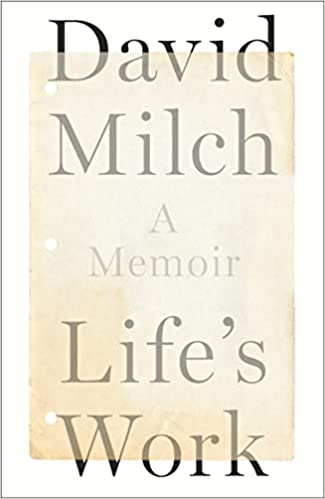
It’s called Life’s Work. It’s anything but a simple title, as only to be expected from its incomparable author, David Milch. It’s not so much a play on words as it is an enunciation of intent, a spiritual aspiration. Yeah, let’s start there and see where it takes us. The rabbi is in.

There is a profound sadness that winds its way through these pages. Alzheimer’s is laying claim to David’s current challenge, and it permeates his thought process in this troubling memoir. He is assisted in committing the recallable memories to paper by his family, and even where confusion follows his path like a sine curve, it’s not just Alzheimer’s that elicits sorrow. It’s the entire path of intermittent regrets. If words are to make us feel, his words again succeed.

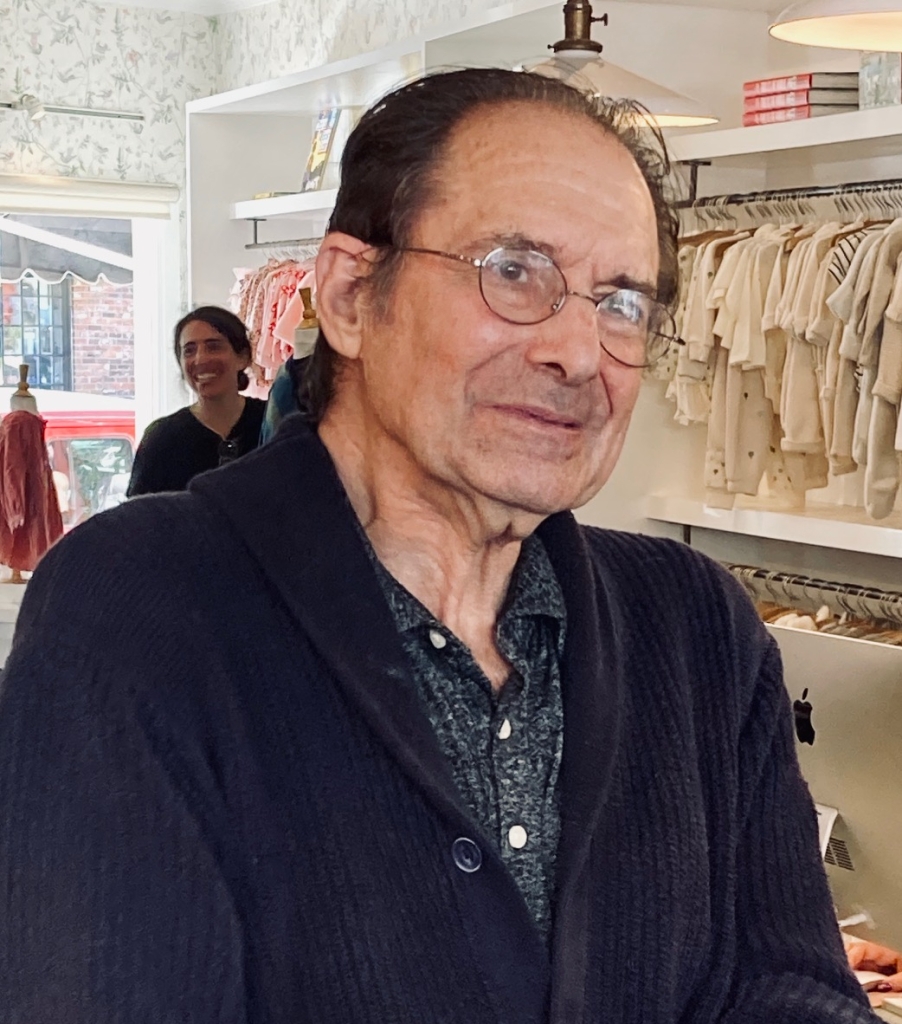
I hadn’t seen David in a very long time when I attended his book launch. I asked him if he remembered me. “Of course,” he said, “do either of us owe the other money?” I was 99% sure it was a joke, but just in case I assured him we did not.

In the broadest sense of its definition, rabbi means teacher. In the workplace, it means more than that. If you get one, your life is going to change. You might just be finding a path to Life’s Work.

When you’re a young writer, if you’re smart you seek teachers. They don’t teach you how to write. They teach you how difficult it is to write. They instill in you taste, fortitude, inhuman patience, proper doubt, and resilience.

The feedback is anything but pleasant. It’s not for the faint of heart. You learn that bad first drafts are a fact of process. They are necessary, but largely need to be deleted.

David Milch taught me these things, mostly by demonstrating them, but sometimes from the breakfast lectern. He taught me that subjecting others to unpolished work was amateur, lazy, and unfair. If you choose to tell stories, you must learn to craft them in ways that don’t waste an audience’s time or take advantage of their goodwill.

You learn discipline, like an athlete. You do it every day, again and again. The rabbi keeps you honest. Character comes first, then reveals plot, but plot is only a device to enhance the arc of character development. We think we love story, but what we really love are characters.

David taught me those characters are guests in people’s homes. Audiences will let them in on expectation, but will only keep them there if they grow. When a show dies, it’s not because you have run out of story; it’s because the characters have no more headroom to interpret and flourish.

Feedback becomes lifeblood. Then one day you’re on your own. When the teacher is no more, your filter is established to shield you from embarrassment. The work must pass your own sniff test as it would be blessed from further refinement by the teacher.

In this memoir, David writes of the mind’s decay. He didn’t ask for this denouement, but his choices are few. He accepts the path as inescapable. He turns to notions of faith that evaded him in his younger years, when his temperament was not tamable. I remember that David. That was the rabbi who first said to me: “If you want to make God laugh, tell him your plans.”

He wrote unforgettable, award-winning episodes of Hill Street Blues. He created the groundbreaking television series NYPD Blue and Deadwood. He left the craft of episodic television writing better than he found it. That is an understatement.

He battled substance abuse and gambling addiction, both almost crushing his existence. He raised a caring family and found his way back to their love. Surviving his demons to nurture love was a monumental achievement.

I came to David because my viewing experience of Hill Street Blues was TV that tore at the soul. I didn’t know that was possible, particularly because it broke for commercial every 12 minutes or so. David came to think of it as bourgeois. That’s a word you don’t often hear outside of college.

He wanted to go deeper, extract honesty from language despite the limitations imposed by presumed broadcast standards. Rules for David were goalposts that needed to be moved with concerted wit whenever a network executive forgot to interfere. All forms of writing are bound by some form of convention, but he wanted those boundaries to be in service to creativity, not obstacles to authentic expression.

He never stopped being a teacher. He saw the gift in his mentor, Robert Penn Warren, and paid it forward. He helped the careers of endless writers who learned from his example the poetic revelations in pure, gritty, messy, conflicted reality.

For many years I never believed I would achieve David’s standard. My aesthetic was too unformed, too quick to quip, too impatient to let a character breathe if it killed a laugh or shocking turn. I became despondent with my own attempts at composition. I worried words would fail me when I needed them most.

Yet I never gave up. The rabbi made that an untenable notion. Work was essential. Rewriting was essential. Craft was essential. I was on my own as David was. Every writer is alone. It takes a lifetime to learn that. The rabbi if abrupt saves you half your life denying this truth and readying you for being alone, determined, indefatigable.

A mentor is a subject matter master. A mentor is not meant to be kind in the present, only in the long arc of life. We learn this too late. The critique of the master is only meant to become self-critique in perpetuity. Like I said, apprenticeship is not for the faint of heart.

There is gravitas in the audacity of writing, absurdity in committing to an endeavor that consistently leaves you empty and unnaturally separates writer from the written. David understands that in a rabbinical sense. His ability to articulate the nature of output is simultaneously divine and existential. A brief, revealing excerpt early in the memoir captures the essence of that reduction:

There’s something about literature—poetry and prose, but particularly poetry—which disinfects the efforts of being. The effort itself is cleansing. It neutralizes what’s profane about the process, and just leaves the result.

If writing becomes your essence, the idea of not writing is about the same as the idea of not breathing. Neither is feasible. Both are equally necessary.

At the end of the reading, supplemented by famous friends sharing passages for reasons of pragmatism, David took the microphone. “Thank you so much for being here. I love you all. God bless you.”

I had never heard him say words like that. His arc had come with an unpredictable resolution. Story and character were again united in natural resonance.

The rabbi placed a small ribbon between chapters and closed the book. His eyes were clear and telling. Here ends the lesson.

_______________

Photo: The Author at Diesel Bookstore