The Compartments We Devise


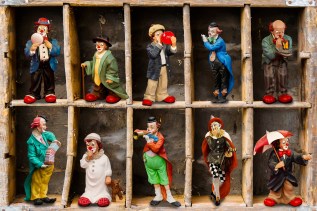
We never know the full story when we look into someone else’s eyes. It doesn’t matter who it is. Our spouses, our children, our friends, our business colleagues—we all have chapters in our stories that are as yet untold or never told. It will always be that way. The best we can do is get better at listening, remain open to compassion, and craft compartmentalization strategies to balance the myriad conflicts that attempt to overrun us even when we appear to be at our best.

Appearance is always deceptive. It’s why writers have something to write about. It’s why most of us like to read stories, see plays, and watch movies. We trust storytellers to reveal to us the points of backstory we need to piece together a coherent narrative. Sometimes we call that entertainment. Other times we call it the awakening inspired by a cautionary tale.

Life instruction is much harder. Think about the people you will encounter this week. Which of the following might they be experiencing and trying to integrate into the disjointed career demands of their workplace and the to-do lists filling their calendars:

  • Might they have a dear friend in the hospital with a terrible disease?
  • Might they have just learned one friend is getting divorced and another divorced a year ago in silence?
  • Might they be looking for ways to support people living far away whose lives are being devastated by a natural disaster?
  • Might they have bet heavily on a seemingly safe investment and lost enormously in its bankruptcy?
  • Might they have heard from the IRS that no matter how careful they were on their tax filings they are being audited?
  • Might they have recently discovered their retirement savings will not sustain them as they had planned for decades?
  • Might they have signed up for a critical deadline at work that is no longer achievable?

Don’t fret; odds are not all of this is likely to happen, at least not at the same time. Yet no matter how well things may be going or appear to be going for someone, you can be assured strife of some sort is lurking behind the curtain. None of us are invincible. None of us can entirely hide from adversity.

You never know any of this is happening to someone until it is revealed—and often it is never revealed, or revealed so long after it occurred you can be of no help. Other times it is you who are overwhelmed by the conflicts hidden from others. Life’s twists and turns find us all. We all have stories no different from tales we read, built on conflict, secrets, revelations, and resolutions.

Some people are better at maintaining the status quo no matter how hard they are being side-swiped in the dark. You know that person at work who seems superhuman, who just keeps delivering and never utters a peep about any kind of distraction or digression. You ask yourself how that person pulls it off. You wonder if such stoicism is sustainable.

Often these “superheroes” (or robots) are not as bulletproof as you think. They might just be very good at separating their life into components, ruling out clouding aspects of conflict to focus on the task at hand. That’s a skill, one that can be developed. Those who are particularly good at it know one thing for certain: it is not a magical power. It does not come with unlimited gas in the tank. It’s a bridge, and while it can be a long one, the beams supporting it are not infinite in strength.

Devising compartments is a coping strategy. Almost everyone figures out how to do this to survive, some better than others. When someone is too good at it, we might think them cold-hearted. That may seem an apt critique in the throes of emotional exhaustion, but it may not be a warranted conclusion.

When we segment our lives into compartments, we attempt to deal with difficult things separately, one at a time, one hour and one day at a time.

The problem with these compartments is that no matter how well we think we construct them, they all have not-so-secret wormholes connecting them. They send messages to each other through an impenetrable network. They shares walls of the same real estate. Those walls are thin by design.

Compartments are awkward. The storyteller knows this, which is why we listen to the storyteller. When the storyteller is ourself, there is all the more reason to listen.

Sometimes I think of song lyrics that have resonated with me and helped me develop perspectives on the compartments of my own life and those I observe in others. In his first solo album in 1984, Roger Waters of Pink Floyd wrote a very simple phrase that has stuck with me:

I recognize myself in every stranger’s eyes.

These simple words of reflection and contemplation put us all on the same playing field. When you take in the faces you pass along the street, each one constitutes a life that likely contains the same levels of success and failure, bonding and betrayal, health and illness, triumph and capitulation. The same holds true for school, for work, for community service, for the organizations you join for camaraderie and insight.

You don’t know the stories of the people around you any more than they know yours. Those stories are difficult and complex. The question is whether the obstacles in those stories will be overwhelming.

Sometimes you can help. More often you really can’t. When you integrate the compartments of your life with theirs, you can always move toward a path of shared understanding.

If you recognize the breakdown of artificial deconstruction in tales of fiction, you can recognize it in the real people around you. More important, you can trust yourself to see it in your own machinations. When you acknowledge the connections in your own compartments, they cease to be traps. That’s when compartments become shared spaces. That’s when real character building begins.

_______________

Photo: Pixabay

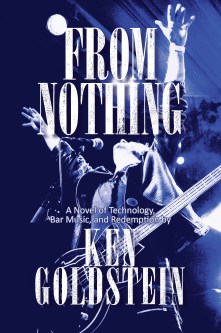
My Third Book: From Nothing

Writers by affliction are an idiosyncratic lot. Other than a willingness to spend an enormous amount of time alone and a preternatural love of language construction, we don’t have all that much in common. We write about different things, from the historic lives of dead people to the ponderous calculations of romance that could never live up to its description. Some of us have enviable discipline in reserving hours for our craft day in and day out. Others are beasts of procrastination who binge occasionally in overnight typing sessions while devoting daylight hours to cleaning out pencil-stuffed drawers and ceiling fan lint. An author on tour may enjoy speaking publicly, while another cowers at facing readership in the form of human flesh.

We may share a passion for literary achievement, but we are in few ways the same. One bit of sameness has occurred to me exactly three times, each when I’ve finished one of my novels. When the final copy-edit has put the book to bed and readied it for your consumption, I’ve invariably asked myself the same simple question:

“Why did I do that?”

The existential query is unavoidable. Why does a writer remain dedicated to the challenge of completing a book? I am guessing I am not alone in that meditation. It is impossible to think that most of my colleagues and the legions of our predecessors have not asked themselves the same thing. It’s a heck of an endeavor, for most not particularly lucrative. It disarms the writer to a battalion of transparent critics, and the incomplete satisfaction is resolved only in the reborn commitment to attempt it yet again.

So I ask you, as you are likely to ask me: Why bother?

To say that we are without choice in the matter may sound glib, but I am afraid that is the only reasonable answer I can muster. We do it because we can’t not do it. We do it because there is something inside of us that needs to ferment and emerge, to escape the confines of a sole mind and become part of a shared consciousness. If we could avoid or redirect this need many of us would, but we cannot, and so we sit, ruminate, draft, and revise. Somehow the new book becomes complete and we are ready to share it, with the best of intentions. For me, happily that time is now, and I hope the new work resonates with some of you the way its voice called out to me.

I am glad it is done. I am honored to share it with you.

It has been a fragile three years in the making. It was delayed partly by life’s interruptions and partly by my need to pick each word at least a dozen times. I may not have the discipline to write in predetermined sections of each day, but I do have the discipline to embrace each of my sentences before I toss them to you. It’s nerve-wracking. It’s time-consuming. It’s exhausting. I know of no other way to do it with pride.

From Nothing. That’s the title, and sort of where it came from — out of nowhere, yet grounded in a collection of moments I have known or expanded in scope. Should you choose to read it, you’ll discover in more detail why I called it that.

It’s the story of why a life becomes a story, how that story is guided concretely and through alchemy, and why some stories are better than others, even if they didn’t set out to be something more than assembled emotions wrapped around an evocative philosophy.

Weird stuff, huh? The problem remains that it’s difficult for an originator to talk about the plot and characters in a book without giving away any spoilers or making light of one’s own intentions. Allow me instead to dance around a few of the book’s themes.

Technology: Yes, it’s me again, come to take you inside the empirical land where I earn most of my living. This is the universe of creative destruction, where bad things have to happen to otherwise good people for progress to have its way with all of us. At the same time, bad people have a way of making these spoils the treasury of their own private club, and the best most of us can hope to do is stay out of the way of the greedy stampede when it targets our cubicle. Change comes with ugly intervention and nasty byproducts. We then quickly abandon the carnage, cash in whatever chips are left on the table, and reinvent ourselves in our evolving world.

Bar Music: I hope you like piercing lyrics and backbeat as much as I do. Sound is at the heart of this novel. We’re still digesting the baby boom, the soundtrack of our lives, the guitar-hero worship that came and went as fast as any other craze but lingers in the possibility of ephemeral ambition. I spend a lot of time thinking about music, and in this tale I devote a lot of pages to unwrapping composition. The songs connect the dots, even when the dots don’t want to be connected and would rather fade into the Milky Way. I have my favorites and they may not be yours, but our immersion in star-quality memories holds us together. That makes for songs that matter.

Redemption: This book has been a strangely spiritual journey for me, more unmasking than I have attempted previously and certainly more uncomfortable than I intended. The protagonist, Victor Selo, has a troubled life that he finds ways to overcome on the surface, yet he can neither come to terms with success nor adequately interpret loss. He makes a lot of mistakes, stumbles through a litany of lifetime accidents, and where he learns from some misdoings, the ultimate assessment of moral right and material wrong forever confounds and eludes him. Theology and philosophy are a tight couplet in our curious canon. I know I have done no better a job of answering the unanswerable than any before me, but perhaps I can open a different door for you to the unquenchable struggle.

So there you have it, a new book is born and with my deepest hope on its way to your hearts. Reserve a copy, read it when time allows, and let me know where we are and aren’t on the same page. With any luck I’ll be back again in a few years with another adventurous yarn, asking myself why I once again committed to the improbable. Much of that will always be up to you, more than you will likely ever know.

>> <<

Publication date is June 12, 2018. If you would like to review an advance reading copy please contact my publisher, The Story Plant, or via email: thestoryplant@thestoryplant.com.

>> <<

A Brief Excerpt from Track 2

When Victor awoke it was dark. He looked around and the parking lot was filled. He recognized a third of the cars from the office parking lot. Full Stack Max’s mustard yellow minivan, dents on three sides. Code Machine Clarence’s jacked up Escalade with the shotgun bucket seat usually toting that new kid, QA Juan. Admin Darcy’s prized lime green Prius gleaming under security lights as if she had driven through the car wash on the way there. The familiarity was comforting. At least some of them had come. He was head to toe in perspiration but relieved in the dashboard’s digital transmission that it was after 7:30. People inside would be singing. There would be friendly faces. Inside Providence it would be safe.

Victor had slept in the car almost six hours. That was odd. He really was drained, more than he had thought. As he mustered the courage to open the car door, a tap came on the half-open window. The face beyond the glass was unfamiliar to him.

“You okay?” It was the voice of a man perhaps a decade older than him. Victor looked at the stranger, his plain grey T-shirt, blue-black lumberjack flannel overshirt, vintage khakis, stubble beard, untrimmed mustache and mutton chops. It was a programmer look, but Victor knew all the programmers at Global Harmonics and they were the only programmers who came to Providence. Who was this guy?

“I’m fine,” replied Victor, not yet finding the energy to move.

“Come on inside, you look like you could use a drink,” said Mean Master Muttonchops.

“Yeah, I’m coming. Do I know you?”

“You don’t. My name is Thomas Katem. I’m an investment banker.” He handed Victor his business card through the open window slot. “You’re Victor Selo, right?”

Victor eyed the card for familiarity and put it in his damp chest pocket. “Have we met before?”

“It’s possible, the circles we travel overlap. Unfortunately your meeting at Global Harmonics was over before I got there. Late to the slaughter, the way I heard it.”

“Your loss, we put on a good show. You don’t dress like an investment banker.”

“It’s afterhours. I carry a change in the car. Doesn’t everyone around here?”

“You think I need to clean up before we go in?”

“Nah, come on, I’ll buy you a drink. I’ll bet you have friends inside.”

“We’ll find out.” Victor opened the door and got out of the car. Strangely, the asphalt felt comforting under his feet.

As Victor walked through the doors beside Katem, Providence was in full swing. In all the day’s drama, he had forgotten this was Friday, Live Band Karaoke Night. A warm fall weekend was getting under way. Tonight people wouldn’t sing with a machine, they would front a cover band. It was what made Fridays special, particularly for anyone who had abandoned a long-ago dream.

At the mic was possibly the worst Elvis impersonator of all time, a grey ponytailer doing his best to belt out “Viva Las Vegas” with more stage drama than musicality. He wasn’t an awful singer, he could work his way through a tune with credible intonation. He just didn’t sound anything like the King. He didn’t look like him either, beyond the tattered white sequined jumpsuit. Elvis recognized Victor from across the room and raised the mic stand to him as he entered. Victor waved briefly, then crossed toward the bar with Katem a half step behind. Elvis found the segue to a low pitch baritone interpretation of “Love Me Tender.”

“You know Elvis?” asked Katem.

“His name is Johnny Olano. He lives for this. Friday is his day. Three Elvis tunes, five shots of tequila, and he never goes home alone.”

“He must be seventy, maybe seventy-five,” observed Katem. “How does he pull off that trick?”

“Welcome to Providence.” Victor motioned the bartender with two fingers and was handed a pair of Coronas. Few of his colleagues in the bar were making eye contact with him. A few nodded slightly his way, but his usual warm embrace wasn’t to be found.

>> <<

Dan Rather Live

Last week I attended a talk with Dan Rather, who is on the road in support of his latest book, What Unites Us: Reflections on Patriotism. Produced by Live Talks Los Angeles, it was an especially engaging conversation because he was interviewed by someone equally interesting and unique, Kareem Abdul-Jabbar.

Kareem made it clear this was an unusual gig for him because he is usually the one answering rather than asking interview questions. He opened with the observation that what he and Rather have in common is that today each of them is considered an elder statesman. Without missing the lightness of the moment, Rather jumped into the dialogue and made it clear that he does not think of himself in any way as a statesman. He also declared with humility that he is not a philosopher or a political scientist, just a very lucky reporter grateful to have enjoyed a long career in professional journalism.

I have to admit that I am quite the fan of Dan Rather. I was in college when he was passed the torch from Walter Cronkite. In those days anchoring the day’s national  news wrap-up was both a high honor and enormous responsibility. I was raised on the CBS Evening News and to this day it remains a welcome friend in my home, played back late at night from a digital recording. The anchor chair has changed hands several times over the years, but when Rather sat there, he carried the weight of the world’s biggest stories with dignity, authenticity, precision, and charm.

I found Rather’s comments that evening so insightful and energizing, I wanted to share a few of his thoughts in hopes that those who share my regard for his career know that his voice is still resonating, and those who are unfamiliar with him might choose to discover the depth of his observations.

“News is what powerful people don’t want you to know,” he offered with certainty. He defined the job of journalism as getting the story that others may be hiding, and that is why journalists are often unpopular with people in high places. This has always been the job as he sees it, finding out what the public needs to know no matter who doesn’t want the public to know it. Mistakes will be made along the way, and he as much as anyone knows there is a severe price to reporting news imperfectly let alone incorrectly, but if a reporter on the beat does not understand that uncovering the hidden story through research is what matters, then that journalist is not much of a journalist.

To that end and in answer to several questions about our current President, Rather observed that Donald Trump is a fearful man. The awkward speech patterns and erratic management behavior of Trump suggest a man who is “very afraid of something.” As a journalist, Rather sees in Trump’s tone glaring similarities to other political leaders who have attempted to cover their tracks, and in so doing he believes this fear will only become heightened as the investigations around him intensify.

In response to broad attempts to discredit the media with sweeping labels of “fake news,” Rather acknowledged that the news landscape today is cluttered with an enormous number of competitive brands, but that to lump them together as equal in diligence or relevance makes little sense. He reminded us that without journalism a democracy will perish, and that widely dismissing media with the catch-all critique of irresponsibility was the most dangerous conclusion we could reach. We have choices in media, and we need to make those as individuals in evaluating standards of discipline. This is a significantly more cluttered playing field than it was in the days of the “Big Three” television networks, but the rules of fact-supported journalism haven’t changed and the idea of uniformly devaluing reporters is a tactic of tyranny.

Rather spent a lot of time talking about the frightening path of authoritarianism fueling the emotion of extreme nationalism, with that being a step toward self-asserted nativism and ultimately devolving into tribalism. He believes in patriotism and has served as a U.S. Marine (an admittedly short tenure), but he is deeply concerned that if we let rhetoric drive our culture to tribal conflict, our nation’s model experiment in democracy will be no more.

In that same concern of internal conflict, he worries that our nation has yet to come to terms with sufficient advances in race relations. He sees the ongoing suppression of minority voting as pernicious and systemically in need of our attention. This struggle dates back to our founding and seems likely to remain unresolved until the final page of our history is written.

Rather worries that our population doesn’t understand how close we are to the brink of war with North Korea, a human tragedy we will regret if we don’t navigate it properly. He sees China as the key to containing North Korea, because China largely controls the supply lines there. The emphasis of our negotiations is better served with China so that China has enhanced motivation to ease tensions with North Korea. We shouldn’t fool ourselves otherwise.

With regard to national priorities, Rather believes that “the three foremost issues in our agenda need to be education, education, and education.” There is no doubt in his mind that education is the core of an informed constituency, and without it democracy will collapse. Likewise he reminded us that “dissent is American” and to think otherwise is to misunderstand the foundations of our nation. Our nation was founded on dissent, and it is always our right to dissent. He chooses to stand for our national anthem, but he appreciates that other forms of peaceful expression remain valid and core to our principles of free speech.

In closing, Rather spoke eloquently of avoiding the trap of cynicism. He believes in skepticism, both as a reporter and consumer of news, but he emphasized that no good can come of cynicism. There is no value in the snide dismissal of hope. I was particularly heartened to hear him end by encouraging us to hold onto our idealism. To hear a career journalist who has stood in the trenches of war and seen close-up every form of violence our world has suffered end on a note of idealism reminded me why I loved his newscast. This was a journalist who at the height of his fame signed off at night with a single word: “Courage.”

Dan Rather is a reporter still on the job, a journalist forever unafraid to do the job that has been his life’s work. Courage and idealism have never mattered more in our world. He might not want to be called an elder statesman, but I know one when I see one.

The Little We See

I discovered the NBC television series This Is Us in summer reruns this year and I have become obsessed with it. If you enjoyed shows like Thirtysomething and My So-Called Life, you’ll not only recognize the tone and structure in This Is Us, you’ll see familiar names pop up in the directing credits. It probably won’t surprise you that what has most attracted me to this show is the writing, both the quality of dialogue within episodes and the structural connections between episodes. Series creator Dan Fogelman has framed a milestone achievement in word-to-screen translation.

If you are a student of fiction you know that narrative has the highest emotional impact when story and character are revealed on equal footing, one reinforcing the other. Whether you attempt the craft professionally or as an avocation, you know how immensely difficult this is to do, particularly consistently. Characters matter more when the story advances as a result of their arcs. The depth of characters is more fully rendered when plot points drive their change. It’s enormously challenging. Try it sometime. Or you can just watch This Is Us.

I certainly don’t want to give away any spoilers surrounding this show in case you decide to binge on it after reading this post. At its core it is the story of three people born on the same day circa 1980 (the year I graduated from high school, go figure). The storyline follows them from infancy to adulthood with all of the many tangents in their lives around family, friends, loved ones lost and found, career highs and lows, and personal discoveries. The emotional complexity of the characters is what makes it powerful, yet surprise twists in their interwoven journeys jump out all the time, making it the kind of serial that leaves you both satisfied and wanting more.

What consistently blows my mind in this show is how character development is revealed in snippets that link forward and back in time, particularly replaying events with increased detail layered into the unveiling of previously hidden moments. It is these hidden moments that led me to write about the show. What continually strikes me as gripping drama is how little we know about any one character or event at any moment in time, and how adding onto the storyline sheds light on the “why” of every moment. I think about this in life every day as I encounter people, not so much in what I do see but in the stark reality of how little I see.

“The little we see” is the mystery of real-life human drama. Someone could be standing next to you in line at Starbucks with a thin smile, but she may have just come from the hospital visiting someone in critical condition. Someone could run into you on the freeway wildly distracted, when an hour ago he was turned down in his marriage proposal. The person next to you in a bar watching a baseball game might be ordering the beer that sends him tumbling off the wagon. We barely know what we see. We usually have little idea why it is happening, what meaning or consequence it may have, or what life fork in the road it may represent. Good storytelling fills in the blanks. Compounding life events don’t snap together as Lego blocks nearly that solidly.

Returning to my obsessions, in my early writing career when I was learning the craft and reading much more than I was writing, I found myself consumed with the question of what happens to characters when we don’t see them. I spent a lot of time immersed in stage-play texts and repeatedly asked myself purposefully unanswerable questions. What are these characters thinking and doing when they are offstage? What were they doing before the play began? What will they be doing after the final curtain? Certainly writers have to think about these things, but the time-limiting constraint that they never can fill in all the blanks is what can elevate a story from entertainment to a more lasting form of art. The elements of a character’s life that are left open-ended are the entry point where the reader’s imagination can come alive. It is in that synthesis that a work becomes both personalized and shared.

Why might this matter to you even if you aren’t particularly enamored with fiction? Perhaps you are like me and find yourself wondering throughout the day about the backstories and masked details in the lives of the people who walk into and out of your contact each day. When you are in a meeting and the presenter is struggling, what was he doing an hour ago, a day ago, a week ago, a year ago? When you hear a co-worker arguing on the phone in the hallway about something that sounds personal and know that you are about to review a business plan together, will that person be paying enough attention to make good decisions and what will happen to resolve the argument by the time you meet again tomorrow? When a co-worker’s child visits your office, what does she see and how will it possibly affect her future decisions about her career?

All of this fascinates me both as a writer and a businessperson, because the long and winding roads of our lives are filled with invisible forks where we choose a path and don’t necessarily know at the time that the decision was of immense consequence. I will be writing more about these invisible forks soon because I think the resonance of our decision-making becomes more consequential when we pay attention to the impact it has on those around us. We can never chart our own fate entirely, but we can think now and again about what might be going on offstage as well as onstage before we act.

One of the best pieces of advice my dad gave me in business was that unless you are in the room where a decision is made, you will never know why that decision was made. My trepidation has gone further, because too often I have been in that room and I still don’t know why many decisions are made. To me that signals what happened in the other room where I wasn’t present and didn’t even know there was a meeting, or what happened in someone’s living room that morning, or what might be happening in some hotel conference room that night. We see what we see and it’s never enough. We see too little, yet we still have to make decisions.

The little we see is a subset of any story. Think about it that way and you might make different choices when you are in the scene. Onstage or off, the story is part public, part private, part secret, part personal, and always conflicted. That is what makes a great television series like This Is Us. What it says about our lives and our business dealings is something else entirely.

____________

Photo: This Is Us Gallery, NBC.com