How Fragile Is a Brand?

Philip W. Schiller, Senior Vice President of worldwide marketing at Apple Inc introduces the new iPads in San FranciscoApple unveiled a bunch of new products last week, including numerous options in shape, size, and price point for a fuller line of iPads.  Many of these products are desirable and will make great holiday gifts, but none comes close to pioneering a new category of experience.  These are known as brand extensions, variations on a theme for already desirable existing successes.  It’s good stuff, and good business, but not much to get excited about — nothing like the first Mac, the first iPod, the first iPhone, and the first iPad, all of which constituted innovations that created category-defining icons.

Steve Jobs used to talk a lot about brand deposits and brand withdrawals.  A brand deposit takes place when a company invests heavily in making an indelible mark with customers, akin to their very first experience with a point-and-click computer, or a sleek digital music player, or an easy-to-use smart phone, or an intuitive tablet.  Brand withdrawals are usually harvesting activities, like brand extensions, where a company takes some money off the table without over-investing to get it.  Extremely short upgrade cycles for modest improvements in a device or high margin accessories like a carrying case are notable examples of brand withdrawals.  Steve would say you have to maintain a balancing act to infuse a brand with life and a company with cash.  I don’t think I ever met anyone better at this balancing act than he was.

That’s why I am starting to feel some heartache for Apple.  I am seeing a lot of withdrawals and not a lot of deposits.  I am also starting to see sloppiness as an acceptable norm, rocky roads that get paved over later without heavily pushing the envelope to warrant the annoyance.

Recently I posed the following question on my Facebook page regarding Apple’s release of the highly touted iOS7:

Is it just me or is iOS7 woefully slow, bloated, and unstable on older devices, particularly on the iPad2? My hour-to-hour experience on my beloved tablet has gone from impossibly perfect to mediocre. Is this the same Apple?

The response was mind-blowing.  Here’s an extract from the thread, names removed to protect the honest:

  • I’m not having any problem with it except for user error with new features. I do see some slowness trying to connect to the internet but I assumed it was my wi-fi.
  • ME: I don’t think so because I am having the problem with wi-fi wherever I log in, it’s just sluggish, and apps that worked fine before crash at least once a day, and gasp, I have to reboot!
  • That’s not good. Wifi is definitely a problem. Apps don’t usually crash unless I stress them by doing things too fast. You have to reboot the device as opposed to relaunching the app?
  • ME: After a few apps crash it freezes, just like MSFT.
  • Ken, I am having the same problem on my iPhone 4S and MacBook. I regularly close apps on my phone, but that just saves battery life. It doesn’t help with speed.
  • Yep apple has confirmed with me that new software doesn’t perform well on old devices. Happen to me when I owned the iPhone 4.
  • It’s also bloated and annoying on newer devices as well.
  • 4S is now super unstable.
  • ME: Yep, no question that the loss of Steve Jobs is hardly being felt in Cupertino. Brand is in hunky-dory hands.
  • My wife hates it… I won’t upgrade….
  • try running it on an iPhone 4. I hate it.
  • Slow and crashes. I’m running it on an iPhone 4S and an IPad 2. Shame. Shame.
  • ME: Wow, I don’t think I’ve seen this much negative love toward Apple other than at a MSFT conference. I wonder if they know. Maybe I should extract these comments into a blog post to help them understand. But would they care? That’s the real question. If they did, they probably already would have done something about it.

Brands are not invincible.  They don’t fly with a safety net.  Customer loyalty has to be won anew at every touchpoint.  No company is safe from creative destruction, not even Apple.  That is why the average life of an enterprise company today is about half as long as a human life, around 40 years.

And you thought your own 40th birthday guiding you into middle age was scary, huh?

In my view, Apple remains a legendary company with three key competitive advantages at the moment:

  1. Brand: One of the most magnificent consumer brands of our time, expertly polished and full of lustre.
  2. People: An almost incomparable assembly of talent in its employment to create, innovate, Think Different, and change the world
  3. Cash: An unfathomable amount of reserves to invest as it deems wise and appropriate.

If they don’t protect the brand, the other two won’t matter in the long run.  While historic odds of longevity are no more on Apple’s side than any other modern corporation, the good news is that Apple has built up tremendous goodwill with customers and shareholders to ignite the future, and I would venture to guess they will protect their brand, but not without a lot of pain in the reinvention.  That’s perhaps the biggest problem of being at the top of the top, and why it is so easy to fall.  When customer expectations are at the level where Apple sets the bar, you have no choice but to outperform yourself time and again.  That’s an outrageous challenge.

Brands seldom shatter all at once.  It’s the little hairline fractures that get you.  Those are waved off as no big deal, normal ebb and flow in business.  Then a hairline fracture becomes a crack, and the crack ripples outward like a spider web, and then the ceramic whole flies apart.  Andy Grove calls it the Strategic Inflection Point, the change in market forces that happens and you miss it, and then it’s too late to course correct.  You can remainder, but you seldom get back to the top of the heap.

That’s because a brand is not a logo, it’s a promise.  And just like when a friend breaks a promise to you, you seldom fully forgive that person or fully trust them again.  Apple has always promised us humanity above technology, so when they even mildly violate that promise we feel it, because we have come to trust them so much. When a promise goes undelivered or long delayed, like a next-generation product leaked to the public zeitgeist, word of mouth can be savage.  Will we give them another chance on a bad release of iTunes or a map app?  On a rough system upgrade?  Of course we will.  Until the promise is broken one time too many, and then we won’t.

Business leadership is managing part for today, part for tomorrow.  It’s a plate spinning combination of the big picture and the small details.  Mostly it’s about listening to customers and loving your brand more than they do, protecting that promise with every resource at your command.  It’s very, very hard to do consistently, which is why the financial rewards are so immense when you get it right.

Curiously, the Facebook thread I extracted above went on a bit longer, and eventually someone pointed me to an online forum where I was directed to adjust a network setting and reboot.  From there things got a little better, but not entirely.  It was then suggested that I do a clean firmware install, which was way beyond my alloted time block for bettering the tool I needed to do my work — remember, these devices aren’t your work, they are the means to do your work.  We migrated to Apple devices precisely because competitors put us through the ropes with reinstalls, adjustments, and tip on settings that experts could swap.  Apple won the last few rounds because you didn’t have to be an expert at anything, you just opened the box and it worked.  That was a wow, and it was always worth the premium price to those who wished to pay it.  There were a lot of us!

Don’t break your promise.  Sweat the small stuff.  Love your brand.  Love your customers.

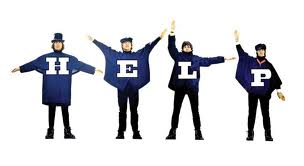
Help, You Need Someone

“Hope you are well.”

We are all guilty of typing those words. It’s the email equivalent of “Have a nice day,” though usually as a salutation. It means that in a few sentences someone is going to ask you for a favor. In customary parlance, it’s someone you haven’t heard from in quite some time. It’s also likely someone who doesn’t much care if you are well.

Help2In the very early days of this blog, I wrote a piece of advice about networking. I thought about that a lot these past few weeks with the release of my novel. Launching a first book at mid-life is a somewhat absurd task. The odds of commercial success are so tiny, you almost can’t calculate them. When countless people in my network—from high school through college through each phase of my career—rallied to my support across the board, I was literally breathless. There is nothing I wouldn’t do for these people: job referral, job reference, resume review, preparation for a pitch, media training, media intervention, hospital visit, you name it! I am there for them in perpetuity, and they are here for me now.

Don’t take this for granted. It does not happen by accident, nor does it happen as the norm. If you haven’t yet been crushed by that discovery, you will soon enough. Don’t be dismayed. Only you can fix the problem, and it’s a problem worth fixing. But it’s not a sticky patch on a leaky roof.

Networking is still so bizarrely misunderstood, it boggles my mind. It is not a system of stored and replaced favors. It is the building of bonding relationships where people want and choose to help each other. Pay It Forward is about as constructive a strategy for longevity as I’ve experienced. Relentless excellence and indefatigable commitment aren’t bad either.

If you want to have a robust network that might help you someday when you truly need the help, build it now; you’re already behind. If you think you can pull off a big-time favor swap real-time, you’re almost certainly deluding yourself. Build your network for the future by offering to do things for others, even if it’s an inconvenience. If you do it enough, some of that work will create powerful memories of connection, even more than appreciation. That’s a well filled with sweet water when you are someday thirsty.

At the very least, if you have nothing to offer someone, show a keen interest in what they do. A few weeks ago I gave a talk about my book at Stanford. I did it because a friend who loved the book asked me. My friend showed enthusiasm, her friend (the teacher) showed enthusiasm, I responded with enthusiasm. No tangible value was created, no business leads exchanged; it was all just goodwill. Yet that wasn’t what won in the networking. One of the students reached out to me after the class with a well-composed email discussing an enigma surrounding one of the characters in the book. The student asked me how that applied to a real-world work situation. It took me a while but I responded, which opened the door for the student to ask some more heartfelt questions. I liked the heartfelt part, that’s just me, but that student has now bridged access to what was once a total stranger’s network. To me, that’s good business practice. We’ll see how he works it over the next decade. I’ll bet he handles it well.

Here’s another example: A few years ago I was in a weekend workshop, not as instructor but participant. I saw promise in the material and was there for the learning. There were people at all levels of their careers and personal development; ages spanned four decades. One individual was quite young and struggling, fresh from college outside the United States, but passionate and curious about everyone’s life path. I asked her after the workshop to email me once or twice a year to let me know how her career was going. Strangely enough, she has. I’ve received about a half-dozen updates, not too many but enough that I remember her name and long-term goals. I’ve given her some advice, but nothing of real value yet. I’m guessing at some point I will. Maybe she’s banking on it, or maybe she’s just sincere. English is not her first language, but she has not as yet typed the words “Hope you are well.”

Staying in touch is not a onetime event. It takes work to be connected, give and take, sharing ideas and information, not just asking for something. If you don’t want to do the work, don’t bother extending the outreach. You would be shocked at how many people I’ve suggested stay in touch with me after an initial meeting and never do. They forget, or they don’t care, or they don’t see value in it, or they are disheartened by the lack of immediate gratification. I am grateful to them. It helps me manage my workload—one less rising star I might someday champion.

Watching new grads bang their heads against the job market is terribly frustrating, because they haven’t had the experience to know how they could approach it better, with fortitude and resilience. Watching later career professionals suffer the same resistance is even more frustrating, because by now they should have powerful networks of their own, but if they didn’t invest along the way in others, that network today is likely too thin. Remember that LinkedIn and Facebook are tools, but networks are between people. The glue that bonds networks is history, and history comes from doing things, often and selflessly, for and with each other. When it comes to bolstering a platform of human support for your unlikely and unexpected needs, you’ll need to make that brand deposit now for future withdrawal. No surprise, you have to Think Different. It’s not a quid pro quo, you don’t get a favor for giving a favor (not a good one, anyway), but if you authentically invest in goodwill, you’ll enjoy a deep reserve of goodwill. When it’s time to dip your ladle, you want it to be an underground lake.

Networking is not what you can do for me. Networking is what I can do for you. Before you ask.

Toons, Love, and Letting Go

Earlier this month the curtain finally fell on Toontown Online.  I am guessing that 90% of the people who read this post will have no idea what that is, was, or means.  I won’t spend a lot of time telling you what it is or was, but I do want to share a few words about what it means.

TTO End of the WorldToontown was a massively multiplayer online role-playing game, an MMORPG, if you can believe such an acronym exists.  It is more commonly referred to as an online world, or a virtual playground, where participants create a character, or avatar, that represents them among tens of thousands of others at any given time, in what is affectionately known as cyberspace, the intersection of computer networks, or the Cloud.  The most famous and successful MMORPG of all time is undoubtedly World of Warcraft, which was created ages ago by Blizzard Entertainment and has produced immense wealth for those behind it.  Toontown is kind of like the quirky second cousin of World of Warcraft, created by huge fans of WOW initially at Disney Imagineering R&D, seeking a key point of differentiation — Toontown was the first MMORPG for kids and families.  Yes, that’s right, kids and families.  It came from Disney, after all, where family entertainment is the brand promise.

Aside from appealing to a different demographic audience, Toontown accomplished a few other significant milestones.  For one, it lasted commercially over a decade, if not putting it in the wealth stamping mode of World of Warcraft, certainly getting it into the rare window of time warp triumph that few digital games enjoy.  It was certainly the longest living bit of software that I ever helped see the light of day, by an order of magnitude.  We started working on it in 1999, launched the free public beta at Disney Online in the Fall of 2002, and went live in full subscription model in mid-2003.  Earlier this year, Toontown Online celebrated a milestone of ten years active that very few libraries of compiled code ever have the occasion to note.

If you have never played an MMORPG or have no idea what the gameplay in Toontown Online encompassed, you can easily learn that by doing a few web searches or scanning the Toontown entry in Wikipedia.  Now that Toontown Online is over, I want to talk less about its being, and more about its resonance.  It was a turning point for those who worked on it in several capacities — proof that the Disney brand and Walt’s vision could be migrated to a new platform of which Walt never dreamed.  It galvanized a team to emerge from the DotBomb bubble years through a process of creative destruction and reinvention.  It bonded its developers to its customers in a true paradigm shift that redefined for all involved the notion of “community.”  I remember approving a job requisition for a position called “Community Manager,” and I swear I stared at the page for an hour wondering what that meant, whether we really needed one, and whether any person was superhuman enough to tackle such a role.  The truth was, we were all Community Managers, and residents, and participants, and young at heart immersives who knew something had changed.  We bonded with our customers, and we bonded with each other, and that bond proved to be something that will last in perpetuity.

World class work is contagious.  High performance teams willingly tackle shared dreams.  Achieving the improbable is a permanent bonding agent.  Copy and paste that in your signature file.

The bond of being part of doing something that hasn’t been done before with a team of impossibly talented individuals with whom you are unlikely to ever work again is both powerful and intangible.  The odds against Toontown lasting a year let alone a decade were incalculable.  It was so hard to describe the concept to people both inside and outside the company that building a consensus and maintaining funding was entirely improbable.  Yet because history told us Walt had faced the same struggle and challenge opening a branded family theme park — Walt’s Folly, as it was known — we just stuck to it and got it done.  We knew if we could get people to sample it — try it, touch it, be in it, share it — it would slowly catch on.  It did, like the Little Engine that Could, and those silly little Toon characters got stuck in our minds and our hearts.  We played in that world with each other, kids and adults, employees and customers, everyone an equal, everyone just looking for gags and Cogs to take down.

Years into it, Thomas Friedman wrote a critically important book called The World is Flat, but those of us making and playing Toontown already knew that.  The hierarchy had inverted, unrestricted except by carefully constructed parental controls, global in reach and appeal.  The Toons were in charge of this world, not us.  Our job was to be good stewards of the world, not run it, only to tend the expansive lands.  Yep, it was an online theme park that belonged to everyone there.  It was a community, a true virtual community, almost perfectly safe because the community kept it that way, alive and vital 24x7x365.  We discovered it then, and we feel it now.  The game might be gone, but our sense of belonging, no chance that can be dipped in solvents.  Belonging is eternal.

Therein lies the truest lesson of Toontown for me, a lesson I learned my very first years in the software business, years in which I rode the unruly swings of success and failure all at once.  Astonishingly few projects in media succeed commercially or critically, and even fewer achieve both, but the ones that do make up for all the ones that don’t, both financially and in life satisfaction.  An extraordinarily wise mentor taught me at the outset of my journey this simple but enduring lesson, that if I stayed in this racket and wanted a career instead of a job, I needed to learn and embrace the mantra that projects come and go, but it is the people with whom you work  you will remember way more than the projects.  He explained that anyone looking back on a creative career when it comes to an end — and they all do at some point because we are humans, not T0ons — is that a truly successful career will be built on the back of about a half-dozen successes you could never predict, mixed in with a landfill of failures.

The takeaway was that it would always be easy to forget projects magnificent and awful, but the people with whom you shared those projects could rise to the level of unforgettable if you made that a focus.  If process was as important as outcome — more important than outcome because it is the only path to sustainable outcome — then you might forget the rotten days, the missed milestones, the modules that wouldn’t compile, the costly customer service calls, all that junk — but the joyous memories of the people would stay with you.  The people were the gift then, and they would remain so forever.

The incomparably talented people who built and nurtured Toontown were many of the same people with whom I shared any number of initiatives that didn’t go right.  It would be impossible to acknowledge and commend all of them here, and to pick just a few would inevitably be read wrong by the many.  The ten-year run of Toontown didn’t make them good, they were good already and they are good still.  All of us shared this tiny bit of magic, and now like most forms of media it joins the destiny of the ephemeral.  Our bond with each other is unbreakable , and our bond with that community is impenetrable.  The memories of the cast endure, the value of the bond beyond price, the stories of each other ours forever.  We are a little geeky, a little playful, a little different, and a little older.  We are forever Toons.

Toons of the World Unite.