Don’t Yell at the Pilot

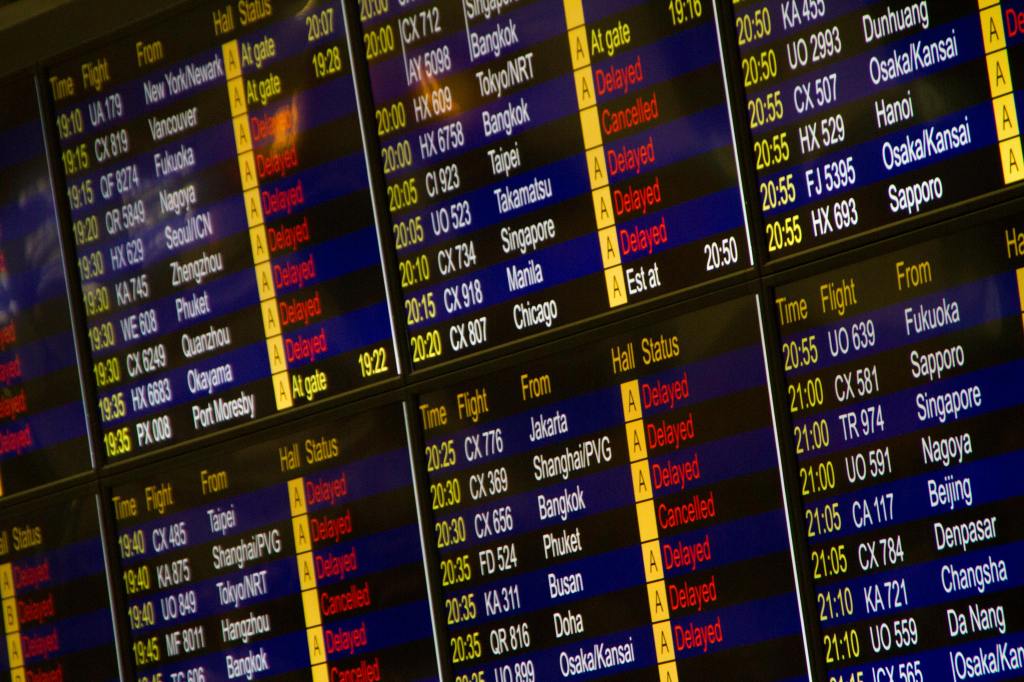
If you are a regular reader of this blog, you know I spend a lot of time on planes. When you fly a lot or spend a hunk of time at airports, you observe human behavior in many of its less magnificent expressions. There’s no way around it — the more you fly, the more likely things are to go wrong. It’s a numbers game. Take 100 flights, and if just 5% of them don’t go as planned, that’s five bad days of travel interrupted. That 5% is optimistic.

Frequent travelers know that getting angry at the people trying to help you with a canceled or rerouted flight is not likely to get you what you want. You may think yelling at the person on the other side of the computer will get their attention. What you don’t know is what they are typing, or would have typed if you had been a little kinder.

Last week I had one of those bad business travel days. Shortly after takeoff, we were notified by the captain that there was an unexpected rumbling we all heard in the retraction of the landing gear. Although he assured us we were safe, to be even safer he was going to make an unscheduled landing at the next major airport we were approaching.

You can imagine the groans from the cabin passengers. “There goes the day.” “So much for our plans.” Yep. That’s what happens. The captain makes the call and the plane goes where the captain says it goes. Twenty minutes later we were on a runway and at a gate two hours short of our destination.

Indeed there was confusion when we landed. We were asked to disembark and wait at the gate. Job 1 of course was to inspect the plane and see if it could be airborne again. If you have ever experienced this scenario, you know the chances were maybe 10% that plane was going back in the sky the same day, but you do what the crew advises and take it a step at a time.

Because we were an unexpected landing the gate was understaffed. While they tried to get the connecting passengers rerouted, they asked the single destination passengers to wait for a call on whether the plane was safe to fly again or we would need to be rebooked. Frequent travelers know not to wait — you get on the phone or internet, rebook while seats are available on other flights, and take whatever seat you can get to keep moving. Of course not everyone can be helped immediately with long lines and on-hold wait times, so there was reasonable angst in the gate area.

Reasonable, that is, until the captain came off the plane and visited with us while we waited. That’s when people became unreasonable. He told us the likelihood of that plane taking off again the same day was extremely low, and we should all be making other plans. He was honest and straightforward. He didn’t have to do that. He didn’t even have to talk to us. In exchange for his candor, a number of passengers started yelling at him. “This is unacceptable!” “Do you know how to run an airline or not?” “What compensation do we get for this inconvenience?”

There are a few cardinal rules frequent travelers embrace. Don’t make jokes when passing through security. Don’t step in front of small children or anyone in a wheelchair when boarding or deplaning. And don’t yell at anyone in uniform. Ever. Do not yell at a flight attendant. Absolutely never yell at a pilot.

For all these angry passengers knew, this pilot might have just saved their lives. Sure he said there was no danger in the air, but you don’t know if that’s really true. A captain would never create a panic in the cabin. This captain made a call and set the plane down. Now we’re calling family to tell them we’re going to be late and worrying about retrieving our luggage. Could it be worse? At 37,000 feet above the Earth?

I remember during Covid when passengers were complaining to flight attendants about wearing masks. Sometimes that exploded into yelling. I thought to myself, what makes people think that flight attendants have any discretion over enforcing federal policy? What can passengers possibly hope to accomplish by yelling at those making it possible to fly during the pandemic?

Airline inflight personnel are heroes who look after our safety first and foremost. They don’t run the airline. They aren’t in management or marketing. They are not jet manufacturers or maintenance crews. Their job is to get us where we are going safely. They do that with 99.99% accuracy, maybe more 9s. To yell at a pilot for the inconvenience someone might be suffering is beyond ignorant, beyond disrespectful, beyond lunatic. The pilot did his job. Applaud him, thank him, write a letter of commendation on his behalf.

Don’t yell at the pilot. Never. You’ll get where you’re going because a highly trained and experienced professional kept that option open for you. Their thousands of hours in the cockpit prepared them to make split-second decisions, perhaps a few consequential times in their careers, that allowed you to read these words. I’m in awe of their talent, commitment, dedication, and perfectionism. Yell at them and you’re going to get a different kind of feedback from passengers like me, their most devoted fans.

_______________

Photo: Pexels

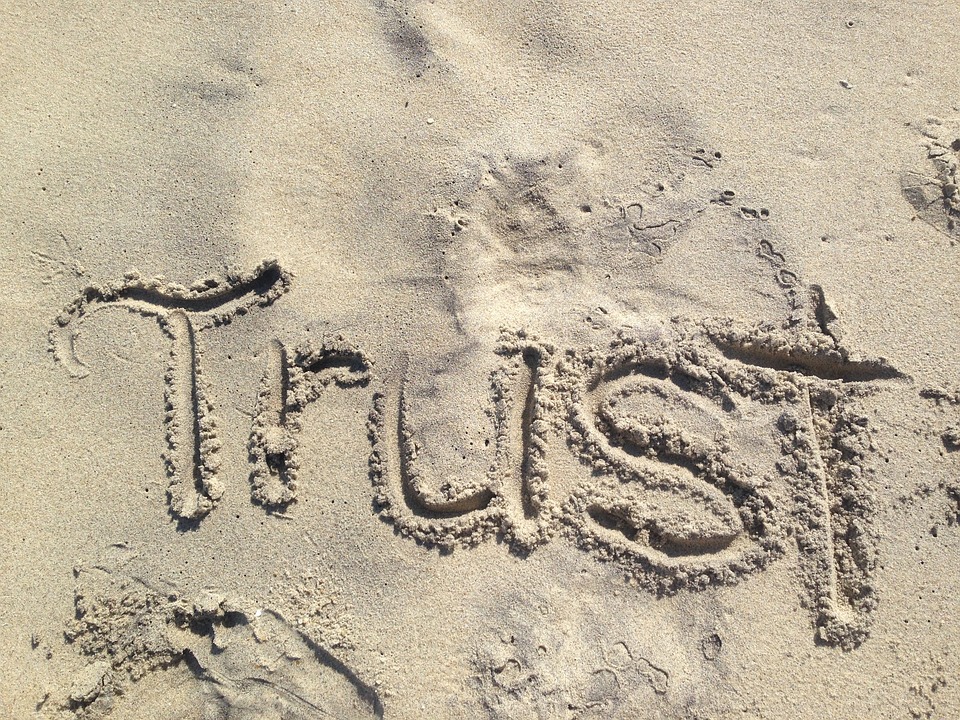
The Trust Quandary

I spend a lot of time in airports. If you look around the airport, endless dramas are playing out. People coming, going, hugging, saying goodbye sometimes forever, welcoming home friends and family gone who knows how long. When I look at so many strangers, I often wonder about the ideas that bond and separate us as co-inhabitants of cities, states, and our nation. That often leads me to think about our common ideas of trust.

Why trust at the airport? If you get on as many planes as I do, trust is implicit in the experience. I don’t know the pilots. I don’t know the state of the equipment I’m boarding. I don’t know who else is going to populate that airborne metal tube for the next several hours at 30,000 or more feet above sea level.

A few weeks ago my flight was delayed more than ten hours in a reasonably bad storm. It happened to be Election Day. When they finally let us board, I walked onto the plane and took my seat as quickly as I could. I looked out the window and saw a wet runway and dark sky hurling rain and wind. I didn’t ask to exit. I didn’t ask for reassurance that the crew was rested. I trusted everyone involved in the decision that it was safe to fly.

Since you’re reading this blog post, you can presume that wasn’t a fateful choice on my part. It surely could have been, but somehow trust in people I didn’t know, a company that employs them, and a government division assigned to oversee the activity carried the day. Other than thinking I wanted to write about it, I didn’t think much about it at all.

Is trust a form of absurdity or is some form of it necessary for us to share common spaces?

Perhaps it is both.

It isn’t a coincidence that I write this immediately following an election. Somehow over the past few elections, it has become vogue in certain circles to simply dismiss the reported, monitored, and validated results of an election as fraudulent. If one’s candidate loses an election, especially by a narrow margin, there is no easier way to declare victory than to declare a lack of trust in the voting process. It doesn’t even require evidence to attack the fairness of the vote count. We all can say what we want, and if we want to say our candidate lost because the election was compromised by fraud, we have the freedom to say that.

To summarize: I can trust the strangers controlling the jet airliner I’m going to fly with four hundred other strangers through a storm, but I can’t trust the civil servants whose job it is to count votes accurately. That one seems tough to reconcile.

Some say that democracy itself was on the last ballot, with the outstanding question of whether the tallied results would result in the winning candidates being lawfully seated. Again, just typing that sentence makes my fingers tremble. Democracy has been at the core of my personal values for as long as I can remember. I presume as a citizen of this nation I get to vote along with everyone else and the counted votes will direct an outcome. I don’t think about it any more than getting on the plane in the storm.

That doesn’t mean I don’t want expert monitors overseeing the transportation industry or our voting booths. If I can’t trust either one of those, I can’t fly and I can’t agree to follow laws passed by legislators. When we throw in the towel on trust, our ability to function in shared spaces is dramatically curtailed. Without some presumed notion of trust, I am not sure we can function at all.

Before you write to let me know what a mark I am likely to be for targeted scams, let me assure you my trust is not easily won. If you’ve worked with me, you know this emphatically. If you’ve ever sold me something of substance and been paid cash money for it, you know it even more. Even then I am wildly understating the difficulty to win my personal trust, but it can be won. If it can’t, we can’t do great things together. We can’t do anything at all.

Do I worry trust is abused? More than you can imagine. Baby boomers know a thing or two about trust. We were raised with the Vietnam War. We were raised with Kent State. We were raised with Richard Nixon. One of our most memorable anthems declared, “We won’t get fooled again.”

It sickens me when trust is blatantly abused.

It sickens me that people trusted FTX and its once-celebrated CEO to help them navigate the already shaky world of cryptocurrency. If you trusted FTX as an investment, you likely lost all your money.

It sickens me that people trusted a night out with friends at an LGBTQ dance club in Colorado Springs and five of them didn’t return home, with as many as 25 others injured in the semiautomatic weapon assault. If you were someone who put trust in diversity and acceptance that night, your trust was forever violated.

It sickens me that the federal government offered much-needed financial aid to individuals and small businesses through the CARES act, and billions of these dollars were diverted to fraudulent claims. If you needed Paycheck Protection Program dollars and didn’t get any when they ran out, there’s a good chance you trusted the custodians of these funds to be ahead of con artists, and they weren’t.

Does that mean we going to stop investing, going to clubs, or filing applications for government programs? It can’t, any more than we should consider not flying or accepting the results of certified elections.

Trust in some shape or form is always going to be violated, which is why we must continue to insist on as many reasonable safeguards against these violations as technical and process engineering can muster. I don’t know anyone in the FAA, but if I don’t trust that agency to do its job, or I don’t support proper legal action to correct its performance should it fail, my time at the airport is done.

If I don’t trust the vast majority of fellow citizens to behave civilly in public, I can no longer go out and presume I am coming home as healthy as I left.

If I don’t trust my doctor to perform a procedure when I am under anesthesia, I can’t have the procedure.

And if we can’t trust the certified results of a routine election, then we can’t have a democracy. We didn’t protest against all the attacks on civil liberties this past half century to give up our democracy. We did it to enhance and preserve this incomparable gift of sharing spaces, agreeing to disagree, and believing that if we didn’t get our choice in the last election, the next one will be coming soon. That next election has to be a certainty or the experiment is over. I’m calling the experiment alive if not perfectly well, but necessary and enduring.

There might be an absurdity underlying the notion of trust. If that kind of trust is what it takes to get me on the next scheduled flight, call me absurd. I’ll see you at the airport and at the ballot box.

_______________

Photo: Pixabay