The Miracle of 18 Years

This tribute to the life of David P. Coon was delivered live by the author on February 4, 2024 in St. Alban’s Chapel at ‘Iolani School in Honolulu.

I’m standing in his spot. I remember sitting in any number of locations in those pews starting at about age 12. When he stood here, my eyes were transfixed. This was his spot. The chaplains stood here. Many of our teachers stood here. Years later I even stood here a time or two. We were borrowing the space ever so briefly. He belonged here. This magnificent structure was all our home, but this spot was his.

Much can be said about presence. When that presence transcends the ordinary, everyone knows it. Whether speaking as the Revered David P. Coon, Headmaster Coon, Dr. Coon, Father Coon, even the impossible to say “Dave,” this beloved gentleman embodied presence. That baritone voice, that solid handshake, that unforgettable laugh – presence doesn’t even begin to describe him.

This is where I first learned about original sin. I didn’t even know what it was. He stood here and taught us that we had fallen and didn’t even know it. Redemption would be our lifelong mission. What in the world did he mean by that?

That’s heavy stuff I’m still digesting in my 60s. Imagine being 12 and trying to make sense of the homily. It made sense because he always made sense. It was like listening to an opera star. Could be Italian. Could be French. I just wanted to listen.

I loved coming to chapel. Really. For 5 of the 6 years I was a student here, I was the only Jewish kid on the roster. When we became co-ed my senior year, I was no longer solo in that regard, diversity was blossoming at every level. It had been every year prior. The women who joined this community as students and graduates did so in the culmination of this headmaster’s vision. He saw it as necessary before anyone else and he made equality reality.

This was a place of learning and truth. This was a place of inclusion This was a place of love. I’ve never felt more at home than I did on this campus.

Dave Coon insisted on that. Dave Coon made it so.

I’ve been awarded the honor of speaking today on behalf of the ‘Iolani alumni in tribute to a man we respected, admired, emulated, and loved. It’s an impossible task and I have been asked to keep it brief. If you know me, you know that’s even more of an impossible task.

Brevity is required so I will do my best to honor it. Representing the breadth and depth of alumni that walk up here each Spring and get a diploma? I’m just going to admit failure right now and try instead to tell you what I think Father Coon did better than anyone else in all my years and travels.

Ready?

He planted seeds.

Not ordinary seeds. Seeds of excellence. Seeds of change. Seeds of diversity. Seeds of integrity. Seeds of the impossible. Fragile, vital seeds that sprout in young minds and grow stronger and steadier for a lifetime.

I’m a grandparent now. It’s a bit eerie. It’s caused me to think about the arc of childhood in ways I never imagined. Those baby seeds take shape in enormously deep roots, inescapably revealing insights in the most unpredictable contexts. We all start out in the same place. Completely vulnerable. Non-conversant. Utterly dependent. Absent memory. Even Dave started that way. Hard to imagine.

What happens next, I’ve come to think of as The Miracle of 18 Years. This was a revelation for me, a daunting moment of transformation.

Years ago, I was interviewing an impressive high school senior for college. I do this each year as a volunteer. This particular young adult was blowing me away with knowledge, analysis, ambition, humility, graciousness, kindness – she even made me laugh.

So I’m sitting there marveling at this 18-year-old laying out a portfolio of observations eons beyond her years and a game plan to make the fast track to a Nobel prize, and I’m wondering, how did that happen? How did that barely cognizant infant compound knowledge over a period of just 18 years and come to utilize a vocabulary that sent me paging through the Oxford English Dictionary?

It seems impossible to believe that could happen. I’ve been trying to put that together for the better part of a decade, how that arc works, the impossibility of diapers to Dostoevsky in an 18-year sprint. 18 years, it’s nothing, it flies by, and suddenly you’re an adult human being. Who figured that out?

In that moment of clarity, all I saw was Father Coon. This was his gig. This was his normalcy. He never thought twice about it.

Each year another group of us would arrive, each of us a small lump of pizza dough. We could be 6-year-old pizza dough, 12-year-old pizza dough, it didn’t matter to Dave. This man knew how to turn pizza dough into pizza.

And here was the secret trick. He knew each of us was unique. No two of us would be the same. I think he loved that most of all. It wasn’t his job to mold us into what he wanted us to be. He wanted to mold us into the best version of ourselves that we could be. What mattered to Dave was that we would become what we wanted to be.

Were there a few values we should share? You bet. Did we have to know when a sentence ended where to place the period? Oh, yes. Did 2 + 2 equal five? No, it did not. The rest? Mostly up to us.

That’s where he planted the seeds. In our hearts. In our minds. In our souls. We were not finished goods. Those seeds needed to grow inside us for the rest of our lives. That’s what he understood better than anyone I’ve met. That was what he did better than anyone I’ve met. He helped us become who we needed to become, and he taught us to care for each other more than ourselves.

Parents do it. Of course, they do. Once, twice, in the extreme maybe six or eight times. He might pray for you if that were the case. He did it hundreds of times each year for decades. You want to talk about leverage and scale? You want to talk about consistency? Imagine creating that miracle of human development over and over again – never losing energy, never losing interest, never losing faith. Imagine the odds of that kind of repeat success.

There’s a word that comes to mind: indefatigable.

You know what else? He did it quickly. We didn’t see it coming. We didn’t even know it was happening. He knew The Miracle of 18 Years was a ticking clock. When we came up here in the Spring to shake his hand, that clock had mostly run its course. Another clock was starting. His day job was done, but its impact was only beginning.

Dave Coon led this astonishing institution from its storied past to its celebrated future. On this campus where we gather today, he made that miracle purely routine.

I had the good fortune at one point in my career to work at Disney where we talked a lot about magic. That dialogue dates back to Walt.

If you’re into science fiction, you know that Arthur C. Clarke wrote, “Any sufficiently advanced technology is indistinguishable from magic.”

Neither Walt Disney nor Arthur C. Clarke had anything on Dave Coon. Dave Coon worked his magic perfecting and normalizing The Miracle of 18 Years. They might have failed his class. He probably would have asked for more specificity.

Okay, we’re in the home stretch, I promised brevity, and this is not the kind of place to tell lies. Here is the most important part.

It didn’t stop when he left. The seeds were planted all around this place. There were teacher seeds who shared the magic with other teacher seeds. There were leadership seeds that in this room right now are evangelizing inspired leadership. There were math seeds and sports seeds and music seeds and poetry seeds. They all just keep growing.

Father Coon stepped off this lectern when he thought it was time to do other things, to nurture a church on the Big Island, to spend time with his family, to counsel another generation of educators. The seeds were deeply embedded. Their magic kept blossoming.

The Miracle of 18 Years continued. It continues to this day, while he watches and listens to us from a different place of presence.

We embark as youngsters naively on The Miracle of 18 Years with hopes of accomplishment, hungry to achieve goals, eager to find fulfillment in the relationships we traverse. When there are more years behind us than there are ahead of us, we may start to think instead about legacy.

Legacy is not something we can direct; it is left for others to decide. The legacy of Dave Coon is the perpetuation of his presence in this beautiful place where he lived and worked and touched each of our lives.

It is a legacy of love, which is the one lesson he taught repeatedly, sometimes in the classroom, sometimes on the lawn, sometimes standing in this place. He is still here and will be forever. This is still his place. I am a seed of his legacy as are we all. The love of this alumni for Father Coon is boundless. He taught us to love each other, to welcome the stranger, to honor every life we would be privileged to encounter.

How can any presence be more profound than that?

_______________

Photo: ‘Iolani School

Thoughts About Steve

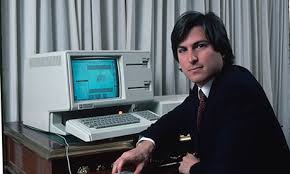
Steve Jobs 1955- 2011Everyone who has worked around technology the past few decades has a Steve Jobs story. Some have observed Jobs at a distance and felt the impact of his creativity and decisiveness, others have worked with him directly and more explicitly experienced his creativity and decisiveness. No meeting with Jobs is forgettable. Most meetings with him begin with a non-disclosure agreement, and since no one is quite sure of the statute of limitations he expects, I shall tread carefully through this post while still sharing some of my own observations.

So much has been said and written about Steve Jobs in the past week it is almost daunting to try to add to the collection without being redundant. In a recent profile on CNBC Titans, Jobs was portrayed in a balanced manner, fully celebrated as the Thomas Edison of our time, of course not without a few bumps in his long and winding road, personal and professional. The day after the announcement that Jobs would no longer be CEO of Apple, Walt Mossberg in the Wall Street Journal expertly assessed the legacy of Steve Jobs as someone who changed the way we live. Coverage and analysis have poured onto the web from professional and citizen journalists, the very volume of which speaks to the somewhat incomparable significance of his contributions.

My personal experiences with Jobs were mostly tied to the launch of the iMac, right after he returned to Apple in 1997. We had just launched a games label at Broderbund Software called Red Orb Entertainment, and Jobs invited us to be part of his new beginning. Riven: The Sequel to Myst, developed by Cyan Worlds, and The Journeyman Project 3: Legacy of Time, developed by Presto Studios, were both largely created on Macs by Mac devotees, so it was easy and natural for us to get onboard. Everything Jobs promised us happened, from the billboards to the print ads to inviting Cyan President Rand Miller to share in the keynote at the Macworld Expo. The iMac was unique, Jobs’s vision was unique, and he wanted unique products to be associated with its beauty. That was the beginning of Apple’s resurgence, and it was magical.

What was most impressive about the return of Jobs was how quickly he brought the core values back to the company that seemed to have evaporated with his initial departure. Meetings at Apple in the non-Jobs years had become, to say the least, painful. Apple had forgotten what was special about it, that its publishers and developers were a unique bunch, and that fully democratizing the Apple universe would serve no one customer well if the core values of Apple were not embraced. Upon Jobs’s return, those core values returned in real-time and included with stunning mandate:

• Intuitive user interface is not optional. If a customer needs a manual, something is wrong. I remember when we received very first prototype iPod, no one in the house knew what it was, but within five minutes of it landing on our doorstep we had it synched and working with iTunes. How much more intuitive does it get than getting a new high-end gadget that never previously existed and have it working flawlessly without instructions?

• Innovation is meant to leapfrog entrenched competitors. The iPod wasn’t a better MP3 player, it was a new vision of how music could be enjoyed. The iPhone wasn’t a better cell phone, it was a lifestyle device that put a computer in your pocket. The iPad wasn’t a better tablet, it was an all media delivery system that is light, fast, simple, and elegant. If Jobs was going to make incremental change, it would be on later versions of his own products. The products he introduced to market were to be leapfrog inventions.

• Think Different is much more than an advertising campaign. Think Different is an intellectual construct that begins by defying grammar and doesn’t end until we have exhausted elimination of the ordinary. It is sometime said the difference between a cult and a religion is how long a movement lasts, and for many devotees, Think Different is something of a religion. It forces us to challenge ourselves to achieve the impossible, and then when we achieve it, make it look simple to everyone else.

When I worked at Disney, I remember well the weekend we had a staff preview at our new theme park in Anaheim, Disney’s California Adventure. Disney had not yet bought Pixar, that was years away, so the relationship between the companies was quite separate. One of the attractions at the new theme park was a whimsical movie about the history of California hosted by Whoopi Goldberg that delved into what made California unique. That attraction no longer exists, but what I remember most about it was the section on Jobs, largely painting him not only as part of California’s history, but our nation’s economic advancement. The portrait was magnificent, because his contribution to the world through the Silicon Valley miracle was magnificent. It was more than California, it was more than technology, he was settling the new frontier. What felt weird to me was that what I was seeing was indeed history, but it was happening now, current events, a real man and a real life changing the lives of all of us with each new idea and grand leap forward. I never got to meet Walt Disney or Henry Ford or Sam Walton, they were more icons to me than tangible people. Steve Jobs had become part of our lore while he was still young and his legacy was unfolding in our time.

Yet of all the emblematic impact of Steve Jobs, what resonates most with me is what he means to the notion of reinvention. Here is a guy who was driven out of the very company he founded by the very fellow he had invited to help him run it. Had he done nothing else after that event he would have forever been part of the Silicon Valley story. Then he founds another company, then Apple falls on almost unrecoverable hard times because it has lost its way and he returns, embracing that new-new thing called the Internet and helping chart its hockey-stick future. As a sideline, he buys a small computer graphics company from George Lucas and helps guide it to become one of the most successful entertainment production studios of all time.

Like so many others, I am trying hard not to write a tribute, but instead capture the spirit of what the contributions of Steve Jobs can mean to every one of us, whether or not a devotee. The point is that reinvention is possible no matter how hard we fall on our face, and that is a lesson always worth re-learning. Reinvention is not the stuff of storybook fables and pep talks, but the stuff of necessary and vital resilience. We need concrete examples to see that reinvention is possible, that lives and devices and ideas can be reinvented if we have the will and commitment to Think Different.

For me, that is the legacy of Steve Jobs. All that he has accomplished in a lifetime is astonishing, but like his very small peer group of great visionaries who have led our economy forward, it is the abstract notion of reinvention that I see and feel whenever he is present, nearby, referenced, or invoked. No matter how many English teachers correct us, I hope we will never stop saying the words Think Different, attributing them appropriately, and giving all we can to reinvent the legacy.

Fleeting Moments in iHistory

Why don’t internet brands make comebacks?

myspaceWith the recent attention on onetime market leaders AOL, Yahoo, and MySpace to inject new creativity into their platforms, I have been talking with a number of people about why this notion isn’t business as usual, with the expectation that success is much more probable than unlikely. We are so quick in the internet age to exchange snarky remarks about last year’s fading nameplates, as if it were all but inevitable that a fallen giant cannot get up and march on. Why?

Well, aside from our gossipy predisposition to critique, there is a good reason we take a skeptical point of view about internet brands that have seen better days—in almost all cases, those were their best days. Major turnarounds don’t seem to be the norm. Sadly, they don’t seem to be out there much at all. We can point to several works in progress where noble efforts are underway, but we can’t really write a business school case study on a revamp that is making history and ripe for the textbooks.

Although this is reality, it does not make sense, certainly not good business sense.

Most traditional brands go through life cycles: they are cool for a while, then something inevitably goes wrong—operational mishaps, disruptive entrants, or market forces—then visionary management attacks the problem and turnarounds do happen, sometimes monster turnarounds. Think about what happened with the rise and fall and rise of Disney, the same but even more so at Apple, the customer win back at Coke after the public rejection of new-Coke, multiple cycles up and down at Sony, the same to a lesser extent at MTV. All of these instances gave management—often new management—a starting point for the very real consideration of turnaround plans. Management carries out the traditional SWOT (Strengths-Weaknesses-Opportunities-Threats) analysis, and the discussion centers around how probable the turnaround plan under consideration might be, not a passive discussion of should we bother. You always bother.

Look at what happened at the Wall Street Journal—newspapers have been pronounced on their way to the graveyard, but the brand has never been stronger and circulation is growing on multiple platforms. That is giving the New York Times hope, the Los Angeles Times as well. You always try because the asset you have is too valuable not to try. CBS, NBC, ABC, HBO, they all have good and bad seasons, but you don’t think about walking away after a bad season. Look at MSNBC, how it struggled out of the gate, now it has an identity. Sticking with an established beachhead can work, surely not all the time, but there are so many examples where the uphill effort is proven to be worth it.

Like internet brands that have enjoyed success, non-internet brands once in the limelight come to the outset of a turnaround with some remaining loyalty, mass reach, measurable unaided awareness, and some core value proposition. The fact that tastes have changed or tactics have failed doesn’t mean you have lost everything; you just have a lot less of it. You have something to work with, so you don’t walk away. Your investors would not be pleased with those kinds of write downs.

Let’s think about the dotcom bubble and all the brands it birthed, starting with the portal wars—Excite (then Excite @Home), Lycos, Looksmart, Infoseek (then Go.com)—they all had huge followings! Now they are answers to trivia questions. What about Friendster, eToys, Netscape, NeoPets, Encarta, GeoCities, Pets.com, Webvan? These were all massively attended internet destinations, great names with tremendous followings built on innovation and creativity. Was there really nothing better to do with their identities than turn away?

I started to wonder whether our relationship with brands today is somehow different from our relationship two, three, four decades ago. Were we somehow more willing to give brands a second chance then that we are not now? Is this generation of consumers somehow wired differently? Have we come to a new understanding of inertia so that once cold something must stay cold? That would have been an easy answer, but one trip to the Apple Store will change your mind quickly. Spend a little time in the store with the other customers and you will soon be reassured how much a once loved, then dismissed, then reinvented brand can be loved anew. Ask tweens about Disney Channel, which they never would have been caught dead watching a generation ago, but now it too has been reinvented to become a trendsetter.

Brand laws may evolve, but they haven’t died.

What seems most ironic to me is that when you look at the giants of brand reinvention, the core turnaround strategy is not financial engineering, but rediscovery of the company’s roots in innovation. Disney expanded its theme parks, its own hotels, rebuilt its animation efforts, created the Disney Store, and rode a wave of home video before acquiring ABC and later Pixar and Marvel. Upon the return of Steve Jobs, Apple pioneered the iMac, then iTunes, then the iPod, then the iPhone, then the iPad, all the while building out the Apple Stores. Microsoft from a standing start entered the entertainment world with Xbox, as Sony had done prior to that with PlayStation. Clearly these involved massive investments, but they were bets on products and services, new ideas from talent and passion within the company.

Can we imagine a day when Google, Amazon, eBay, or Facebook are no longer top of mind with consumers? What about Netflix, LinkedIn, or YouTube? If history is a guide, it is entirely likely one of these or another equally strong internet property will fall out of favor. Are we likely to see it left to harvest? I would bet 100% the answer is no. Reinvention will be the order of the day, and revitalization will follow with new products, new services, and creative marketing to support those initiatives, no different from the offline world.

Internet brands are born of talent and passion—they are the very picture of innovation. So why if they can be invented with innovation can they seldom seem to be reinvented with innovation? Is the answer to be found in independence vs. acquisition by an umbrella company, where founding talent departs and corporate bureaucracy takes over? Possibly, but that seems more like an observation to me than a fait accompli. Just because a young company is bought on the way up or down doesn’t mean it cannot survive a downtown. The question has to be what is being done to address the downturn. If the downturn is being addressed through a product strategy with talent and passion, there is every reason to believe a new vision can have success. Just because it hasn’t happened doesn’t mean it won’t happen. We all have reason to want it to happen, because that creates more opportunity for the industry and sends the right message to customers, that we do listen to them and change can happen when we are serious about it.

Optimism as a driving force is always good. The change that happens in the analog world will translate to the digital world. When a once adored brand is down, root for reinvention.

The Brand’s The Thing

Interview at Disney
by David Handelman
Brandweek, January 8, 2001

Before The Crash

The greatest challenges are almost always the most wonderful opportunities.