Making Sense of the Senseless

It’s a strange time, stranger than any I can remember in the second half of my life.

If you try to summarize the number of global issues our nation faces, it begins to feel unprecedented. There is violence on three fronts in Israel arising from the horrific terrorist attacks of Hamas. There is the question of how Iran and Hezbollah will accelerate that conflict. Putin is still waging a brutal war on Ukraine. No one is quite sure what Xi will do in Taiwan. Kim Jong Un remains a force of chaos in North Korea. That’s a lot of global conflict without much epicenter.

Then there is the building lack of faith in our government. The divisiveness between and within the parties is all but unbridgeable. Maybe we’ll fund the government, maybe we won’t. What happens if we have to make a really big decision, like going to war as a nation? Do we have the wherewithal to come together on anything that is consequential?

Inflation drags on family budgets. Healthcare costs continue to soar, while faith in modern medicine is frayed. Gun violence takes lives every day. The education gap widens and so does income inequality.

When we aren’t angry or fighting with each other with uncontained words, we often take on a cold silence of passive aggression, too exhausted to argue, knowing we can’t change each other’s minds. The internet should have been a gift of doors opening to each other, but we know it is anything but that.

In the midst of all that, we go to work. We try to focus on our goals. We try to do right by our customers, partners, and employees. We look for a path to salvation in our tangible achievements, but those are increasingly less tangible.

Two to three times each day people come into my office “just to talk” or call me on the phone with a long pause often preceding the inevitable opening remarks, “Hey, Ken, how are you doing with all this?”

I guess the flattering part is people think I might have something worthwhile to say. It feels like the days after 9-11. I had little worthwhile to say then. I have less now. It is impossible to make sense of the senseless.

I’m a trailing-edge baby boomer born many years after the last world war, but I wonder if this is how it might have felt then, when parts of Europe were being overrun and Asia was in equal turmoil. The US waited for its leadership to guide us toward the good. Then we were attacked, which made the response largely unanimous. Can we respond to anything unanimously today? Is there an FDR we have yet to meet waiting to show us what leadership means?

Back to the idea of trying to work steadily through all this. I often suggest to people that compartmentalizing can be an effective strategy for getting things done in a day despite the overwhelming distractions. I’m doing it increasingly, but I am finding it more challenging. Remember, we are making sense of the senseless. That’s hard to do and tackle your monthly sales quota without fail.

Few of us have the option of letting world events be an excuse for missing business goals. We all have inescapable responsibilities. We have to do what we have to do.

First of all, we have to be human. I am hopeful we can also be humane.

I write this as I am wrapping up project reviews for the past year, building a budget and a work plan for the new year with our team, and trying to listen closely to the smartest people around me offer wisdom on how to navigate the shaky ground we share. I read the Wall Street Journal for clues on where the economy is headed, but it is like a giant treasure hunt where no one knows if the treasure has actually been hidden let alone where. How do you find firm ground when the elephants won’t stop jumping on it, not even to take a breath?

Here’s what I know: Wherever we are, whatever we are doing, we don’t have to be in this alone. If you think it’s hard to make sense of the senseless, you might have retained enough of your good senses to share that concern with another caring soul who can help you by listening. Yes, you are still sane if you think we are dancing aimlessly in a circle of senselessness, but there is strength in numbers and even greater strength in diversity.

When people come to me and open their hearts with questions I am always listening. Sometimes they share perspectives I never expected. Sometimes they find a way to make me chuckle. I find that keeping some semblance of humor is a gut check on reason. The bonds between us that let us continue to be successful no matter the noise around us can only be severed if we let them.

I have no good answers. Senseless means senseless. Let today be a day of strength, tomorrow be a day of hope, and the next be one of empathy. We advance in infinitely small increments, sometimes so tiny they seem invisible. Yet the bonds between us were formed in better times, and the goals we share give us an abstract common purpose that brings with it the dawn of a future we can never fully imagine.

Bend toward justice. Don’t let the bad guys win. Don’t give up. It’s called a dream for a reason. Dreams of peace and healing are not senseless.

_______________

Photo: Pixabay

Moments of Clarity

I just finished another trip around the sun (they seem to come annually for some reason), and to the extent it was a bit of a numerical milestone, it certainly got me thinking about things that matter.

I like living in this world, despite all its faults. When I am immersed in places like Yosemite Valley and looking up at Half Dome, I have less desire than ever to partake in meta. Learning how to navigate in this reality has never lost its appeal to me. Being an avatar in a virtual world has almost no appeal to me.

I find it deeply troubling that regardless of how technology has accelerated global interdependence, ruthless despots continue to pursue egomaniacal, territorial wars of vast destruction like we are seeing in Ukraine. I find it more troubling that in the 21st century, more humanitarian societies remain largely clueless about how to circumvent crises without accelerating conflict. I love our democracy, our nation, and the limitless opportunity this generational child of immigrants continues to experience, but the divisive politics of rhetoric and hyperbole leave me sleepless most nights and concerned about the reemergence of authoritarian populism.

I like our U.S. currency and monetary system. It is not flawless, but I understand it and trust it enough to park my assets in its floating value. I don’t have an interest in cryptocurrency, particularly those that began as jokes and trade in wide ranges on speculation. I am intrigued by blockchain technology and see its potential in future accounting systems, but I don’t think that has to be tied to flavor-of-the-day money brands. Similarly, I have no plans to purchase NFTs. Maybe if people like me sit out the NFT market, the price will be lower for others who see value here. Consider it our invisible gift to you.

I like trading equities on fundamentals. I like owning shares in companies that either generate earnings or are on a path to generate earnings. I want to understand traditional ratios and multiples that determine the price of stocks. I don’t care if a company has sextupled in current market value because “everyone” is buying it. I want to buy it at fair market value where I understand the valuation.

I also like companies that create products and services with a business model I understand, where technology is not just disruptive but improves process, where customer experience is highly valued, and where there is a path to future reinvention. I like leadership teams who are never satisfied with themselves. I don’t care if an IPO is oversubscribed because of hype if there is not a clear value proposition that is explicitly articulated. I am okay to miss out.

I believe in talent more than I ever have, that great things can happen when high-caliber people are assembled to address a meaningful and elusive task, but I have a very high bar when I think about what constitutes high-caliber talent. Part of my expectation in building a team has to do with a demonstrable track record of success, not just an energetic expression of possibility. Much has been written on the war for talent, and sometimes it is real, but excessive bidding wars to fill open positions in a company are not specifically nurturing or championing talent. Real talent in my mind is rare, precious, usually humble, collaborative, collegial, and views career trajectory over the long haul while building lasting relationships and selflessly mentoring others.

I think people need to read more. This has nothing to do with the fact that I work for a company that sells books (well, maybe it does). Reading helps develop minds. This cannot be substituted with truncated, silly videos, brief unpunctuated texts, misguided tweets, or pithy sound bites forwarded out of context. Reading is a gift, language can be a conduit of compassion, stories often reveal empathy, and books are forever our treasures.

I think excellence in the arts is exceptionally hard to achieve, and too often we confuse celebrity with extraordinary craftsmanship. Super-hero movies are fine for those who want to watch them, but the fact that they generate piles of money doesn’t increase my interest. If someone aspires to be a TikTok star that’s their choice, but that is not in the same class as being a brilliant playwright, painter, or musician.

I think climate change can never get enough attention, income inequality is a corrosive catastrophe we have no idea how to mitigate, and the ravages of woke mandates are shutting down dialogue rather than improving it.

I think working in a workplace rather than at home all the time is critical to collaboration, communication, and leadership development. I think in-person meetings when well planned improve human connection and help augment trust. I think phone calls should be returned politely and promptly.

I am feeling increasingly old-fashioned as I get older, largely because I have spent my life in technology and seen what helps us and what distracts us. I love innovation, I admire visionary change, I adore the notion of a Carousel of Progress. I’m also a lifelong skeptic and a fierce utilizer of a nose for bad-smelling dross. There are things I believe we can improve, things we can’t, and things that sound like we can even when we haven’t a real clue how. An idea pitched is not an idea proven. An idea proven can often be as subjective as it is objective.

And finally, to the extent anyone cares, as a result of the recently settled MLB lockout, I am okay with the universal designated hitter.

_______________

Photo: The Author on His Birthday 

5 Brief Quotes That Keep Me Thinking

Are we turning the corner on a new day of reinvention and reinvigoration, or are we swapping one set of enormously complicated challenges for another?

I’ve been thinking about that a lot as Covid-19 vaccinations are welcomed by increasingly more people and the doors to a rejuvenated nation continue to open at an encouraging pace. Still, it’s hard to ignore that much of the conflict that existed in the pre-Covid world remains in the post-Covid world.

The economy is rebounding with optimism in investment, yet income inequality is as deeply embedded in our interactions as it has ever been. High profile convictions for the abuse of power have been handed down, yet racial injustice remains in the daily headlines. International travel is resuming, yet lives are being lost in battles across and within borders.

We remain too often divided and find little in the way of broad consensus that will adequately address sustainable remedies. Has the world learned anything from Covid-19, or are we picking up where we left off?

On days that are difficult to explain, I find myself looking to tiny bits of wisdom that keep me inspired and focused in good times, bad times, and when I can’t tell the difference. Here are five fragments I keep top of mind that I hope you will find perennial and inexhaustible.

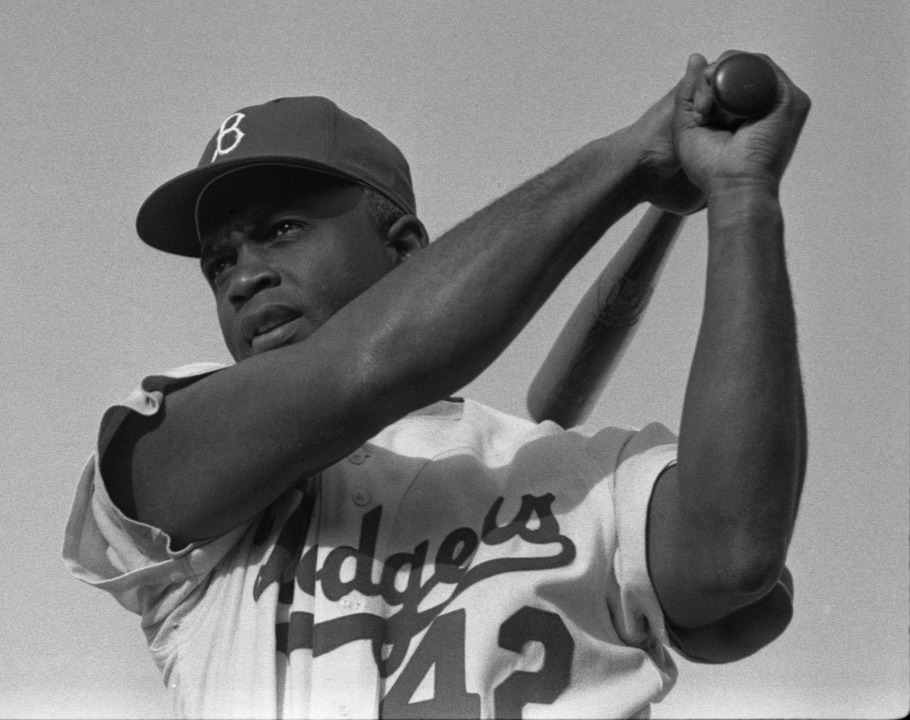
“A life is not important except in the impact it has on other lives.” — Jackie Robinson

Jackie Robinson broke the color barrier in Major League Baseball. He had every reason to be a pessimist given the treatment he endured, yet he was a fighter of the most noble order and seems to me a true optimist. He had a gift that he transformed into a cause. He led by example. He teaches me there is no other way to lead than by example.

“It’s kind of fun to do the impossible.” — Walt Disney

Walt Disney was another optimist, but in a different way. He focused on pushing the imagination to unimaginable bounds. He knew beyond all financial gain that our aspirations live in our dreams, and that our stories are mirrors of our souls. He teaches me there is creativity in all of us, and nurturing that expression is essential to our fulfillment.

“All we are saying is give peace a chance.” — John Lennon

John Lennon expressed this in lyrics, so when I hear it, it is more music than words. Is it pointlessly naïve to think after centuries of combat, conquering, and attack we can make the active choice to seek peace as he suggests? To think less seems to me impossibly cynical. He teaches me that hope is at the root of getting past the seduction of old ways, and those old ways find a terrible way of repeatedly deceiving us.

“How wonderful it is that nobody need wait a single moment before starting to improve the world.” — Anne Frank

Anne Frank left the world much too soon and in the unfairest of ways, yet it is the majesty of her child’s voice that reminds us initiative to improve is always within our grasp. Her courage holds the uplifting power to bypass the contaminants of cruelty in favor of a bias toward action. She teaches me that no matter the debilitating obstacles confronting our values, we must remain true to a commitment to heal the world.

“One voice can change a room.” — Barack Obama

Barack Obama is the one person quoted here who is still alive, tirelessly active in his advocacy for our shared wellness. He remains a controversial figure and his impact on our world will be debated long after his poetic voice passes into history. He often cites another of my favorite quotes around the arc of the moral universe. He teaches me there is intrinsic reward in tackling audacious goals, and that where progress may appear thin, there is ever more necessity in maintaining navigation toward a North Star.

That’s a lot to invoke in relatively few words. I have another batch of these I may share at a later date, and of course I would love to hear the words that inspire you in these ambivalent times. The concise wisdom of others is often enough to help us make a better decision, sculpt a bad choice into an improved choice, or just fire up our engines when fuel is hidden from our view. As I get older, I seldom see the obvious clarity I once anticipated would always reveal itself.

Sometimes you have to Think Different. Sometimes you have to think harder. Sometimes a little listening helps us discover the path beyond the noise.

_______________

Photo: Pixabay

Why We Should Give More

Give!
It’s that time of year for me, another trip around the sun complete. This one is not quite a milestone count, but as good a time as any to reflect on purpose. Age will do that to you. We don’t get to reflect indefinitely. That which goes into our permanent record is anything but limitless.

Covid-19 will soon pass into history, but not its devastation. The time it has given us to think about our uses of time may be one of its few constructive legacies

Do we look externally for validation or is it intrinsic? What is a job well done? Are we meant to behave as survivalists with a primary worry of self or something different?

Giving is a curious notion. Perhaps it presents a choice that is inescapable. We do or we don’t. We make a choice even if we don’t make a choice.

I do wonder at length why we give. It’s easy to be conned and give wrong. The charlatans and traps outnumber our investigative hours. The risk of being fooled is an occupational hazard. I’ve made peace with that.

Here’s one good reason to take the risk and give: When we believe in others, we reinforce their courage to believe in themselves. When we share compassion with others, we demonstrate that compassion is possible and can be a virtuous circle.

We are directed to welcome the stranger. Soon after that our bond becomes our gift.

I find myself increasingly thinking about the notion of fairness. I do believe the arc of the moral universe bends toward justice, but I find the pace of alteration lethargic and unsatisfying. Are things better than they were 50 years ago? My father says yes and he has a 40% premium on years of observation to mine so I’ll go with his affirmation, but better is not the same as good. Relative unfairness is still unfairness.

Black Lives Matter shows us conclusively that the application of law is unfair. Two and a half million dead globally of coronavirus shows us that the availability of healthcare is unfair. The wealth of stock market gains for the few against the lost jobs and bankrupt businesses of many is almost violently unfair. Unfairness is not solvable. It is at best addressable through personal generosity and accessible charity.

Woke isn’t working. The Dr. Seuss debate was not a debate at all. A company for its own reasons decided to exercise copyright authority and stop selling certain books. It has that right. That is not book banning. No government or autocratic mandate was issued. If you still want for some reason to read these books they remain available at libraries, specialty stores, or in digital form.

I find the debate around capitalism equally disingenuous. If you think you have reason to storm the Capitol because socialism is coming for your freedom, you are deluded. There are no pure forms of economy. They are all mixes of this and that, some weighing more heavily in one direction or another, but always open to reversion by market forces.

Likewise, any cheesy rhetoric that would seek to undermine capitalism in the extreme is pointless. Free enterprise has created unbounded benefits for billions. No, it is not equally or fairly distributed. There aren’t enough recognized referees in the rough and tumble. Policies that ensure ardent competition inspire innovation with incentive compensation. That kind of moderate regulation protects our livelihoods and drives imaginative initiatives without useless polarization.

If you’re really worried about economic instability, worry about runaway income inequality. Without thriving buyers and broad access to manageable credit, there is little need for growth in sellers.

I am both beneficiary and critic of our system. If you’ve worked with me or read any of my books, you know I am not shy or apologetic about this.

I love our nation. I love free enterprise. I love working hard.

I despise exploitation. I despise greed. I despise arrogance and lack of humility.

Hegelian dialectic has taught me these head-banging notions can co-exist.

I love the impossible challenge, the learning that comes from failure, the teamwork of a shared victory overcoming competitors and naysayers.

I despise the selfishness, self-congratulations, and coldness that comes when we fail to recognize that too many trusting, hopeful, well-meaning individuals tirelessly try in their own way to navigate daunting obstacles, but often end up with little or nothing.

I believe we begin to bridge the gap by giving. We can give our time and attention. We can give money. We can give opportunity. We can give understanding and empathy.

As it becomes clear that there are fewer trips around the sun ahead of me than there are behind me, I find myself retreating to the existential. I find less meaning, reason, and justification in fairness than I hoped I might find at this age. At the same crossroads, I see time as more precious and commitment to social justice more urgent. I know I can’t fix much, but where I can have a slight impact, time is increasingly shorter.

I think perhaps we give to beat the clock. We can see a life change before our eyes because of something caring we do, but we have to endeavor to do it.

We give because all forms of faith suggest it is our duty. We don’t have to agree on spiritual reckoning to have this in common. We don’t have to believe in anything more than the tangible world we see to know we are expected to do something unexpectedly selfless with the disproportionate gifts we are awarded.

It is our calling to repair the world. Civilization will remain conflicted and in conflict, because human beings are imperfect, troubled, fundamentally flawed while evolving. That doesn’t give us a get-out-of-jail-free card. Existential does not have to mean cynical. It can mean we are empowered to consider the unfairness around us as a challenge to be met, an uneven distribution of pain to be healed, a sense of acknowledgment if not quite purpose.

We give to be more complete.

We give to be part of a whole that has been shattered by our own achievements.

We give because the math suggests there is little other way to balance a scale that assures us history will maintain its imbalance.

We give to combat rhetoric, indifference, and convenient but incomplete argument.

We give because justification is not justice, and because words will always fail us.

We give to remind ourselves we are human, and we have no choice to be anything otherwise.

Whatever necessary mission that elevates your imagination, whatever human cause that fuels your passion, consider increasing your commitment. No, it’s not a carbon offset, it’s not retiring guilt, it’s not a debt you owe or a pledge against salvation.

It’s the right thing to do, to whatever extent you can. It’s not hypocritical and it’s not posturing. It’s how you can be more dimensionally human.

An investment in your belief set is a pact with yourself. The outcomes of your contribution can carry you many more times around the sun with reason to renew your journey. Stay honest, stay measured, stay authentic. That distant, mythic, flickering light at the end of the tunnel has cascading spectrum to shine on you.

_______________

Photo: Pexels