Easing Up on Advice

When I started writing this blog more than thirteen years ago, I never intended for it to be an advice column. The tagline has always been “Ideas, Business, Stories.” Sometimes it’s not about business, sometimes I fail to shape a decent story, but I always try to center the content around ideas, which comes first for a reason. Nothing in these words other than keeping me in practice between books is more important to me than causing people to think harder and test those thoughts in ardent dialogue and discussion.

I’ll admit, too often I’ve delved into the realm of advice. I won’t apologize for that per se, because I’ve heard from many of you over the years struggling with similar challenges that extracted bits of this advice have led to course corrections, strategic realignment, saving a customer, or even circumventing the unneeded pain of a failed initiative without key learning. If the reading material was helpful, great. If not, perhaps at least I got you to reconsider the ordinary.

What is better than advice and where I’ve hoped to steer a lot of these words? That would come back to ideas, and that would be anchored in inspiration.

With advice, we often suggest what to do and when to do it.

With inspiration, we better suggest why something is worth rethinking and how perhaps to approach a framework for effective resolution.

Never was this clearer to me than in a candid panel discussion at my latest college reunion ostensibly about third acts in our lives. Understand this is a collection of oldsters whom I would be so bold as to characterize as not yet ancient. This group now has four decades of life and career under its belt post-college, with all the setbacks and curveballs we are certain everyone else is likely to encounter. In simply introducing this panel, the moderator found several of the participants rejecting the very premise of the panel in asking: Why does any life have to be structured in three acts? While that framework might (or might not) work at times for commercial storytelling, what relevance does it have to most human arcs, which are infinitely more nuanced?

Yes, it was that kind of discussion. The ideas that emerged were worth the nitpicking.

Key among those ideas for me, and quite a surprise at that, was the somewhat common theme that all the diverse participants shared in acknowledging most of the advice they received throughout their lives as well-meaning but demoralizing.

Wait, huh? If you know people genuinely care about you, or at least give them the benefit of that doubt, why would the advice offered too often hurt more than help?

Again, the commonality in response was striking: Advice considers the general case rather than the personalization of the specific case. Indeed, if the recommended advice worked for you in your set of decisions and you were happy with the outcome, that’s terrific. It’s more than terrific if you navigated a complex maze to get safely and successfully to where you wanted to be. What relevance is it likely to have for me? Much less than you think.

In these cases, the advice individuals received from people close to them centered on career, family, self-realization, medical and health problems, losing loved ones, even planning for retirement. The standard expressions of get an education, get a starter job, climb the ladder, pursue a family, invest wisely, and confront demons as they emerge all seemed too pat in hindsight. Get an education to you might not be the same as get an education to me. Find fulfilling employment, even gainful employment, again proved a landmine of difficult-to-connect dots.

The biggest problem seemed to be that rejecting advice could insult the advice-offerer, but more troubling, cause the advice-offerer to segue from advice to criticism. To the extent this set of unique, highly motivated fellow travelers at difficult junctures in their lives wished to hear criticism… well, you can imagine how that kind of rejection lands. Feedback opens the door to curiosity, which fuels the exploration of a theme and extends two-way dialogue. Even the tiniest implication of judgment can shut it down.

Instead of advice, the panel craved peer interaction, within and across disciplines, within and across life stages, to light a torch that could lead them through opaque corridors and dark tunnels. To some extent, this means active listening combined carefully with real-time conversation, avoiding the trap of prescriptive solution crafting. It is precisely the inspiration of those exchanges that people found most useful in designing and committing to better outcomes. It’s the difference between canned narrative touting relatively obvious answers and imaginative moments of shared realization. Advice was predisposed to be narrow. Inspiration was ceaselessly unlimited.

Still think we’re nitpicking? I don’t think so. I’ve written many times that in my own worldview, the course of our lives often comes down to four to six invisible forks in the road. As Yogi Berra liked to say, “When you come to a fork in the road, take it.” The problem with these invisible forks is just that — you don’t know you’re there when you are. We understand our relationships and careers in hindsight way better than we plan them forward. We can point to those stunningly revealed forks looking back. We can’t necessarily know that a decision we make today will affect our lives for decades to come.

If you are potentially at one of those invisible forks, and you start to explain it to someone, the advice they offer you (“Why, yes, you have to take that job”) is as likely to be wrong as right. Throwing darts would probably get you better results because at least the dartboard is unbiased. On the other hand, if the dialogue we enjoy at those potential forks causes us to think differently and make a decision we are comfortable living with right or wrong, the interaction is likely to be memorable and long-term laudable. It’s the difference between practical direction, which is somewhat hierarchical, and empathy, which is bonding.

All of this is to say if any of my advice in these passages has been useful, I am happy I didn’t blow it. If it has been thin and irrelevant, or worse, demotivating, I do apologize. On the other hand, if any of the ideas here have lifted your spirits to encourage better decision-making, I am humbled. My goal is not to articulate what I think you ought to do. My goal is for you to feel great about your choices and decisions. If I have stretched your notion of possibility along the way, then the words did the job I intended.

To my aging classmates, thank you again for the inspiration. You got me to rethink my own sense of purpose in a manner only you could achieve. I’ll try to repay the favor going forward with the precious time ahead we can still share.

_______________

Image: Pixabay

Why Do We Do Difficult Things?

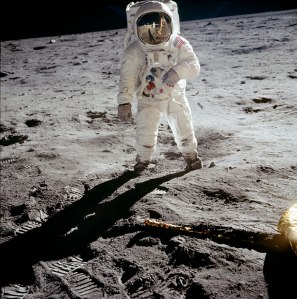
Apollo 11 - NASAI’ve been out on book tour for the launch of my new novel, From Nothing. At one of the early talks I began with a simple question: Why do we do difficult things?

I’m not talking about ordinary-difficult things like schlepping yourself to work every day or paying all your bills. I’m talking about really big stuff. Pick a career path. Marry someone. Divorce someone. Start a company. Write a book—without an advance check.

Why do we decide to tackle extraordinarily hard challenges? Why do we embark on the kinds of things that change our lives?

I’m going to give you the answer in just a few more carriage returns, but before I do, think about what your answer might be.

Why do you do exceptionally difficult things?

Is it for money?

Is it for status and ego?

Is it because someone else pressures you to do it?

I think those enticements can play a role, but I don’t think it’s why most of us do difficult things.

I think we do difficult things because we can’t not.

Try repeating that in your head. Read the words “Why do we do difficult things?” Then answer aloud: Because we can’t not.

If you’re not alone, say it rather quietly under your breath, but do say it aloud. If you are alone, shout it from your gut.

Why do we difficult things?

Because we can’t not.

Excellent, I think I heard you that time! You’ll note the purposeful application of a solid double negative. Don’t worry, the grammar police aren’t coming for us, at least not this time.

I want this message to encode in your mind: Because we can’t not.

The topic of my book talk was why I choose to write for what amounts to the tiniest part of my income given the full span of hours invested. The question at hand was why I didn’t spend more of my time on lucrative business projects instead of sitting alone in a room for half my waking hours banging out words without much promise of real financial upside no matter how well I write.

There are obstacles to book distribution at an enterprise scale that are beyond my ability to control. If I chose to write fiction solely for wealth creation, I would be repeatedly disappointed. I would like to be pleasantly surprised by financial reward largely because it meant more people would have read my stories, but I would be foolish to count on it.

To me, it doesn’t matter if I get paid a fortune or less than minimum wage. Most of the money I’ve made in my career was when I wasn’t thinking about money at all. The few times I was thinking primarily about money I made the least. Or none.

I follow the path I can’t ignore. I do what I need to do, and the rewards follow or they don’t.

Why do we do difficult things? Because we can’t not.

I have learned that this applies to business, to art, and to human relationships. The principle is always the same.

Certainly money is a part of the equation. For some people, it’s a very big part of the equation. In my experience, when it’s most of the equation, you’ll see in front of you a very unhappy person—whether he has a lot or a little.

When the reason for doing things is unbalanced, most everything begins to go haywire. That actually happens to the main character in my new book, Victor Selo. He sees people going for the money and only the money. The world falls apart.

Why do I sit in front of this grimy keyboard pounding out sentences when I could be helping start or buy or sell another company?

I like money. I just decided I knew how much I needed, and what I wasn’t willing to do in search of more. I needed to return to who I was when my wife met me: a guy who made up goofy stuff and told it to other people (I borrow that line liberally from George Carlin). Minimum wage or a bestseller, it didn’t matter. I couldn’t not write.

I want you to consider doing the same. I want you to do whatever it is that you cannot-not do. Ah, there’s that double negative again! This author will go far.

Please do what you cannot-not do.

Why not stick with the easy stuff? Isn’t it difficult enough to get through each day and week, pay the bills, avoid unnecessary conflict with your boss, co-workers, acquaintances, and family?

Yes, all of our routine tasks can be exhausting. It’s easy to let them take over our lives. Here’s what those debilitating punch lists obscure:

Time is precious. Time is perishable. Our lives are at last defined by how we play out the clock.

Self-definition is a choice. It happens to be a very hard choice. It takes place at those invisible forks in the road we too often only see in hindsight. When we force ourselves to look ahead, our choices become constructively active, not passive, even when ultimately deemed wrong.

The intrinsic rewards of courageously owning a cannot-not do agenda are unique to each of us. If we don’t own that choice, it is made for us. Some people call that one of life’s regrets. I think of it more as ignoring the call to unique opportunity.

Why do we do difficult things? Because we can’t not.

Another way to go astray and release control of the clock is to lose faith in our honest self-awareness or pure acknowledgment of our true abilities. Remember, I am not talking about the things we might want to do. I am talking about the things we cannot-not do. Those two forces might align, but not always. Self-deception can cloud our best choices.

Here’s a confession: I was a theater student in college. I was also a philosophy student so it wasn’t a total waste of time and money. I had a very Russian acting teacher one semester, who took me aside and said in a thick accent, “You know what, Kenneth G, this acting, you know why I do it?”

Okay, she didn’t say Kenneth G, that reference comes years later, but it kind of works in this context. Go with me.

“Because you’re good at it?” I answered her.

“That is beside the point,” she replied in English that could have been Russian. “I do it because there is nothing else I can do and still be me. The difference is, I think there are other things you can do and still be you, so do that, and you will spare yourself a life of misery.”

I thought about it and said: “Is this a nice way of telling me I’m not good at acting?”

She smiled and nodded with that Russian piercing insight. “You see, Kenneth G, you understand so well. Do something else that you cannot-not do. What we should do is what we must only do—because we can’t not.”

That’s when I knew I had to write.

What about you?

_______________

Phone: NASA (Apollo 11)

The Little We See

I discovered the NBC television series This Is Us in summer reruns this year and I have become obsessed with it. If you enjoyed shows like Thirtysomething and My So-Called Life, you’ll not only recognize the tone and structure in This Is Us, you’ll see familiar names pop up in the directing credits. It probably won’t surprise you that what has most attracted me to this show is the writing, both the quality of dialogue within episodes and the structural connections between episodes. Series creator Dan Fogelman has framed a milestone achievement in word-to-screen translation.

If you are a student of fiction you know that narrative has the highest emotional impact when story and character are revealed on equal footing, one reinforcing the other. Whether you attempt the craft professionally or as an avocation, you know how immensely difficult this is to do, particularly consistently. Characters matter more when the story advances as a result of their arcs. The depth of characters is more fully rendered when plot points drive their change. It’s enormously challenging. Try it sometime. Or you can just watch This Is Us.

I certainly don’t want to give away any spoilers surrounding this show in case you decide to binge on it after reading this post. At its core it is the story of three people born on the same day circa 1980 (the year I graduated from high school, go figure). The storyline follows them from infancy to adulthood with all of the many tangents in their lives around family, friends, loved ones lost and found, career highs and lows, and personal discoveries. The emotional complexity of the characters is what makes it powerful, yet surprise twists in their interwoven journeys jump out all the time, making it the kind of serial that leaves you both satisfied and wanting more.

What consistently blows my mind in this show is how character development is revealed in snippets that link forward and back in time, particularly replaying events with increased detail layered into the unveiling of previously hidden moments. It is these hidden moments that led me to write about the show. What continually strikes me as gripping drama is how little we know about any one character or event at any moment in time, and how adding onto the storyline sheds light on the “why” of every moment. I think about this in life every day as I encounter people, not so much in what I do see but in the stark reality of how little I see.

“The little we see” is the mystery of real-life human drama. Someone could be standing next to you in line at Starbucks with a thin smile, but she may have just come from the hospital visiting someone in critical condition. Someone could run into you on the freeway wildly distracted, when an hour ago he was turned down in his marriage proposal. The person next to you in a bar watching a baseball game might be ordering the beer that sends him tumbling off the wagon. We barely know what we see. We usually have little idea why it is happening, what meaning or consequence it may have, or what life fork in the road it may represent. Good storytelling fills in the blanks. Compounding life events don’t snap together as Lego blocks nearly that solidly.

Returning to my obsessions, in my early writing career when I was learning the craft and reading much more than I was writing, I found myself consumed with the question of what happens to characters when we don’t see them. I spent a lot of time immersed in stage-play texts and repeatedly asked myself purposefully unanswerable questions. What are these characters thinking and doing when they are offstage? What were they doing before the play began? What will they be doing after the final curtain? Certainly writers have to think about these things, but the time-limiting constraint that they never can fill in all the blanks is what can elevate a story from entertainment to a more lasting form of art. The elements of a character’s life that are left open-ended are the entry point where the reader’s imagination can come alive. It is in that synthesis that a work becomes both personalized and shared.

Why might this matter to you even if you aren’t particularly enamored with fiction? Perhaps you are like me and find yourself wondering throughout the day about the backstories and masked details in the lives of the people who walk into and out of your contact each day. When you are in a meeting and the presenter is struggling, what was he doing an hour ago, a day ago, a week ago, a year ago? When you hear a co-worker arguing on the phone in the hallway about something that sounds personal and know that you are about to review a business plan together, will that person be paying enough attention to make good decisions and what will happen to resolve the argument by the time you meet again tomorrow? When a co-worker’s child visits your office, what does she see and how will it possibly affect her future decisions about her career?

All of this fascinates me both as a writer and a businessperson, because the long and winding roads of our lives are filled with invisible forks where we choose a path and don’t necessarily know at the time that the decision was of immense consequence. I will be writing more about these invisible forks soon because I think the resonance of our decision-making becomes more consequential when we pay attention to the impact it has on those around us. We can never chart our own fate entirely, but we can think now and again about what might be going on offstage as well as onstage before we act.

One of the best pieces of advice my dad gave me in business was that unless you are in the room where a decision is made, you will never know why that decision was made. My trepidation has gone further, because too often I have been in that room and I still don’t know why many decisions are made. To me that signals what happened in the other room where I wasn’t present and didn’t even know there was a meeting, or what happened in someone’s living room that morning, or what might be happening in some hotel conference room that night. We see what we see and it’s never enough. We see too little, yet we still have to make decisions.

The little we see is a subset of any story. Think about it that way and you might make different choices when you are in the scene. Onstage or off, the story is part public, part private, part secret, part personal, and always conflicted. That is what makes a great television series like This Is Us. What it says about our lives and our business dealings is something else entirely.

____________

Photo: This Is Us Gallery, NBC.com