World Series Reflections: 2025 Edition

You might have noticed I’ve published fewer blog posts this year. The political climate has made it hard to write about things that seem trivial in comparison. I’ve found it difficult to comment on news of the day without adding divisiveness to the national dialogue, yet unsettling to try to ignore it with distanced topics. I suspect I’ll resume my regular cadence at some point. I’m not sure when, but I will remain at the keyboard infrequently as my DNA requires.

You might also have noticed that the Los Angeles Dodgers just won the World Series for the second year in a row. That is another infrequent happening, and while perhaps not life-changing, joyously worth a few comments from a devoted fan.

The entire MLB postseason this year was filled with unpredictability. The World Series was a fitting final act to that rollercoaster, with an 18-inning marathon Game 3 and a fought-to-the-finish Game 7 that went down to the last swing of the bat. I won’t recap the play-by-play, others have done that with endless detail, but I will say it was a game that turned on both the performances of superstars and journeymen.

That’s one of the things we love about baseball. Any team can beat any other team on any given day, no matter how good or bad. Chance is always at play. A ball can literally get stuck in a wall crevice and change the outcome of a game (it happened in Game 6). A series MVP like pitcher Yoshinobu Yamamoto can demonstrate consistent excellence on the mound in the clear sight of Sandy Koufax, or a little-known infielder with heart like Miguel Rojas can come off the bench and tie a game that seems all but lost.

Impact can happen at any moment from any player. The game can seldom be predicted.

What does this innocent children’s game played by highly trained adults teach us? We learn from the applied metaphor of baseball that you always play hard to the end. Resilience is your heartbeat. It pays to be indefatigable. You never give up. Never.

Baseball is so many things in the mirror of life. It is the ultimate combination of athleticism and strategy, training and statistics, physical readiness and endless number crunching. It is a game of mistakes — the only sport that counts them on the scoreboard. It is a game of overcoming failure, where a player who gets a hit 2 out of 10 times at bat usually gets dumped, and a player who hits 3 out of 10 often will be paid millions of dollars — crazy many millions of dollars. Unless you are a pro, you’ll never see a 100 mph fastball whip by inches from your body. In fact, the pros can’t see it either, but sometimes they time their swing right, make contact, and put it in the outfield stands.

I had hoped to see the Dodgers win the World Series at home for the first time since 1963. Not only didn’t that happen, but we lost both games I attended with my brother, who was quite the ballplayer in high school and college. So was my dad, who couldn’t attend this year, but texted me at every key moment with his coaching suggestions. I never had the talent, but curiously, I was pretty good with the numbers.

When we lost both those games, I thought of a marketing idea for the front office: how about they give us a 5% rebate for every run we lose by? So if we lose 6 to 1, we get 25% of our ticket price refunded. This would just be for the wildly overpriced World Series tickets. I’ll be sharing that concept free of charge on my annual season ticket feedback form. I don’t expect a response.

The two games we lost at home were more than offset by the final two games we won on the road. The drama of those two games would make for an Academy Award winning movie no matter who won. Note to Kevin Costner, Redford is unavailable — do you have one more baseball epic in you? And who would you like to play?

Hats off to the Toronto Blue Jays, who have waited since 1993 to get back to this big stage. Their ball club oozes talent, from the future Hall of Famer Vladimir Guerrero Jr to the wild ascent of pitcher Trey Yesavage from Single A minor league ball to triumph in the World Series seven months later.

The Dodgers magical starting lineup — Ohtani, Betts, Freeman, Smith, Muncy, Edman, Teoscar Hernandez, Kike Hernandez, Pages — will live in our imagination with most returning for another season. We also witnessed the impossible elegance of an unknown reliever in Game 3 named Will Klein, and in that same game the single inning bridge of the departing great Clayton Kershaw. Manager Dave Roberts made a number of gutsy, counterintuitive moves throughout the series that could have gone either way, but at last the risks played in his favor.

Maybe it will be enough for Costner to make a cameo, a lot of good picks there. AI can help with the aging thing.

It’s all one for the storybooks, but I’ll close with a quiet moment that summed it up for me. When I arrived at the entrance gate for Game 5, I said to the friendly parking attendant I see all the time, ”I’ll bet you’re sad it’s the last day of the season here at Dodger Stadium.”

”What do you mean it’s the last day?” he replied. “We have a parade next week. We’ll all be here for that.”

We had lost the game the night before and the series was tied at 2-2. There was no question in his mind there was going to be a parade. No question whatsoever.

Resilience to the end. Hope in the face of adversity. Optimism facing inescapable, ceaseless competitive resistance.

As Bart Giamatti wrote so eloquently about the game long ago, “It is designed to break your heart.”

Not this time.

Win or lose, this is the game we love.

________________________________________

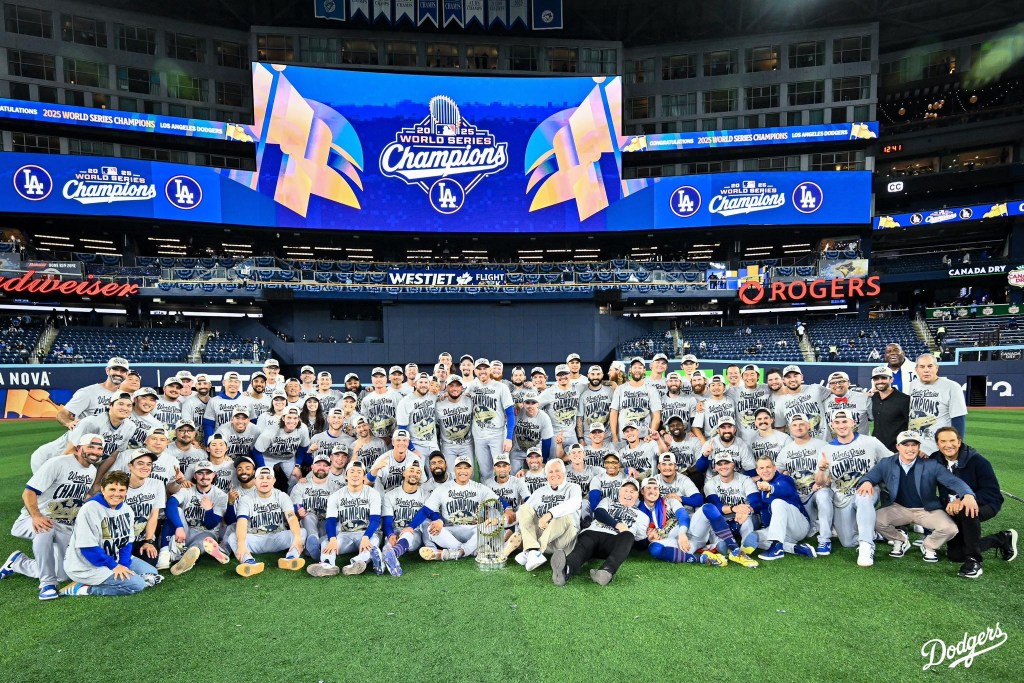
Photo: TORONTO, ONTARIO – NOVEMBER 2: World Series Game 7 between the Los Angeles Dodgers and Toronto Blue Jays at Rogers Centre on Sunday, November 2, 2025 in Toronto, Ontario. (Jon SooHoo/Los Angeles Dodgers)

Getting Your Shot

This month Kamala Harris got a step closer to one of the most coveted jobs in the world. It was anything but a predictable path. The preceding weeks were filled with anxiety and uncertainty. Through it all she remained fiercely loyal to her boss and the inside circle that provided her with the opportunity to someday be considered for the gig in the spotlight. Without much trumpeting, the door then opened and she proudly walked through it. She was ready.

That is not to jump the gun and offer any conclusions about whether she will be president. This isn’t even meant to be a piece about Kamala Harris. It’s about readiness. It’s about preparation. It’s about truly knowing what you want and putting yourself in a position where you might get there.

That kind of readiness is harder than most people think. Way harder. Exponentially harder.

If you’ve ever been in second position in any leadership capacity, you understand the difference between advising the person making a call and making the call yourself. They are both tough jobs requiring objectivity, empathy, careful analysis, diligent consideration, and consensus building. A bench coach in Major League Baseball is a vital and respected member of the coaching staff, but he’s not the team manager who will take the fall for a failed season. The provost of a university has a vast impact on the institution’s administrative and financial condition, but if the university fails to meet the goals of the governing board, it’s the president most likely to be under fire.

Often these second-in-commands long to succeed their bosses, and often they do. When the time comes, the key questions those in a selection capacity will ask encompass whether the candidate understands the gravitas that shifts in this role change, and whether that candidate is fully prepared for the unknown roadmap in their future.

I have written often that mentoring might be the best part of being a leader, but also one of the most difficult. We do our best to share perspectives, but each of us has a unique approach to things that may or may not be useful to someone else. Of all the gratification I have enjoyed in my career, none has been greater than watching younger careers flourish. Sometimes I have been able to offer guidance to a rising star looking to shore up his or her toolbox. Sometimes I have been able to explain the nuances of navigating a particularly counterintuitive negotiation.

I have seen ambition tempered by learning, and ambition undermined by hubris. I have listened to people lobby for a big promotion, asked them to consider fully if they understand the change in expectations once they get it, and watched the results go both ways. We do our best as leaders to ready the next generation for the ladder ahead, but ultimately that readiness is in their own hands.

Opportunity knocks when it wants, not necessarily when someone wants it. That can come in the form of a crisis, an unexpected competitive swing in the market, a change in surrounding personnel, an expansion effort willing to take a chance on new talent and untested ideas — all kinds of events and circumstances can unlock a mythical gate. Sometimes patience is on your side. Sometimes impatience serves you just as well. The question you must have already asked yourself is not whether you want what you think you want, but whether you are ready to tackle the unknown that you accept when you are asked.

In a memorable moment in the musical Hamilton, the young Alexander Hamilton sings the powerful refrain, “I am not throwing away my shot.” It’s a dramatic proclamation of self and an emotional manifesto easily relatable to a mirrored audience. “I’m a diamond in the rough, a shiny piece of coal,” he continues. He knows the coming revolution will call upon the best of all those who choose the life risk of demanding national independence. It is that combination of desire, conviction, and opportunity that puts him on the path to becoming a historical figure.

Does nineteen-year-old Hamilton really know what is ahead of him, the sacrifices he will make, or the ultimate result of his ambition? How could he? What he knows is what matters: he believes he is ready. He commits. That puts him on a remarkable path with personal evolution and history. His choices are intentional. The opaque path ahead is purely beyond his control, and still, he makes his mark.

Alexander Hamilton didn’t throw away his shot.

Kamala Harris isn’t throwing away her shot.

There were no shortcuts for either of them. No guarantees. No promises. No sour grapes.

If you think you know what you want, recommit to readiness. Hone your skills. If you have a mentor, don’t squander the opportunity to be in the room anytime you can. You’ll see good decisions and bad decisions in real-time. You learn from both.

Test yourself repeatedly. Question your preparation even more often. Learn not just how important it is to be right under pressure, but how to improve your odds of being right by building trust with those around you to vet a broad spectrum of possibilities. Learn the balance of risk-taking, the integrity of owning failure, and the cycle of learning that comes from measured mistakes.

Embrace clear and frequent communication even when you want to be alone. Build a substantial contact list and advice circle that is diverse, renowned, honest, accessible, and global. Network ceaselessly for what you can do for others with such modest expectations of reciprocity that help is always abundant long before you ask for it.

Know that the next step is not a cosmetic change in title with better perks. If you want the gig, find the regimen to train for it. Don’t be timid, but don’t catapult yourself into contention before you’re convinced you can launch.

Don’t throw away your shot.

_______________

Image: BroadwayMerchandiseShop.com

5 Brief Quotes That Keep Me Thinking

Are we turning the corner on a new day of reinvention and reinvigoration, or are we swapping one set of enormously complicated challenges for another?

I’ve been thinking about that a lot as Covid-19 vaccinations are welcomed by increasingly more people and the doors to a rejuvenated nation continue to open at an encouraging pace. Still, it’s hard to ignore that much of the conflict that existed in the pre-Covid world remains in the post-Covid world.

The economy is rebounding with optimism in investment, yet income inequality is as deeply embedded in our interactions as it has ever been. High profile convictions for the abuse of power have been handed down, yet racial injustice remains in the daily headlines. International travel is resuming, yet lives are being lost in battles across and within borders.

We remain too often divided and find little in the way of broad consensus that will adequately address sustainable remedies. Has the world learned anything from Covid-19, or are we picking up where we left off?

On days that are difficult to explain, I find myself looking to tiny bits of wisdom that keep me inspired and focused in good times, bad times, and when I can’t tell the difference. Here are five fragments I keep top of mind that I hope you will find perennial and inexhaustible.

“A life is not important except in the impact it has on other lives.” — Jackie Robinson

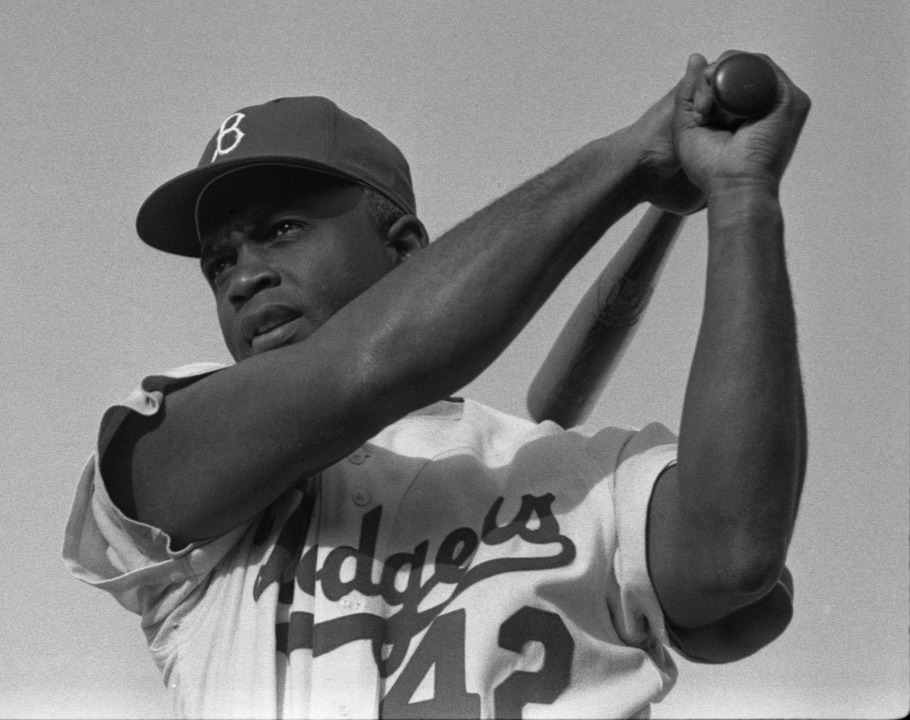
Jackie Robinson broke the color barrier in Major League Baseball. He had every reason to be a pessimist given the treatment he endured, yet he was a fighter of the most noble order and seems to me a true optimist. He had a gift that he transformed into a cause. He led by example. He teaches me there is no other way to lead than by example.

“It’s kind of fun to do the impossible.” — Walt Disney

Walt Disney was another optimist, but in a different way. He focused on pushing the imagination to unimaginable bounds. He knew beyond all financial gain that our aspirations live in our dreams, and that our stories are mirrors of our souls. He teaches me there is creativity in all of us, and nurturing that expression is essential to our fulfillment.

“All we are saying is give peace a chance.” — John Lennon

John Lennon expressed this in lyrics, so when I hear it, it is more music than words. Is it pointlessly naïve to think after centuries of combat, conquering, and attack we can make the active choice to seek peace as he suggests? To think less seems to me impossibly cynical. He teaches me that hope is at the root of getting past the seduction of old ways, and those old ways find a terrible way of repeatedly deceiving us.

“How wonderful it is that nobody need wait a single moment before starting to improve the world.” — Anne Frank

Anne Frank left the world much too soon and in the unfairest of ways, yet it is the majesty of her child’s voice that reminds us initiative to improve is always within our grasp. Her courage holds the uplifting power to bypass the contaminants of cruelty in favor of a bias toward action. She teaches me that no matter the debilitating obstacles confronting our values, we must remain true to a commitment to heal the world.

“One voice can change a room.” — Barack Obama

Barack Obama is the one person quoted here who is still alive, tirelessly active in his advocacy for our shared wellness. He remains a controversial figure and his impact on our world will be debated long after his poetic voice passes into history. He often cites another of my favorite quotes around the arc of the moral universe. He teaches me there is intrinsic reward in tackling audacious goals, and that where progress may appear thin, there is ever more necessity in maintaining navigation toward a North Star.

That’s a lot to invoke in relatively few words. I have another batch of these I may share at a later date, and of course I would love to hear the words that inspire you in these ambivalent times. The concise wisdom of others is often enough to help us make a better decision, sculpt a bad choice into an improved choice, or just fire up our engines when fuel is hidden from our view. As I get older, I seldom see the obvious clarity I once anticipated would always reveal itself.

Sometimes you have to Think Different. Sometimes you have to think harder. Sometimes a little listening helps us discover the path beyond the noise.

_______________

Photo: Pixabay

When Your Team Loses

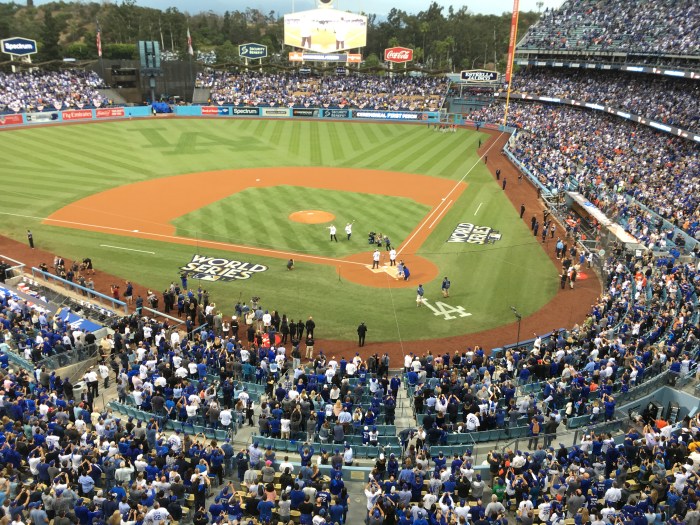
The Houston Astros won the 2017 World Series last week. The Los Angeles Dodgers lost. It was an epic contest. Many have observed it was one of the greatest World Series match-ups in the history of Major League Baseball. It lasted into the mythic and deciding Game 7, crossing tentatively into the month of November, creating the first-ever Game 7 at Dodger Stadium and the first-ever MLB game played in November at Dodger Stadium.

This year’s fall classic delivered all of the drama any fan could want from a World Series. There were come-from-behind victories one after another, larger-than-life villains and heroes caught in an explosive discussion of racism, more lazy walks and majestic home runs than most of us could imagine, and two world-class managers locked in a battle of wits. It was an endurance contest. It began in Game 1 at 103 degrees on the sweltering Chavez Ravine field and ended there eight days later some forty degrees cooler. It brought many viewers back to the game who had abandoned baseball for its slow pace in our ever-hectic world. It was the perfect collision of talent and human will emerging from an always imperfect playing season.

Then it was over.

Only one team could take home the Commissioner’s Trophy. One team did, in a stadium not their own but on a makeshift stage they made their own. The local contenders, who could win only three of seven games, looked on from the home team dugout and watched the award ceremony broadcast to the globe. Behind the blue-flagged dugout sat their fans, also staring vacantly beyond the bright television camera lights with sadness and acceptance. I was among those fans. I slumped in my hardwood seat and watched the grand on-field celebration to my right and the silence of humility to my left.

Bart Giamatti, former MLB Commissioner and President of Yale University, probably said it best in his acclaimed essay The Green Fields of the Mind:

It breaks your heart. It is designed to break your heart.

That is the game, where each preliminary round of the postseason always ends in an event called an elimination game, and then the World Series itself winds down to the final elimination game. When your team is eliminated from competition, your season is over. There are no appeals. At the final elimination game, one team is victorious. The other team retains the consolation prize of league champion, but it is increasingly less of a bragging right than it was in professional baseball’s beginnings over a century ago.

The eliminated team leaves the field with a broken heart shared with its fans. That is the design. It needs no improvement. A loss is as perfect in its ability to stir emotion as a win means to those who share a parade in the glorious days following the final pitch.

So why does any of this matter? Baseball is a business, a big-money enterprise where fans shell out enormous sums of money for ballpark visits, television and internet subscriptions, staggeringly high-margin junk food, proud but ridiculously overpriced authentic field wear, signed souvenirs, trading cards, collectors’ memorabilia, and tiny parking spots where door dings are as much a part of the game as the ceremonial first pitch. Players are traded back and forth late in the season as insurance for a playoff spot, and just because you call it your home team doesn’t mean many of the players on the payroll call it home.

Why does it matter? If you are a fan, you have to answer it in your own way. Let me try to answer it in mine.

Never mind that the Los Angeles Dodgers, a controversial transplant from Brooklyn today playing in the second-largest media market in the nation, haven’t even appeared in a World Series since 1988, the year ace Clayton Kershaw was born. Never mind that the Dodgers are the team of historic #42 Jackie Robinson, whose jersey number is the only one retired across both the National and American leagues. Never mind that Dodger Stadium, the model for modern stadiums when it opened in 1962, the year I was born, is now the third-oldest stadium among the 30 in MLB. All of that is nice context, but it doesn’t reasonably define why I would feel sorrowful over a loss in Game 7.

In fact, in a world plagued by continuing terrorism, nonstop acts of violence, social vitriol, political lunacy, global instability, and wildly unjust economic inequality, why do seven months of three-hour-plus games played day and night on well-manicured fields by young millionaire athletes directed by billionaire ownership groups matter at all? It shouldn’t, right? We’re adults, aren’t we? We’ve got important stuff to worry about, not the velocity of a breaking ball walloped by a carved piece of wood and sailing 400 feet into the bleachers of a 50,000-seat arena.

Well, let’s try it another way and go back to Bart Giamatti, a Renaissance scholar and baseball fanatic who left us much too early but was gracious enough to capture some meaning in all of it in his own temporal longing:

There are the truly tough among us, the ones who can live without illusion, or without even the hope of illusion. I am not that grown-up or up-to-date. I am a simpler creature, tied to more primitive patterns and cycles. I need to think something lasts forever, and it might as well be that state of being that is a game; it might as well be that, in a green field, in the sun.

That is why it matters to me. It matters because it lasts all our lives. It dies with the coming of winter and is reborn in the spring. I love the game because my father loved the game. It is essentially the same game, forget the bells and whistles and data analytics and all that newfangled scoreboard jazz. The game no matter what is fully unpredictable to the final out, the alchemy of athleticism, calculating strategy, and too often chance. It is consistent in its ritual routines, relentless in its aggregate simplicity, intoxicating in its repetitiveness. Forever it has broken hearts. We share that from generation to generation, from season to season. It is absolute in its constancy, absolute in its recurring challenge, absolute in its finality — until it comes again.

It always comes again. It has to come again. It is designed to break your heart.

When your team loses, you internalize the emotion, politely congratulate the winning opponent, and make no excuse for the silliness of the sadness in your obsession with constancy. We all like to win. We all want to win. We all want to be part of winning. Yet more than that, we all want to be part of something that matters because it holds us together with permanence solely because its vitality is assured in its unfailing renewal.

The Brooklyn Dodgers, who didn’t win a World Series until 1955, owned the nickname Dem Bums. Each year they lost, Dem Bums and the fans who followed them would finish the season with the same words: “Wait ’til next year.” Dem Bums knew the answer to what you do when your team loses.

I’ll see you at the green field next April. Opening Day is traditionally played in the early afternoon. With a little luck the sun will be shining on all of us.

______________________

Photo: By the author, Ken Goldstein (11/1/17)