Not Amused by the Dolled Up Wolf

As I have been out discussing my debut novel, This is Rage, over the past few months in bookstore readings and radio interviews, the question often comes up as to whether it is similar to the latest high-profile motion picture from Martin Scorsese, The Wolf of Wall Street. My answer is no for three reasons. First, my story is purely fiction, and Wolf is based on a memoir. Second, my story is exaggerated for the literary purpose of satire, and Wolf appears to be exaggerated (or not) for spectacle. Third, my story depicts a cast of amoral characters on a collision course with poetic justice and renders a series of life lessons and impacts offered for discussion, while Wolf has no moral center and crudely celebrates the life of a scumbag. Fair warning, more eye-opening spoilers ahead.

wolf-of-wall-streetI usually quite like Martin Scorsese pictures, but I really despise this one. I don’t think he set out to make a movie that glorified the inexcusable crimes of Jordan Belfort, but that’s what’s on the screen, and now that people are crying out against the film, Scorsese and his cast are left with few options but to defend their work as creative expression. I don’t dispute their right to produce the film or make money from the enterprise, I simply wonder why it was necessary, especially for such an accomplished company of actors led by no less than Leonardo DiCaprio. You see, while some of us see through the veneer of statements proclaiming the indictment of Belfort as a cautionary tale, the literature simply isn’t there to support the defense. An extremely simple fix would have gone a long way to offset the damage caused by this movie in showing the devastation caused to the victims of the penny scam swindling. We never, ever see anyone get hurt by the incessant wave of fraud that takes money from the pockets of innocents and hands it for abuse to criminals. Not once, anywhere in the film, do we see the pain created when a garbage stock is sold to an ignorant or unsuspecting victim at 50% markup. Would it have been that hard to show that white-collar crime is not victimless? Do people still not understand that when sycophants like Belfort (and Bernie Madoff) lie to clients and empty their pockets, entire livelihoods–and futures–are wiped out?

It’s not funny. It’s not the stuff of sardonic humor. It’s too real. Horrific acts need to be condemned without ambiguity, or at the very least illustrated through juxtaposition to depict thought-provoking irony. The justice system failed to cause Belfort to endure fair punishment; he did 22 months soft time and now he is a celebrity. How about that, a bona-fide celebrity for publicly exposing that he lived a putrid life and is now selling his salesmanship skills as legitimate in pay-to-attend seminars, further brought to visibility by a Hollywood movie deemed worthy of frothy awards. The movie shows everything that goes against the grain of humility and equality, but let’s send up flares and say it’s a tour de force.

You know what else isn’t funny?

Sniffing cocaine off the rear end of a hooker, all paid for with piles of your stolen cash. Nyuck nyuck.

Driving a Lamborghini on public streets under the severe influence of quaaludes and endangering the lives of people around you. Nyuck nyuck.

Getting oral sex in a glass elevator from a co-worker while the rest of your company watches from the trading floor. Nyuck nyuck.

Laughing yet? No, apology not accepted. How about when a crowd of Wall Street insiders gathered for a screening of the film in Battery Park and cheered at its most lascivious moments, essentially endorsing the behavior of Belfort and his punk posse, making it clear that generating big money was laudable, and spending it lavishly even more laudable. Yeah, it happened. You remember these guys, they were the ones our federal government bailed out when the great recession was at its worst. Now they are the same guys who think it is time for Washington to back off on regulation, since everything is “back to normal.” Yep, welcome to the new normal.

No, I’m not indicting all of Wall Street; quite the contrary. I believe in the fundamental strength of our economy, and that trust in investment is the backbone of financial advancement. We put our money into stocks and bonds long-term to see our free market assets grow collectively over time–capitalism for the long haul, compounding legitimately for the greater good. It’s not meant to be a con man’s game. It’s not meant to be a fixed casino. So why portray it that way, and why would anyone who makes his or her living off the public trust applaud such despicable behavior? Starting to wonder if the 1% and the 99% are separated by more than just wealth?

Here’s something else that’s not funny, and the core of what caused my emotional reaction to this vile portrayal of a pathetic American life: It’s an open letter from Christina McDowell published in the LA Weekly. Ms. McDowell’s father was one of the pukes that Belfort threw under the bus to arrange for his reduced sentence, and her life in the ashes that followed was emblematic of the very discord that Belfort created. Because her father was also a criminal, she does not make excuses for the suffering brought on her by the loss of her family’s affluence, after which she sank into poverty as a result of her father’s lying and conniving. Instead she writes with immense empathy for the victims of both her father and Belfort, wondering as I do why these victims show up nowhere in the film, instead remaining faceless and invisible, as if nothing tangible was really taken and incinerated. This passage the day after Christmas left me especially disturbed:

So here’s the deal. You people are dangerous. Your film is a reckless attempt at continuing to pretend that these sorts of schemes are entertaining, even as the country is reeling from yet another round of Wall Street scandals. We want to get lost in what? These phony financiers’ fun sexcapades and coke binges? Come on, we know the truth. This kind of behavior brought America to its knees.

Nope, not funny. Not entertaining. No moral center. No poetic justice. So as the actors and technicians and storytellers and creative journeyman who crafted this epic adaptation make their way to the stage to accept their trophies this season and deliver all sorts of silly speeches about the role of art in society, think about what they did and what they could have done. Art and entertainment can be a stylized mirror, or a refracting lens, or a pastiche of temporal mores, or a slice life that causes us to interpret the actions of characters and ideas of creators. Or it can just sit there like a lump and take our money for nothing, no different from the scoundrels depicted. Two stacked wrongs don’t make this right. Don’t get fooled again. Hold the Oscars, hose this one down with a power-steam cleaning and let it dribble down the gutter where it best can dissolve from future memory.

Wings: Remastered and Revisited

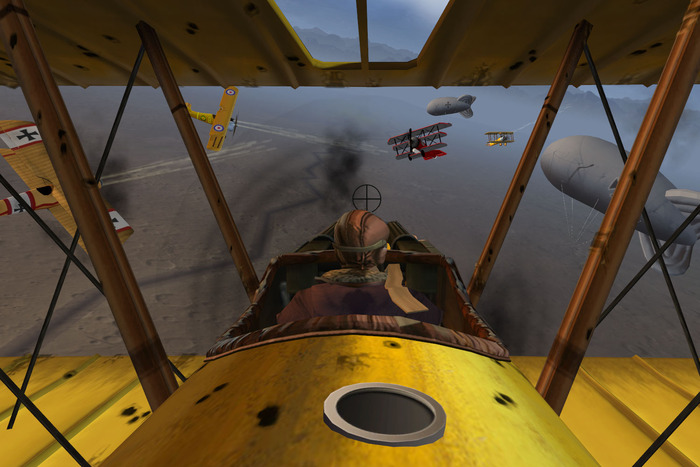
Wings_coverA few decades back, before I became a software and media executive and long before I returned to writing, I wrote the “screenplay” for a succesful computer game called Wings.  That “interactive movie” — as it was marketed — was a World War I flight simulation that followed the lives of the very first fighter pilots, trying to make combat sense of fragile biplanes curiously equipped with machine guns.  It was published by an early innovator in gaming known as Cinemaware, which set out to make games look, feel, and tell stories more like movies.  Recently the Cinemaware brand was resurrected via a Kickstarter campaign to fund a mobile version of Wings, that if successful will contain the entirety of the many pages of story and dialogue, plus a lot of new material.  I have no financial interest in the new Wings, but it does bring back fantastic memories, a slice of life from an earlier time.  The new team asked me to do a text interview to support their campaign, which I decided for nostalgia to publish here as well.  Enjoy!

Please provide a brief bio of yourself.

At the moment I’m a first time novelist, my book This is Rage: A Novel of Silicon Valley and Other Madness just released last month to good reviews.  I’m also an investor, a start-up board member, an executive coach instructor, a blogger, and former corporate executive.  I was CEO of SHOP.COM, Executive VP of Disney Online, and VP Entertainment and Education at Broderbund Software.  I read a lot, follow the L.A. Dodgers, study wine, and am active in children’s welfare issues as well as local government.  If that’s not brief enough, cut everything except the part about reading and the Dodgers.

How did you originally join Cinemaware and get to work on Wings?

I met some of the Cinemaware team at a UCLA conference called The Future of Television in the late 1980s.  They told me they were creating interactive movies.  I had just written a spec screenplay called Miniatures about radio controlled model aircraft that sort of predicted the U.S. drone program.  It was the first thing I had written on a computer, a monochrome XT.  They asked me if I ever thought about working on a computer game.  I said No.  They showed me Rocket Ranger and It Came from the Desert on the Amiga.  Then I said Yes.  Quickly.

How was it working with the Wings team on the Amiga?  What do you remember most about that time?

It was a magical time, a time of possibilities.  I had experienced five years in traditional media of hearing why we couldn’t do certain things, how everything had to be done a rigid way, and how little respect there seemed to be for the writer.  Everything at Cinemaware was, yeah, let’s try that and see if we can make it work, why not?  I also remember writing on a Mac SE/30 for the first time, and I couldn’t believe why anyone would use anything other than that — so much for my XT.  And I remember when our competitor, Origin Systems, leaked a demo of their outer space saga Wing Commander, and our team was like, hmm, that’s a pretty compelling 3D engine, but our story is way better, so back to the drawing board, and they completely rewrote our flight simulator in about 2 weeks to be more state of the art.  Oh, and I remember when someone brought in the first Amiga with a 20MB hard drive and we could install both floppy disks without having to play with disk swapping or a slow seeking second external floppy drive, and that just seemed like the best possible gaming experience you could ever have — until we heard rumor about something coming called a CD-ROM.

How did you go about doing research for the game?

John Cutter, the game’s visionary designer, and I got ourselves invited backstage at the Air & Space Archives in San Diego, where we discovered a lot of the old U.S. Army Air Corp files were stashed.  We were blown away by how welcomed we were there, the military librarians spent hours with us digging out old files, it was a smorgasbord of history, and they couldn’t have been more helpful.  They kept bringing out boxes and boxes of dusty old papers and black & white photographs and let us have at it.  It was a super find and let us dig deep into a very special time of innovation, courage, and pain.  We devoured stacks of books on World War I (we even included a bibliography in the Aviator’s Briefing Manual, I’m guessing the first bibliography for a computer game).  We watched the 1927 silent movie Wings — winner of the first Academy Award for Best Picture — and The Dawn Patrol (1930) so many times on VHS by our QA release date I think we could recite the storylines in realtime without anything on the monitor — then we chose to borrow only the atmosphere: the title, the sets, the costumes, font styles from the text cards, but none of the stories or characters.

What do you think makes Wings such a special gaming experience?

I think it really was the first computer game to try to tell an epic story that was more theater than shoot ’em up, but we kept plenty of shoot ’em up.  We tried extremely hard to make the character role-playing real, to get inside the head of a 19-year-old kid who probably had about as much chance coming home alive as he did surviving enough sorties to live long enough to become squadron commander.  We obsessed on details of the period, used every pixel wisely, created a true sense of responsiveness in the story, something that would set off endless discussions about the true nature of interactivity.  We also kept the game controls immensely simple.  It wasn’t a super complex gravity based simulation where you had to be an engineer to takeoff and land the plane or fight virtual physics to keep the contraption airborne.  We simply “cut to” you in the air and said Just Fly and Shoot.  We brought in a lot of non-gamers with that simplicity, but funny enough, the hard-core gamers praised us for it as well.

Can you tell us what the team wanted to implement in the game, but didn’t have the time or resources to do?  Any special hidden gems or trivia for Cinemaware fans?

First you have to remember what we were dealing with getting the game to ship on two 512K floppy disks, as if any big blockbuster developer today could comprehend how little data that is.  Our programmers were masters of compression, and kept squeezing and squeezing.  The music  was astonishingly intelligent, but the short redundant loops made our composers crazy, so I’m sure they will be delighted with the enhanced score on the remastered version.  Every screen shot was a big hit to storage, and I remember the artists begging to include more storyboards, but that wasn’t possible.  Luckily for me text was as economical to store then as it is now, so I didn’t feel the same thrashing.  I do remember the branching tree logic making me nuts and having to write multiple outcomes for every mission, wondering if it was humanly possible to cover every fork in the story and how many people would care that on a given pass through the game they would only see fractions of the screenplay (we positioned this as a customer benefit, creating replay value).  I remember when the marketing folks “requested” we cut from three floppy disks in beta down to two in order to improve gross margin on wholesale, which almost created a revolution in the hallways.  Our indefatigable producer, Jerry Albright, reminded us it was OK for them to ask, and that we had to respect them for trying, then emphatically told them not a chance.  Then somehow our miracle programmers pulled it off and we shipped the master on Reel 1 and Reel 2.  I also remember a few brainstorms we had after we realized what a unique product we had developed, one for a CD-ROM version with recorded spoken dialogue that of course never happened, and one for a Wings sequel that would have been set in WWII, and who knows where that would have taken us.

If Cinemaware had a chance to expand on Wings, what do you think could be better developed or explored?

That’s sort of like asking the creative team who made the original movie version of Wings how they would have made it a talkie.  The remastered version being funded on Kickstarter is doing all the right things — improved graphics, enhanced music, more missions, improved physics in the engine — all of that brings out the best in what we did so long ago.  The important thing is that we gave the game heart, layered grounding in reality staying true to the source material, emotional resonance woven through a role-playing experience.  As long as you remain true to heart, the polished production values will fully bring out the best.

Ken, you also pledged for this campaign, thank you so much for the support.  What made you do it?

It is a very small sum of money to let an entirely new generation of gamers see where we started as an industry, and maybe a few grown-up parents will get to share the experience with their kids.  Really, it’s not much money for a lot of game, and it is a fun game, part of what got us here.  It’s kind of like the silent movie version of Wings we watched over and over — what if someone hadn’t bothered to preserve it, can you imagine having lost a gem like that?  I can’t, no way.  We all come from somewhere, it’s important to remember that and even more important to share the memories.

Pilot Shot

On a Mission or Just Staying Awake

One of the themes I explore in my forthcoming debut novel, This is Rage, is the notion of motivation.  This is a subject I hold dear, and one I focus on a great deal in the executive coaching workshop I co-lead with John Vercelli.

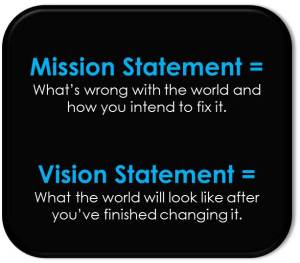
mission-statement-vs-vision-statementIf all a mission statement is meant to do is fill a half page in your human resources handbook, it is probably not worth the time to write it down.  One of my former teachers and board members used to say he had a vision of all the great mission statements in the world collected in a single volume, and there could be no possible better bedtime sleeping remedy than trying to force oneself through those pages with one’s eyelids open.  Again I agree, if a mission is just a string of words — Buzzword Bingo without a juicy prize — it will not motivate, but let’s consider a few potential examples of applying a personal leadership mission in attempting to inspire a team.

Here are three choices I offer participants in the workshop, all of which we’ve heard in some variation, from the absurdly failing to the boldly aspirational:

Choice 1:

To make this department much more efficient and profitable!

Choice 2:

To overcome market forces and prevail over our competition!

Choice 3:

To provide my team with the support and resources they need, to the very best of my ability, to collaborate and do the very best work of their careers.

My response to Choice 1:

Not gonna inspire, management by fear is so not cool.

My response to Choice 2:

You’re starting to get my attention, through an occasional yawn.

My response to Choice 3:

I’d build you a log cabin in the arctic if you asked me.

Call me an optimist; people like to be inspired.  It’s not a sleight of hand.  Real leadership means rallying people around a cause, to subordinate their own personal quirks to the shared agenda adopted.  The leader’s job is to create the environment for sharing.

Is it the business leader’s job to make her or his department more efficient and profitable?  Do we really need to ask?  It goes without saying, so don’t seek glory in the obvious.  Is it the business leader’s job to respond to market forces and win market share from the competition?  Once more I ask, where’s the question?  Any answer to this presupposes a complete lack of faith in the common sense of why we are employed by our company and not another.  Is it the business leader’s job to rally, help, support, test, and muster the collective wisdom of those assembled to form a team and work together?  That should be just as obvious, but try saying it aloud and look at the surprised gazing around you.  That’s what people want to hear.  Uttering the manifesto is the first step toward building trust and accomplishing the impossible.  True, it’s just the first step, and trust is easily shattered when actions upend words.  Yet it’s an important step, and it does fire up hearts and minds much in advance of a spreadsheet.

It also connotes vulnerability — to the very best of my ability — which again is all in fact you can ever do.  Not proclaiming more makes you human, perhaps a form of life other people are more willing to follow.  Be honest, not only about what you can do, but in admitting that you are not de facto possessive of superpowers.  Try it out, it just might give you superpowers.

In my novel, a few clever and powerful people are trying to make a whole lot of money.  That is not a bad thing, until they forget that how you make the money is the difference between taking along a deserving set of others and leaving almost all of them behind.  Most of the people in the story just want to do their jobs, to find a way to love their jobs, to shake off the demoralization that has come from the illogical separation between task and income.  When a job is a paycheck, you don’t need a mission statement or real leadership, you just keep your head low and get through the day.  When a job is about something more, it’s still a paycheck — we all need a paycheck — but the purpose of the work is a much more substantial driver, creating better outcomes and better paydays.  Improved business comes from more engaged employees, and getting those employees engaged is a soft skill that in the hands of a master can conquer most obstacles.  That’s when work is fun, when we believe in something, when we believe in the leaders and their values and their rallying cries and we choose to be a part of innovation’s path.

The promise of the start-up is to build something new with heartfelt values at its core, and in closely held companies at modest scale it is much easier for founders to maintain the kind of personal mission and creative culture that reflects this entrepreneurial DNA.  When an exceptional start-up enters a period of hyper growth, hands on sustenance of idealized culture becomes considerably more difficult.  Should the start-up go public, it too easily can take on the shape and form of the goliaths it sought not to be, and then the challenge of maintaining a mission grounded in shared values is often put on trial.  The disconnect between what was innocently envisioned and what inertia morphs can be terribly upsetting to the grasping loyals, who hold their idealism in longing, hoping at length for the pledge to retake honest meaning.

Still it is important to remember than the personal leadership mission can endure.  Indeed it might be less than a grand corporate mission statement, but I believe conviction is almost always within a business leader’s reach at all levels of an organization.  Committing to a personal leadership mission is a choice — a brave choice with its own risk — and while rare, a good one in the spirit of Choice 3 has a decent shot at creating significantly more employee engagement and long-term value than the other two slug lines.  It’s all a matter of executive style, setting a tone for the broadest possible positive, tangible outcomes.

It is too easy to check out, and once people check out, try getting them to check back in.  As my story compounds, an awful lot of people check out — because they don’t feel valued, because they don’t feel inspired, because they see what they do each day as separate and divorced from the actual process that creates income for the business and value for the shareholders.  Tie those pieces back together and real innovation comes a good deal more naturally.

Leadership is not so much a word as a behavior, a walking example of what it means to be intertwined with the enterprise.  It does begin with words, words that are grounded, words that do something.  Choose those words carefully, lead by example, motivate by inclusion, dole out support without reservation.

You want to keep things humming, make it a little less comfortable and a little more complicated — for yourself, not those you guide.  In the book, I take you to the extremes of this world view, heroic and cowardly and all that binds the spectrum.  The words did not come easily to me, but I committed myself to resilience and found them over time.  You can, too.