Rage On

It’s a strange way to end a strange year.

About a decade ago I wrote a book about an internet uprising in support of a pair of unlikely criminals who kidnapped a pair of executives after accidentally killing a businessperson during the abduction. In hindsight, it’s a bit eerie given current events.

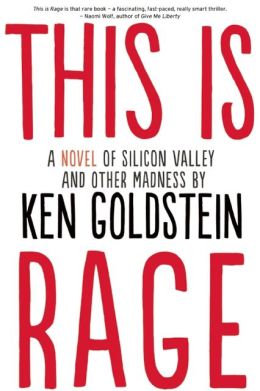
The book is called This Is Rage. It’s a novel of outlandish observations and counterintuitive character behavior I assembled from a career in technology and media. Much of the underlying ethos had been eating at me in repeated cycles. My goal was to paint in the extreme, to bridge the dying days of old world communication with the uncharted future of a world without filters. It was meant to be outrageous, plausible only at the fringes, a look into events that possibly could happen, but held resonance more as a cautionary tale than a slice of life.

I knew the premise was plausible because I’ve been a student of the commercial internet since it entered our lives. I watched it bring out the worst in people, particularly behind anonymity, but also the ways uncontainable sentiment could be exploited by businesses, politicians, and other special interests. I knew the events could spin out beyond the control of those seeding them, while a clever few would convince themselves they could harness the battered convictions of those who felt forgotten.

I meant it as satire in the spirit of Tom Wolfe. In the years that followed, the line between satire and reality began to blur. Then one day, it seemed to me the line was gone.

Skits on Saturday Night Live and news headlines often became indistinguishable. Something called fake news became identified as unreliable information emerging from unconfirmed sources that took on snowball effects with implied credibility. Just as we got our heads around the notion of fake news, it became an easy label for anything someone didn’t want to believe. Deepfakes, videos that appeared to be evidence of real activity, were revealed to be manipulated images edited for effect without regard for truth. The act of lying was sometimes referred to as alternative facts.

Imagine that, alternative facts as a reality we should consider.

This confluence of powerful, widely distributed technology and internet anarchy has exceeded most of what I imagined, yet the one storyline I hoped was long into the future no longer is. While I anticipated the fiery populism most often expressed with unchecked anonymity, I held the belief that human character would nonetheless gravitate toward a sense of justice. The stretch in my satire was that in fully unrestrained expression, a villain could in the public eye become a hero. This to me was a bridge too far, and that if a movement began to form in that direction, the goodness in us would win out. The failings in our logic would become uncomfortably apparent.

I was wrong. Today the headlines tell us popular sympathy can align behind a villain if the circumstances motivating a crime are deemed by spiraling opinion somehow more pernicious than the crime itself. It was impossible then and it is impossible now for me to believe a vote of internet emotion can take the side of the criminal who murders an insurance executive because he finds the victim’s business unethical. I say it is impossible to believe, and yet it is reality.

How did we get here? As I have written so many times before, the implications of the technology weaving through our lives takes its toll whether we understand it or not. Our ability to digest the psychological impact of technology can’t keep pace with the deployment of its power. We use the internet freely, we express ourselves in whatever form of truth we believe is appropriate, but the ability to decipher how our behavior is being altered eludes us as individuals and in the collective.

There are no alternative facts unless we allow them. Fake news is not a convenience unless we allow it be. Villains are not heroes unless we allow them to be.

There will be more rage, I am assured of that. People are angry, confused, and sadly turned against each other for the gains of those who fuel the rage. While we are free to express ourselves without restraint in anonymity, it’s hard for me to think of that as freedom when we could be empowering each other with shared values and vetted knowledge.

We don’t need to hide behind falsehoods. If we are made to feel afraid for saying the emperor has no clothes, we need to rediscover the courage to stand ahead of the herd. Transparency may prove increasingly challenging in a world gone mad, but actual facts are available if we commit to the work of identifying them. Argue with data and a passion for clarity over impulse.

It is a privilege to write for you, and I believe I have one at least one more book in me. Before I get to that, I am going to have to come to terms with what is meant by satire, and whether being predictive has any value at all. Irony is only a teacher if the comparisons we attempt are rooted in decency that is broadly recognized.

As we begin a new year, remember that there are facts worth unearthing, unsung heroes all around us worth celebrating, and plenty of villains playing out schemes to convince us they are worthy of trust. I’ll finish the year on a thread of optimism and say that together we can separate a worthy example from a fabricated manipulation. The choice to offer applause only when it has been earned remains at our discretion.

_______________

Image: Pixabay

Why Tom Wolfe Matters

What more can I add to the multitude of tributes to literary legend Tom Wolfe? Certainly nothing unique, but given the inspiration he has provided me, it would seem irresponsible not to add a few personal notes.

Wolfe is one of my favorite authors of all time. He was a writer who changed my life. I never met him, but I always felt like I knew him. Now I will miss him, but the library of his life’s work will forever be near me.

It was his invention of New Journalism that changed the way we heard and told stories. He crafted a new set of norms meant to break all the rules that desperately needed to be broken. The storyteller belonged in the story, fact or fiction, a hard break from the false mandates of objective absolutes. He proved by example that a writer and his story are inseparable, no matter the subject matter. His biting critiques of hypocrisy are funny, eye-opening, and actionable. His characters are equally outrageous and believable. The unique style and consistent unpredictability of his prose are seldom short of stunning.

When I first read his 1989 manifesto in Harper’s, “Stalking the Billion-Footed Beast,” I knew the coming shift in literature was more than cosmetic. Allow me to borrow a passage from that essay on how the call to relevant storytelling so lit up my life with hope and gravitas:

By the early 1960s, the notion of the death of the realistic novel had caught on among young American writers with the force of revelation. This was an extraordinary turnabout. It had been only yesterday, in the 1930s, that the big realistic novel, with its broad social sweep, had put American literature up on the world stage for the first time. In 1930 Sinclair Lewis, a realistic novelist who used reporting techniques as thorough as Zola’s, became the first American writer to win the Nobel Prize. In his acceptance speech, he called on his fellow writers to give America “a literature worthy of her vastness,” and, indeed, four of the next five Americans to win the Nobel Prize in literature—Pearl Buck, William Faulkner, Ernest Hemingway, and John Steinbeck—were realistic novelists.

Wolfe reminded us of our American legacy and tradition in creating words that matter. To combine that public statement of reborn intent with a social novel as demonstrative as The Bonfire of the Vanities would have itself constituted a life achievement, but he was just getting started. Ironically, this was years after he wrote The Electric Kool-Aid Acid Test and The Right Stuff in his relative youth. Whether the narrative was reported, invented, or a combination of both, his voice exploded from every page he published and lifted us to reconsider the controlling norms crowding every corner of our lives.

He was already in the club when he dusted off the house rules. To be fair, it was less of an edit about purpose than it was a bold restatement of the rules of engagement. These were the kind of “new rules” that deeply appealed to young writers like me who weren’t sure if it was still okay to address the injustice of our surroundings with purely accessible plots and characters.

Could an author be both mainstream and thoughtful, both entertaining and aspirational? Wolfe told us yes, showed us how, and begged us to beat him at the game. Eleven years after Bonfire he proved he could tackle the social novel in different geography with A Man in Full, bringing realism and nuance to an equally vibrant cast of characters in the financial machinations of Atlanta. Again he beckoned all comers to rise to a more demanding creative standard. We couldn’t beat him, but we sure could take out pen and pad and play along as if the contest were open for anyone brave enough to enter.

What did I learn most from this erudite iconoclast?

Current events become history. Tell even the simplest stories with flair. What you chronicle for the present becomes a time capsule that can be unwrapped in ten years or a hundred. Reporting on contemporary events is a noble calling, but framing them within multiple prisms of context transforms ordinary happenings into perpetual discussions of culture and significance.

Story and storyteller are inseparable. Voice is alive whether you are writing fiction or non-fiction. To pretend otherwise, that there is somehow an ideal objectivist viewpoint, is to deny the reality of the music in your head and the muse speaking through you. Acknowledge it, confess it, embrace it.

Style is content. What you write and how you write it are also inseparable. So many of us studied his eclectic, eccentric style of phrasing to adopt his craftsmanship and tone. If you want to use nonsense syntax to land a point, to hell with copyeditors, be a writer, accentuate at will and rise to the iconic. Like this, from Bonfire: “On Wall Street he and a few others – how many? – three hundred, four hundred, five hundred? – had become precisely that … Masters of the Universe.”

How big a deal was Tom Wolfe? I can’t identify a single reductive adjective. Enormous is a good start. Unique is another. I’d toss in galvanizing as well. His writing changed the entire playing field for a churning generation. He showed us how words become possibility. Yes, he was that big a deal.

Important works of literary fiction that are fully absorbing may not be in the same demand today as they were a generation ago when readers of another time learned to love words as life inspirations. When we remember Tom Wolfe as author and provocateur, we remember what is possible when we demand as much of our artists as they demand of themselves.

Words matter. Stories matter. Storytellers matter.

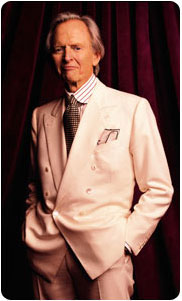
Tom Wolfe matters.

_______________

Photo: TomWolfe.com

About This Book of Mine

Pre-Order on AmazonI have mentioned now and again that I have been working on a novel for a few years.  It’s time to share a few more details.

First of all the title: This Is Rage.  You will discover why I called it that if you read the sample excerpt on my teaser site and other fine channels we will be utilizing in the coming months, like Amazon or Barnes and Noble, where you can currently place your pre-order that will be shipped when the book is officially released on October 8, 2013.  Shameless, I know, but I am officially in the pull marketing business effective immediately.

There are two protagonists in the story, who are also both antagonists, at least to each other.  They are each hero and villain in the broader context of economic turmoil, which they aspire to improve, but not surprisingly mess up on high-octane, mostly by accident.  Kimo Balthazer is a disgraced radio talk show host, who seeks redemption in the obtuse netherworld of internet webcasting.  Daniel Steyer is a venture capitalist at the top of his game, looking to go out huge with the deal of a lifetime, but market forces have other plans.  That’s not the order in which you will meet them, and you’ll find out why.  At the outset they don’t know each other exists.  They don’t even know each other’s world exists.  But they soon do.  And they don’t like each other.  At all.

I am going to do the right thing and not toss out any spoilers, but I can say that you will spend some time in Silicon Valley, some time in Los Angeles, and some time in Washington D.C.  You will be introduced to the world of Investors, Bankers, and Operators, the three points of an ever-forming triangle that comes with its own hierarchy, rule set, chaos, and politics.  You will also meet a curious politician with a tangential agenda, a conflicted movie studio boss, the co-founders of one of the most successful tech-start-ups ever, and a pair of would-be entrepreneurs turned criminals whose interpretation of thinking different is not quite what their families had in mind.  You will be invited into board meetings and venture partner meetings.  You will hear the voice of Kimo in your head.  You will see what happens when ego and presumption run amok, and the notion of control spirals into hyper normalcy, where random boo-boos add up big time, and the consequences are strangely real and familiar.

My key influence for this book is Tom Wolfe, whose first novel Bonfire of the Vanities blew my mind in ways that still shake me to the core.  I didn’t know what a bond trader was the first two years I was in college.  Then I saw a bunch of guys my age lining up in blue suits to be interviewed to become one.  They went to Wall Street and became extraordinarily wealthy selling paper promises to their clients.  Then came the broad implosion of junk debt.  Michael Lewis, whom I also tremendously admire, made his debut as an author writing about this phenomenon.  I saw the impact on my friends, I saw the impact on New York, and I felt the impact on our economy.  What I admire to this day about Wolfe’s work was how he wove storytelling through the observational narrative, migrating the educational lesson to character development, and burying the polemic in a moral tale for the ages.  I was studying theater at the time, without notion of how I might fit into the business world, or even if I could make a living given what I valued.

A quarter century later we seem to have forgotten the fall of the junk bond kings.  The miracle of Silicon Valley has replaced the lustre of Wall Street and the allure of Hollywood.  I have played my whole career in this fantastic environment of innovation, the arranged marriage of technology and media brokered by the matchmaker financiers, and the output had been invigorating.  We have created jobs, opportunities, and a good deal of wealth — but not for everyone.  In the same way that Wolfe and his New Journalism looked beyond the restaurants and clubs and luxury high-rise suites, I have seen the scary trailing the good.  Where there is big money there are big personalities, and where there is a win-lose battle fought daily, often those who lose are the secondary foils who play by the rules without insight into the eccentric ecosystem.

That is the story I wanted to tell.  That’s why I wrote a business novel instead of a non-fiction set of adages.  This was something I needed to do, part of the continuum of my journey.  I started my career in storytelling, then helped bring storytelling into computer games, then found my way into profit and loss, and now I come full circle.  I needed a way to bring these elements together, to find a synthesis of my passions, which include the theatrical, the financial, the philosophical, the hope of justice, and a touch of dark humor (hopefully more than a touch!).

In the coming months I will tell you more about the publishing journey, but I cannot conclude this project announcement without a sincere thank you to my brilliant editor, Lou Aronica, under whose independent imprint The Story Plant my book is being published.  Lou is a Mensch in every sense of the word (Google it if that’s unfamiliar to you).  He has been a steadfast believer in This is Rage since we met each other last year on Twitter.  It’s not just the notes that he gives me, it’s the way he communicates his viewpoint that makes me want to rewrite a fourth time when he is only asking for the third.  I think Lou, a bestselling author himself, is at the forefront of New Publishing in the same way Wolfe wanted New Journalism to embrace the opportunities of Creative Destruction as a positive force for change.  Wherever this journey takes us, I am delighted to be paddling alongside a friend on this whitewater river of 21st century digital publishing — with a paperback to boot.

So that’s the introductory story of my novel.  It’s my first, I hope not my last, and I welcome you to come along and share the journey with us.  It’s for you, and it’s about you.  I hope to entertain, and maybe share an idea or two as the whitewater rises.

This is Rage.