Say It Loud

I like that people are speaking out.  I like that customers are letting corporations know what they think.  It’s good for democracy and free enterprise.  It’s great for business.

Bank Transfer DayLast week one individual, 27-year-old art gallery owner Kristen Christian, kicked off a true grass-roots movement that came to be known as Bank Transfer Day.  No one told her to do it, no giant entity or association formally backed her cause, she just did it and thousands of people got on board.  Since September 29, 2011 when Bank of America announced its $5.00 debit card fee, as many as 650,000 new credit union accounts have been opened.  This past week, Bank of America changed its mind about charging that fee.  You think they aren’t listening?  Maybe not as carefully as they should be, but it is clear some message got through.  This is how it should be.

Companies must never forget why they exist — to serve customers.  When they forget that, they are on a slippery slope.  Corporations can have a tendency to be inward thinking, they can focus with intense obsession on their internal issues, efficiencies, operations, politics, succession plans, and tactics for improved profitability.  Internal company struggles can become engrossing to the exclusion of more important matters, like creativity and customer focused quality.  When companies forget about customers, the other stuff ceases to matter.  They need to be reminded of that often and with passion.  Don’t feel bad when you complain or move your business, you are helping them.  They need to hear from us.  Our voice is vital to their survival.  If they don’t believe that and embrace it as a core value, creative destruction will do its job.

As I have written before, we are customers, we cannot allow ourselves to be reduced to the notion of being treated as consumers.  Customer service in a company needs to be both reactive and proactive:

Reactive customer service is when you call them to identify an issue or concern, the person on the phone or chat or responding to your email should do everything possible to solve your problem.  Great companies love these inbound calls, because each contact point is an opportunity to bond a customer for life.  If something goes wrong and a customer service person “makes the save,” your loyalty and lifetime value to that company can increase exponentially.  Conversely, if the customer service person manhandles the “win-back” moment, not only are you likely to be gone, you are likely to take a few dozen of your friends or the company’s future prospects from them, maybe more with the power of social media.  Again, you are doing the company a favor.  If you give them a chance to be helpful and they succeed, you have invested in their brand.  If they let you down, you teach them a lesson they need to learn quickly before their brand is permanently damaged.

Proactive customer service is the job of listening to customers before an action occurs, reading the trends and common themes that flow through the data bases of feedback systems.  Did banks know of the anger of the 650,000 customers who opened credit union accounts last month?  Some did and some didn’t.  Did they act in advance?  Did yours?  Why not?  If they are taking your business for granted, they deserve to lose it.  We all have options.  Proactive customer service focuses on retention activity in advance of crisis.  After crisis, it’s a public relations campaign, the spin doctors join the fray.  That may have worked a generation ago, but not so much today.  When we go, we are gone.

The Bank Transfer Day effort was careful to acknowledge that although it shared some inspiration from the activities of Occupy Wall Street, it was not part of that movement, it was its own thing.  Here again, the idea of customer voice is the key takeaway — what is being said, what is being heard, how can this help make systems function better?  Last week in the Wall Street Journal, Jeff Greene suggested the same basic idea, that “We Should Listen to the 99%” because they “are giving us a chance to address our problems before they grow worse.”  Neither Greene nor I are suggesting that every idea being articulated by OWS is necessarily actionable, but there is most certainly upside in listening and nothing but downside in ignoring the voices of passion.  If people have something to say, business is always well advised to listen.

And how about Congress, where the public approval rating dropped to 9%, are these elected officials not in need of working much harder at hearing?  Never has the need for the public’s voice been in more demand, and yet, as so many of us keep asking, is anyone listening?  The debt ceiling follow-up deadline for the Super Committee is November 23, just weeks away.  I don’t sense a consensus plan on the horizon or an amicable resolution, seems like business as usual in Washington to me.  Maybe we aren’t making enough phone calls or sending enough emails, we are much too polite.

It takes courage to speak out, to draw attention to oneself in a public forum and ask to be heard.  Likewise it takes courage in a corporation to align with the customer and advocate for improvements in the enterprise that cause customers to embrace goods and services along the lines of brand.  How much do banks spend on advertising to drive people through their doors?  What is the lifetime value of your business to a bank, to any company for that matter?  Can the banks not offer us valuable services over the course of a lifetime that produce reasonable profits?  Of course they can, or there would be no such sector.  While corporations worry about driving the value of their share prices, is there any better way to create value than to address customer needs and build lifelong customer relationships?  These are the backbone of profits, not much else that isn’t short-term financial engineering.  When innovation is applied to addressing real customer needs, good things happen for buyers and sellers.

It is so easy to give up and think that one individual cannot make a difference, but then someone like Kristen Christian comes along, fires up a Facebook page and shows us that there is power in the fabric of our nation.  That power of responsiveness is at the core of what can make a business great.  Our economic system can serve us well if we demand that it be responsive.  Don’t be quiet.  If you have something to say, say it and share it and drive the companies who need to earn your respect to work harder for the privilege to serve you.  When businesses listen they can only get better, help them to hear you by being brave and bold and honest.  A robust feedback loop makes good business sense, and everyone can have a say in that.  This is a business proposal with unlimited potential.

Brand vs. Direct: Must We Choose?

My distinguished colleague Gene Del Vecchio sent me some insightful follow-up thoughts to my post last week on advertising. Gene’s credentials in this area are much deeper than my own, with more than thirty years of advertising experiencing rising to the level of SVP at the renowned agency Ogilvy & Mather. He is an award-winning expert on advertising research, and also a successful author of non-fiction and fiction books, including the data-driven breakthrough Creating Blockbusters!

Gene’s point was that the distinction between brand and direct response advertising is a label, sometimes artificial and not necessarily useful except by executives managing ad budgets, often on the agency side. As simply stated as possible as handed down by legends like David Ogilvy and Leo Burnett—the individuals, not the agencies—all advertising has a single purpose: to sell products. Image is nice, awards are nice, clever memories are nice—but if the shirt doesn’t sell, it’s a cruddy shirt ad.

Gene summarized his point of view as follows:

The distinction between “branded” and “direct” is a red herring. If I advertise a movie on Thursday, I expect people in seats on Friday. Isn’t that direct? Sure it is. Simply because the time delay was 24 hours instead of 12 seconds, people are likely to say otherwise. These two disciplines need desperately to merge into ONE that both brands and sells. They are kept apart because many clients view them as silos. Adding to this is that agencies often hold these disciplines in two different groups with separate profit & loss responsibilities. Brand account managers at agencies don’t want to give up money to their counterparts in direct, and vice versa. Agencies also tend to have their highest profit margins in television ads, more than direct response campaigns, thus the agency business model with its higher overhead tends to favor the bucket called brand advertising. This is a battle on three fronts: 1) a philosophical battle of what is brand vs. direct; 2) a mechanical tracking battle regarding how to measure the effect of each; and 3) a business model battle regarding how agencies make their money.

Creating BlockbustersGene is a wise and honest fellow. I admire his candor which is firmly grounded in extensive experience. Surely an account executive would argue his or her job is always to do what is in the client’s best interest, but if they are doing what they believe is in the client’s best interest and it happens to be on the more profitable side of the agency’s business, one would have a hard time criticizing that as anything but a win-win. Rather than argue the potential conflict in an agency’s interest vs. that of the client, I find it more interesting to consider whether Gene’s suggestion that the distinction between brand and direct marketing has become anachronistic, and that this is yet another topic where we ought best to Think Different.

Few who have survived long careers in media would argue that brand advertising is meant to do anything other than sell products, and in that respect it has the same intention as direct response advertising. Long before the internet or digital platforms were available, long before the 1000 television channel universe, marketing budgets were allocated by clients as an acceptable percentage of total sales volume, invested in multi-platform campaigns that included TV, Print, Radio, and Outdoor. Sales expectations were set to evaluate Return on Ad Spend (ROAS). The concept of buying a carefully constructed and flexible campaign was investment driven, leading some forward-thinking corporate heads of marketing like Sergio Zyman at Coca-Cola to begin thinking of themselves as CMOs, or Chief Marketing Officers. If funds were invested and returns did not appear, they were accountable, and yes, these jobs have always been volatile. When CMOs turn over, ad agency accounts often come up for review, also a very volatile affair. While some agencies like Ogilvy and Burnett were well-known for keeping clients for ten, twenty, even thirty years, it was not because of Clio Awards, it was because of sales results. Anything less than accountability and ad business would be in jeopardy.

As more technologies became more available to CMOs and award-winning TV commercial directors found paths to becoming movie directors, a notion of image advertising entered the equation—as if to suggest that some advertising was meant to sell and some advertising was meant to make you feel good about a brand. Gene’s argument, with which I concur, is that makes no sense at all. If the advertising does not result in sales growth relatively soon—the car ad putting a perspective buyer in the showroom, a movie ad putting weekend butts in seats— it really doesn’t much matter how people feel about the Chevy brand or the Indiana Jones brand.

The job of an ad is to create action. A nice step in that direction might be a feel-good moment, but without action, no one paying for an ad cares a hoot about ” feel good.” Clients pay for an ad for a reason, and they don’t much care about trophies or “best-of round ups.” If the stuff they advertise is stuck in the warehouse, they are out of business. There are no more ads to buy next year, just burned creditors seeking liquidation crumbs.

At the same time advertising options became more creatively interesting and diverse, direct response mail and television infomercials touted their accountability. You mailed this many pieces, it cost you this much, you got this many orders, your cost per acquisition was at your target, live long and prosper. All of that may have been true, but with response rates worth celebrating at well under 5%, it was hard to argue the same kind of waste identified in TV epic brand spots wasn’t to be found in direct marketing initiatives—if you can get a 5% response rate, why can’t you get 10%, or 50%, or 100%? Why do we have to accept the old adage that in any campaign 50% of your ad dollars are always wasted, you just don’t know which 50% went up in smoke? And why can’t your direct response campaign have a residual brand effect, so that even if you don’t buy now, you might buy later, and if you do buy now, you might remember to buy again later? How do these urban legends become generally accepted principles, simply because they produce positive return on investment, however marginal?

Along comes perhaps the most important advancement in advertising since the thirty-second TV spot—the internet keyword ad generated by search engine marketing—and suddenly we begin touting 100% accountability in advertising. You pick the words you want to buy, you set your parameters for the auction, you pay your bill, and you get your orders. Perfect, right? Well, not exactly. You still pay for a lot of clicks that produce no value, factoring these as negative offsets to the profitable transactions of the campaign, and you feel a little better because you only pay for the clicks, not the impressions. The question is, can you or should you be getting residual brand or feel-good value for these unprofitable clicks, and if you aren’t, can you at least get some residual or byproduct brand value from the impressions that people are seeing even though the are costing you nothing? If you can, you have discovered advertising nirvana, which is precisely Gene’s point on bridging the applied and artificial distinction between brand and direct response marketing. Gene calls this finding the Golden Goose:

The key for both brand and direct response marketing has always been this: SELL IN A BRANDED WAY. TV, radio, print, and outdoor should create an image that sells. Internet clicks should create an image as they sell. That has been a rallying cry at agencies for years. Have they attained it? Sometimes yes and most times no. These two tools should also work in concert, together, as part of an overall strategy, and not thought of as mutually exclusive. The trick is to find the right balance of each, given each brand’s strategic objectives and its consumer’s decision-making process. The blend creates a consumer driven contact strategy, where you cannot tell where brand leaves off and direct begins, because they are part of the same whole.

I like the way Gene is thinking here. I find his approach to be liberating and aspirational. Will it be easy? No, but why should anyone in media get paid for what is easy? Can we get better at what we do and make our tools and platforms work harder for the people paying the bills? We better, or we ought not expect our invoices to continue getting paid. As the world becomes more flat, the notion of separate creative buckets becomes harder to defend. It’s time to be less defensive and get on offense, applying higher level creativity to more difficult problems of client advocacy, focused communication, and customer call to action.

Evolving The Ad Measure

Last week I spent a day and a half at a four-day conference in Los Angeles known as Digital Hollywood. I can remember speaking at this conference a number of times back in the bygone CD-ROM years, when QuickTime v1.0 was all the rage and the notion of getting postage stamp video to play on a PC was gleefully deemed the dawn of FMV (full motion video, which was still about 10 years and many versions of QuickTime to come). Digital Hollywood has been growing steadily since 1990 and is now hosted in multiple locations throughout the year. It has become well-attended and thrives on emerging trends and technologies that carry with them opportunity and hope.

While I can hardly say my tour through the panel discussions at this conference was exhaustive, my experience was that many people were there in search of the question: If I build it, will they pay? The broad desire seemed to be for so many passionate and creative souls, if they put their heart into creating digital content, is there any chance at making even a modest living at it? The big media companies continue to study the little companies, still trying to solve the riddle of how digital pennies can replace analog dollars before the next wave of Creative Destruction breaks on our Company Town shores. The little companies and individual voices remain excited by the notion that self-publishing has zero barriers to entry, and with no constraints on distribution, anyone can be in the communications game through YouTube, a blog, a web site, an email newsletter, a Facebook page, and with just a little bit of push a mobile app. The breadth of creativity screams freedom as well as opportunity, yet when you gather in the halls, creative satisfaction seems to be outpacing financial satisfaction at almost every level of the pyramid.

When asked about business models, studios and individuals alike tend to respond most often with the word “advertising.” There are actually several ways to monetize digital content (subscription, syndication, e-commerce, data mining research), but the approach you hear most is advertising. It continues to strike me as ironic that the greatest and most liberating technologies of our day so often point to something as old school as advertising to fuel them, as I am sure it surprised pioneers from Google to Facebook. We have seen the shift in advertising wreak havoc with print and radio and outdoor, and finally it is beginning to put pressure on television. My question remains, why aren’t traditional television ad budgets under significantly more duress?

A very quick primer on advertising, there are two basic kinds: brand and direct response. Brand marketing attempts to get you to encode a message and take action later, direct response attempts to create instantaneous demand and get you to take action now.

When you watch a network television show in its time slot and a commercial tells you how the floor wax you are seeing in action will get your floors to sparkle, that’s brand advertising. It is meant to get you to remember the brand you saw on the commercial in a positive light when you are in the floor wax section of Safeway. That is achieved with reach (how many individuals see the commercial) and frequency (how many times they see it) which add up to affordable tonnage. If you are my age and can still recite the ingredients in a Big Mac, you have a pretty good idea how much money McDonald’s invested in the reach and frequency for that brand campaign when we were kids, super tonnage to burn into memory that pithy creative construct.

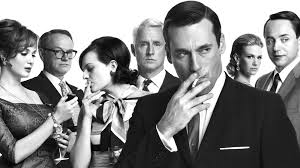
Mad MenBrand advertising is usually measured in terms of broad sales increases in a product line or shifts in competitive market share as a result of the campaign. Skippy buys an ad schedule across TV, print, and radio, spends a certain amount, then measures over a period of time what impact it has on sales of their peanut butter. They may experiment then with new commercials, or add weight to TV and subtract it from print, trying to get the best return on investment possible. You can imagine what an inexact science it is, but if you pay X for your ads and get more than X in increased sales, you at least know your campaign paid for itself, and from there, the sky is the limit. In the 1960s and 1970s with three TV networks, it was really hard to go wrong with the kind of TV buys we now enjoy memorialized in Mad Men.

Direct response advertising used to be the less polished hard sell stuff we saw on late night TV or UHF, where the commercial or infomercial shows you a miracle vacuum cleaner obliterate a thick pile of goo and then gives you an 800 number to respond now and buy it. It is also the kind of advertising that worked well in print and catalogs via mail order. To this day it remains simple and exact to measure because there is little noise in the equation. You run an ad, your switchboard lights up with orders or it doesn’t. You know what you paid for the ad, you know how many orders you got. It’s not very glamorous, but compared to brand advertising, it is easy to evaluate and research is precise.

The glamour factor shifted with the internet from brand to direct, because the economics shifted with the internet at huge scale. On the internet, direct response, or performance based advertising, mostly trumps brand advertising. In the digital world, brand advertising became known as display advertising—in the consumer vernacular, banner ads (industry jargon sometimes calls them dots and spots) where payment is rendered by the advertiser for delivered inventory—insertion order invoiced tonnage just for showing up. The click-through rate on most display ads today is almost not worth measuring, but that does not mean they are not impactful. Most of the ads you see on Facebook are display, lots of reach and frequency, and much better targeted by interest level than ye olde TV.

Yet the glamour business of the internet remains keyword advertising, the logical evolution of direct response advertising, the sponsored links that have been most successful for companies like Google but are also used in comparative shopping sites and similar layouts where the ad buyer does not pay for an ad to be seen, the ad buyer pays for a click on the keyword link, and then counts on a certain number of clickers to follow through to transaction (that means buy something). Here again, the direct response model is more precise than the brand model and can be measured with sophisticated analytics, while the dots and spots—and now with video streams commercial insertions in Hulu and YouTube much like TV only shorter—should be fully intended to contribute to downstream sales activity, but are much harder to evaluate mathematically.

In the world of TV, brand still rules. In the world of internet, direct response still rules. The reason? Performance, also known as Return on Ad Spend (ROAS). You can still drive big sales and shifts in market share via a TV brand campaign, and you can do the same with an internet direct response campaign. So my fundamental question remains: why hasn’t the science of efficacy and research advanced to show how display campaigns online can approach the same sort of massive scale impact on consumers that they have on TV?

There are many things we can measure in both brand and direct response campaigns, some would argue too many. If McDonald’s stopped spending completely on TV and moved all that budget to the internet at better prices, would it have a negative impact on their business? Probably, or they would do it. The question is, how much can they move, and how much more affordable can it be for them to start moving more of it? How can they tie market share gains back to internet display campaigns? Attitude and usage studies—the kinds of email surveys you get asking if you have seen or remember a campaign—aren’t nearly enough to convince them they can move billions of dollars of burgers at the counter without an accompanying TV vehicle. They need digital brand campaigns that sell goods and services at scale and science to attribute the success—and we don’t yet have either.

Going back to our passionate content creators at Digital Hollywood—what do I think they should be worried about for their sustenance? I think their fate will be cast by leapfrog advances in advertising research, and I think those advances will come. With advances in the science of display advertising efficacy in digital platforms whether fixed or mobile, the big brand dollars will have to shift from television to non-television. It is not just a question of eyeballs (mind share, share of voice) shifting with a generation that has grown up digital, it is a question of what works, the reach and frequency and cost efficiency to make or break predictable sales of consumer products. When we have that science to show how digital spending improves on the job of TV, the big brand dollars will shift and content opportunities will flourish.

Almost every graph trend shows that the future for digital media is nothing but bright, but until the research and reporting platforms rescue brand advertisers from the opaque, illusive promise will remain greater than reality. That shouldn’t last much longer. Tell your digital research departments to put those monster TV budgets in their gun sights and keep innovating. It’s really good money if you can get it. And we will.

Let’s Be Careful Out There

The private reaction I received to last week’s post on career opportunities was quite overwhelming.  I expected to get a few calls asking for similar consultations from people I know trying to decide between this or that gig, and I did, but the breadth of emotion I received in reaction to the first paragraph — the seemingly unmovable 9% national unemployment factor — reinforced for me just how far this epidemic has reached.  A few years ago, I remember hearing about how many of my college classmates could not afford to attend our 25th reunion.  That was eye-opening and unsettling.  This is much worse.

Look around you.  The impact is everywhere.  People need jobs.  People need opportunity.  People need leadership.  People need purpose.  They are wondering if anyone is listening.  I don’t mean running for office, I mean listening.  Caring.  Responding.  It is hard to see much evidence that any response is on par with the outcry.

For the past few years since the recession began, it would seem many people have been suffering if not in silence, then at least maintaining a difficult quiet.  Of late that pain has become manifest in anger.  The anger we are seeing expressed by Occupy Wall Street is one form of reaction, but there are others all around us.  If you are not personally impacted, just listen to the dialogue around you.  Listen, really listen.  You may be surprised at what you hear, and who is saying it.

Compassion is a noble reflection that we celebrate usually in the final few months of each year during the annual holiday season.  Regardless of our various faiths, public messages of Peace on Earth become evident in everything from retail sales displays to city street decorations.  Then shortly after the Rose Bowl, we take down all the signs with all those slogans and catch phrases and get back to normalcy with the new year.  Can we afford to do that this year, with all of the requests for outreach we are hearing from friends and acquaintances?  I wonder if this time maybe it’s different.

Each holiday season I look forward to a touring rock band known as Trans-Siberian Orchestra that puts on a theatrical spectacle with a tremendous amount of meaning captured for me best in the following few lines from a song called Old City Bar:

If you want to arrange it
This world you can change it
If we could somehow make this
Christmas thing last
By helping a neighbor
Or even a stranger
And to know who needs help
You need only just ask

I usually post these lyrics around the holidays, but I thought I’d get an early start so the sentiment does not get lost in the year-end noise.  We need compassion now and year round.  Some people are going to ask you for help.  Others are not going to feel as comfortable asking, so maybe you can offer it without the ask.  As I discovered in the response to my post last week, sometimes it’s as easy as being a good listener to someone who has lost hope, having chased down every opportunity they can and not found work.  For others you can make a phone call or two, or help edit their resume, or simply remind them that they are good at what they do and these are extraordinary times.  Just returning a phone call can be a very big deal.  The point is that your compassion will go a long way right now, further and deeper than you can comprehend.  Remember Pay It Forward?  It’s always a good time as Steve Jobs would say to make a brand deposit.  Now is an especially good time, never better.  Someday you too will need a withdrawal.

There’s one more thing on my mind this week besides reminding us all to be compassionate, to help where we can, and to not let the message of the holidays flicker out when the crowds leave the Rose Bowl.  There remains a good deal of misunderstanding on all sides of the equation as to whom we can blame for our problems, the catastrophic impact of hyperbole and invective, how simplistic notions of corrective strategies can be naive, and whether justice is a shared ideal that can be broadly and fairly enacted.  When you combine the complexity of all that anxiety with the pain and anger that seems to be spiraling, you have a very bad brew.  The potential for rotten things to happen — events that cannot be reversed, stalemates that cannot be reconciled, words that cannot be taken back, violence that will be regretted — becomes a turbine gaining momentum, suddenly with its own inertia.

Certainly we all want change for the better, regardless of whether we agree on the definition of better.  What we can agree on is certain definitions of harm — physical harm to individuals, extended harm to the economy, permanent harm to our democracy.  Business enterprise is not all wrong, investment is what drives opportunity; there are no jobs without investment, and there will be no investment without risk and return, that is the backbone of free enterprise and prosperity.  A nonviolent protest against unfairness is not wrong, there is a message in the expression of pain and anger we need to hear; every one of us plays a role in this economy as a consumer, that voice cannot be taken away, and that voice says people want to work.  Real trouble begins when an impasse cannot be bridged because too many people decide that it cannot be bridged.  The path through that impasse is ours to negotiate, one at a time, with each other.  It is the very compassion of one person helping one person that gets the wheels moving again.  We don’t have to wait for a grand proclamation of resolution to express humility.  To not do so is to let a fire burn that we needn’t allow consume all that we have built together.

People always wonder if they can make a difference, if any individual can make a difference.  The answer is yes, one individual can make a difference to another individual, and that can become a movement.  The opposite choice is to allow the stalemate to divide us.  That seems like a dangerous choice.

On the groundbreaking 1980s TV series Hill Street Blues, a police drama set in an extremely troubled and decayed metropolis, the avuncular Sgt. Phil Esterhaus (played until his own premature passing by Michael Conrad) would conclude roll call each week with the words, “Let’s Be Careful Out There.”  I think for the foreseeable future that is very good advice.