Piercing the Bubble

Almost daily now I’m asked my opinion of whether we are in a stock market bubble. It’s a curious line of inquiry, and inevitably leads to any number of further ponderous meditations that follow:

“What do you think of that King Digital IPO; did Candy Crush get crushed for good?”

“Is Bitcoin for real, and is now the time to get in?”

“Does it look like Zynga is on the mend? Did they hit bottom and create a buying opportunity?”

“What happens to Yahoo’s price post Alibaba?”

“Box or Dropbox, which do I want to own?”

GodotI can almost imagine Didi and Gogo having this conversation in a contemporary reworking of Waiting for Godot. They’d go back and forth on each headline for a few minutes, and the resolving cadence would always be the same: “Nothing to be done.”

They’d probably be right. And wise. And existential. And of course they would be ignored, two bums with nothing but holes in their shoes, playing insufferable word games beside a dying tree.

And I’m probably the wrong person to ask. Crystal-ball predictions of dicey, professionally picked over offerings seem as wacky to me as hardworking people forking over portions of their paychecks to the state government for lottery tickets.

Speaking of which, there’s something even stranger afoot of late, a new pattern of dialogue running through the frenetic networking schmooze scene. It goes something like this:

“WhatsApp wasn’t worth $19 billion.”

“Agreed.”

“It was worth more.”

“You’re kidding. How do you figure?”

“Well, look at what Snapchat turned down at $3 billion. That app had 36 million users and would have gone for $92 per user.”

“Oh, I get it. And WhatsApp had 450 million users, so at $19 billion, that’s a mere $42 per user.”

“You’re right, what a steal. Facebook should have paid more. I bet they would have if WhatsApp had played coy.”

“What about Instagram?”

“I don’t know, what’s Instagram?”

In most discussions of relative valuation based on anything more complicated than revenue, EBITDA, growth rate, and some basic ratios like price/earnings, my head starts to hurt. Ignore all fundamentals, project abstract strategy on modeling unknown monetization value, and you lose me.

That doesn’t mean I’m right, it just means I know when it’s the right time for me to sit out a dance. It’s kind of like someone asking me which is the surer thing in Vegas: poker, blackjack, craps, or roulette. My answer: If you can’t afford to lose, don’t play; and if you can, what does it matter—pick the game that’s the most fun for you and knock yourself out. Someone will take home a mountain of cash every day, because a casino only works if there are winners. Most people will leave their bounty behind, not only to pay the winners but to pay the house for brokering the trade and serving subsidized cocktails—plus the gigantic water fountain out front of the brightly lit, air-conditioned cement tower in the middle of the desert.

Don’t get me wrong, I believe in investing. Most everything I have earned working over the years has more than doubled in value over time because of investing—really boring diversified asset allocation in various index-like vehicles, bolstered consistently over time through saving and dollar-cost averaging. Yes, I have speculated on occasion, and I have even had a winner or two, but even then I looked at the core financial analysis when I bet, and those numbers always had growing dollar signs in front of them.

Now I’m hearing young entrepreneurs echoing the exit lingo. “If we can just get 500 million users of our app, how can we not get bought for $20 billion? That’s a massive discount! And we only need to raise another $65K to make it through beta with a minimum viable product. For another $20K we can stress test the server, too. That’s less than $100K investment for a decent front end and the return of a lifetime. Do you prefer the term sheet via email or text?”

This is a different kind of Gold Rush, with its own beguiling logic and normalized ethos, plus many sideline winners selling new-age picks and axes. Should the notion of Built to Last cross your lips in any public gathering, you are likely to be met with curious stares at best, and more often ostracising scorn. Free salty snacks will not be replenished in the small paper bowl you hold. This is not a discussion of how value is created by serving customer needs with wondrous products scaling in gross margin and the brand extensions that follow. This is a discussion of filling the strategic needs of an acquirer that has slipped into low organic gear and is sitting atop a stockpile of cash, the war chest itself a creation of optimism, inflated promises, and dare I say it, Irrational Exuberance. It’s a party and a playground. Fundamentals are for losers. Job experience is the enemy. Don’t be a downer.

As the JOBS Act begins to open the doors democratically to a new set of speculation-based investors—equity crowdfunding is the freshly cleared frontier—I hope they will do the hard work of learning to assess valuation before they write checks equal to 5% of their net worth or annual income. You’ll hear lots of stories about the next killer app, or the next levitating brick, and you may be lucky enough to be in the room with the next undiscovered wunderkind. But if the story that wunderkind is telling you has lots of math but no defensible revenue and profit realization, ask yourself, Where did he or she learn this math? Is it sustainable? Why hasn’t someone else with a lot more disposable income or risk capital taken this deal off the table if it is so good you can’t say no to it?

There’s always a bubble, and there’s always a bottom. The good news is that once you get past the moonshots, no one has yet figured out where the sky ends in its entirety. Boom and bust. Bust and boom. If you draw a trend line through a lifetime’s worth of data, pacing the erratic market highs and lows, the slope is still northbound.

I like that line a lot. That line protects me from worrying too much about a bubble.

Don’t Fear the Fad

As an investor, can you ever know for certain if that newfangled gizmo come to market is the real deal or a fad?

Let’s try it a different way—perhaps everything is a fad, until it’s proven otherwise.

Bread, most likely not a fad. But organic fair-market nine-grain soft crust, probably a fad.

Cars, probably not a fad. But eight-cylinder 130 mph muscle mobiles with no back seats could be a fad.

AM radio, possibly a fad, but one that has enjoyed a long shelf life—and now with news and sports retransmitted over the internet to mobile devices, probably a decent bit of runway left in the broadcast machine.

Farmville, Mafia Wars, and their brethren? You tell me.

Our attention spans are surely fickle, but just because something is a fad does not necessarily make it a bad investment. I am not certain internet keyword search will last forever, but the last decade and a half have proven pretty rewarding, at least for one company that currently commands better than 70% market share. Games? That’s where they come and go in a coughing breath—if you are going to bet at that crap table, come with a lot of chips and a jug of Pepto-Bismol.

The question of whether it makes sense to bet on a fad in a commercial, accelerated, low-loyalty, short-attention-span, vastly diverse, market-driven global economy seems moot. People have bet against railroads, phones, airlines, television, personal computers, and even guitar bands as fads—and that was before they had customers! Even after these “fads” had momentum, there were endless naysayers who said they were on their way out as fast as they’d found their way in. With that kind of outlook, eventually you have to be right, but you may be staring up at daisy roots when you finally win your bet.

There is tremendous Monday morning quarterbacking now about the dive in Web 2.0 companies, from Facebook to Zynga to Groupon to Pandora. Maybe they are all fads, but let’s separate the fad of stock market performance from the fad of consumer adoption as two separate issues. The shine may be off the stock, or the shine may be off the company’s products, but those are very different things. High-growth speculative stocks like these are most often valued on future earnings potential, not current performance, so if the stock is out of favor, that does not de facto mean the product or service has gone out of favor. Plenty of people are enjoying these consumables at the moment, though it is safe to say that they won’t all be in vogue for eternity. Styles change, tastes change, brand loyalties change. We know that to be Creative Destruction, an ever-present cycle, so when we criticize either an equity or a product as being a fad, let’s be careful to make the distinction, and even more careful not to level broad sweeping judgment that could lead to missed opportunity.

Can a company make money riding the wave of a fad? Seems to me that is more norm than anomaly. Can an investor make money owning the stock of a company that rides the wave of a fad without volatile exposure to market timing? Again this seems perfectly reasonable, depending on the window. Think Intel with micro-processing chips during the PC revolution, Electronic Arts with the rise of sports-based video games led by Madden NFL, and today’s True King of All Media, Apple. Equity markets in the long run reward smart risk and punish reckless risk, just as commercial markets reward desirable consumer offerings and reject cynical ones. There has to be risk for there to be reward or no one would invest, so the question is not whether something is a fad, but whether that fad represents some potential form of continuity recognized by visionary management as one in a string of ventures that together comprise opportunity.

Intel’s legendary former CEO Andy Grove clearly taught us, “Only the Paranoid Survive.” He knew at any strategic inflection point the difference between a fad and a trend was largely the expanse of the product life cycle. More importantly, he worried about management culture as the path to product culture, where innovation means never-ending creativity, not tossing the dice and getting lucky on a good roll. I don’t worry whether a company is profiting from a fad, I expect companies to be opportunistic. I worry whether the company is a one-trick pony, whether it has created a learning culture where success and failure are both studied. A company that has learned to learn, that can read data and understand how fads are perpetuated as trends that constitute periodically sustained disruptions—that is a company that can extract true shareholder value from a fad, foremost by surprising and delighting customers repeatedly with that which they never expected was possible.

I have a lot of criticism about this year’s poor performing new entries in the NASDAQ, but that criticism has nothing to do with whether those companies were beneficiaries of identified fads now assessed by pundits to be in decline. My own career has been the beneficiary of any number of fads that came and went—computer games that sold millions and now barely qualify as second round questions on Jeopardy, once immensely cool websites that scored millions of visits that no longer can be found, virtual communities that ranked with the best in loyalty and now would be lucky to make the card draw on Trivial Pursuit. Does that mean they weren’t good businesses that added significant value to their owners? To the contrary, in their useful lives they added exceptional shareholder value in earnings and lifetime contribution. We worked the brand promises as long as we could, but when their time was done, we moved on.

That’s why a sweeping statement like “don’t invest in fads” makes little sense, because if virtually everything is a fad with varying sustainability, there is no choice but to invest in fads. What I worry about is management vision, how the brand stewards of a company are migrating from one fad to the next, how maneuvering through Creative Destruction is an art and science unto itself. Edison did it over a very long period of time. So did Steve Jobs. The folks who run television networks have to do it, because no show lasts forever and formats are cyclical; yesterday’s Variety Shows are today’s Reality Shows, half-hour comedy goes in and out of style, so does one-hour drama. Walt Disney famously bet the ranch on 2D feature animation, clearly a fad, although one he created and that lasted more than 50 years—but that wasn’t the only trick he had in the magic shop, not even close. To invest wisely in the likelihood that originators can capitalize on a string of fads through creativity and experimentation is very different from investing in one hot rocket that goes straight up with full knowledge that gravity will send it back down with equal and opposite thrust.

As the contemplative George Harrison reminds us, All Things Must Pass. That doesn’t mean windows of opportunity aren’t always in abundance. Watch the fad-makers, not the fads themselves, and the game changes significantly. While even the best fad-makers can’t call winners forever, those longer windows leave plenty of room for upside, especially when you bet the full spectrum of an index rather than trying to call the hits in isolation. If you bet on a one-trick pony and lose your bait, that was most likely your mistake, not that you bet on a fad.

Built to Launch?

I aspire in this post to be among the elite—one of the few business bloggers on the planet currently not commenting on Marissa Mayer becoming CEO of Yahoo. I have never met Marissa, but her reputation speaks strongly for her. I wish her well because I always want good people to succeed, and in this case I also want to see Yahoo succeed. I hope she reads my article about Yahoo from last year that predated her last two predecessors and figures out a way to restore much-needed competition to the landscape of search. Hmm, seems I’m writing about her. Okay, enough said. Got get ’em, Yahoo! Stop.

Now my real topic for the week—not surprisingly, also about succession.

Venture investors Marc Andreessen and Ben Horowitz have been steadfast in their support for keeping Founder/CEOs at the helm of the companies they back, from early blog posts on their site that state their philosophy to more recent comments in the Wall Street Journal that reinforce their sometimes contrarian assertions. Not only do they believe most deeply in the Founder/CEO success model, they have championed multiple class shares that keep CEOs in authority with majority control even without majority ownership. Their point of view is clear, consistent, and well-argued—and thus far their financial returns in aggregate have been extraordinary. They want vision, they want independence and long-term creative thinking, and they want continuity.

I am not sure I have an absolute opinion yet on absolute power for a start-up CEO; we’ll have to see how those play out over the next ten or twenty years. I do worry that without senior team loyalty and continuity, it may not matter whether a CEO stays or goes. Teamwork is what matters in today’s intellectual property centric companies, and if your team is not stable, I wonder if your company can remain so. Surely new blood is a great infusion when parsed appropriately, but it needs to be in balance, at equilibrium with a set of players we can count on.

What about the top-tier executives, perhaps a level down, who seem to jump freely from ship to ship, following their own personal muses, particularly after liquidity gives them the ability to set themselves free? Is this good for companies and long-term shareholder value, for companies with massive capitalization that are taking on investment—public or private—ostensibly with some hope of being Built to Last?

Clearly within our pressured and fragile economy, the bonding relationships between employers and employees have become increasingly tenuous. “At-will employment” is not just boilerplate in an offer letter, it means what it says, that jobs are temporal. Employees not under contract may depart a gig when they wish without much obligation, and employers may equally freely dismiss them (to the extent those decisions are not discriminatory) without much warning or explanation. Companies are predisposed to protect earnings and cost-cutting can be a tactic to achieve those goals, the favor of which gives employees good reason to always be in the market. Although there are any number of topics I can extract from that thread and will do so in the future, that is not my key focus here. This is not about everyday turnover and the anxiety it creates, it is about senior level turnover as a litmus test for investors.

Reality is, a lot of high-profile employees in high-profile start-ups seem to jump ship early these days. I am not so sure that they are cashing in as much as their attention spans or personal desires lead them from one thing to the next. Some examples:

• Two of Twitter’s co-founders who served as CEO left the job and their day-to-day roles, although one returned, not as CEO, but as head of product. The third co-Founder also left day-to-day responsibilities.

• Facebook’s most recent CTO, who joined the company in 2008, departed voluntarily almost immediately following the IPO. Facebook also lost an extremely high-profile CFO in 2009, and a number of other prominent C-level executives have churned through in the years leading up to the IPO.

• Groupon’s former COO, a Silicon Valley veteran brought in to steady the ship, spent about a year on the job day-to-day before moving to an advisory role.

• Yahoo continues to make headlines with five CEOs in five years, although the situation here is different. The last one to leave on his own timeline was media veteran Terry Semel, who preceded the five. Perhaps more curious at Yahoo is the level below CEO, where the turnover has been even more active, voluntary or otherwise.

• Google is now being celebrated as iCEO University, for which it has reason to be proud with strong executives like Sheryl Sandberg, Tim Armstrong, Dick Costolo, and now Marissa Mayer all willingly accepting significant challenges. My sense is this is sustainable as long as founders Larry Page and Sergey Brin stay on the job (guided by the advice of Eric Schmidt), but at some point the spinning off of entrepreneurs may take a toll as it did at once great legendary giants like Sun and Silicon Graphics (also keep an eye on HP).

It is hard to fault someone with talent and wealth for leaving a position with an “old company” to tackle a brand new start-up concept. They have the creativity, they have the yearning, and they can absorb the personal risk. Yet these aren’t exactly old, mature companies they are leaving, even in internet time. If talent retention is critical to continuity and leadership is demonstrated by example, what does it say about loyalty to the “rank and file” millionaires of Silicon Valley hungry to pursue their dreams when so many of the top dogs or near top dogs are endemically antsy?

Can you build a company that is Built to Last when many of your brightest employees—especially those made wealthy with capital they can reinvest—are thinking Built to Jump? Should shareholders in emerging high-valuation private and public companies be concerned with the New World of high turnover that is largely viewed as the way things are? There is already risk enough in holding stakes at the high valuations these companies will need to grow into, but if these are essentially knowledge-based companies where the key assets go home to their families each night, how much should owners worry whether they come back tomorrow or start a new company that’s more fun? Are these companies Built to Last or Built to Launch—launch themselves to early prominence, and launch the careers of the stars who emerge from their ranks?

Retention and the war for talent are surely talked about a lot, but I wonder if these are just buzzwords now, if key stakeholders really are losing sleep over the next spun-off employee or just prepared to roll with the punches. For anyone who has ever led a company, the notion of culture is no small issue, and companies where the culture is strong have a heritage of continuity that gives them a shot at longevity. Do we now assume Creative Destruction is such a powerful force that short-lived companies are a norm, regardless of culture and continuity? I wonder, and look forward to checking the Fortune 500 again for a few more decades to see how this plays out—not to mention the long-term trend on aggregate net job creation we so desperately need for our economy to go the distance.

I am not suggesting that employees should stay past their welcome or interest level, and in no way would I ever want (or tolerate as a manager) any form of stagnation in the form of tenure-based retention or retention for continuity’s sake. The case I am trying to make is for a tiny bit of balance in an Old World concept known as loyalty—which has been very good to me on both sides of the desk for most of my years on the job. It has been said that in today’s world loyalty is between individuals, not within companies, and there is every reason to understand how that has come to be. Yet if companies are not loyal to employees and employees are not loyal to companies, can these kind of companies really be long-term investments for shareholders? Said another way, if the system and talent are not demonstrating loyalty and commitment, should investors?

The Ultimate Broker

“Uncovering hidden supply to meet pent-up demand is the magic behind some of today’s most exciting start-ups.”

I read that opening phrase in a Heard on the Street WSJ Article by Rolfe Winkler last week and it stuck with me. It’s not a particularly new idea, but it is elegant, simply stated, and true.

At its core, the internet in many ways is a giant marketplace—a shared global space for socializing, exchanging ideas, buying and selling goods and services, hanging out, observing human behavior—occasionally offering spectacle, always stimulating interactive exchange.

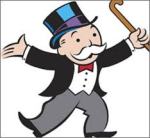
Uncle PennybagsIn the simplest terms, a broker brings together buyers and sellers. A broker can be a person or it can be a facility. It is a go-between function for give and take—introductions, descriptive information, negotiation, resolution. The act of brokering can be formal and compensated with paid commissions or informal and somewhat ephemeral.

It was anything but coincidental that discount stock brokerages like Charles Schwab and TD Ameritrade made a beeline to the commercial web in its earliest days, circa the mid 1990s. Some observers eventually came to blame much of the dot-com bubble on too easy access to day-trading by non-professionals. A good many individuals who prior to loading their first browser never met a stock broker found themselves easily comfortable with entering their own trades at hugely reduced transaction fees where professional labor costs were eliminated. We all know that didn’t turn out well for a lot of folks and the overall economy, but the point remains that the excitement of the internet’s adoption was fueled by people using the internet to buy and sell a whole line-up of newly created internet stocks. Marshall McLuhan deja vu, eh? Not sure we will see a self-referential kaboom quite like that again in our lifetime, though the public’s hunger for IPOs built on entirely new business paradigms (proven or not) still seems rather insatiable.

One of the things the internet does well is bring efficiency to the brokering process. Success stories are a virtual Who’s Who of celebrated internet brands—eBay, Priceline, Expedia, Travelocity, Craig’s List, Etsy, Airbnb—any number of much embraced marketplaces where the site of exchange never takes possession of physical inventory on its balance sheet, but instead acts as an agent to connect what is for sale with both new and loyal customers. A myriad of innovative payment models has been developed to compensate these broker-marketplaces for the service they provide, but in almost all instances they have lowered transaction costs, passed those savings along to customers, and increased total sales volume in the categories tackled. This mostly customer-friendly way of doing business is now every bit as normal for us as sitting on the back side of a travel agent’s CRT monitor waiting for him to input an airline seat query into Sabre not even a full generation ago (like, when I was in college). What others used to do for us we now do for ourselves, happily in most cases, and because of the savings and easy access, we do it a lot more frequently.

I have been spending a reasonable amount of time of late helping a number of start-ups get off the ground—formally and informally, no shameless plugs today, but I do mention them often in my tweets—and one of the constants in determining my excitement level is how thoroughly an emerging visionary has thought through a problem of reinvention. If we take it on faith that basic human needs and behaviors don’t change that much—we sleep, we eat, we learn, we love, we move, we fight, we heal, we protect, we shop—then the march of progress marked by improvements in technology finds reward when disruptors help us do those things better.

Returning to the quote that kicked off this post, when an entrepreneur is able to identify an abundance of largely unknown supply and connect it with a steady stream of curiously hidden demand, new business can boom. In the realm of the marketplace, anytime a business can innovate around streamlining the availability and visibility of products and services in need of buyers—and buyers motivated to use these new tools are driven to discover otherwise opaque inventories—a new brokerage is born. This can bring to bear a cruel process of creative destruction on entrenched competitors without the willingness or vision to change, but in our current economic landscape, it can offer a steady flow of more efficient business endeavors that inspire imagination and eliminate unnecessarily inflated costs. Pooled information, often in the form of personal opinions and reviews, is a freely traded currency, a form of entertainment in itself. Add social sharing playfulness along with clever experiments in curation and the fun really begins.

The innovation I am seeing both as an insider and an outsider suggests we are nowhere near maturity in reinventing how sellers find buyers and vice-versa—through digital channels and whatever awaits us beyond mobile, social, and local electronic communities. That should be good news as the availability of previously gated inventory finds its way into the supply chain and into the hands of delighted customers. Each new successful brokering start-up comes with its own spin. Some are truly wacky, some are obvious in hindsight, some too quickly migrate from wacky to obvious. I have little fear that all the people functions of brokering will be replaced—there will always be demand for great customer service and high touch assistance that adds value—but I do know that increasingly over time we will stop paying high fees for anything that doesn’t add much value. That’s the way of efficiency, and a great use of connective technology, where I’m pretty sure we ain’t see nothing yet.