Who’s Really Sitting at the Top of Every Organizational Chart

New Org Chart 1cFacebook moved into a new office complex earlier this year, which Mark Zuckerberg has described as “the largest open floor plan in the world.” With over 400,000 square feet, it is reported not to offer a single private office. There are conference rooms, shared spaces, and all kinds of creative gathering areas meant to protect the startup environment that is core to the company’s zeitgeist as it evolves into a corporate behemoth. It’s a wild, energetic, real-time experiment in organizational development that is already being praised and criticized from inside and outside the company. Whatever your assessment might be, it’s a test of human behavior worth watching.

For a moment, I’d like to think of the Facebook campus not as a model of space planning, but as a model of team planning. Long before the debate raged on whether private offices had run their course of usefulness—and just how truly dreadful the industrial cubicle could be—company leaders were debating the “optimal” way to arrange organizational charts in the Information Age. If you’ve spent any time with me in product development, you know I like to quote the sometimes overused phrase, “People in companies get stuff done in spite of org charts, not because of them.” It’s a bias I maintain for all kinds of reasons, not the least of which is seeing it in action almost every day. Another bias I hold applies to the “optimal” way to build these org charts. I’ll confess to that in a moment, but the title of this article has likely already given away my leaning.

Let’s start with the basics. The rise of the Industrial Revolution in the 18th Century, emerging from prior Agrarian Societies, led to thousands of individuals working for single companies, for the most part creating efficiencies in the manufacturing model. Most of us are familiar with the innovation of Henry Ford as something of the father of mass production with his 20th Century Assembly Line. The premise of the organizational charts for these early corporate conglomerates surmised that a few knowledge workers and a Big Boss would send instructions down the pyramid to a wide base of workers who hopefully wouldn’t ask too many questions. Executives were at the top, middle managers squeezed in the sandwich, and individuals contributors down below busy doing their hands-on functions repeatedly. If the model sounds blunt and easy to follow, there is a reason for that—it dates back to the earliest days of broad warfare, mostly perfected by the Romans. You have an Emperor, you have Generals, you have Captains, and you have Soldiers. It worked for thousands of years in capturing terrain, albeit at the cost of mostly Soldiers, and it worked for hundreds of years in mass producing products, too often without much consideration of job satisfaction.

As education and information became more available in later decades, and asking questions became the norm, the inflexible org chart became a lot more difficult to maintain. As workers collaborated more and followed instructions less, human resources departments (formerly known as personnel offices) looked to break out of the traditional top-down structures and unleash creativity. Standard org charts evolved along the lines of two basic models: Functional Departments and Cross-Functional Teams.

Functional Departments place similarly skilled workers into groups led by senior individuals with advanced experienced in a discipline. This creates a Legal department, an Art department, an Engineering department, a Finance department, a Sales and Marketing department, and the like. Over the course of your career you might aspire to become the VP of Finance or the VP of Marketing, and these VPs, now sometimes called C-Level executives (Chief Financial Officer, Chief Marketing Officer) point the functional expertise of their teams into a Chief Executive Officer. Your company may organize itself this way. It is a very common and familiar way to organize. It’s also still very close to the old military hierarchy.

Cross-Functional Teams break the model of Artist reporting to Art Director and Engineer reporting to Engineering Director. They place multi-disciplinary groups under a generalist manager who is often more “cat herder” than boss. In this model, a smaller group of people with engineering, finance, marketing, design, and manufacturing expertise might all report to someone called a Project Lead, Product Manager, or General Manager, who is in essence a mini-CEO. Unlike Functional Departments, Cross-Functional Teams are likely to be less “permanent” in structure. The team might be ad hoc, assigned to an initiative, ready to be broken up and redeployed following a product release. Functional experts on the team might have a dual reporting relationship to the team leader and a senior expert in their area of expertise offering professional mentorship, so that a team leader who doesn’t know the law doesn’t have to render legal oversight (always a good idea). Over time Cross-Functional teams can evolve into more permanent Business Units with profit and loss responsibility for a specific line of products and extensions. If you have ever been in a company comprised of Battling Business Units , you know it can be even less fun than being buried on a Functional Team.

It is at the intersection of these two models that we all learn the necessity of Matrix Management, which unfortunately in the Information Age is the only real way we have to collaborate in an ongoing manner. Sometimes we need a Functional Department to help us advance in our area of expertise, and sometimes we need a Cross-Functional team to get stuff done with people who are good at different things. Most companies go back and forth between Functional Departments and Cross-Functional Teams, and just when you think your company has settled into a comfortable structure, along comes the inevitable memo announcing the company re-org. Companies re-org over and over in search of optimizing their growth models, but the truth is, neither approach is perfect, and whichever one your company is currently utilizing, be prepared to have it change. Re-orgs are certain because change is certain. The opposite would be sameness, and as much as you might think you want that, running in place is the surest way possible to go out of business.

Oh, about that bias of mine—I believe anything in a company that leads to entrenched fiefdoms stalls creativity. Functional Departments are usually fiefdoms. Business Units are usually fiefdoms. Again, this is why Matrix Management is a reality, particularly in managing empowered, innovative individuals who join together in a mission that is unlikely to last a lifetime, but has a real chance to change the world now. If we take that back to the visual metaphor of the open floor plan, I tend to see greater strength in the output and engagement of Cross-Functional Teams than I do Functional Departments. That doesn’t mean I am against having an exemplary CFO, CTO, or CIO setting the bar for excellence in a discipline. It just means that whatever the org chart says at the moment, I don’t want any walls between artists talking to engineers, lawyers talked to sales people, accountants talking to marketers, or anyone so distant from customers that they forget who pays everyone’s salary.

You see, at the root of all this, there only is one Emperor, one General, one CEO, one Boss who matters most. That is the voice of the Customer, whom we almost never place on the org chart. Start by putting the Customer at the top of the hierarchy, and you’ll soon understand why who reports to whom doesn’t really matter when it’s time to tally the scorecard. That’s why the walls gotta go, figuratively or literally. Go out on the floor and try to bump into a few people. You may be surprised how much you learn and how good it feels.

_____

This article originally appeared on Inc.

Act Two Begins When You Say So

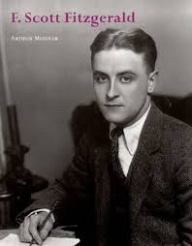
F Scott Fitzgerald“There are no second acts in American lives.”

  • F. Scott Fitzgerald, The Last Tycoon, 1941

“I once thought that there were no second acts in American lives, but there was certainly to be a second act to New York’s boom days.”

  • F. Scott Fitzgerald, My Lost City, 1932

Like many everyday admirers of American literature, I grew up only hearing the first use of Fitzgerald’s famous quote, which in fact was published posthumously. And like many people who misinterpreted that quote due to a lack of context, I grew up confused, conflicted, and even angry every time I read it. Fitzgerald the social observer worried about the American Dream, but he also celebrated idealism and courage. Would he want to be remembered for an inaccurate observation that is not only untrue but damaging? I doubt it.

Without diving into a diatribe on American literature, let’s just lift from the earlier interpretation of Fitzgerald’s quote and bury the latter forever. To the complete contrary, I assert with full confidence that it is entirely the DNA of American lives to reignite with second acts—in many cases, multiple second acts. In fact you can have as many acts as you want. Your life’s work can be singular, dual, multifaceted, multithreaded, a sine curve of milestones, or a pastiche of overlapping landmarks. If anyone tells you otherwise, run away as far as you can as quickly as you can and clear your mind of the naysayer’s rub.

Our economy is a place that celebrates reinvention. Our democracy is a place where resilience triumphs over cynicism. I believe these things not because I am a Pollyanna motivator (quite the opposite if you know me), but because I see these traits in winners who repeatedly defy the odds. Entrepreneurs, respected leaders, creative professionals who challenge the status quo—they all have to be good at what they do, but they all get knocked down for believing that change has to happen. They seldom bring change to the world on their first try, and when they win, they seldom win once. Why is that? Because before Act One is over, Act Two is in the works, and probably Act Three.

There is only one thing that can prevent an Act Two curtain from rising: Your own decision that a failure is too much to bear. The Information Age has turned that notion wholeheartedly on its head. As long as there is learning extracted from failure, failure is a pit stop, not an endpoint. As long as risk is sufficiently mitigated to bypass a cataclysmic wipeout of resources, you are not failing if you are learning. You are on a path to where you need to go. You are on your way to Act Two.

Read Walter Issacson’s biography of Steve Jobs. We all know Jobs founded Apple. Then he got kicked out of his own company for being an uncontrollable rebel, the very thing that put Apple on the map. Jobs gets fired around p.206 in Chapter 17. He is personally devastated, emotionally crushed. That’s when his Act Two begins. The book ends on p.571 in Chapter 42. Through it all, Jobs’s Act Two is fueled by a spirit of resilience and a commitment to personal reinvention. He lives an arc that resonates.

Read Neil Gabler’s biography of Walt Disney. Disney Bros. loses control of Oswald the Lucky Rabbit around p.109 in Chapter 3. Mickey Mouse is born in Chapter 4. Snow White and the Seven Dwarves—which simultaneously almost crushed Disney’s financial interests and then put the Disney name into American lore forever—arrives in Chapter 6. Disneyland doesn’t even make an appearance until Chapter 10. The book continues until Chapter 11 is finally exhausted on p.633. If you’re looking to count second acts, start early.

Reinvention does not only apply to the famous. When I personally decided to return to writing after a twenty-five year hiatus, a lot of people made snide remarks, both to my face and behind my back. I had enjoyed a respected career in management at the intersection of entertainment and technology, but I never wanted to consider that my whole story. Starting over and writing a novel with a half-century under my belt seemed absurd to almost everyone around me. I would be competing with established authors who had amassed a lifetime of credits. I would be doing it for a fraction of the income I earned previously. There was absolutely no way to predict critical or commercial success of any kind. Critics can be harsh, public evaluation even more ominous. It was a challenge filled with possibility, a path to sharing ideas with authenticity and voice that was mine. That sounded like a decent Act Two to me. I wonder what Act Three will be.

In my new book, Endless Encores, a seasoned CEO spends an entire evening stranded in an airport executive club talking with a rising young manager who is about to hit the wall on his first failure. The less experienced leader is terrified that all he has ever wanted to achieve is about to be lost in a single product cycle. It’s a business parable, with only a few simple plot points, yet it encompasses a Socratic dialogue around what it means to learn from failure. Daphne, the veteran, has survived a seemingly infinite number of product launches, enough of them successful to keep her in the game. Paul, the rookie, comes to learn what it means to embrace resilience and reinvent himself to form a career of linking “acts” that over time reveal the arc of his personal development.

Neither Daphne nor Paul would ever buy into the idea of a terminal Act Two, let alone Act One. That’s a driving factor in the purpose that underlies their lives. Products have to sell, but more importantly, teams have to work well together and values have to emerge as shared conduits to satisfaction. Few of us get this right the first time. No one gets it right every time. You don’t have to get it right every time. You just have to know that potential for improvement always exists, recognize the aspiration for excellence as a mandate, and approach the ideal with unbridled enthusiasm. The curtain goes up on Act Two when you commit the passion to ensuring that it happens.

Don’t misquote or misunderstand Fitzgerald. Don’t tell me there are no second acts in our lives. As long as you are learning and readying yourself for what comes next, you can start anew any time you want. The courage to pursue that can only come from you.

_____

This article originally appeared on The Good Men Project.

Learning a Different Way

HSCC 2015

The kids in this picture all wear the logos of the colleges they hope to attend. Like many of the kids you know, they dream of becoming alumni of famous universities, where they will study hard and ready themselves for a productive career. Yet there is a difference in their lives that may not be similar to that of the kids you know. Many of these kids may not have food in their refrigerator every night. Some may not even have a real place they call home. These kids didn’t get a lot of breaks coming out of the gate.

The two adults in the middle, Paulette and Henry Matson, are trying to change that by investing in their future. Paulette and Henry are friends of mine whom we recently honored for their public service, but they wouldn’t want me to talk about that. They would only want me to talk about these kids—these bright, energetic, optimistic kids who are working diligently to change their fortune. We are working with them closely to change their future. It’s a magical partnership, a journey toward hope. You might want to join us, or perhaps learn more about what we mean when we say they are Learning a Different Way.

Earlier this month I again chaired Celebrating Children, the annual gala fundraiser for Hathaway-Sycamores Child & Family Services where I also serve on the board. This year’s event was held at the Natural History Museum of Los Angeles County. The program focused on our Learning Lab, where we work with at-risk youth to help them prepare for college. These kids sign a contract with us to make their lives different, to commit to their studies and ensure the lives ahead of them will be self-sufficient, fulfilled, and noble. They want a better life than the one they have now and are willing to work for it. We want to help them achieve their dreams and more.

At the event we met an incredibly inspiring individual, Alejandra Negrete. As you will learn in the short video embedded here, Alejandra never dreamed of going to college. She didn’t even know “what SATs were.” Then she met Simon Gee, founder of our Learning Lab, and in a quiet way the entire universe changed. This is her story. My words will never do it justice. Please watch this, you won’t soon forget it:

Alejandra’s triumph touched the hearts of the more than 400 people in attendance, who contributed over $300,000 in support of expanding our Learning Lab. It costs about $500 to provide annual afterschool tutoring to each student in this visionary workshop, so we know that a lot more success stories are in the works in Highland Park, California. A lot more lives will be saved from poverty simply by offering these young people a real chance to succeed, to grasp the tools they need to make it on their own. Give them a little help now and their dreams will become real through their own achievements. They want to dive into education, listen and be heard, give back to their communities. The opportunity we share is that real, that tangible. The need has never been greater, and we can make a difference.

If you’d like to join us in supporting these highly motivated kids who need our focus, attention, and love, please click here to make any contribution you can to further our work. As shown in the video, there is only one way to make a real difference, and that’s one kid at a time. Add them up, and pretty soon you change a neighborhood. Then a city. Then a society.

Dream a little. No one’s final path has to be determined at the outset. Everyone can make smarter choices when given the chance. Together we can embrace Learning a Different Way.

Chance Meetings and Their Power to Change Your Life

Imagine if you just said hello.

I was sitting on a flight recently, observing the informal “Golden Rule” among business people who frequently travel: You don’t bother me, I won’t bother you. By bother, we mean talk. Business people can actually sit next to each other for a full Trans-Atlantic flight never saying more than “excuse me” when we need to step over each other to get to the aisle. Strange as it may seem, we consider this polite. We are terrified of the notion of losing an hour or two of work time, reading time, movie time, or sleep time, to idle conversation time—or worse, opening the door to being asked for a favor. We like silence in our air travel. Silence is safe.

Silence is also a lost opportunity.

About twenty minutes before this flight landed the person in the seat next to me braved the opening of a conversation. He asked me if I was headed home or away. He told me he was headed home after playing a music gig in Seattle. Turns out he was a studio session guitarist who has been surviving as a professional musician for fifty years. I told him I used to play, but now was just a devoted fan. He asked me which musicians I admired and suddenly we found overlap in artists whom he had backed. He had played behind Don Henley onstage. He had played on an album with Frank Sinatra. I told him I had just seen Jackson Browne at The Greek Theatre in Los Angeles and he said he always wanted to play with Jackson Browne, that was on his bucket list. We agreed The Greek was the best live venue currently in the L.A. area, and he said the next time he played there he would try to invite me if he could get extra tickets. We exchanged cards. He asked me for nothing.

It was a great twenty minutes. I don’t know if I will ever see him again, but it made me think hard about that unwritten rule of bothering the strangers around you. How many amazing opportunities get away from us because we are too wrapped up in ourselves to reach out, or too exhausted from today’s turmoil to see tomorrow’s opportunity? We’ll stare into a tiny LED screen and page through infinite tidbits in a news feed, but we’ll hide from the tangible stranger who is less than a foot from our elbow. It’s a weird way to partake in humanity, and it’s probably costing us an unseen miracle or two over the course of a lifetime.

We all know well the image of the “Meet Cute” that plays out in romantic comedies. Two unlikely strangers bump into each other in the supermarket parking lot and knock their groceries to the asphalt. Eggs break, toilet bowl cleaner ruins their leather shoes. Ninety minutes of screen time later—after at least one baffling breakup and a healing montage of running along the beach—they get married and the best man offers a drunken toast about how the couple was always meant to be. The truth is, it does happen in real life. It happened to me over a quarter century ago, although the groceries involved had more to do with a commercial real estate rental. I wake up every day thanking my lucky stars I was paying attention. I could have let that go by. It would have been much easier to maintain silence. My life would not have been the same. The risk involved was sub-measurable. The reward was beyond belief. How close I came to blowing that. How very, very close!

Wait a second… risk… reward… aren’t those words better applied to, uh, business? Is it possible we are shutting down real possibility by obsessing in our solipsism? What part of the obvious are we shutting down for no good reason at all? If someone doesn’t want to talk, he or she will tell us. If someone doesn’t want to be bothered, that can be revealed in a nanosecond. Why are we so afraid of interaction? What might the avoidance of a kind greeting be costing us?

The “Chance Meeting” is the Platonic version of the Meet Cute, where the paths of two strangers intersect for any number of reasons and the grounds of some relationship begins. Like the Meet Cute, where romance comes when you least expect it, the Chance Meeting commences without expectation. In my own life this has resulted in a job opportunity, discovery of a favorite vacation spot, invitation to a speaking opportunity, the hugely rewarding chance to mentor a technology star, a book recommendation that changed the way I think about words, an affordable channel for collectible wines, and more than one new friend who likes to hang out at Dodger Stadium. The Chance Meeting is powerful, and yet I rarely leave myself open to it. When I think about what may have gotten away based on what didn’t, it’s scary. And stupid.

My new book, Endless Encores, is all about a Chance Meeting. It takes place in an airport executive lounge, where a veteran CEO offers a life’s experience to a rising executive who is about to encounter failure for the first time. When I was sending out early versions of the manuscript for feedback, one reader told me she really loved what the book had to say about what it takes to repeat success, but she couldn’t buy the premise that a successful woman in an airport would strike up a conversation with a downtrodden young manager who was in desperate need of all she had to say. Was it really that outlandish, I wondered, that a seasoned business leader would engage in dialogue with a stranger to pass a few hours and hand off her years of learning without expectation of anything in return? My reader said yes, that was a sticking point for her, if I could get past that, the rest of the wisdom was solid. I guess my reader closely observes the unwritten Golden Rule of the business traveler. These days, I’m trying to get over it.

Don’t miss out on a Chance Meeting. You never know where it could take you. You never know where you could take someone else. Learning happens when ideas are exchanged. For ideas to intersect, people have to intersect. That only begins when someone says hello. Imagine the power you can unlock with a single word. Or you can stay safe and stay silent.

Your risk. Your reward. Your choice.

_____

This article originally appeared on The Good Men Project.