It’s All Getting Personal

It’s a bit weird, this Author thing. Let me try to explain.

For as long as I can remember, putting words on paper has been an integral part of my life. It started when I was a kid, with little plays and poems. Then in high school it became short stories and full-length plays. Then in college some more plays, some student films, and the occasional joke for a journeyman standup comic. When I was done with school, I wrote about a dozen screenplays, and then when the Writers Guild strike hit, I wrote an epic story for one of the very first movie-like computer games.

Shortly after that I moved to the business side of the computer software publishing model, only occasionally penning a bit of dialogue here and there for a certain Carmen Sandiego. My life became focused on technology, marketing, sales, finance, and team leadership. As I’ve said before, I really didn’t write much for a couple of decades, other than business plans and PowerPoint decks, which I was later told might have had saleable option rights for media exploitation given my need to always tell a story (if only I then had an agent!).

All through these periods of business creativity and innovation, I never had much trouble calling myself a writer, because I felt pretty good about my ability to form pithy sentences and get other people to take an interest in them. Even when I wasn’t writing per se, people would call me a writer, and I would show up at writerly events and schmooze with writers because I could keep up with the banter and liked most of it. I felt fine about this. It never felt stuffy, arrogant, pretentious, or the least bit weird.

Then I hung up the spreadsheet programs for a while and wrote my first novel, This Is Rage. Suddenly I was an Author—at least that’s what my publisher called me. I fell into silence at that descriptor. That was weird. In that same window, one of my most valued mentors introduced me at lunch as a Novelist. I looked at him in fear and more silence. “No, it’s just me, Ken, the writer.” It was and it wasn’t. That’s when things started to change.

You can go online and look up all the different uses of Writer vs Author vs Novelist vs. Schmuck Who Types and Prays for Good Reviews and Modest Royalties (that last one is harder to find in search, so I think I’ll tag it). Here’s the really hard part, especially for me: Once you decide you want to sell books and do public readings and speak at lunches and conventions, you have made the implicit decision to transform yourself from Writer to Author. What’s hard about that? You now find yourself being public about things you never thought were your job to expose. Take, for example, this blog post. It’s a little different from most of my others, huh? It’s getting personal.

PlatformIn the publishing world, they call this “building your platform.” It’s not a platform you stand on in Hyde Park and it’s not a platform you adopt as a political candidate. It’s the sum total of all your networking outreach, private and public. You gotta go light up Twitter (@CorporateIntel) with clever BRIEF memes your soon to be amassed Followers can follow. You gotta have an Author Page on Facebook that gently steers people toward buying your new book without being too crass about it. You gotta pump up your LinkedIn Profile so your business associates know what you’re doing but don’t think you’ve gone completely rogue. You gotta get busy on Google+ which means you have to figure out how Google+ works and learn to repost everything there to get it scraped into the index.

Why in tarnation do you need to do all this? Can’t you just write the dang book (that’s hard enough!) and toss it over the wall to your publishing team? Well, I suppose you can if your name is Stephen King, J.K. Rowling, or Malcolm Gladwell. The rest of us quickly learn our real name is more like P.T. Barnum. When you are deemed an Author, you are also deemed Promoter-in-Chief, because if you won’t get out there and rally people behind your work, why on earth would anyone else? The introverted tendencies of writing reverse themselves into Living Out Loud! If you don’t think you can do it, you can always go back to being a Writer. In this day and age, writing for an audience is putting yourself out there, and no matter how uncomfortable it is to type the word Author after your name as some bizarre form of professional title from The Bloomsbury Group, you really have no choice other than to accept obscurity without a fight.

Okay, two more points and then I’ll wind down. First, if you know me, you know I’m a lousy introvert, and second, if you know me, you know I ain’t going down without a fight. Publisher says build the platform, I’m building the platform. Please don’t leave me out here on the ledge in the clown suit alone. Like me or something.

Here’s how I am reconciling this weirdness, this discomfort, this near unholy demand to say please pay attention to me. I’m going back to my business roots. It’s all about mission statement. It’s all about brand promise. Writer, Author, or Schmuck, that’s my job.

Sometimes the simplest ideas are the easiest to forget, and the ones most worth remembering. Two years ago I wrote a post on the importance of a mission statement in a business. What I emphasized was that it only mattered if it was more than words. At the top of this blog you see the words:

Ideas. Business. Stories.

That has been my brand promise to you, the underlying essence of this whole Author mishigos. You buy that, you buy me. I’m pretty sure the rest is arts and crafts.

Rolling deeper into my non-Author roots, as I was driving to a meeting last week, I heard a snippet of a radio interview with Dane Ban, the CEO of much-beloved Trader Joe’s. He was asked what advice he most often gives emerging entrepreneurs. He replied that a business has to be about a mission. Rather than leave it at that, which already resonated with me, he went on to quote the esteemed Peter Drucker in The Practice of Management:

“There is only one valid definition of business purpose: to create a customer.”

Simple. Relevant. Profound. Try to challenge it.  Very, very hard.

So as weird as it feels to me, as uncomfortable as it is being made for me, I am building that platform in advance of the launch of Endless Encores. Its subtitle is not coincidental: “People, Products, Profits—In That Order.” That also appears near the top of this blog in my mission statement. It all comes around. Like I said, it’s all getting personal.

Come along for the ride, will you, please? Don’t force me to come to my senses and claw my way back in. That might make me a writer again. How scary would that be?

_____

This article originally appeared on The Good Men Project.

Records So Good We Bought Them Again (and Again)

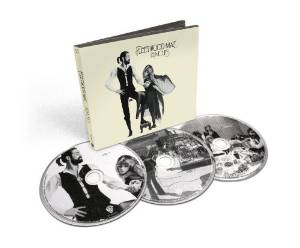
Fleetwood Mac - RumoursI guess for me this is turning into The Year of The List! Earlier this year, inspired by a Writers Guild initiative, I catalogued a suggested collection of the Funniest Screenplays of All Time. Right around that time, inspired by the Fleetwood Mac reunion tour, I found myself thinking about musical recordings so beloved I had purchased them multiple times on replacement platforms. While the records stayed largely the same (yes, I will keep calling them records as long as I am listening to them), a series of innovations in consumer technology offered us relatively inexpensive access to personal libraries of vinyl, 8-track tape, cassette, reel-to-reel, DAT, CD, DVD, and MP3-like digital hard drive storage along the lines of iTunes. Here I am considering what I would call three-buy and above purchases for personal use, which of course live alongside AM & FM radio broadcast, satellite play, streaming services like Pandora and Spotify, and any number of less legitimate ways to file-share.

While I was pondering all thatand readying myself to attend Fleetwood Mac’s current reunion tour at the recently refurbished concert-only Fabulous Forum in Los Angeles (remembering I had attended in 1990 what I believed was the final performance of the farewell Fleetwood Mac Word Tour)what should be playing in our living room but Rumours. Yep, at home in 5.1 Dolby Surround played an album so impossibly fantastic I had bought it at least five times with each subsequent technological improvement, including the remastered scratch tracks on the latest Expanded Edition, which chronicled the development of each song. I sat there listening again to this marvel, no regrets of any kind for the many dollars spent. I have extracted so much entertainment value from this record I would gladly purchase it again. And again.

Thus it occurred to me that Rumours was not alone, and that I was not alone in the three-buy, four-buy, and even five-buy serial record purchases. Rather than pencil out my own list, I went to my social network and asked friends where they had repeatedly dumped their dough buying the same thing over and over. Below you will see an unedited list of those records, some of which I also bought a bunch of times, others of which I have never heard but may sample now. Rather than allow this list to expire in the ephemeral Facebook news feed, I decided to recreate and share it here. I think it’s a cool list, one you should feel free to expand upon in broadening our spirit of sharing.

There is definitely a late Baby-Boomer Bias to these confessions of multiple repurchase, represented no doubt by my circle of social media friends, along with our age and taste. I think you will find the publishing dates stamped for the most part between the mid 1960s and the early 1980s, when the formative years of my contemporaries had disproportionate influence on our modest discretionary spending. Not surprisingly, in the “nifty fifty” albums reported here entirely unscientifically and in no particular order, multiple appearances are logged by the Beatles, Pink Floyd, the Rolling Stones, and Elton John.

If you’re looking for any connective tissue in all these, I think you’ll need more than the music to draw a speculative conclusion. Here is my one linking observation to the extent that I recognize most of the titles: they are in one way or another albums, curated collections or song cycles of various sorts that weave into and around themselves. Much has been written about the demise of the album in this day of pop streaming shuffles. For a while when we were younger, there was a wild notion that a record album could be something of its own as a form of, dare I say it, art.

I’m not sure I have the intellectual fortitude to plow through the art manifesto, but let me just say that when I play Abbey Road I don’t skip tracks, I play it through beginning to end. Okay, on The White Album I do skip “Revolution 9” most of the time, you got me there. But Dark Side is beginning to end, Hotel California is beginning to end, and Rumours is beginning to end. Remember, when these were vinyl, that meant getting up and switching to the flip side—yes, getting up physically to hear the rest!

There is a “something of substance” in these picks that a lot of us find missing in contemporary LP equivalents that don’t even try to compose, let alone somehow unite, a dozen or more flowing songs. I think that’s why a lot of us miss the days of AOR—album oriented rock—and why we’re willing to spend anew when landmark records with recurring motifs and thematic resonance repeatedly make their way back to the virtual shelves. These albums age well, a bit like fine wine, and seldom seem dated. Absent historical and social context, most of these carefully crafted works could just as well have been recorded today and simultaneously sound modern and classic. They were expertly written, performed, and engineered with creative courage that resulted in textured, lasting impact. Good is good, great is great, and unforgettable is, well, just what the word says.

So here is a compilation of fifty records my friends found so remarkable they bought them on three, four, or even more platforms (not to mention extended or remastered versions), and will probably continue to play until their last days on the planet in whatever form they may become available:

1) Abbey Road by The Beatles

2) Sergeant Pepper’s Lonely Hearts Club Band by The Beatles

3) The Beatles (The White Album) by The Beatles

4) McCartney by Paul McCartney

5) Band on the Run by Paul McCartney & Wings

6) All Things Must Pass by George Harrison

7) Imagine by John Lennon

8) Dark Side of the Moon by Pink Floyd

9) The Wall by Pink Floyd

10) Exile on Main Street by The Rolling Stones

11) Let It Bleed by The Rolling Stones

12) Madman Across the Water by Elton John

13) Goodbye Yellow Brick Road by Elton John

14) Hotel California by Eagles

15) Quadrophenia by The Who

16) Songs in the Key of Life by Stevie Wonder

17) Blonde on Blonde by Bob Dylan

18) Born to Run by Bruce Springsteen

19) What’s Going On by Marvin Gaye

20) London Calling by The Clash

21) The Rise and Fall of Ziggy Stardust and the Spiders from Mars by David Bowie

22) The Joshua Tree by U2

23) Led Zeppelin II by Led Zeppelin

24) Lady Soul by Aretha Franklin

25) Songs of Love and Hate by Leonard Cohen

26) Silk Degrees by Boz Scaggs

27) The Point by Harry Nilsson

28) After the Gold Rush by Neil Young

29) John Barleycorn Must Die by Traffic

30) Dr. Hook and the Medicine Show by Dr. Hook

31) Running on Empty by Jackson Browne

32) Cheap Trick at Budokan by Cheap Trick

33) Black Sabbath by Black Sabbath

34) Candide by Leonard Bernstein

35) The Lady and the Unicorn by John Renbourn

36) Nights in the Gardens of Spain by Manuel de Falla

37) The Remains of Tom Lehrer by Tom Lehrer

38) The Doors by The Doors

39) Tapestry by Carole King

40) Tom Petty and the Heartbreakers by Tom Petty and the Heartbreakers

41) Berlin by Lou Reed

42) Wheels of Fire by Cream

43) 21 by Adele

44) Crime of the Century by Supertramp

45) Bridge Over Troubled Water by Simon & Garfunkel

46) Graceland by Paul Simon

47) Dreamboat Annie by Heart

48) Pet Sounds by The Beach Boys

49) Something/Anything? by Todd Rundgren

50) Rumours by Fleetwood Mac

Which “greatest albums of all time” did we miss? Probably a lot. Add your favorites in the comments below and if there is anything you discover new in the suggestions provided, let us know what it sounds like no matter the player you choose as a conduit.

Tavis and Maya

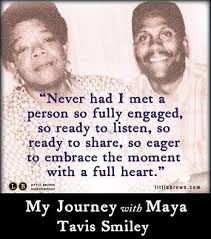
Tavis and MayaEvery year the Los Angeles Times Festival of Books continues to cement itself in my psyche as a major go-to event. Now the largest book fair in the United States, its bustling aisles fill the USC campus for two days with eager authors and insatiable readers. Each year I joyously look forward to attending, not just for the schedule of talks I plan to experience, but for the inevitable surprises I discover. This year’s surprise was an exceptionally powerful book talk on an open-air stage by Tavis Smiley about his lifetime of interaction with Maya Angelou.

Although I have not yet read Smiley’s new book, My Journey with Maya, my takeaway from the forty-five minutes my wife and I listened to him speak was profound enough to report here as a stand-alone inspiration. Smiley talked openly and honestly about how he personally crashed and burned after a failed election campaign for Los Angeles City Council following a gig on the staff of Mayor Tom Bradley. With a mountain of campaign debt crushing him, he was to be evicted from his apartment with no prospect of employment. A friend arranged a happenstance job for him to travel with Angelou on a brief trip to Africa as an assistant, mostly to carry luggage. That kicked off a lifelong friendship and dialogue between them where they didn’t always agree, but Smiley always found a way to learn.

I’m going to read the book and I hope you will as well, so I won’t go into a lot of detail here on all he said. What I want to share are the two most striking learnings from Angelou that Smiley encoded, largely because they have been stuck in my head and churning ever since we stood there in the sunshine listening to him. I have only seen Smiley a few times on television over the years, but standing in front of him, hearing his passion, listening to the heartfelt words that flowed from his inner being completely coherently without any notes or podium, I was moved completely by the sweat and memory that poured from his soul. The two ideas that Angelou planted for growth in his brain couldn’t have been more relevant to me than if I’d heard her say them to me herself. As far as I am concerned, I think I did hear her speak on both counts, channeled in full energy by his voice calling on hers:

“Baby, we find our path by walking it.”

“Sometimes rejection is redirection.”

If you think those are just broad, sweeping, generic statements of advice from the elevated dais, stop here and go read someone else’s reflection, or perhaps today’s stock market results. On the other hand, if you’re like me, copy those words onto a Post-it and put them in plain sight for the next decade or so. When Maya speaks, it’s a good idea to listen. Tavis did, and his life was reinvented.

I write a lot on this blog and in my books about resilience and reinvention, the lifeblood of innovation. When I heard Smiley put the notion of self-motivation in so few words from Angelou, I was heartened, invigorated, and inspired. She got it. He got it. I wish everyone could get it. And still, transferring the words of others into action is immensely difficult, filled with pain, buried in setbacks, and only on the most wondrous of occasions celebrated in brief victories.

Smiley was adrift after losing his election and identity in public service. He sat stunned and stared at the failed image of himself. He wanted desperately to reinvent, but had no idea how. He was frozen. Angelou saw through him to his core. “Baby, we find our path by walking it.” If it had been a Nike commercial saying “Just do it,” it couldn’t have been clearer advice: Just do something. Do anything that matters to you. Find thought in action, not in dire contemplation. Whatever you do is better than nothing, and it will inevitably lead somewhere. Sometimes I tell people to form a plan—a conceptual roadmap of any kind—not because you will follow the path from here to there, but because if you start with a map, you will go somewhere, and that has to be better than nowhere. You won’t connect the dots—the dots will connect themselves in ways you never could have imagined. Yes, you find your path by walking it. Get busy. The rest will be discovered when you least expect it.

Smiley was crushed because the electorate said no to him. He wanted to serve, but the voters said “no thanks.” Again Angelou saw motivation in the otherwise unfortunate result. “Sometimes rejection is redirection.” If the voting public did not wish to recognize Smiley as an elected official, was that the only way he could realize his dreams? Obviously not, because a few years later Angelou appeared as a guest on Smiley’s national PBS talk show. How about that? From apartment eviction to the interviewer’s chair in so little time you almost think he made the whole thing up. He didn’t. He listened. He accepted “no” as meaning “not now, not here.” Then he went another way, and his dreams were realized beyond all imagination. Can it happen to you? Yes, if you see the negative before you as motivation to go another way. That new way might be a million times more fulfilling than what you thought was your only way. We have no only way, just opportunity to be who we need to be in an as-yet undiscovered path.

Both of these precepts have been guiding lights in my own life, yet until I heard Tavis channel Maya in an unplanned walk by the stage where he happened to be speaking when I was on my way to another place, I wasn’t aware how much I shared with so many others there on the grass listening intently to every word. Maybe we are more similar than different. Maybe we all do share the same dreams of enrichment and fulfillment. Maybe if we all listen to each other a little more closely, we can help each other get from the stagnant to the unstoppable. To quote another dreamer, “Imagine.”

I sure do love the Los Angeles Times Festival of Books. I can’t wait until my walking path takes me back there next year for another dose of redirection. See you under the tents. I’ll be the guy taking copious notes, or maybe talking ideas if you start the conversation.

Funniest Screenplays of All Time

Drama MasksBack in 2012, the Writers Guild of America surveyed its membership to identify the Best Written TV Series of All Time and I used the occasion to share my own list. This year the WGA is doing the same for the 101 Funniest Screenplays, asking members to submit fifteen titles to collect the 101 most mentioned. Again, I am not only happy to oblige, I am happy to share my picks with all of you even before the definitive list is published!

Of course funny means different things to different people. Is it slapstick funny, quirky funny, shock value funny, social critique funny, outrageous, embarrassing, or simply impossible to describe? How can you compare so many different kinds of funny, and is the contest even worthwhile other than as a recommendation list? Many wonder if it’s the writing that’s funny, or the performances, or the directing and editing. For me, you have to give credit to the writer if the movie ranks as one of the funniest, no more who contributes. Of course as someone who types a lot of words to share with others, I’m clearly biased toward recognizing writers for their contributions no matter the collaboration. Call me old-fashioned about the important of the written word, but my sense remains that if it’s not on the page ready to be made funny, no one can come to work to make it more funny!

I reached out to my Facebook friends to see what they thought, and what you see below, not in any specific order, are my fifteen, followed by all others that were mentioned frequently or emphatically. Mel Brooks is a clear and recurring winner here, along with the mockumentary Christopher Guest ensemble, a healthy dose of Monty Python, and a rousing run by the Coen Brothers. There were definitely generational trends in the responses I collected, with any number of people on this or that side of political correctness and golden age vs. modern age vs. contemporary leanings. Like music and literature, comedy is very personal, and taste is an individual expression of who we are what makes us tick. There’s a wide net here, and it will always be open to argument, rebuttal, reform, and addition.

I somewhat arbitrarily capped the list below at sixty titles because, well, I guess I didn’t want it to go on forever. Some of the motion pictures named by my friends were less familiar, so I tried to stay with more mainstream and recognizable fare. That should leave plenty of room for surprises when the WGA list is published next winter, and also for any others might want to add. I’m sure you’ve enjoyed many of these:

1) Young Frankenstein

2) Blazing Saddles

3) Monty Python and the Holy Grail

4) Animal House

5) Airplane

6) This Is Spinal Tap

7) When Harry Met Sally

8) Arthur

9) A Fish Called Wanda

10) There’s Something About Mary

11) Trading Places

12) Austin Powers: International Man of Mystery

13) Stripes

14) Dr. Strangelove

15) MASH

And then from my social media community…

16) Waiting for Guffman

17) Best in Show

18) Some Like It Hot

19) What’s Up Doc?

20) Duck Soup

21) A Night at the Opera

22) Flirting with Disaster

23) Raising Arizona

24) The Producers

25) Caddy Shack

26) Bridesmaids

27) Wedding Crashers

28) Fast Times at Ridgemont High

29) The Princess Bride

30) Shakespeare in Love

31) Caddy Shack

32) Monty Python’s Life of Brian

33) Monty Python’s The Meaning of Life

34) The Jerk

35) O Brother, Where Art Thou?

36) The Big Lebowski

37) Rushmore

38) Napoleon Dynamite

39) Being John Malkovich

40) Annie Hall

41) Harold and Maude

42) My Cousin Vinny

43) My Favorite Year

44) Groundhog Day

45) Ghostbusters

46) Tootsie

47) The Hangover

48) National Lampoon’s Vacation

49) His Girl Friday

50) Office Space

51) The Naked Gun

52) The Forty Year Old Virgin

53) Dumb and Dumber

54) Tommy Boy

55) Planes, Trains, and Automobiles

56) The Blues Brothers Movie

57) The Graduate

58) The Pink Panther

59) The Party

60) A Funny Thing Happened on the Way to the Forum

That’s a more than decent start, plenty of chuckles, guffaws, and belly laughs to go around. Remember, it all starts with the written word, or as many writers like to say: “You know that joke? Somebody wrote that!”

Please feel free to add any of your favorites in the comments below!