Warp Factor Ten: The New Cruise Control

“Here’s a tune that’s really moving fast. When I say fast, it was recorded at 9 o’clock this morning. At 12 noon, it was No. 15. At 3 o’clock, it was the No. 1 sound in town. And now it’s a golden oldie!” — George Carlin, FM & AM (1971)

What a difference a month makes. A week. Even a few hours.

Prior to its first day of public trading, Facebook was pure glamor. Individual investors who could not get into the IPO were camped out in the lobbies of retail brokerages. Where they couldn’t get shares prior to the first day open, some were moving cash into their accounts ready to buy at the commencement of trading. We loved Facebook, all 900 million of us with an account. We may have heard a bit of light background noise about how its advertising wasn’t working all that well for some clients like GM, or whether the company was making enough strides in mobile, but few people listened. It was frenzy. We had to have it. Then it all changed.

The question is, what changed? Did the facts change? Did the market conditions change? Did the technology change? In 24 hours? Sure, there were analyst reports that didn’t find their way to everyone, but how many individual minds would those have changed, for the people who had to have it? Not many, I suspect. One Wall Street Journal story that especially caught my attention noted: “… a 30-year-old actor in Toronto, bought 15 shares of Facebook on its opening day. Before then, he had bought just one stock, yet saw the market as a place to make his savings rise in the long run. Now he feels burned.”This fellow is upset, yet his investment strategy was to own two individual stocks in minimal quantities to increase his net worth. As they say on SNL, really?

For my mind battle, Facebook was as exciting and pioneering a company before the IPO as it was after—the critical question was whether enough people considered what its stock was actually worth. We like to believe in fundamentals, until we don’t. What changed was the hangover. We sobered up and asked the questions we should have asked after we acted. Opinion reversed in this instance to an unprecedented polar opposite, a trend we now see too often.

Around the turn of the millennium, we experienced astonishingly rapid adoption of the commercial internet. The public couldn’t wait to buy stock in this emerging set of companies. Earnings be damned, this was the new economy! We used new online brokerage platforms at our fingertips to day-trade nascent listings on something called momentum. About a year later came the dot-bomb implosion and we couldn’t dump these equities fast enough. As soon as mass opinion declared most of them worthless, it was a self-fulfilling prophecy.

In the mid 2000s, popular opinion declared home real estate values going in one direction, to the stratosphere. Credit was easy, because with prices rising, properties could be flipped quickly, debt retired and profits tabulated with presumed certainty. When home prices crested and credit markets began to freeze, homeowners found themselves “underwater,” owing more on properties than they were worth. It happened that fast. People asked themselves how a home they bought for $600,000 could be worth less than $200,000 when only a year ago it was assessed at $400,000. How did prices go up so quickly, then down so quickly, then lock up without some form of fair warning?

JP Morgan Chase escaped the mortgage-backed securities meltdown and CDO liquidity crisis largely unscathed, only to follow-up this year with a series of disastrous derivatives trades that resulted in billions of dollars in losses. The company’s CEO, James Dimon, went on record saying the bank’s strategy was “flawed, complex, poorly reviewed, poorly executed, and poorly monitored.” Does that sound like a dependable financial institution gone temporarily astray, or a speculative gambling pit operating without normalized controls?

How do we make choices in a world where assessment can change this rapidly and radically? What is a grounded opinion?

Is the public manipulated? You bet we are. Witch’s brew opportunism is all around us. Are well-meaning individuals subject to baffling contradiction and confusion? To my knowledge it has never been any other way. The problem now is the fever pitch, the speed at which information and misinformation travels, the global pace of relentless throbbing that blinks and bubbles and burns and overwhelms our better judgment. We act because the parade is leaving town and the horns are blazing, not necessarily because we have decided it’s a good parade celebrating a cause we wish to trumpet. We don’t want to get left behind, until we too late discover there’s no place like home.

How fast is fast? In the original Star Trek series which debuted in 1966 and was set in the 24th century, Gene Roddenberry envisioned Warp Factor One as travel at the speed of light. Any kid who had taken high school physics got the joke, but for sheer late night discussion it seemed a decent enough way to talk about speed in the extreme. Warp Factor Ten was considered unachievable, a “purely theoretical” value, yet in the later sequels, Warp Factor Ten was used all the time, no big deal. I don’t think stretching of the metaphor over time was accidental. When fantasy portrays the speed of light no longer as a milestone, any definition of fast requires new parameters. I think we’re getting there, or at least the hyperbole is catching up with our perceived experiences that don’t involve beaming up our bodies, just harnessing some constancy in our opinions.

The 24 hour news cycle is well understood by those who create it, so much so that top public relations firms often suggest just waiting for a worse story to wipe out your current bad news. Rapid and seismic change has been a recurring theme in this blog since its launch, where the patron Pre-Socratic philosophers Parmenides and Heraclitus now have us wondering if you can even step in the same river once.

We like, we don’t like. We know we are fickle, but we allow conflicted voices all around us to vacuum us in one direction, then whiplash us in another. We become certain something is worth our hard-earned money, then we see our money vaporized and want it back. With all the experience we have around vast shifts in sentiment, why do we still allow ourselves to act before we have enough facts to make a reasonable judgment?

Robert Burgelman, one of my former board members who teaches business strategy at the Stanford Graduate School of Business, likes to define the shift between strategic thinking and consequence as the moment when valuable resources are committed to action. In a company, that’s when you move from the planning and consideration phase of a project to the substantial deployment of capital—financial, material, and human. These decisions are not trivial. There are experts involved, and even then, too many times they are wrong. In your own life, it’s when you go from liking a company for what it does to investing your savings in an equity stake. That too is a big leap, one you want to think about very hard.

Indeed, creative destruction is a norm, we know we have to move fast or risk missing opportunity. How do we apply the essence of urgency, the realities of internet time, to factor out hype and not be shifted into a higher gear than makes sense?

For starters, don’t be afraid to take an extra breath. Be appropriately careful with your convictions. It’s admirable to be resolute, but if facts are going to be relative, how really certain can you be today when someone else with a vested interest is bound to change the story tonight? Living in a world where unformed argument too convincingly sells itself as conventional wisdom can make skepticism a virtue. I am not one to resist change, but when I listen to opinion, I want convincing debate, not anxious pressure. Opinions can be interesting, facts are better. When you don’t understand something, never let others make you feel inadequate because “You Don’t Get It” and the clock is not on your side. You might be getting it just fine.

Your pace of decision should be your own. If you don’t like the story, don’t buy the book solely because someone stacked the deck with a stockpile of boilerplate reviews. Opinions will keep changing at lightning pace. Anticipate change in the assessment of change; you can bet on that because you have evidence. Beyond that, there’s a reason they call it the cloud.

Facebook just might beam itself into a valuation you wish you could have seen coming. Mortals like us can no more see the future than travel at the speed of light. If you want to win long-term in a race against noise, listen more closely to what’s under the noise. Cruise control at top speed will never be as comfortable as the manual suggests.

Manners Made To Order

Peter Bart, the long-serving studio executive turned prominent media industry journalist, recently wrote a column in Variety wondering where all the manners have gone:

A Zest to Text Lets The Rude Intrude

The irony of calling out the entertainment community on bad behavior is not lost. If you have spent any time at all in film, television, radio, theater, advertising, or any related endeavor, you have your own war stories to share. You have been humiliated, ignored, dissed, or berated at every level of your ladder climb from desk clerk to corner office. If you are not currently experiencing the abuse to your face, you are fully aware it is happening behind your back. This of course is in no way limited to showbiz—the rest of the business world including technology has its own flavors of belittling, it’s just a little more celebrated in Hollywood as norm. If you have never had the pleasure to do jumping jacks on this playground, just catch a few reruns this summer of the hit TV show Smash.

VarietyAlthough Bart largely ties the exponential run-up in the rude factor to gadget proliferation, the 24/7 expectation of real-time response, and the death knell of “nuanced conversation” in the creative process, I wonder how many of us are paying attention to our own slides into the primordial. The question is not are we targets of rudeness, the answer to that is as obvious as it is ubiquitous—and I don’t think it has all that much to do with texting and youth, especially if you remember the pre-politically correct workplace before Wang when an airborne stapler headed for your cranium often had to be ducked. The question I am more apt to ponder is how we let ourselves get seduced to the other side, becoming a violator when we know that’s not something we want to be.

We can still be hard-charging, we can still be Type A, but there is no mandate for acclaim that requires sloppy people skills. Presuming there is a roof over your head and ample food available to you on revolving credit, ask yourself in the long run what matters more: accomplishing a task however trivial, or building relationships that strengthen your standing? Certainly in the throes of immediacy a terse email might be released now and again, but what about the basics we were taught as children about The Golden Rule, lessons we now ostensibly pass along to subsequent generations who are as glued to their handhelds as we are?

Is it really that hard to save a viciously nasty email in your drafts folder and wait until morning before you elect to hit the send button?

Can you really feel good about telling someone you’ll call them tomorrow and then failing to do it ever?

Why are you checking your Facebook news feed during a sales pitch, regardless of which side of the desk you are on?

What good are you doing yourself continuing to say “Let’s have lunch” when you really don’t want to have lunch and have no intention of following through with any such invitation?

If you are meeting someone for lunch—business or personal—and you are going to be more than five minutes late, would it be possible for you to call or text, then apologize when you arrive? Better yet, barring a jack-knifed semi blocking all freeway lanes for ten miles in both directions, could you possibly leave a little early and be on time?

Depending on what stage you may have attained in your career, some of this comes down to the difference between what you are looking to achieve in terms of personal impact rather than measured achievement. That’s a see-saw that should shift over time to the beneficial, but there are pragmatic aspects of a well-mannered approach that might be useful to you now. Considering again Bart’s suggestion that “nuanced conversation” is a mauled victim of abrupt interpersonal dynamics, it is possible that listening less really is bad for business?

If you understand the nature of creative destruction as I often discuss in this blog, you know that we live in a world where teamwork generally matters more than individual contribution, and true leverage in time to market is almost always achieved by collaborative intelligence rather than ramrod dictum. In that sense, where an effective creative process is a function of shared give and take, the question becomes not how well we are silencing the noise, but how well are we listening.

Later this year I will be piloting a training seminar to help guide executive coaches with a practical approach to the corporate training work they do. I mention this in the spirit of disclosure and not for promotional purposes. In designing this emerging program, I have been inspired repeatedly by my partner organization, the well-regarded Coaches Training Institute (CTI). In the book written by CTI’s founders Henry Kimsey-House and Karen Kimsey-House with contributing author Phillip Sandahl, I discovered the following simple but profound reflection:

The absence of real listening is especially prevalent at work. Under pressure to get the job done, we listen for the minimum of what we need to know so we can move on to the next fire that needs fighting. The consequence: it’s no wonder people feel like mere functions in a whirling machine, not human beings. It’s no wonder that “employee engagement” is a serious issue in most organization’s today. Everybody’s talking, nobody’s listening.

The point is entirely actionable—a renewable creative process requires focused listening, much more than combative banter. No doubt the methodology of Constructive Confrontation pioneered over the years at Intel is as relevant as ever, but it remains a framework that is fully participatory. If you aren’t nurturing the dialogue all around, you are leaving money on the table.

Invoking the world view of popular ethics advocate Michael Josephson, I could easily migrate The Argument for Being Nice into a call for Significance beyond Success, but my sense is we all learn that well enough for ourselves over time. Instead let me keep it pragmatic.

If you are playing the short game and have convinced yourself the liquidity event is just over the horizon and that’s all you care about, feel free to be as rude as you want. Why not? You’re going to get what you want.

If you’re like the rest of us and have no idea where the forest trail will lead today or ten years from tomorrow, remember that kid on the reception desk probably will be running a company. History is on her side.

If it’s Friday night and you’re home from a hard week cataloging all the different ways you were kicked in the teeth the past week, ask yourself a simple question—how much forensic dental work were you responsible for doling out of late? And how much dialogue did you shut down that may have given you the answer to that very hard problem you’re still trying to solve on your own with the bomb clock tic-tic-ticking?

I’ll go out on a limb here, a little old-fashioned digerati, but what the heck—good manners are good business, and both of those will make you happier. Go easy on the texts and eradicate the gossip. Listen, there are good ideas all around you.

Like Is Not Enough

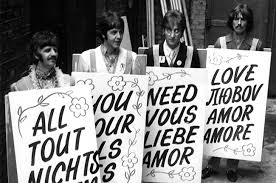
AllYouNeedAll You Need Is Love” — Lennon/McCartney, The Beatles

Facebook over the past several years has done the unexpected in creating exponentially vast usage of the noun/verb Like. This has been fun for those of us who indulge in broadly stamping our personal approvals on anything from a friend’s single syllable utterance to the launch of a new wave of flavored taco shells. Some argue the Like button has diluted the very significance it is meant to convey by spawning misguided promotions to increase click tallies, while others maintain it is the metaphysical fuel that rocketed Facebook into the stratosphere as the place advertisers have to be to mine explicit commendations. Regardless of the ultimate conviction it conveys, Like is an ultra easy way to express a soft high-five in public without any substantive commitment, and if you change your mind, you can Unlike something just as quickly.

While the full measure in a Like action remains on the light side of hand-waving, for marketers it can nonetheless provide an easy litmus test to note directionally if their intended messages are registering at all. Registering is not necessarily resonating, but it is a decent stride across the starting line. Getting someone to Like your brand for the long haul—on Facebook or along the purchase funnel—will never be a small task, but my sense is there is one constant in consistent success: For star marketers to get a Like, they must first Love.

I wrote about a similar topic not long ago in a post about eating your own dog food, where I suggested if you don’t use your own products, how could you expect anyone else to pay you for the privilege. This is a tangent to that thread, where of late I have observed entire marketing teams dogged by cynicism. They are charged with brand evangelism, but in their own minds, they are either not engaged in the true value proposition of their products and services or they have given up on their own futures, proclaiming themselves victims of an ice age they believe is imminent and unavoidable. I believe we often refer to this malady as the self-fulfilling prophecy.

Recently in a meeting with a team of executives who had invited me to help them with some seismic strategic planning issues, I noticed a through line where all of the many accomplished marketing executives in the room found a way to get on each other’s bandwagon, lamenting that their company’s future was not bright. I thought this was simply a down cycle in the conversation which is normal in brainstorming, but the negative energy was a contagion. Here we were, charged with helping reinvent the company, a blue sky path to infusing new levels of Like into brands that were already broadly embraced, but no consensus was emerging on how past Like could become new Like, or dare I say it, Love. As an outsider, I saw that their brands were certainly challenged in the market place, they had seen some decline, but they had in no way collapsed. Yet here the brand stewards being paid quite well for their presumed passion had convinced themselves their brands were dying—a sickness that was terminal and could not be reversed. Where I really got myself in trouble was asking the team how many of them still loved these brands. The rest of the assignment was awfully quiet.

If a brand steward does not start the day in Love with a brand, by the time that apathy translates and diffuses itself into a campaign of communication tactics, Like is not going to be there with the public. Better the executives hand in the baton and give the assignment to someone else who might find a way to convince themselves there is light ahead, yet throwing yourself on the sword for lack of conviction is not a road well-traveled in business. Instead it is likely that these brands will die, even though they could fight on, because no one behind them has the Love to fight. I wonder if the CEOs at the top of these companies know their chief lieutenants have already surrendered to creative destruction rather than rallied to next generation rebirth. Even if the beaten executives are right and the brand is destined to die, shouldn’t someone else who doesn’t believe that be given the chance to prove otherwise—to try with honest enthusiasm to wrestle imagination and go a different route that might just work despite the naysayers? Perhaps some of the CEOs are biding time as well, but my sense is most of those wouldn’t last too long in a board meeting. Love has to be real, and it has to start at the top.

Can someone in a marketing job walk away nobly from a lack of Love? Sometimes I think it is necessary and essential. A very successful friend recalled for me recently how early in her career she was working for a multi-national corporation on a vastly successful billion dollar brand that had of late stalled in its growth, years after it had gone wild and saturated market share. The team brainstormed and came to the conclusion that to reignite growth, marketing programs would have to implicitly suggest that the brand being marketed met the needs of a more healthful alternative already for sale, and that by shifting use from the believed healthful product to the growing brand, nothing would be lost and everything would be gained. Mind you, nothing illegal was being plotted and the campaign would by default have to meet truth in advertising laws, but the very idea that the only way to grow the brand was to pull attention from a more healthy alternative did not sit well with my friend. She understood the strategy, but she fell out of Love, and even out of Like. She did the right thing and left the company. Today she runs her own company and I can tell you this—she Loves her brand.

Remember this: a brand is not a logo or a trademark or a pithy name—a brand is a promise. You can stop loving a product line because it needs to change, indeed loving a product line too much can be a trap, but products are directed to evolve because loving the brand is a driving force. A brand is a set of choices that begins and ends with meeting customer needs. The branding process begins with ideation, continues through product development, then translates into communication (these days bidirectional feedback loops, like we see in social media, more than soap box broadcasting) and ultimately does or doesn’t result in customer loyalty. When you make a promise to your customers, you are obliged to make good on that promise. My sense is for that to happen repeatedly and predictably, if you are part of the creative cycle, you must Love, Love, Love your brands. If you don’t, no one else will.

If for some chronic reason you’re convinced a brand truly is at end of life, the right thing to do is protect working capital and advocate to take it out of commission mercifully. It is wrong to shovel high-priced coal into an engine you believe will no longer run because you’re pretending to believe a directive handed down that you knowingly disavow. Don’t try to fake it! If you don’t Love your brand, go find another that you can Love. If you are biding your time waiting to be found out, don’t worry, you will be found out. Your customers will do that for you. You need their Like. They deserve your Love.

Love, Love, Love.

Evolving The Ad Measure

Last week I spent a day and a half at a four-day conference in Los Angeles known as Digital Hollywood. I can remember speaking at this conference a number of times back in the bygone CD-ROM years, when QuickTime v1.0 was all the rage and the notion of getting postage stamp video to play on a PC was gleefully deemed the dawn of FMV (full motion video, which was still about 10 years and many versions of QuickTime to come). Digital Hollywood has been growing steadily since 1990 and is now hosted in multiple locations throughout the year. It has become well-attended and thrives on emerging trends and technologies that carry with them opportunity and hope.

While I can hardly say my tour through the panel discussions at this conference was exhaustive, my experience was that many people were there in search of the question: If I build it, will they pay? The broad desire seemed to be for so many passionate and creative souls, if they put their heart into creating digital content, is there any chance at making even a modest living at it? The big media companies continue to study the little companies, still trying to solve the riddle of how digital pennies can replace analog dollars before the next wave of Creative Destruction breaks on our Company Town shores. The little companies and individual voices remain excited by the notion that self-publishing has zero barriers to entry, and with no constraints on distribution, anyone can be in the communications game through YouTube, a blog, a web site, an email newsletter, a Facebook page, and with just a little bit of push a mobile app. The breadth of creativity screams freedom as well as opportunity, yet when you gather in the halls, creative satisfaction seems to be outpacing financial satisfaction at almost every level of the pyramid.

When asked about business models, studios and individuals alike tend to respond most often with the word “advertising.” There are actually several ways to monetize digital content (subscription, syndication, e-commerce, data mining research), but the approach you hear most is advertising. It continues to strike me as ironic that the greatest and most liberating technologies of our day so often point to something as old school as advertising to fuel them, as I am sure it surprised pioneers from Google to Facebook. We have seen the shift in advertising wreak havoc with print and radio and outdoor, and finally it is beginning to put pressure on television. My question remains, why aren’t traditional television ad budgets under significantly more duress?

A very quick primer on advertising, there are two basic kinds: brand and direct response. Brand marketing attempts to get you to encode a message and take action later, direct response attempts to create instantaneous demand and get you to take action now.

When you watch a network television show in its time slot and a commercial tells you how the floor wax you are seeing in action will get your floors to sparkle, that’s brand advertising. It is meant to get you to remember the brand you saw on the commercial in a positive light when you are in the floor wax section of Safeway. That is achieved with reach (how many individuals see the commercial) and frequency (how many times they see it) which add up to affordable tonnage. If you are my age and can still recite the ingredients in a Big Mac, you have a pretty good idea how much money McDonald’s invested in the reach and frequency for that brand campaign when we were kids, super tonnage to burn into memory that pithy creative construct.

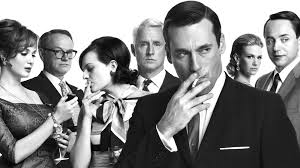
Mad MenBrand advertising is usually measured in terms of broad sales increases in a product line or shifts in competitive market share as a result of the campaign. Skippy buys an ad schedule across TV, print, and radio, spends a certain amount, then measures over a period of time what impact it has on sales of their peanut butter. They may experiment then with new commercials, or add weight to TV and subtract it from print, trying to get the best return on investment possible. You can imagine what an inexact science it is, but if you pay X for your ads and get more than X in increased sales, you at least know your campaign paid for itself, and from there, the sky is the limit. In the 1960s and 1970s with three TV networks, it was really hard to go wrong with the kind of TV buys we now enjoy memorialized in Mad Men.

Direct response advertising used to be the less polished hard sell stuff we saw on late night TV or UHF, where the commercial or infomercial shows you a miracle vacuum cleaner obliterate a thick pile of goo and then gives you an 800 number to respond now and buy it. It is also the kind of advertising that worked well in print and catalogs via mail order. To this day it remains simple and exact to measure because there is little noise in the equation. You run an ad, your switchboard lights up with orders or it doesn’t. You know what you paid for the ad, you know how many orders you got. It’s not very glamorous, but compared to brand advertising, it is easy to evaluate and research is precise.

The glamour factor shifted with the internet from brand to direct, because the economics shifted with the internet at huge scale. On the internet, direct response, or performance based advertising, mostly trumps brand advertising. In the digital world, brand advertising became known as display advertising—in the consumer vernacular, banner ads (industry jargon sometimes calls them dots and spots) where payment is rendered by the advertiser for delivered inventory—insertion order invoiced tonnage just for showing up. The click-through rate on most display ads today is almost not worth measuring, but that does not mean they are not impactful. Most of the ads you see on Facebook are display, lots of reach and frequency, and much better targeted by interest level than ye olde TV.

Yet the glamour business of the internet remains keyword advertising, the logical evolution of direct response advertising, the sponsored links that have been most successful for companies like Google but are also used in comparative shopping sites and similar layouts where the ad buyer does not pay for an ad to be seen, the ad buyer pays for a click on the keyword link, and then counts on a certain number of clickers to follow through to transaction (that means buy something). Here again, the direct response model is more precise than the brand model and can be measured with sophisticated analytics, while the dots and spots—and now with video streams commercial insertions in Hulu and YouTube much like TV only shorter—should be fully intended to contribute to downstream sales activity, but are much harder to evaluate mathematically.

In the world of TV, brand still rules. In the world of internet, direct response still rules. The reason? Performance, also known as Return on Ad Spend (ROAS). You can still drive big sales and shifts in market share via a TV brand campaign, and you can do the same with an internet direct response campaign. So my fundamental question remains: why hasn’t the science of efficacy and research advanced to show how display campaigns online can approach the same sort of massive scale impact on consumers that they have on TV?

There are many things we can measure in both brand and direct response campaigns, some would argue too many. If McDonald’s stopped spending completely on TV and moved all that budget to the internet at better prices, would it have a negative impact on their business? Probably, or they would do it. The question is, how much can they move, and how much more affordable can it be for them to start moving more of it? How can they tie market share gains back to internet display campaigns? Attitude and usage studies—the kinds of email surveys you get asking if you have seen or remember a campaign—aren’t nearly enough to convince them they can move billions of dollars of burgers at the counter without an accompanying TV vehicle. They need digital brand campaigns that sell goods and services at scale and science to attribute the success—and we don’t yet have either.

Going back to our passionate content creators at Digital Hollywood—what do I think they should be worried about for their sustenance? I think their fate will be cast by leapfrog advances in advertising research, and I think those advances will come. With advances in the science of display advertising efficacy in digital platforms whether fixed or mobile, the big brand dollars will have to shift from television to non-television. It is not just a question of eyeballs (mind share, share of voice) shifting with a generation that has grown up digital, it is a question of what works, the reach and frequency and cost efficiency to make or break predictable sales of consumer products. When we have that science to show how digital spending improves on the job of TV, the big brand dollars will shift and content opportunities will flourish.

Almost every graph trend shows that the future for digital media is nothing but bright, but until the research and reporting platforms rescue brand advertisers from the opaque, illusive promise will remain greater than reality. That shouldn’t last much longer. Tell your digital research departments to put those monster TV budgets in their gun sights and keep innovating. It’s really good money if you can get it. And we will.