Evolving The Ad Measure

Last week I spent a day and a half at a four-day conference in Los Angeles known as Digital Hollywood. I can remember speaking at this conference a number of times back in the bygone CD-ROM years, when QuickTime v1.0 was all the rage and the notion of getting postage stamp video to play on a PC was gleefully deemed the dawn of FMV (full motion video, which was still about 10 years and many versions of QuickTime to come). Digital Hollywood has been growing steadily since 1990 and is now hosted in multiple locations throughout the year. It has become well-attended and thrives on emerging trends and technologies that carry with them opportunity and hope.

While I can hardly say my tour through the panel discussions at this conference was exhaustive, my experience was that many people were there in search of the question: If I build it, will they pay? The broad desire seemed to be for so many passionate and creative souls, if they put their heart into creating digital content, is there any chance at making even a modest living at it? The big media companies continue to study the little companies, still trying to solve the riddle of how digital pennies can replace analog dollars before the next wave of Creative Destruction breaks on our Company Town shores. The little companies and individual voices remain excited by the notion that self-publishing has zero barriers to entry, and with no constraints on distribution, anyone can be in the communications game through YouTube, a blog, a web site, an email newsletter, a Facebook page, and with just a little bit of push a mobile app. The breadth of creativity screams freedom as well as opportunity, yet when you gather in the halls, creative satisfaction seems to be outpacing financial satisfaction at almost every level of the pyramid.

When asked about business models, studios and individuals alike tend to respond most often with the word “advertising.” There are actually several ways to monetize digital content (subscription, syndication, e-commerce, data mining research), but the approach you hear most is advertising. It continues to strike me as ironic that the greatest and most liberating technologies of our day so often point to something as old school as advertising to fuel them, as I am sure it surprised pioneers from Google to Facebook. We have seen the shift in advertising wreak havoc with print and radio and outdoor, and finally it is beginning to put pressure on television. My question remains, why aren’t traditional television ad budgets under significantly more duress?

A very quick primer on advertising, there are two basic kinds: brand and direct response. Brand marketing attempts to get you to encode a message and take action later, direct response attempts to create instantaneous demand and get you to take action now.

When you watch a network television show in its time slot and a commercial tells you how the floor wax you are seeing in action will get your floors to sparkle, that’s brand advertising. It is meant to get you to remember the brand you saw on the commercial in a positive light when you are in the floor wax section of Safeway. That is achieved with reach (how many individuals see the commercial) and frequency (how many times they see it) which add up to affordable tonnage. If you are my age and can still recite the ingredients in a Big Mac, you have a pretty good idea how much money McDonald’s invested in the reach and frequency for that brand campaign when we were kids, super tonnage to burn into memory that pithy creative construct.
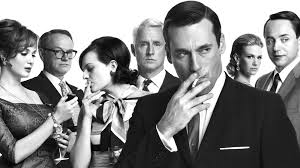
Mad MenBrand advertising is usually measured in terms of broad sales increases in a product line or shifts in competitive market share as a result of the campaign. Skippy buys an ad schedule across TV, print, and radio, spends a certain amount, then measures over a period of time what impact it has on sales of their peanut butter. They may experiment then with new commercials, or add weight to TV and subtract it from print, trying to get the best return on investment possible. You can imagine what an inexact science it is, but if you pay X for your ads and get more than X in increased sales, you at least know your campaign paid for itself, and from there, the sky is the limit. In the 1960s and 1970s with three TV networks, it was really hard to go wrong with the kind of TV buys we now enjoy memorialized in Mad Men.

Direct response advertising used to be the less polished hard sell stuff we saw on late night TV or UHF, where the commercial or infomercial shows you a miracle vacuum cleaner obliterate a thick pile of goo and then gives you an 800 number to respond now and buy it. It is also the kind of advertising that worked well in print and catalogs via mail order. To this day it remains simple and exact to measure because there is little noise in the equation. You run an ad, your switchboard lights up with orders or it doesn’t. You know what you paid for the ad, you know how many orders you got. It’s not very glamorous, but compared to brand advertising, it is easy to evaluate and research is precise.

The glamour factor shifted with the internet from brand to direct, because the economics shifted with the internet at huge scale. On the internet, direct response, or performance based advertising, mostly trumps brand advertising. In the digital world, brand advertising became known as display advertising—in the consumer vernacular, banner ads (industry jargon sometimes calls them dots and spots) where payment is rendered by the advertiser for delivered inventory—insertion order invoiced tonnage just for showing up. The click-through rate on most display ads today is almost not worth measuring, but that does not mean they are not impactful. Most of the ads you see on Facebook are display, lots of reach and frequency, and much better targeted by interest level than ye olde TV.

Yet the glamour business of the internet remains keyword advertising, the logical evolution of direct response advertising, the sponsored links that have been most successful for companies like Google but are also used in comparative shopping sites and similar layouts where the ad buyer does not pay for an ad to be seen, the ad buyer pays for a click on the keyword link, and then counts on a certain number of clickers to follow through to transaction (that means buy something). Here again, the direct response model is more precise than the brand model and can be measured with sophisticated analytics, while the dots and spots—and now with video streams commercial insertions in Hulu and YouTube much like TV only shorter—should be fully intended to contribute to downstream sales activity, but are much harder to evaluate mathematically.

In the world of TV, brand still rules. In the world of internet, direct response still rules. The reason? Performance, also known as Return on Ad Spend (ROAS). You can still drive big sales and shifts in market share via a TV brand campaign, and you can do the same with an internet direct response campaign. So my fundamental question remains: why hasn’t the science of efficacy and research advanced to show how display campaigns online can approach the same sort of massive scale impact on consumers that they have on TV?

There are many things we can measure in both brand and direct response campaigns, some would argue too many. If McDonald’s stopped spending completely on TV and moved all that budget to the internet at better prices, would it have a negative impact on their business? Probably, or they would do it. The question is, how much can they move, and how much more affordable can it be for them to start moving more of it? How can they tie market share gains back to internet display campaigns? Attitude and usage studies—the kinds of email surveys you get asking if you have seen or remember a campaign—aren’t nearly enough to convince them they can move billions of dollars of burgers at the counter without an accompanying TV vehicle. They need digital brand campaigns that sell goods and services at scale and science to attribute the success—and we don’t yet have either.

Going back to our passionate content creators at Digital Hollywood—what do I think they should be worried about for their sustenance? I think their fate will be cast by leapfrog advances in advertising research, and I think those advances will come. With advances in the science of display advertising efficacy in digital platforms whether fixed or mobile, the big brand dollars will have to shift from television to non-television. It is not just a question of eyeballs (mind share, share of voice) shifting with a generation that has grown up digital, it is a question of what works, the reach and frequency and cost efficiency to make or break predictable sales of consumer products. When we have that science to show how digital spending improves on the job of TV, the big brand dollars will shift and content opportunities will flourish.

Almost every graph trend shows that the future for digital media is nothing but bright, but until the research and reporting platforms rescue brand advertisers from the opaque, illusive promise will remain greater than reality. That shouldn’t last much longer. Tell your digital research departments to put those monster TV budgets in their gun sights and keep innovating. It’s really good money if you can get it. And we will.

Eyes on HP

Hewlett-Packard is not just any company. It is iconic. Like Disney, Ford, General Electric, Apple, Microsoft, and a few others, it is not only part of business history, it is deeply wound into the fabric of American history. Modern Silicon Valley pretty much begins with Hewlett-Packard—the foundations of information technology as a new sector of productivity, the power of innovation, the hardware/software product life-cycle, the beginnings of west coast venture capital, and the splitting atom of employees spinning off from the mothership to become founders themselves. The Hewlett-Packard story until recently is a magnificent tale.

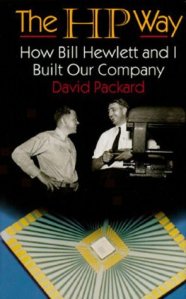
HP WayBill Hewlett and Dave Packard really did start in a garage. One of the very first products they sold was a precision audio oscillator, to of all people, Walt Disney. They captured their thoughts in a book, The HP Way, reinforcing the need for a company to have a mission and a vision. When we talk about a job being more than a paycheck, a lot of that comes from the work ethic and values of Hewlett and Packard. They set the stage for a generation of entrepreneurs. They made it okay to fail, as long as that failure contained learning that was honestly disseminated. HP on an engineer’s resume was gold. The sales and marketing team was second to none.

It is almost impossible to understand the impact of a global company with over $125B in annual revenue and 325,000 employees changing CEOs four times in six years, not including the interim CEOs between hires. Carly Fiorina, Mark Hurd, and Leo Apotheker each left the company for different reasons, and while the HP board is now taking a lot of heat for perhaps not scrutinizing their decisions around these leaders carefully enough, that is unfortunately water under the bridge. The company is now under the direction of former eBay CEO and recent California Gubernatorial candidate Meg Whitman, who will need to move quickly and definitively to steady the ship.

HP has seen numerous mergers, divestitures, and acquisitions throughout this period of seismic change, and each time one strategy replaces a previous version, the impact is costly. Whitman has said she believes the strategy in place at HP now is largely correct, so if the issues she is facing are managerial, perhaps we will see a positive impact sooner rather than later. My guess is she will dig into strategy a bit more in the coming months, and then move aggressively to make her mark. The sooner she can restore confidence with customers, employees, and shareholders, the better it will be for all those who do care deeply about the company’s future.

Why is HP so important in the scope of business enterprise? When you dig into exceptional business books like Built to Last and Good to Great, both by Jim Collins, you realize just how hard it is for even the strongest corporations to go the distance in an environment of creative destruction. As Collins points out so often in the data he cites, only 62 of the original Fortune 500 companies named on the original list in 1955 remain there in 2011.

The great former CEO of Intel, Andy Grove, talks at length about the “strategic inflection points” facing companies at every stage of their evolution—particularly technology companies—in his critical study Only the Paranoid Survive. Grove makes it all too clear how easy it is for a well established organization with vast resources and expansive markets to miss a fundamental change in the continuum of progress, only to catch its error to late to be fixed, having been lapped by any number of competitors.

Where Collins approaches the challenge largely from the aspect of defining and reinforcing a brand, Grove looks at it from the point of view of ceaseless innovation and refusal to accept the status quo as satisfying. Both approaches are vital, but neither has a chance in the face of organizational chaos. Products, features, and benefits must remain in constant flux, but ideals and values are their balancing counterparts. Remove the rudder from a very fast ship and it really doesn’t much matter what is powering the engine room.

It takes both leadership and strategy to steer one of these mammoth ships through the rough seas of business change, and simply taking those notions for granted is the easiest way for a company to fall from grace. Robert Burgelman, a colleague of Andy Grove who teaches strategy at the Stanford Graduate School of Business (and is also a former board member of mine), tells us that strategy becomes real when we apply resources to concepts. We see that very much in action now at HP, but we see those resource decisions changing too frequently in real-time. The leadership of the CEO drives that strategy from concept to action, from white board idea to investment cost center, and if strategic shifts are reversed before cost centers become profit centers, value can be destroyed at an astonishing pace.

No CEO or strategy is meant to last forever, but change them too often, and costs pile up without reward. The toll on staff morale is immeasurable, and the lost jobs from reversing decisions may never be recovered. Employees feel the impact in loss of income, shareholders get pummeled. Customers just move on.

It’s time now for HP to turn the corner. As I said, HP is iconic, it is Silicon Valley. We need it as an example in the tech sector of a company that is Built to Last and can continue to grow from Good to Great. HP dates to 1939. It is the standard-bearer for all the great companies that followed its mantra, were born in garages, and now have office space in the adjacent neighborhoods. If we want to believe companies like AOL and Yahoo can find new creative life through reinvention, we have to have models for long-term success. We need succession plans that show great companies can transcend their founders and achieve new levels of success by ensuring that values are more than words in the employee handbook, and that they are liberating, not confining, as long as the leaders who embrace them help guide their teams through increased commitment to innovation with coherent planning and rigorous evaluation. No shooting from the hip, but no fear of change.

On a pragmatic level, we also need the jobs, particularly in HP’s home state of California. Surely the majority of new jobs in our nation will come from small business and startups, but we can’t afford to lose the ones we have in the enterprise, not for the families who depend on them, not for the state budget that needs the payroll tax. Because of its deep history in the community and legend, HP leads the ethos in Silicon Valley in so many ways, its stability is a reflection of hope, its instability a drag on the headlines when we need a shot of optimism.

This is a once in a lifetime career and company defining opportunity for the new CEO at HP. It’s like getting the chance to manage the NY Yankees after three bad seasons no one saw coming. They might be on a losing streak, they might have made a bunch of bad trades, but they’re still the Yankees. Everyone knows they can win, that they have the resources to win and a history of winning. Meg Whitman just needs to ask herself, what kind of game does she want her team playing, who does she want in the line-up, and where does she need to better read the competitive landscape. A little consistency in management will go a long way.

Let’s hope Hewlett-Packard has it right this time. There is already new criticism of HP’s board that they acted too quickly in hiring Meg Whitman, that she should have first been named interim CEO, or that her background is not right for the job. Their decision has been made, so I am rooting for the new CEO. This isn’t politics, this is P&L. It is critical that Meg gets this right and succeeds. A win for her in this role is a win for all of us.

Things That Work, Things That Rot

I think I know why Apple is one of the most valuable companies in the world, if not the most valuable. Simply stated, the company’s products are elegant, and they work. They are intuitive, and they work. They are designed with vision, and they work. Most of all, they work.

Am I willing to pay a premium for that? You bet. Are a lot of other people? How do you think they amassed more cash than our Federal Government (which, incidentally, has proven of late that it does not work). Yes, people will pay a premium for elegant, intuitive, well-designed, visionary products that work. To the victor go the spoils. We get tremendously useful products. Apple gets our cash. We may grumble about the constant upgrade cycles, but we shouldn’t often grumble about the value proposition, We get what we pay for, and in my mind, it’s worth it.

My experience earlier this year buying my first iPad could not have been more pleasant. I began my research polling friends on my Facebook page for feedback on what configuration to buy, and not only got great information, but rave endorsements for the iPad2 itself. I then went to the local Apple Store and despite the fact that they were sold out of iPads, a very well-trained and nice salesperson spent a great deal of time with me going over my options, then suggested I order my iPad online (with free shipping and engraving) to get it sooner. Other customers in the store were also Apple evangelists and offered me lots of friendly tips on apps I might like. I went home, ordered it on a Monday afternoon, had it on Friday morning, and used it all that weekend without any need of a manual or user guide. To take this all the way home, on a recent business trip some of the functionality froze, but when I searched my issue on Google, there was plenty of user feedback that accurately told me how to “reboot” the iPad and unfreeze the grayed-out state I encountered. The fix from problem to resolution with community help took six minutes.

LoveCustomersCompare and contrast this experience with my recent encounter with my telecom company. Early last week, my broadband connection to the internet vaporized—gone, kaput, no warning, no connectivity—in the midst of this week’s heavy stock market trading, which made the timing even more problematic. With sweat inducing trepidation, I called the 800 service number, and after five minutes of voice assisted prompts, I got a very polite person on the phone. This person thanked me for my business, assured me I was appreciated, took my phone number in case we got disconnected, then began to ask me to plug and unplug things which I told him I had already done. Thirty seconds later he accidentally cut off the call. He never called back.

I dialed the 800 number again, went through the voice mail prompts, got another polite human being ten minutes later. This person apologized for the first person cutting me off. Then after some give and take and checking with her supervisor several times while she put me on hold, she communicated to me more than thirty minutes later that my “old” DSL modem, which they had sent me in 2005, was incompatible with a change they had made in their network “at the central station” (sadly, my neighborhood is largely stuck with ancient DSL technology, but that’s another grating story). She then congratulated me on my eligibility for a new and improved free modem upgrade, which she would order for me as soon as her supervisor approved it. I had to go to a meeting, and indeed, 45 minutes later she called and left me three voice mails to congratulate me again that the free modem had been approved and would arrive in 24 hours. It did.

Unfortunately when I connected the new modem, it did not connect to the internet, so I called the 800 number again. After the voice prompts I got another exceptionally polite employee on the line, and this person apologized for the fact that the new modem did not work, but told me a ticket was open and would be resolved by Friday. It was Wednesday. I needed to be online. The nice person said he would escalate the issue, but that a configuration change had to be made at the central station according to the notes in the file.

I lived without hard-line internet through Thursday, saved by my iPad which of course worked fine. On Friday morning I still had no internet, so I called the 800 number again, went through the voice prompts and got another wonderfully polite person who apologized again, but told me the switch at the central station had not been adjusted because of a work stoppage, asking me if I had heard or read about this. I said I had, but I wondered why they would have made a network configuration change earlier in the week, not told me, and sent me a free modem that needed to be configured at the central station when there was no one available to do that. The wonderfully polite person agreed with me that this was wrong, and said I should have been called before the change was made originally to advise me a new modem was coming before they had sent it. I asked if all this was supposed to happen without me calling and he said yes, absolutely, then apologized again for the inconvenience.

I asked when I would have my internet connection again, and he said he hoped it would be by Monday, if someone was available to make the change at the central station during business hours, since they did not work weekends, if they were working at all. I offered some less than polite words about the impact this was having on my ability to conduct business in a turbulent equities market, and suffice it to say, with a certain number of carefully worded phrases (including a promise to write this blog entry), my connectivity was restored about four hours later.

I suppose that’s one way to take a job to completion.

I write this not specifically as a celebration of Apple and an indictment of my telecom company. I offer it instead as a lesson in excellence and the loyalty a true commitment to customers will garner. What Apple does should be the norm, not the exception, but because it is the exception, they enjoy almost unreal loyalty from their customers. I believe most if not all businesses once aspired to such a level of passion, but today, not so much. Mediocrity seems to be good enough for a lot of businesses, and as customers, we are just supposed to grin and bear it. That’s one of the true costs of everyday low prices. Quality can become a coin toss.

Perhaps it is time to put a stake in the ground and demand better products and services in every capacity we consume. With all this choice, customers are supposed to be Job #1. But are we really? If we have been reduced to being consumers rather than customers, than at the very least, let us consume well—without frustration, without anger, with reasonable expectations of the value chain. I have a better idea: let’s not be consumers, let’s be customers and expect to be treated that way, with respect, forcing healthy market competition for our loyalty. We pay a lot for this stuff, honestly, we do. Quality should be a given.

Not much to ask, products and services that work—and that work well, all the time.

Then again, perhaps I might share with you another example of trying to replace a battery for a mobile device from a branded store where the device remains on sale but the batteries not so much. Nah, I’ll spare you, just scroll up and do a search and replace.

Product Development is Not Democratic

Following up my last post on the scarcity of successful internet brand turnarounds, I had a number of interesting discussions with colleagues in search of the answer why. While it would be impossible for me to boil that down to a single concept in a single blog post, the common theme seemed to be the extraordinary difficulty in reinventing the key products or services under a once a powerful but now fading brand, such that the new offerings were up to the standards of the original breakthrough experiences.

Digging deeper into this theme of why a brand that was created of innovation could have such a hard time finding reinvention in subsequent cycles of innovation, the culprit fueling failure often found the compass needle pointing at process. Where some form of good process once allowed staggering creativity to flourish, failure to reinvigorate good process most often led to uninspired product development, lackluster offerings to customers, and ultimately a continuation of the downward spiral where a turnaround was the hope. Called out for especially pernicious result:

1) Tepid Innovation—believing that a little idea was a big idea almost in desperation for lack of identifying a big idea. Copycat products that responded to market leaders to segment small bits of their commanding market share consumed energy where market leading ideas remained in small supply.

2) Lack of shared vision—weak leadership failed to articulate a big idea around which teams could rally, so buy-in became compelled rather than organic. Empowering strong leaders to lead is not often enough a company’s core competency, because truly creative rebels don’t want to be managed, they want to be sponsored, so that they can make change happen in cultures that prefer conformity, and conformity is not how you win market share. When the right leaders are chosen and empowered, they can build a shared vision by leading, not managing.

3) Corporate intervention—a young company acquired for its Think Different mentality and bold new ideas becomes indoctrinated in the prevailing corporate culture of the parent, and begins to see the world through the lens of the acquirer rather than for the reasons it was acquired.

4) Lack of listening—there is no longer a measurable correlation between time on the job and quality of concept. The youngest arrival in a company may just have the best ideas, but if there is no forum for real listening and discussion, the most creative voice can be too easily silenced.

5) Marketing/Engineering Wars—rather than partner, the two necessary sides of the winning formula argue for the sake of winning the argument. They forget what it means to win—that their competition works at another company.

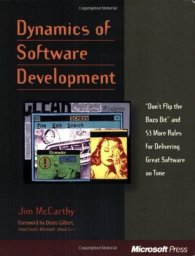
Dynamics of Software DevelopmentMany of these themes are explored in the brilliant and surprisingly nontechnical book Dynamics of Software Development by Jim McCarthy, which I have encouraged every senior executive I have met to read as well as every staff leader I have mentored. In my experience the core issue comes down to learning how to build a consensus, understanding that consensus building is not polling or voting or majority rules. Product development is an expertise, like any other profession. Many individuals can learn to do it adequately, but few can do it extraordinarily.

Look at some of the new wave of great companies and you see the top-tier of product development pros at the helms: Mark Zuckerberg, Reed Hastings, Elon Musk, Reid Hoffman. Of course those are all CEOs of substantial, important, disruptive companies and they are not available for brand turnarounds at internet companies on the rebound, but the question remains, are the people being put in charge of turnarounds somehow similar in nature and characteristics to the great leaders of product development? Are they able to articulate a vision around which people can rally willingly and with trust? Do they listen to a multitude of opinions and then make decisions that incorporate feedback because it is critical, not because it represents a political agenda? Do they have good taste, and can they see beyond the state of today to leapfrog a competitor with perhaps something that didn’t do well in a focus test? Have they built a process in their environment where good work can shine and fast iteration can overcome mediocrity in rapid succession?

Consensus is an astonishingly complex concept; it is not at all compromise. It begins with vision, It is evangelized through leadership, It becomes stronger through group participation and feedback, but it is guided to completion by the same vision and leadership from which it emanated. Consensus goes off track when a leader feels for whatever reason that bits of all contributions most be included to create the consensus, the proverbial camel with two humps. That is wrong, because all comments and critiques will not be right if breakthrough products are your goal. Group participation is a must to achieve organic buy-in, listening is a must for a leader to bypass being feared as a despot, but for great product development to triumph, a vision must remain strong, pure, unique, original. That can never be taken for granted, and everyone on a team will not always be happy at every twist and turn. Yet if you have ever had the privilege of working on a world-class, game changing product, you know that most sins are forgiven when it all comes together through good process, and it does not look anything like the system of checks and balances we see in representative government.

Product development is driven by a different motive set, of creative destruction and inspired disruption, a high stakes arena where often winner takes all, second prize means you go home. Democracy does not work there, and democratic compromise is not workplace consensus. Show me a great product, and I know you will find iteration, but I bet you won’t find haggling.

Vision is what launches a brand. Vision will always be key to reinventing a brand. Process is the key to translating ideal vision into working reality. Consensus is the element of process that gets everyone on a team to remain part of the team, because success is owned by the team, not by its individual components. Get most of that right and product development has a fighting chance, and so might reinvention.